
Primary Implant & Instrumentation Showcase I
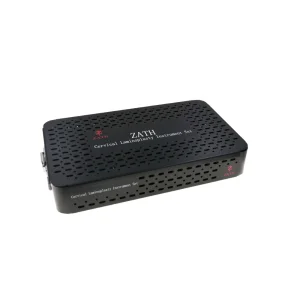
Direct surgical engineering platforms manufactured in our Zhongguancun Science Park facility, offering certified sterile delivery, dimensional repeatability, and global hospital supply continuity.
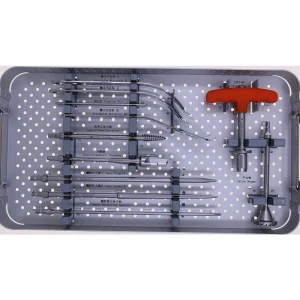
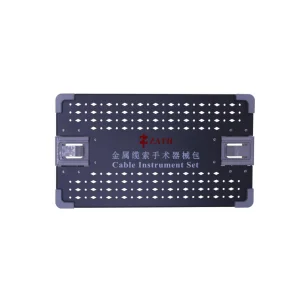
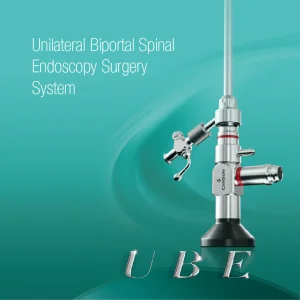
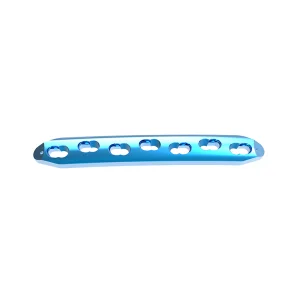
The Biomechanical Paradigm of Distal Fibular Plating
Anatomical internal fixation demands absolute restoration of fibular length, rotational alignment, and lateral talocrural joint congruence.
Restoration of Lateral Malleolar Stability in Ankle Fractures
Distal fibular fractures represent one of the most frequent lower-extremity traumatic presentations encountered by orthopedic trauma surgeons globally. Accounting for nearly 70% of all ankle fractures, disruption of the lateral malleolus directly compromises the structural integrity of the talocrural mortise. Groundbreaking biomechanical research by Ramsey and Hamilton established that even a minimal 1-millimeter lateral shift of the fibular body reduces the effective contact area between the talus and the tibial plafond by 42%, precipitating dramatically elevated peak contact stresses and early-onset post-traumatic osteoarthritis.
Historically, distal fibular fractures (Danis-Weber Type B and C / AO/OTA 44-B and 44-C) were stabilized utilizing conventional one-third tubular plates applied in a lateral neutralization or posterolateral antiglide mode. While non-locking tubular plates offer sufficient contourability, their limited torsional rigidity and tendency to strip in soft, osteoporotic metaphyseal cancellous bone frequently led to secondary loss of reduction, screw toggle, and construct collapse. The evolution toward Anatomically Pre-Contoured Distal Fibula Locking Plates (LCP) has systematically revolutionized extremity trauma surgery.
Modern distal fibular fixation requires plates that honor the specific biomechanical demands of the subcutaneous border. Anatomic pre-contouring eliminates intraoperative plate twisting, which minimizes operative time, reduces fatigue-stress induction within the implant metal, and preserves soft-tissue envelopes that are notoriously prone to ischemic breakdown and surgical dehiscence over the lateral ankle.
Rigid Fixed-Angle Stability
Screw-to-plate threaded locking constructs eliminate dependency on bone-implant friction. This forms an internal fixator construct that protects osteopenic bone from micro-motion and screw backout under early rehabilitation stress.
Periosteal Perfusion Preservation
Undersurface limited-contact scallops minimize bone-plate contact area. This design prevents local capillary thrombosis, preserves periosteal blood flow, and accelerates primary osteonal bone union across the comminuted zone.
Syndesmotic Repair Integration
Engineered with dedicated non-locking combi-holes and elongated slotted apertures, facilitating dynamic suture-button deployment or rigid 3.5mm/4.0mm trans-syndesmotic screw fixation without plate deformation.
Discount Distal Fibula Plate Factory: The Engineering & Cost Truth
Demystifying "Discount" in Class III orthopedic manufacturing: Vertical integration, automated CNC machining clusters, and high-efficiency raw material utilization in Beijing.
Redefining "Discount" in Precision Medical Device Sourcing
In the global orthopedic supply chain, the term "discount" has historically been misinterpreted by procurement officers as a potential indicator of compromised metallurgy or truncated quality inspection. At Beijing ZhongAnTaiHua Technology Co., Ltd. (ZATH), founded in 2009 and situated within the Zhongguancun Science Park (Pinggu, Beijing), "discount" represents something completely different: structural cost rationalization realized through scale, vertical integration, and zero-redundancy engineering.
Western orthopedic multi-nationals incur bloated overheads, carrying 65% to 75% gross margins that support extensive direct-sales forces, distributor layers, and legacy royalty structures. By contrast, a dedicated, ISO 13485-certified Chinese production facility operates on high-throughput precision automation. With more than 300 experienced personnel, including nearly 100 dedicated senior and mid-level biomechanical technicians, our factory directly controls every echelon of product transformation: from medical-grade raw bar stock reception to wire EDM cutting, 5-axis Swiss-lathe processing, optical surface profiling, cleanroom double-barrier Tyvek packaging, and final gamma sterilization.
| Engineering & Procurement Parameter | Traditional Multinational Tier-1 Brand | ZATH Factory Direct Manufacturing Model | Distributor & Hospital Margin Advantage |
|---|---|---|---|
| Material Metallurgy Standard | Ti-6Al-4V ELI (ASTM F136 / ISO 5832-3) | Ti-6Al-4V ELI (ASTM F136 / ISO 5832-3) Verified | Identical biocompatibility & fatigue resistance |
| Dimensional Machining Precision | ±0.010 mm Multi-Axis CNC Milling | ±0.005 mm High-Precision Citizen Lathes | Flawless screw-hole thread engagement |
| Surface Anodization Protocol | Type II Hard Anodization (Anti-Galling) | Type II Hard Anodized with Micro-Polishing | Reduces soft-tissue & peroneal tendon friction |
| Procurement Markups & Distribution | 3 to 4 Intermediary Distribution Layers | Direct Ex-Factory Wholesale Architecture | 40% – 60% Procurement Cost Reduction |
| Regulatory Documentation Dossier | FDA 510(k), CE MDR Technical Files | ISO 13485, CE/UDEM Certified, FSC, CE Ready | Seamless tender qualification & registration |
| Packaging & Sterilization Mode | Non-sterile bulk or high-surcharge sterile | Pre-Sterilized Double Tyvek Blister Packaging | Zero CSSD autoclaving cost; saves OR setup time |
Metallurgy Without Compromise: ASTM F136 Ti-6Al-4V ELI
Every distal fibula plate manufactured in our Beijing production plant utilizes exclusively certified medical-grade titanium alloy Ti-6Al-4V ELI (Extra Low Interstitial) conforming strictly to ASTM F136 and ISO 5832-3 standards, or implant-grade 316L stainless steel (ASTM F138). Raw metal bars enter the plant accompanied by certified mill test certificates detailing chemical spectrography, grain size analysis, and tensile properties. Incoming bar stock undergoes independent ultrasonic non-destructive testing (NDT) to eliminate internal voids or inclusion anomalies before entering the machining cell.
The mechanical modulus of our titanium distal fibula plate is approximately 110 GPa—substantially closer to the cortical bone modulus (18–30 GPa) than stainless steel (200 GPa). This reduced stiffness gradient significantly mitigates the detrimental phenomenon of stress shielding, preventing localized cortical osteopenia underneath the plate and promoting physiological load transfer across the healing fibular fracture gap.
Mass Economies of Scale
Producing across 19 unified implant platforms—from spine pedicle screws and total joint replacements to sports medicine anchors—our continuous automated plant throughput drives tooling and cycle costs to absolute structural minimums.
Automated In-Line Inspection
Every single manufactured batch undergoes high-precision coordinate measuring machine (CMM) testing, thread pitch laser verification, and micro-hardness testing, ensuring 100% adherence to engineering blueprint specifications.
Turnkey Supply Readiness
Our rapid international air-freight channel (DHL, FedEx, UPS) guarantees 4 to 6 day global delivery for replacement hospital consignments and distributor stocking orders, supported by direct technical account managers.
Evolutionary Trends in Extremity Fracture Systems
From standard single-axis locking to polyaxial trajectories, ultra-low profile contouring, and biological syndesmosis augmentation.
1. Polyaxial / Variable Angle Locking
Fixed-trajectory locking screws can inadvertently penetrate the tibiotalar joint or collide with syndesmotic lag screws. Modern systems feature Variable Angle (VA) locking mechanisms allowing surgeons to angulate screws within a 30° cone (±15° off-axis), targeting dense subchondral bone anchors without joint penetration.
2. Ultra-Low Profile Tapering
Because the distal fibula has minimal subcutaneous tissue cushioning, prominent plate profiles precipitate skin necrosis, wound dehiscence, and pain. Modern plates feature an ultra-slim tapered tip (down to 1.5mm) and recessed screw heads that sit flush with the implant surface, slashing secondary removal rates.
3. Dynamic Syndesmotic Repair
Rigid 3.5mm or 4.0mm trans-syndesmotic screws risk fatigue breakage and require routine removal before weightbearing. The industry is rapidly adopting flexible suture-button construct slots integrated directly into the plate shaft, allowing micro-motion during joint loading while maintaining reduction.
4. Trimalleolar Dual-Tray Modularity
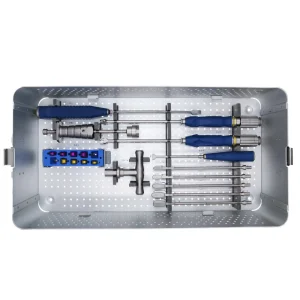
Trauma centers are transitioning away from disconnected, fragmented sets toward comprehensive trimalleolar kits. These modular sets house lateral distal fibula plates, posterolateral antiglide plates, medial malleolar cannulated screws, and headless compression screws in a single optimized autoclave tray.
Clinical Applications & Operative Techniques
Proven surgical workflows across Danis-Weber categories, high-velocity sports fractures, and fragile geriatric osteoporotic ankle trauma.
Scenario A: Danis-Weber Type B / SER Ankle Fractures
In standard oblique spiral fractures of the distal fibula initiating at the level of the syndesmosis (Supination-External Rotation injury), the distal fibular locking plate is applied directly in a lateral neutralization role.
Surgeons first achieve anatomical interfragmentary compression utilizing an independent 2.7mm or 3.5mm cortex lag screw inserted from anterior-to-posterior or posterior-to-anterior. The pre-contoured locking plate is then secured over the lateral border. The distal cluster accepts multiple 2.7mm locking screws divergent in the malleolar head, shielding the lag screw from rotational shear forces.
Scenario B: Danis-Weber Type C & Maisonneuve Lesions
Weber C injuries involve disruption above the syndesmotic syndesmosis with mandatory disruption of the interosseous membrane. These high-energy pronation-external rotation (PER) patterns exhibit pronounced instability.
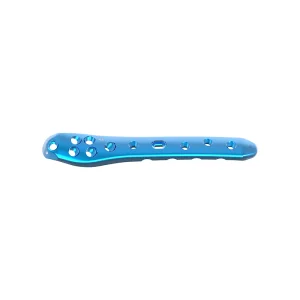
A longer distal fibular plate (7 to 12 holes) is positioned to bridge the diaphyseal comminution zone. Syndesmotic stability is subsequently verified under fluoroscopic Cotton stress testing. Trans-syndesmotic screws (3.5mm or 4.0mm cortical) or flexible titanium buttons with UHMWPE loops are introduced through the designated oblong holes of the plate, anchoring into two or three cortices of the tibia.
Scenario C: Geriatric Fragility & Comminuted Osteoporosis
In elderly patients with compromised bone mineral density (BMD), traditional non-locking screws fail to achieve torque resistance, stripping out of the paper-thin lateral cortex.
The fixed-angle locking screw cluster creates a structural rigid scaffold within the cancellous distal head. Up to four to five divergent 2.7mm locking screws purchase the distal lateral malleolus immediately adjacent to the articular subchondral bone. This rigid construct distributes loading forces evenly across the entire plate length, resisting axial collapse and valgus tilt without reliance on screw purchase friction.
Healthcare Economics & Hospital Procurement Alignment
How hospital systems, surgical centers, and regional health ministries navigate DRG/DIP cost ceilings while securing gold-standard trauma hardware.
Navigating DRG/DIP Hospital Cost Caps
Healthcare reimbursement models across Europe, Latin America, the Middle East, and Asia have shifted irreversibly toward Diagnosis-Related Group (DRG) and Diagnosis-Intervention Packet (DIP) reimbursement protocols. Under these bundled payment systems, hospitals are reimbursed a fixed tariff per surgical admission, regardless of the individual hardware prices billed. When surgical centers utilize legacy multinational trauma implants carrying artificial 300% brand markups, implant procurement absorbs up to 55% of the total procedural reimbursement, drastically shrinking hospital operating margins.
ZATH's ex-factory direct procurement model breaks this financial bottleneck. By sourcing ISO 13485-certified, CE/UDEM-audited distal fibula plating systems directly from our Beijing manufacturing plant, hospital trauma networks reduce consumable implant expenditure by 40% to 60%. This substantial fiscal saving restores surgical profitability without sacrificing metallurgy, biocompatibility, or clinical outcomes.
Sterile Packaged Ready-for-OR
All distal fibula plates and matching cortical/locking screws are available pre-sterilized in double-barrier Tyvek blister packaging with a validated 5-year shelf life. This eliminates hospital CSSD reprocessing costs, prevents pre-operative sterilization bottlenecks, and cuts surgical site infection (SSI) risks to absolute baselines.
Tender Dossier & Regulatory Backing
We provide global distributors with comprehensive technical documentation required for national MOH tenders: ISO 13485 certificates, UDEM CE compliance documentation, Free Sale Certificates (FSC), biocompatibility reports (ISO 10993), biomechanical dynamic fatigue reports, and localized sterilization validation files.
OEM / ODM Custom Manufacturing
For medical brand holders, distributors, and sovereign procurement agencies, we offer full private-label services: laser etching with custom logos and UDI barcodes, custom plate curvatures matched to regional anthropometric datasets, customized screw-hole configurations, and tailored anodized color identification.
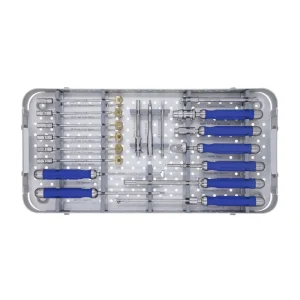
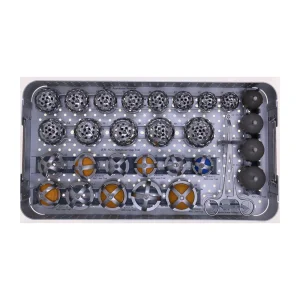
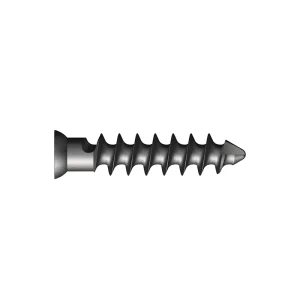
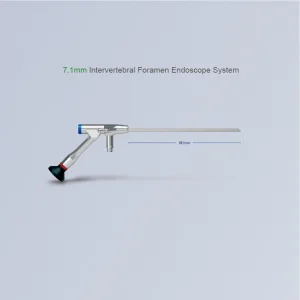
Trauma, Spine & Joint Systems Showcase II
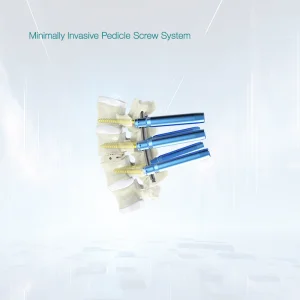
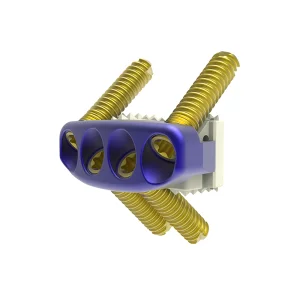
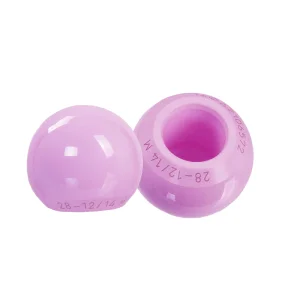
Expanding beyond extremity plating: ISO 13485-certified spine fusion, total hip arthroplasty, and endoscopic decompression systems for complete hospital tenders.
Frequently Asked Questions for Procurement Teams
Key clinical, regulatory, and manufacturing answers addressing hospital tender prerequisites and ex-factory procurement protocols.