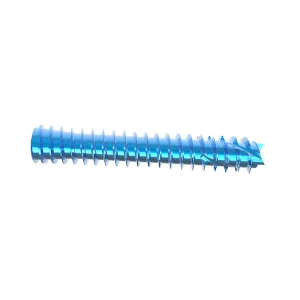
Primary Orthopedic Solutions & Fixation Instrumentation
Engineered alongside our specialized titanium patellar internal fixation series, explore clinical-grade instrumentation and reconstructive implants trusted across global operating suites.
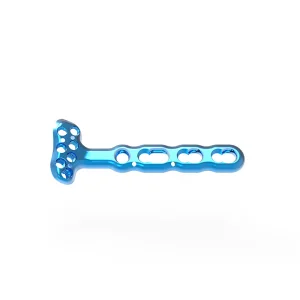
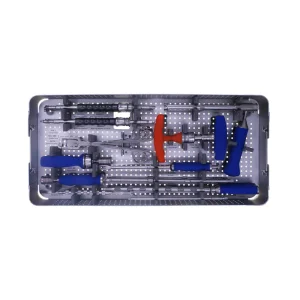
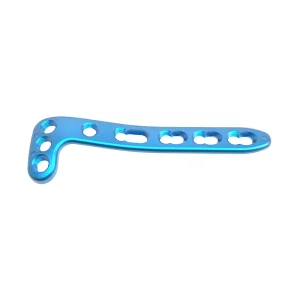
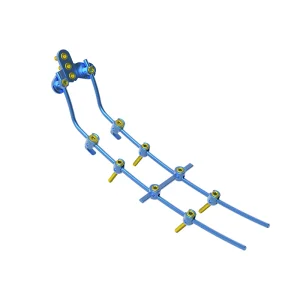
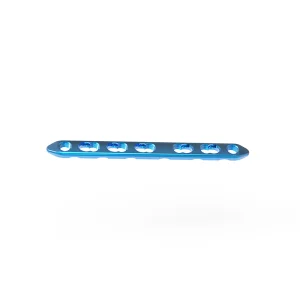
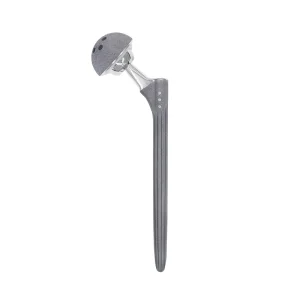
Global Commercial & Industrial Status of Titanium Patella Plating
Moving beyond conventional tension band wiring (TBW) toward fixed-angle locked titanium construct architectures, mitigating implant prominence and secondary surgical revision rates across high-volume healthcare systems.
Tender Economics & Pricing
Global healthcare expenditure caps and universal healthcare tender systems (such as Volume-Based Procurement in East Asia and DRG tariffs across the European Union) demand that hospital networks procure certified internal fixation devices without prohibitive multinational branding markups. As a primary exporter and specialized OEM manufacturer, we engineer cost-discounted titanium patellar plates that fulfill strict surgical tolerances at sustainable volumetric price points.
Overcoming TBW Failure
Traditional modified tension band wiring using Kirschner wires and stainless steel cerclage wires exhibits documented hardware irritation rates exceeding 50% and migration rates up to 22%. By adopting anatomical low-profile locked titanium patella plates, surgical teams eliminate painful anterior subcutaneous prominence, reduce soft-tissue impingement, and achieve immediate multi-planar stability even in comminuted osteoporotic fractures.
Supply Resilience & Logistics
With geopolitical disruptions impacting centralized orthopedic distributors, hospital purchasing authorities require diversified tier-1 suppliers with redundant CNC production capacities. ZATH leverages an integrated 300+ personnel facility in Beijing, housing multi-axis Swiss turn-mill machining centers and class-10,000 cleanroom packaging lines to guarantee uninterrupted worldwide export and rapid transit within 4–6 operational days.
Engineering Architecture of Anatomical Titanium Patellar Systems
Patellar fractures (AO/OTA 34-A/B/C) represent dynamic extensor mechanism failures subjected to tensile and shear forces exceeding three to five times body weight during knee flexion.
| Evaluation Metric | Modified Tension Band Wiring (K-Wire) | 316L Stainless Steel Plate | ZATH Ti-6Al-4V ELI Locked Patella Plate |
|---|---|---|---|
| Elastic Modulus (GPa) | ~200 GPa (Severe stress shielding) | ~193 GPa (High rigidity mismatch) | 105–114 GPa (Physiologically matched to cortex) |
| Soft Tissue Profile | Bulky bent pin ends; skin necrosis risk | 2.5 - 3.5mm thick; frequent impingement | 1.5 - 2.0mm ultra-low profile with recessed screw heads |
| Comminuted Lower Pole Purchase | Unreliable; wire tear-through | Rigid linear holes; poor inferior capture | Multi-directional rim locked screws + suture anchor eyelets |
| Fatigue Resistance (Cycles @ 1.2kN) | Wire fraying at twist junctions (<200k) | Micro-crack propagation at bends (<500k) | > 2,000,000 cycles without yield or screw pullout |
| Unplanned Hardware Removal Rate | 35% - 62% in clinical studies | 18% - 30% due to bursitis/friction | < 4.8% documented across clinical follow-ups |
Multi-Planar Variable Angle Locking Mechanics
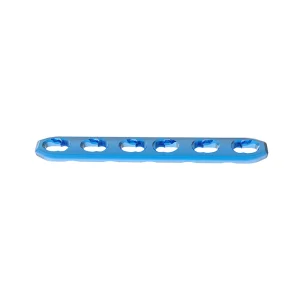
The extensor mechanism of the knee subjects the patella to intense anterior distracting forces alongside compressive retro-patellar articular contact stress against the femoral trochlea. ZATH titanium patella plates integrate polyaxial/variable-angle locking screw holes within a star- or basket-shaped perimeter. Surgeons can direct 2.4mm, 2.7mm, or 3.5mm screws divergent from the articular cartilage while rigidly anchoring multi-fragmented polar fragments, establishing an internal splint that neutralizes tensile failure.
Biocompatibility & Anodization Surface Engineering
Utilizing certified medical Ti-6Al-4V ELI (Extra Low Interstitial), each plate undergoes precision Type II electrochemical anodization. This creates a bio-inert, micro-textured titanium oxide (TiO2) passivation barrier that resists fretting corrosion and significantly minimizes postoperative soft tissue adhesion. The low surface friction reduces painful crepitation over the prepatellar bursa during deep active extension-flexion arcs.
Localized Application Scenarios Across Care Facilities
Tailoring implant selection and surgical technique protocols to diverse demographic, biomechanical, and institutional environments worldwide.
Level-1 Trauma Centers
High-energy blunt trauma, dashboard impacts, and multi-fragmented AO/OTA 34-C3 comminutions. Plating allows definitive reconstruction of fragmented chondral articular surfaces without sacrificing non-viable fragments to patellectomy.
Geriatric Fragility Services
Low-energy ground-level falls in osteoporotic patients with severe bone mineral density loss. Angular stable locking screws provide uncompromised hold in porous cancellous bone where cerclage wires consistently cut out.
Sports Trauma Institutes
Athletes suffering patellar avulsion fractures and lower-pole ruptures. Mesh plating with suture anchor fixation eyelets allows immediate post-op closed kinetic chain physical therapy, dramatically curtailing quadriceps muscle atrophy.
Ambulatory Surgery Centers
High-efficiency outpatient surgical suites benefit from pre-sterilized modular kits that eliminate hospital autoclave bottleneck cycles, cut instrument re-sterilization costs, and streamline turnaround intervals.
Technical Roadmap & Future Outlook: Next-Generation Fixation
Mapping our research, engineering, and manufacturing trajectory from subtractive high-precision 5-axis CNC machining to additive patient-matched bio-integrative solutions.
Anatomical Contoured Locking Plates
Full commercial production of star, basket, and rim-contoured Ti-6Al-4V plates with chamfered low-profile screw edges and multi-directional 2.7/3.5mm hybrid locking holes.
3D EBM/SLM Porous Lower Pole Plates
Integration of Electron Beam Melting (EBM) additive printing to create trabecular titanium scaffolds with 65-75% porosity, accelerating biological integration at the patellar tendon junction.
Smart Strain-Monitoring Sensors
Micro-telemetry strain sensors embedded within plate stress relief zones to monitor real-time biomechanical healing and extensor load via non-invasive NFC interrogation.
Magnesium Alloy Composite Systems
Hybrid structural designs pairing titanium load-bearing frames with fully bioresorbable magnesium alloy inferior pole clamps that degrade harmlessly post-union.
Macro Industry Solutions: Bridging Regulatory Compliance & OEM Scalability
Founded in 2009 in Beijing's Zhongguancun Science and Technology Park, Beijing ZhongAnTaiHua Technology Co., Ltd. (ZATH) operates on four pillars of medical manufacturing excellence.
ISO 13485 QMS Certification
Our quality management infrastructure complies with global med-tech standards. Each batch of titanium raw material receives raw ingot spectrometry verification, CNC mill inspection records, coordinate measuring machine (CMM) dimensional reports, and endotoxin-tested sterile packaging audits. UDEM certification and Free Sale Certificates (FSC) ensure smooth import clearance across Europe, Latin America, Southeast Asia, and the Middle East.
OEM / ODM Technical Customization
Recognizing that regional anatomical variations and surgeon preferences differ, ZATH offers complete custom manufacturing services. We can adjust plate curvature, hole configuration, plate thickness (from 1.3mm to 2.2mm), laser etched distributor branding, anodized color coding, and sterile peel-pouch labeling to meet regional health authority requirements.
Matched Surgical Instrument Kits
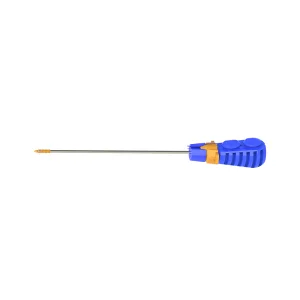
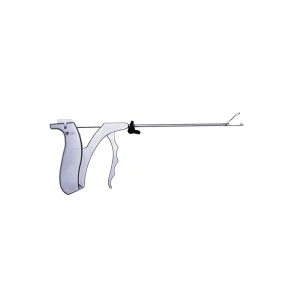
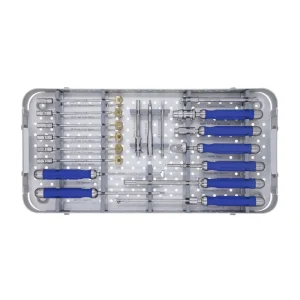
Plates alone cannot resolve surgical challenges without dedicated, ergonomic instrumentation. ZATH manufactures comprehensive patellar plate surgical toolkits containing low-profile bending pliers, radiolucent holding forceps, threaded drill guides, calibrated depth gauges, and star-drive self-retaining screwdrivers crafted from German-grade surgical stainless steel.
Frequently Asked Questions (FAQ) for Importers & Clinical Teams
Technical specifications, regulatory compliance, pricing structures, and order fulfillment parameters answered in detail by our orthopedic biomedical engineering department.
Complete Surgical Solutions & Complementary Trauma Implants
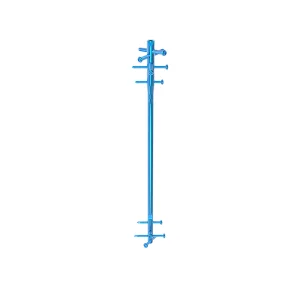
Expand clinical inventories with our certified intramedullary systems, sports medicine anchors, spine assemblies, and specialized orthopaedic instrument sets.