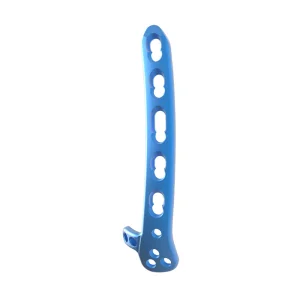
Engineered Solutions
Precision Orthopedic Implants & Systems
Direct from our Beijing precision cleanroom and CNC machining facilities. Fully compatible with ASTM F136 Ti-6Al-4V ELI and ASTM F138 316LVM implant standards.
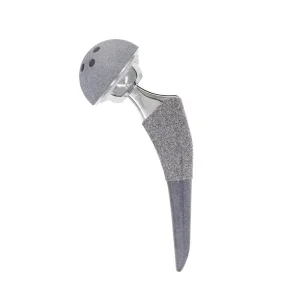
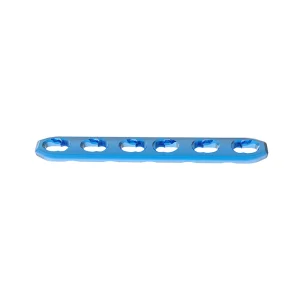
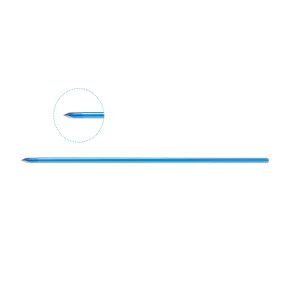
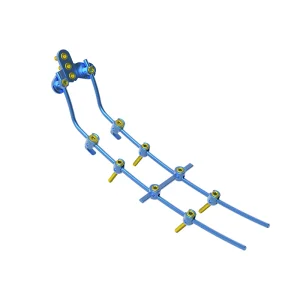
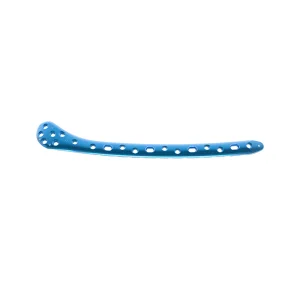
Market Intelligence
Global Status: The Biomechanics and Economics of Cortical Screws
An authoritative analysis of diaphysis fracture fixation, purchase torque biomechanics, and international market expansion.
Clinical Footprint & Demographics
Cortical screws remain the fundamental workhorse in orthopedic osteosynthesis. Representing over 42% of global trauma fastener consumption, standard diameters (Ø1.5mm, Ø2.0mm, Ø2.7mm, Ø3.5mm, and Ø4.5mm) underpin both non-locking plate neutralization and interfragmentary compression (lag screw technique).
As global geriatric demographics escalate osteoporotic fracture rates, the requirement for dual-lead, optimized pitch cortical threading has transitioned from specialized request to standard hospital tender specification.
Biomechanics & Pullout Resistance
Unlike cancellous screws designed for spongy metaphyseal architecture, cortical screws feature a shallower thread depth, tighter pitch, and increased core-to-outer diameter ratio (typically ~0.72) to maximize shear purchase within dense cortical bone.
- Holding Power: Directly proportional to cortical thickness (bicortical fixation provides 35–45% higher torsional rigidity than unicortical engagement).
- Drive Recess: Shift from legacy cruciform/hexagonal to Star-drive (Torx/Stardrive T10–T25), drastically reducing cam-out failures and strip torques.
Supply Chain Bottlenecks
Western contract manufacturers (Tier-1 CDMOs) frequently suffer from lead times exceeding 26–38 weeks due to titanium billet allocation caps and overextended multi-spindle capacity.
Consequently, hospital groups and regional distributors are aggressively realigning their vendor bases toward qualified Chinese medical device foundries capable of executing high-yield Swiss lathe runs with rapid delivery, consistent micro-burr passivation, and pre-sterilization packaging.
Manufacturing Capability
High-Precision Manufacturing: The ZATH Industrial Advantage
How Beijing ZhongAnTaiHua Technology Co., Ltd. (ZATH) deploys automation, medical metallurgy, and rigorous cleanroom control in Zhongguancun Science Park.
Swiss-Type Sliding Head CNC
Equipped with Citizen and Star 9-axis sliding-head automatic CNC turning centers. Cortical screw threads, cutting flutes, and drive recesses are machined in a continuous single-clamping cycle to ensure concentricity within 0.005mm.
Micro-Deburring & Polishing
Micro-burrs on cutting flutes are eliminated via high-energy centrifugal disc finishing followed by automated electropolishing. This process guarantees low insertion torque and prevents intraoperative foreign-body tissue abrasion.
Class 100,000 Cleanroom
Implants pass through 18.2 MΩ·cm ultrasonic deionized water cascades before transfer into Class 100,000 cleanrooms for blister sealing. Pre-sterilization packaging supports ethylene oxide (EtO) or Gamma irradiation cycles.
Raw Material Verification
Every bar of medical Grade 5 Ti-6Al-4V ELI (ASTM F136) and 316LVM (ASTM F138) undergoes optical emission spectroscopy and ultrasonic flaw detection. Mill test certificates (MTC) accompany every manufacturing lot for 100% audit compliance.
B2B Procurement Reference
Cortical Screw Orthopedic Pricelist & Dimension Specifications
Representative OEM/ODM factory price index for qualified hospital suppliers, contract buyers, and medical brand owners (FOB Beijing / CIF worldwide).
| System Type | Outer Diameter (Ø) | Length Range | Drive Recess | Raw Material | Indicative Price (USD / Unit) | Packaging Tier |
|---|---|---|---|---|---|---|
| Micro Cortical Screw | 1.5 mm / 2.0 mm | 6 mm – 24 mm | Cruciform / T6 Star | Ti-6Al-4V ELI | $4.20 – $7.50 | Sterile Double Blister / Bulk |
| Small Fragment Cortical | 2.7 mm | 10 mm – 40 mm | Hex 2.5 / T8 Star | Ti-6Al-4V ELI | $4.80 – $8.20 | Individual Sterile Pouched |
| Standard Small Fragment | 3.5 mm (Self-Tapping) | 10 mm – 60 mm | Hex 2.5 / T15 Star | Ti-6Al-4V / 316LVM | $3.90 – $6.80 | Sterile / Clean Non-Sterile |
| Large Fragment Cortical | 4.5 mm (Self-Tapping) | 14 mm – 90 mm | Hex 3.5 / T25 Star | Ti-6Al-4V / 316LVM | $5.20 – $9.40 | Sterile Peel-Pack Barcoded |
| Dual-Core Locking/Cortical | 3.5 mm / 5.0 mm | 14 mm – 85 mm | Stardrive T15 / T25 | Ti-6Al-4V ELI | $7.80 – $13.50 | Sterile Box with UDI Labeling |
| Headless Compression (Herbert) | 2.5 mm / 3.0 mm / 4.0 mm | 12 mm – 45 mm | Cannulated Hex / Torx | Ti-6Al-4V ELI | $14.50 – $22.00 | Pre-sterilized Kit with K-wire |
*Note: Pricing subject to quantity tiers (MOQ: 500 units for customized pitch/head geometries; 50 units for standard stocked items), anodization color finishes (gold, dark blue, magenta, green), laser etching, and UDI compliance packaging.
Surgical Indications & Trends
Clinical Biomechanics, Localized Techniques & Industry Trends
Bridging surgical engineering with next-generation manufacturing technology to meet hospital procurement guidelines.
Lag Screw Fixation Mechanics
In oblique and spiral diaphyseal fractures (e.g., humeral shaft, fibula, and femoral fractures), cortical screws placed perpendicular to the fracture line produce dynamic interfragmentary compression. By over-drilling the near cortex (gliding hole equal to outer screw diameter) and tapping the far cortex, axial load converts directly to frictional holding force between fracture surfaces.
Factory Feature: ZATH self-tapping cortical screws feature parabolic chip-relief flutes that expel bone debris without clogging, lowering insertion torque by up to 22%.
Additive & Subtractive AI Hybrid Manufacturing
Global demand is migrating toward dual-locking/cortical configurations and hybrid biological surfaces. CNC machining is paired with specialized surface treatments (Type II Anodization) to prevent cold welding between titanium plates and screw heads while boosting fatigue endurance under cyclic physiologic loading.
Moreover, modern robotic plate-bending workflows require standardized screw thread profiles to ensure predictable engagement angles.
Sterile-Packed Single-Use Fastener Kits
Hospitals across North America, the EU, and Latin America are phasing out communal screw caddies due to hospital-acquired infection (HAI) risks, instrument re-sterilization costs, and missing SKU dilemmas in the sterile field.
ZATH provides comprehensive sterile individual peel-pouches with peelable GS1-standard 2D data-matrix barcodes, streamlining hospital inventory management and patient charge capture.
Authority & Verification
Standardized Testing, Metallurgy & Regulatory Compliance
Ensuring frictionless market access across international jurisdictions: MDR (EU), FDA 510(k) pathway readiness, ANVISA, and COFEPRIS.
ASTM F543 Biomechanical Testing
All cortical screw variants undergo rigorous validation according to ASTM F543 (Standard Specification and Test Methods for Metallic Medical Bone Screws), verifying:
- Torsional yield strength & maximum breaking torque
- Breaking angle under torsional load
- Axial pullout force in calibrated synthetic bone (Sawbones PU foam)
- Insertion and removal torque evaluation
ISO 13485:2016 Certification
ZATH’s comprehensive Quality Management System covers every facet from early CAD parametric modeling, computer-aided CAM simulation, CNC turning, to passivation verification per ASTM A967 and ISO 10993 biocompatibility testing.
Factory audits are routinely performed by leading notified bodies, assuring verifiable document authenticity.
Complete Dossier & Free Sale Support
We supply distributor partners with full regulatory dossiers: Certificate of Analysis (CoA), Mill Certificates, Biocompatibility Evaluation Reports, Cleanroom Sterilization Validation (ISO 11135 / ISO 11137), and Free Sale Certificates (FSC).
Accelerate national MOH registration timelines from years down to months.
Procurement Q&A
Frequently Asked Questions: Sourcing Orthopedic Screws & Implants
Key technical, commercial, and operational queries answered by our senior orthopedic manufacturing engineers.
What is the key metallurgical difference between Ti-6Al-4V ELI and 316LVM in cortical screw manufacturing?
Ti-6Al-4V ELI (Grade 23, ASTM F136 / ISO 5832-3) is an "Extra Low Interstitial" titanium alloy offering an exceptional strength-to-weight ratio, superior fatigue resistance, and low modulus of elasticity (~110 GPa), which closely matches human cortical bone compared to stainless steel. It is non-ferromagnetic, allowing artifact-free MRI imaging.
316LVM (ASTM F138 / ISO 5832-1) is a vacuum-melted stainless steel delivering outstanding ductility, high ultimate tensile strength, and cost-effectiveness for temporary fracture fixation where the implant is slated for extraction post-consolidation.
Can ZATH produce cortical screws with custom pitch, specialized drive recesses, or OEM branding?
Yes. As an end-to-end ODM/OEM provider, ZATH provides custom toolpath programming for proprietary thread profiles, such as buttress threads, reverse-cutting flutes, and variable-pitch architectures. We support custom recesses including Hexagonal, Torx/Star-Drive, Cruciform, and Quad-lobe.
Laser marking of distributor logos, part numbers, lot codes, and length indicators can be directly etched onto screw heads down to 0.08mm character heights without compromising fatigue performance.
How does the self-tapping flute design prevent cortical bone micro-fracturing?
Our self-tapping cortical screws incorporate precision-milled relief flutes with positive rake cutting angles. Rather than compacting and wedging dense bone tissue during insertion, the flute acts as a miniature milling cutter that collects and channels osseous shavings forward and away from the core cylinder.
This design prevents excessive radial hoop stresses in the diaphysis, safeguarding against longitudinal split fractures while reducing thermal osteonecrosis risks caused by high friction.
What are the minimum order quantities (MOQ) and production lead times for customized runs?
For standard cortical screw dimensions cataloged in our inventory, the MOQ is 50 units per SKU, ready for same-week dispatch. For bespoke ODM customizations (custom pitch, non-standard diameters, customized anodization hues, or custom drive types), the standard MOQ is 500 units per line item.
Production cycles for customized OEM orders typically span 3 to 5 weeks, followed by 4 to 6 days for express air transport via DHL, FedEx, UPS, or TNT.
Are ZATH implants supplied sterile, and what packaging options are available?
All ZATH cortical screws, locking plates, intramedullary nails, and arthroplasty components are available in two primary formats:
- Pre-Sterilized Packaging: Medical-grade Tyvek-backed blister shells (double blister barrier) validated for a 5-year sterile shelf-life under ISO 11607 standards. Ready for direct introduction into the operating field.
- Clean Non-Sterile: Ultrasonically cleaned, lot-bagged, and barcoded for clients maintaining local hospital autoclave or tray loading infrastructure.
What documentation is provided to support our company's national medical device registration?
We provide a comprehensive technical documentation dossier (Summary Technical Documentation - STED format), which includes ISO 13485 certification, Declarations of Conformity, Material Characterization Certificates (MTCs), Mechanical Biocompatibility Reports (ISO 10993 series), Pyrogenicity & Bioburden validation reports, and Free Sale Certificates (FSC) authenticated by the relevant authorities.
Broad Platform Spectrum
Orthopedic Reconstructive, Spinal & Joint Portfolio
Expand hospital tenders with complementary spine, joint replacement, and trauma platforms manufactured under the same strict ISO 13485 regime.