
Integrated Orthopedic Platforms & Instrument Sets
Explore our core trauma and reconstructive portfolios engineered with exact tolerances for reliable surgical outcomes, available with private-label OEM configuration and global regulatory readiness.
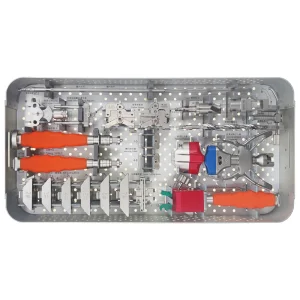
ODM New Design Quality Guaranteed Total Knee Joint Instruments
View Product Set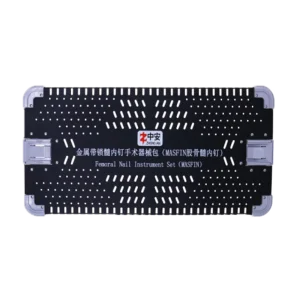
China MASFIN Expert Femur Intramedullary Nail Instrument Set
Explore Instrument Specs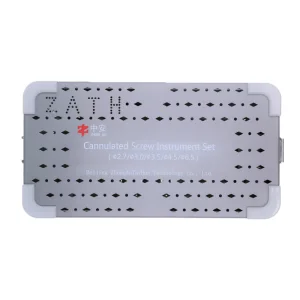
Orthopedic Stainless Steel Cannulated Screw Instrument Set
View Technical Specs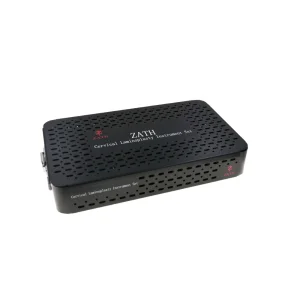
Hospital Use Cervical Laminoplasty Instrument Set
Request Instrument Kit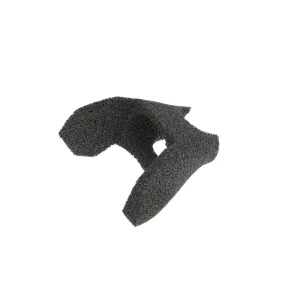
3D Printing Porous Knee Joint Metaphyseal Sleeve System
View Additive Solutions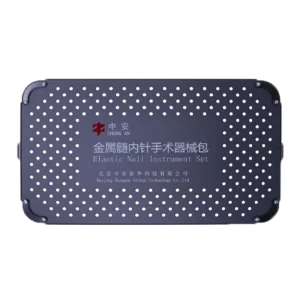
CE Certified Pediatric & Adult Elastic Nail System (ZEIN)
Inspect Certification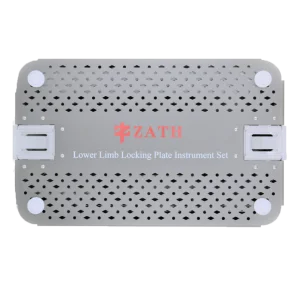
ODM Lower Limb Anatomical Locking Plate Instrument Set
Explore Plate Range
Knotless Titanium Alloy Suture Anchor with Needle
View Anchor PricelistEngineering the Intramedullary Standard: Femoral Nail Solutions
Intramedullary (IM) nailing represents the gold standard in the management of subtrochanteric, diaphyseal, and distal femoral fractures. As a dedicated OEM femoral nail exporter and contract manufacturer, our implants are meticulously balanced between structural rigidity and load sharing.
Anatomical Bowing & Radius Optimization
Standardized straight or poorly contoured intramedullary rods increase the clinical risk of anterior cortical impingement or iatrogenic fracture during distal insertion. Our femoral nail solutions incorporate an engineered anatomical bow with a radius of curvature (ROC) calibrated between 1.5m and 2.0m.
- Eliminates distal anterior cortex perforation risks
- Optimized entry portal design: Trochanteric (5° lateral angle) and Piriformis fossa configurations
- Universal left/right and specialized side-specific anatomies
Load-Sharing vs. Load-Bearing Dynamics
Unlike extramedullary plates that experience high bending moments on the tensile lateral cortex, intramedullary femoral nails act as central splints aligned with the mechanical axis of the femur, significantly lowering implant fatigue stresses.
- Allows early postoperative patient mobilization and partial weight-bearing
- Promotes secondary secondary periosteal callus formation via controlled micro-motion
- Dynamic distal locking slots accommodate controlled axial telescoping
Medical-Grade Titanium Alloy Ti-6Al-4V ELI
We source raw bar stock conforming strictly to ASTM F136 and ISO 5832-3 standards. Ti-6Al-4V ELI (Extra Low Interstitial) provides an exceptional strength-to-density ratio, superior fatigue resistance, and an elastic modulus closely mirroring cortical bone.
- Significantly reduces cortical stress shielding phenomena
- High magnetic resonance imaging (MRI) compatibility with negligible artifact distortion
- Type II hard-anodized surface finishes prevent micro-galling and fretting wear
Technology Roadmap & Future Horizons in Fixation
The intramedullary nail sector is rapidly shifting from passive mechanical splinting toward intelligent, biomechanically active, and digitally navigated trauma ecosystems. Here is our continuous product development roadmap.
Multi-Planar Angular Stability
Implementing multi-hole proximal configurations with integrated end-cap set screws to firmly lock cephalomedullary screws, mitigating blade back-out and cut-through in osteopenic metaphyseal bone.
Carbon-PEEK Radiolucency
Developing radio-transparent distal aiming targeting guides and hybrid composite carbon-fiber nails that afford unobstructed intraoperative fluoroscopic visualization without repetitive repositioning.
Integrated Telemetric Sensors
Embedding micro-strain sensor nodes within hollow nail cannulations to wirelessly monitor bone union progress, cyclic loading, and early structural fatigue, alerting clinicians before mechanical non-union occurs.
Nanostructured Anti-Infection
Engineering chemical vapor-deposited silver/zinc nano-coatings and bioactive calcium phosphate microporous lattices that drastically inhibit bacterial biofilm colonisation while expediting osseointegration.
Resolving Macro Surgical Challenges in Trauma Fixation
Femoral fracture surgeries pose serious clinical complications if instrumentation and nail designs do not synchronize with operating theater demands. Our engineering addresses specific clinical pain points.
Cut-Out in Geriatric Unstable Fractures
The Challenge: High cut-out incidence of single lag screws in unstable intertrochanteric fractures (AO/OTA 31-A2 and A3) with severe osteoporosis.
OEM Engineering Solution: Integrated dual-screw and helical blade fixation options. The compaction effect of our helical blade condenses spongy trabecular bone, maximizing mechanical anchorage without harvesting bone mass during insertion.
Excessive Radiation & Distal Freehand Misses
The Challenge: Free-hand distal locking screws are notoriously time-consuming, elevating radiation exposure for both surgical teams and patients.
OEM Engineering Solution: Precision-calibrated carbon-fiber distal targeting arms coupled with magnetic and acoustic targeting compatibility. Our instrument sets deliver a verified >98% first-pass hit rate, cutting OR fluoroscopy duration drastically.
Implant Jamming & Nail Incarceration
The Challenge: Sudden mismatch between medullary canal diameter and nail distal geometry during rapid insertion, risking longitudinal split fractures.
OEM Engineering Solution: Progressive fluting along the nail shaft combined with smooth conical driving tips. This structure releases intramedullary hydraulic pressure, limits fat embolism risks, and guarantees smooth canal progression.
China Factory 4.0: Precision Engineering & Cost Arbitrage
Operating from our modern facility in the Zhongguancun Science and Technology Park, Beijing, we combine high-volume production efficiency with microscopic tolerances, delivering high supply chain resilience for international medical brand owners.
Multi-Axis Swiss CNC Centers
Equipped with high-precision Swiss-type lathes and 5-axis simultaneous machining centers, producing continuous contour transitions and intricate locking threads without repositioning errors.
Deep-Hole Cannulation Drilling
Specialized gun-drilling technology creates perfectly concentric cannulations through lengths exceeding 460mm, ensuring zero wall-thickness deviation along the entire length of the nail.
Class 10,000 ISO Cleanrooms
Automated multi-stage ultrasonic degreasing, passivation, deionized water rinsing, and primary sterile-barrier packaging under ISO Class 7/Class 10,000 cleanroom environments.
Full Lot & UDI Traceability
Every single implant carries permanent fiber laser marking (GS1 DataMatrix UDI, lot code, dimension), providing end-to-end traceability from raw ingot to patient records.
Global Enterprise Procurement Specifications Matrix
Procurement directors and hospital purchasing consortia require ironclad technical and commercial deliverables. Below is our standard manufacturing capability matrix for institutional tenders.
| Evaluation Parameter | OEM Standard Specification | Customizable Range / Option | Compliance Reference |
|---|---|---|---|
| Raw Material Origin | Ti-6Al-4V ELI (Medical Grade 5 Titanium) | Medical 316LVM Stainless Steel Option | ASTM F136 / ISO 5832-3 |
| Nail Diameters (mm) | Ø9.0, Ø10.0, Ø11.0, Ø12.0 mm | Ø8.5 mm (Pediatric/Adolescent), Ø13.0 mm (Revision) | Calibrated Cannulation |
| Length Spectrum (mm) | 320 mm to 440 mm (20 mm increments) | Custom lengths (280mm–480mm) upon request | Anatomical Curve Matrix |
| Sterilization Presentation | Double-Blister Sterile Pack / Non-Sterile Bulk | Gamma Ray / EO Gas / Hospital Autoclave Tray | ISO 11137 / ISO 11135 |
| Marking & Identification | High-contrast fiber laser etching with UDI code | Customized distributor brand logo and typography | MDR 2017/745 / FDA UDI |
| Instrument Trays | Hard-anodized aircraft aluminum with silicone racks | Modular PPSU trays, customized layouts | Steam Autoclave Validated |
Regulatory Support, Quality Systems & Localization
Entering international healthcare markets requires exhaustive documentation. We provide our global partners with fully audited Technical Files, test data, and bilingual registration dossiers.
Mechanical Testing Validation
Our implant families pass comprehensive biomechanical testing protocols conducted according to international standards before regulatory submission.
- ASTM F1264: Intramedullary fixation devices static & fatigue bending
- ASTM F383: Static bend and torsion testing of intramedullary pins
- Dynamic cyclic fatigue testing surviving 5,000,000 cycles without plastic deformation
Audited QMS & Certifications
ZATH manufactures strictly within an ISO 13485 certified quality management ecosystem, audited by internationally notified bodies.
- Full compliance with EU Medical Device Regulation (EU MDR 2017/745)
- UDEM certified quality systems with current Free Sale Certificates (FSC)
- Biocompatibility compliance: ISO 10993 cytotoxicity, sensitization, and systemic toxicity validation
Localization & Partner Enablement
We work hand-in-hand with regional distributors to facilitate rapid Ministry of Health (MOH) product registrations across Latin America, the Middle East, Southeast Asia, and Africa.
- Comprehensive Common Technical Document (CTD) dossiers provided
- Multilingual Instructions for Use (IFU), packaging labels, and surgical technique manuals
- Surgical workshop demonstration kits and bone model sets for local key opinion leaders (KOLs)
Global Orthopedic Product Portfolio & Pricing
Complete your supply portfolio with our certified implant series. Every product is backed by direct factory guarantees, rapid express logistics, and dedicated OEM customization capacity.
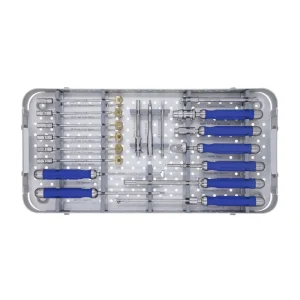
Cervical Interbody Fusion Cage Instrument Set
Explore Cage Systems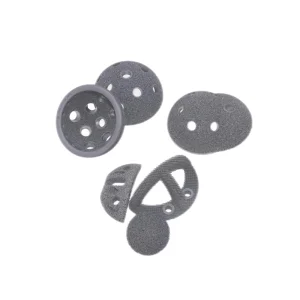
ODM 3D Printing Acetabular Revision System
View Revision Systems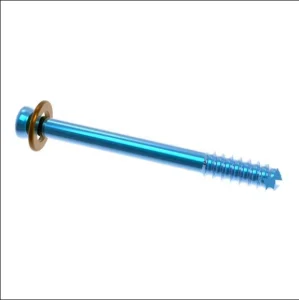
Surgical Cannulated Compression Bone Screws
View Screw Diameters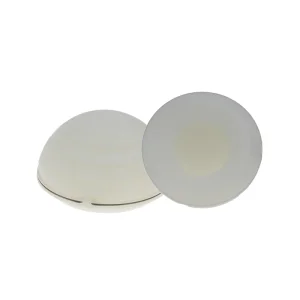
TDC Cemented Hip Acetabular Cup Prosthesis
View Arthroplasty Range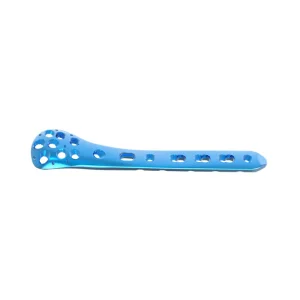
Proximal Lateral Humerus Locking Compression Plate II
View Trauma Plates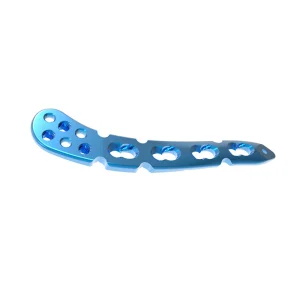
Distal Clavicle Anatomical Locking Compression Plate
Download Technical Sheet
CE Approved Trauma Rib Locking Plate Instrument Set
Explore Thoracic Set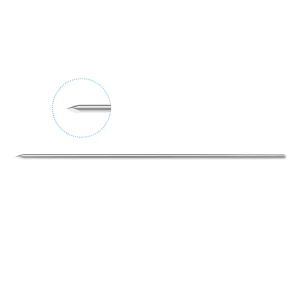
Stainless Steel Orthopedic Bone Pin / Kirschner Wire
Request Factory QuoteFrequently Asked Questions for Procurement Teams
Comprehensive technical and commercial clarity directly from our orthopedic engineering department.
What distinguishes your OEM femoral nails in terms of fatigue life and metallurgy?
We utilize certified Ti-6Al-4V ELI (ASTM F136 / ISO 5832-3) bar stock with ultra-low interstitial elements, which increases dynamic fatigue life under cyclic loads. In biomechanical bench testing following ASTM F1264 guidelines, our femoral nails withstand more than 5,000,000 continuous cycles at maximum physiological bending moments without plastic deformation or structural micro-fracture.
How does your factory accommodate customized radii of curvature (ROC) for regional populations?
Skeletal femoral bowing varies significantly across ethnic demographics; for example, Asian populations typically exhibit shorter femoral lengths and a smaller anterior radius of curvature compared to Caucasian cohorts. Through our flexible CNC CAM tooling, we offer OEM partners customized anatomical curves ranging from 1.5m to 2.0m ROC without requiring prohibitive retooling investments.
What packaging options are available for sterile versus non-sterile distribution?
We provide two supply options: (1) Sterile double-blister medical Tyvek packaging processed via validated Ethylene Oxide (EO) or Gamma irradiation, certified for a 5-year sterile shelf life; and (2) Non-sterile bulk packaging intended for integration into hospital surgical instrument cases and in-house autoclave sterilization regimes.
Can you manufacture matching instrument sets under our private brand name?
Yes. We offer turnkey ODM/OEM contract manufacturing for entire surgical sets. This includes carbon-fiber or titanium radiolucent targeting guides, flexible reamers, quick-coupling screwdrivers, and extraction devices. All instruments are customized with laser-etched distributor branding, custom anodized color-coding, and dedicated graphic sterilizer cases.
What is the typical lead time for standard and customized OEM orders?
Standard inventory orders for catalogued trauma, spine, and joint platforms can be dispatched via international express air freight (DHL, FedEx, UPS) within 4 to 6 business days. For customized OEM contracts requiring proprietary laser marking, custom dimensions, or tailored sterile packaging, typical first-lot delivery ranges between 4 and 8 weeks depending on tooling and validation requirements.
How do you assist partners with local Ministry of Health registration?
Our in-house regulatory affairs department prepares complete Common Technical Documents (CTD), covering full raw material mill certs, ISO 13485 declarations of conformity, biocompatibility reports (ISO 10993), sterilization validation data (ISO 11135/ISO 11137), risk analysis (ISO 14971), and official Free Sale Certificates (FSC) to expedite local market approval.