
Precision Internal Fixation & Surgical Solutions
Sterile-packaged implants, anatomical contouring, and ergonomic instrumentation engineered in compliance with international osteosynthesis biomechanics.
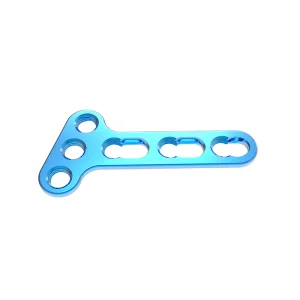
Oblique T-Shape Locking Compression Plate
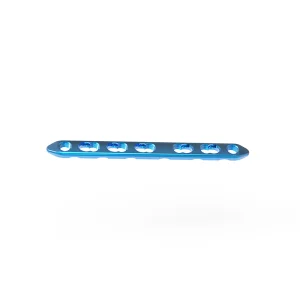
Custom Radius-Ulna Limited Contact LCP
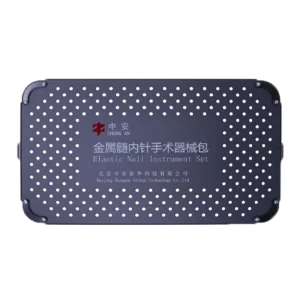
CE Certified Elastic Nail Instrument Set (ZEIN)
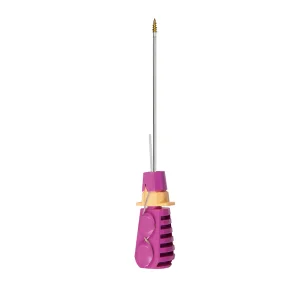
ODM Sports Medicine Titanium Suture Anchor
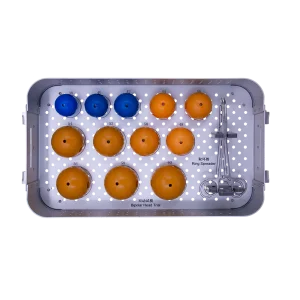
Human Use Bipolar Hip Instrument Set
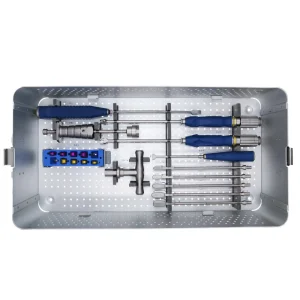
OEM Thoracolumbar TLIF Cage Instrument Set
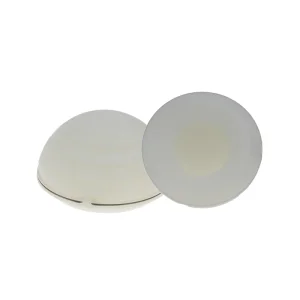
TDC Cemented Acetabular Cup Hip Prosthesis
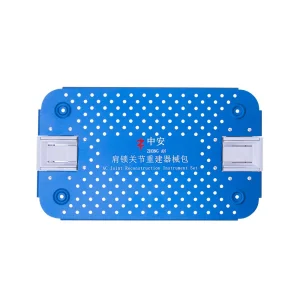
ODM AC Joint Reconstruction Instrument Set
The Shifting Paradigm in Orthopedic Plate Osteosynthesis
An analytical overview of surgical trends, material transitions, and institutional sourcing criteria governing global fracture fixation systems.
Market Growth & Trajectory
The worldwide orthopedic fixation plate market is expanding rapidly, fueled by an aging global population, increased incidence of high-energy polytrauma, and wider adoption of minimally invasive plate osteosynthesis (MIPO). Healthcare providers are transitioning from standard non-locking dynamic compression plates (DCP) toward anatomically contoured locking compression plates (LCP), requiring contract manufacturing partners to deliver micro-toleranced variable-angle locking holes and low-profile plate geometry.
Rigorous Enterprise Criteria
B2B procurement leaders at multinational orthopedic distributors and hospital purchasing syndicates evaluate OEM vendors beyond surface pricing. Qualification mandates thorough auditing of cleanroom bioburden levels, automated CMM coordinate inspection reports, full traceability of medical raw materials (Ti-6Al-4V ELI / 316LVM), and comprehensive design history files (DHF) capable of withstanding notified-body scrutiny under ISO 13485:2016 and EU MDR 2017/745.
Supply Chain Resiliency
Post-pandemic procurement protocols prioritize supply chain diversification and integrated contract manufacturing ecosystems. Partners capable of handling bar stock machining, finishing, passivation, Class 10,000 cleanroom pouch sealing, and customized gamma/EO sterilization offer a measurable buffer against logistical fragmentation, drastically reducing lead times and safeguarding hospital supply continuity.
Metallurgical Precision & Biomechanical Validation
Adhering strictly to AO/ASIF biomechanical principles, our OEM orthopedic plate solutions balance high load capacity, biological blood supply preservation, and anatomical adaptation.
Ti-6Al-4V ELI (ASTM F136)
Extra Low Interstitial medical-grade titanium provides exceptional fatigue strength, superior biocompatibility, and an elastic modulus closer to cortical bone, significantly reducing stress-shielding risks around fracture margins.
Combi-Hole Mechanics
Integrated dynamic compression and threaded locking holes allow surgeons to combine conventional axial interfragmentary compression with fixed-angle stability in a single plate construct, facilitating rigid or flexible fixation as indicated.
Limited-Contact Underside
Underside scallop and relief grooving reduce direct plate-to-periosteum compression contact by over 60%, maintaining crucial periosteal vascularization and accelerating callus formation across fragile comminuted zones.
Type II Surface Anodization
Advanced electrochemical anodization hardens the titanium surface layer, dramatically mitigating cold-welding risks between the plate thread and locking screw head while optimizing fatigue performance under dynamic physiological stress.
| Evaluation Parameter | Titanium Alloy (Ti-6Al-4V ELI) | Pure Titanium (CP Ti Grade 3/4) | Medical Stainless Steel (316LVM) |
|---|---|---|---|
| International Standard | ASTM F136 / ISO 5832-3 | ASTM F67 / ISO 5832-2 | ASTM F138 / ISO 5832-1 |
| Ultimate Tensile Strength (Rm) | ≥ 860 MPa | ≥ 550 MPa | ≥ 860 - 1100 MPa |
| Yield Strength (Rp 0.2) | ≥ 790 MPa | ≥ 380 MPa | ≥ 690 - 800 MPa |
| Elastic Modulus (E) | ~ 110 - 114 GPa | ~ 105 GPa | ~ 200 - 210 GPa |
| Biocompatibility / MRI Safety | Exceptional / MRI Safe (Non-ferromagnetic) | Exceptional / MRI Safe | Excellent / Minor MRI Artifacts |
| Clinical Target Applications | High-stress trauma plates, periarticular, distal femur | Craniofacial, low-load micro-plates, clavicle reconstruction | Economic trauma plating, tension-band wirings, pediatric sets |
Turnkey Contract Manufacturing: Concept to OR
Beijing ZhongAnTaiHua Technology Co., Ltd. (ZATH) provides a closed-loop OEM and ODM ecosystem operating within Beijing's national high-tech corridor.
DFM & FEA Modeling
Virtual anatomical fitting using 3D CT reconstructions, finite element stress modeling under cyclical loading, and tooling optimization for mass manufacturability.
5-Axis CNC Machining
High-precision Swiss-type turning and 5-axis simultaneous milling to cut combi-holes, anatomical twists, and low-profile beveled plate edges within ±0.005mm.
Surface Engineering
Automated vibratory deburring, ultrasonic alkaline degreasing, clean-passivation, and type II anodization to maximize fatigue life and corrosion resistance.
CMM & Fatigue Testing
100% optical coordinate inspection, thread pitch verification, and ASTM F382 static four-point bending and cyclical fatigue endurance validation up to 5,000,000 cycles.
Sterile Barrier Packaging
Class 10,000 cleanroom sealing into double-sterile Tyvek blisters, UDI GS1-compliant laser etching, and dispatch ready for hospital OR shelves.
Regulatory Assurances for Seamless Market Access
Overcome international health agency hurdles with pre-validated documentation, technical files, and authorized local representation.
ISO 13485:2016 Certified QMS
Our manufacturing site in Pinggu District, Beijing, operates under an audited ISO 13485:2016 Medical Devices Quality Management System. Every single production batch is accompanied by raw material mill certificates, lot non-conformance records, and full end-to-end device traceability.
STED Dossiers & CE Support
We provide distributor partners with robust Summary of Technical Documentation (STED) files compliant with EU MDR 2017/745 Class IIb requirements. Biocompatibility reports adhere to the complete ISO 10993 battery (cytotoxicity, sensitization, irritation, systemic toxicity, and implantation).
Global Registration Assistance
Our dedicated regulatory affairs team directly assists distributors in clearing regional health authority approvals across Latin America (ANVISA, COFEPRIS), Southeast Asia (MDA, HSA, TFDA), the Middle East (SFDA), and Africa, providing apostilled Free Sale Certificates (FSC) and stability data.
Answers for Hospital Buyers & OEM Specifiers
Clear, expert responses to the questions most commonly raised during our technical vendor qualification audits.
What specific locking mechanism is utilized in your OEM trauma plates?
Our locking compression plates feature dual-function combination holes ("Combi-holes") and variable-angle (VAL) locking configurations. The dynamic compression portion accommodates standard cortical screws for axial compression, while the threaded conical portion engages locking screw heads up to ±15 degrees off-axis, creating a rigid angular-stable internal fixator construct ideal for osteoporotic bone.
How do you mitigate the risk of screw cold-welding in titanium plate systems?
Cold-welding during intraoperative insertion is prevented through precision thread tolerance controls (±0.005mm) and proprietary Type II electrochemical surface anodization. This creates an anti-galling oxide layer that reduces friction coefficients, allowing smooth screw seating and reliable post-union explantation when necessary.
Can you manufacture plates from custom CAD drawings and specific patient anatomies?
Yes. We specialize in contract engineering and custom OEM/ODM production. If your orthopedic group requires tailored anatomical curves, distinctive screw configurations, or customized plate widths for specific ethnic demographic geometries, our R&D engineering team can deliver rapid prototypes within 14 working days.
Are plates supplied sterile, and what validation standards apply to packaging?
We supply implants in both sterile and non-sterile configurations. Sterile implants are packaged within our ISO Class 7 (Class 10,000) cleanroom into medical Tyvek/PET blisters validated under ISO 11607-1/2 with an accelerated-aging shelf life of 5 years, sterilized by gamma radiation or ethylene oxide (EO).
What is the typical minimum order quantity (MOQ) for custom private-label branding?
For customized laser etching of distributor logos and unique private-label catalog numbers, our MOQs are flexible—typically starting at 50 units per specification for standard plates. Full custom instrument sets and proprietary mold geometries are quoted on a tiered investment basis with low initial entry thresholds.
How are international express logistics managed to ensure hospital stock continuity?
We maintain standing accounts with DHL, FedEx, TNT, and UPS, alongside temperature-controlled sea/air container freight forwards. Standard emergency replenishment shipments reach major international logistics hubs in 4 to 6 business days, accompanied by complete airway bills, customs clearance declarations, and certificates of analysis.
Comprehensive Reconstructive & Internal Fixation Systems
Explore our expanded catalog of distal radius plates, femoral and tibial intramedullary nails, soft-tissue anchors, and arthroplasty prostheses.
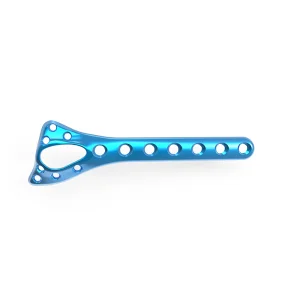
ODM DDR Locking Compression Plate
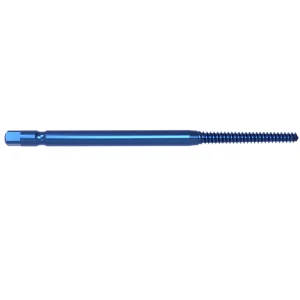
CE Certification Pin for External Fixation
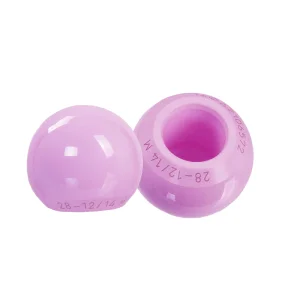
Ceramic CDH Femoral Head Implant Hip
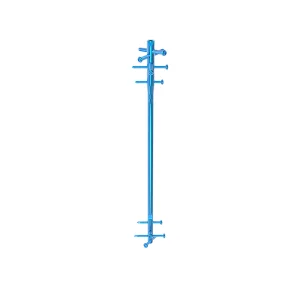
Customized Expert Tibia IM Nail Implant
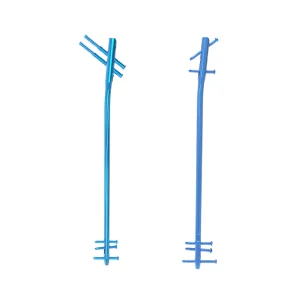
MASFIN Femur Intramedullary Nail Implant
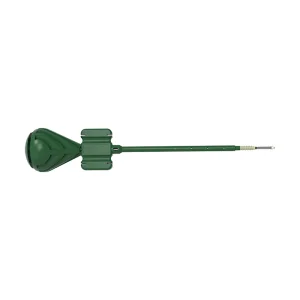
SuperFix P Knotless Suture Anchor
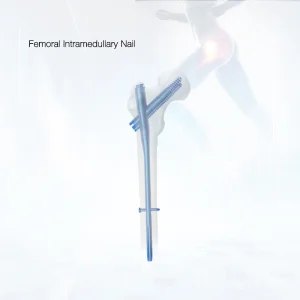
InterZan Titanium Interlocking Nail for Femur
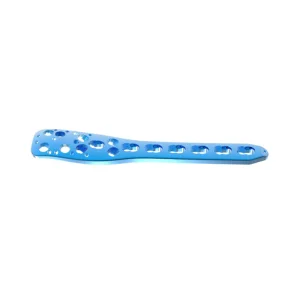
Proximal Humerus Locking Plate III
Initiate Your OEM/ODM Orthopedic Contract Project
Request confidential technical documentation, product matrices, CAD-to-prototype schedules, and factory audit invitations from our Beijing engineering and regulatory affairs headquarters.