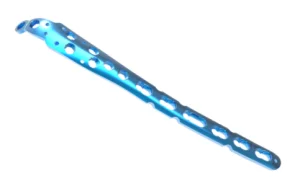
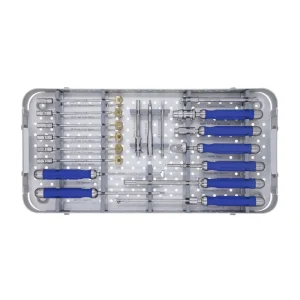
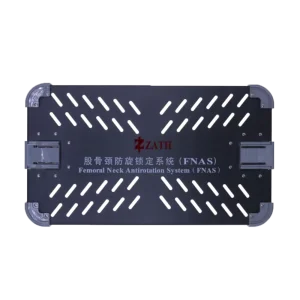
Primary Orthopedic Fixation Systems Showcase
Explore our ISO 13485-certified small fragment trauma products, locking plates, reconstructive anchors, and instrumentation packages for global distributors.
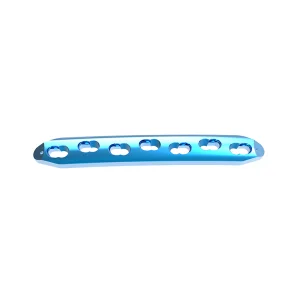
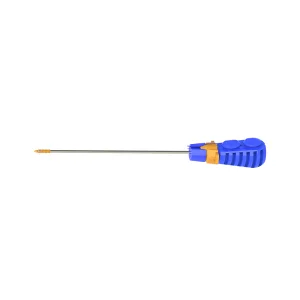
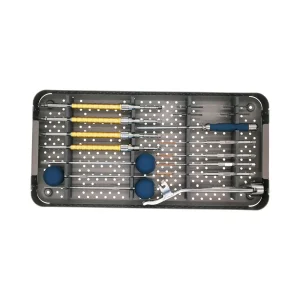
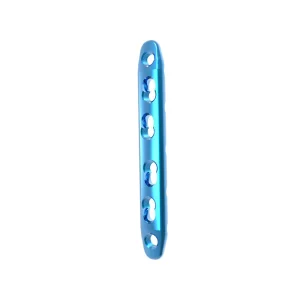
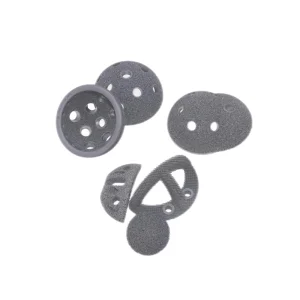
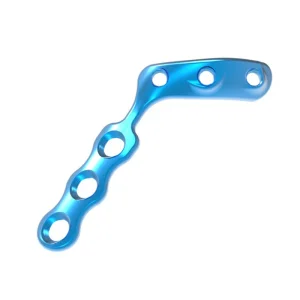
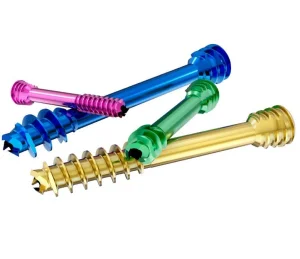
Global Clinical and Industrial Landscape of 3.5 Cortical Screws
A deep engineering overview of standard 3.5mm bicortical fixation systems across contemporary orthopedic trauma care.
In contemporary orthopedic trauma surgery, the 3.5mm cortical screw serves as the fundamental mechanical baseline for small-fragment osteosynthesis. Whether deployed through dynamic compression unit (DCU) slots, locking compression plates (LCP), pelvic reconstruction contours, or independently as an interfragmentary lag screw, the structural integrity of the 3.5 cortical screw governs clinical outcomes. With healthcare systems demanding higher surgical throughput, biomechanical predictability, and total infection mitigation, the manufacturing ecosystem for 3.5 cortical screws has migrated toward advanced Swiss-type multi-axis CNC lathes and integrated cleanroom packaging workflows.
Exporting orthopedic grade fasteners is no longer purely about low-cost metal extraction. As an ISO 13485 accredited enterprise headquartered in Beijing's Zhongguancun Science Park since 2009, ZATH (Beijing ZhongAnTaiHua Technology Co., Ltd.) manages the engineering delta between standard compliance and clinical operational durability. The worldwide distribution market evaluates cortical screws across four critical vectors: core diameter consistency for optimum pullout strength, self-tapping cutting flute precision to prevent micro-fracturing dense diaphyseal bone, driving recess torque transmission without cam-out failure, and strict biocompatible cleanroom gamma/EtO sterilization protocols.
Thread Pitch & Core Mechanics
Engineered with a 1.25mm pitch, 2.4mm core diameter, and 3.5mm outer thread profile. This geometry maximizes thread contact surface within diaphyseal bone, providing optimal axial holding power and stripping resistance under functional rehabilitation.
Drive Socket Geometry
Machined with precision Star-Drive (Torx T15) or classic 2.5mm Hexagonal drive recesses. The cold-formed and micro-broached socket eliminates cam-out slippage, allowing reliable insertion and high stripping torque even during dense sclerotic cortical drilling.
Material Biocompatibility
Manufactured exclusively from certified Grade 5 Titanium Alloy (Ti-6Al-4V ELI conforming to ASTM F136 / ISO 5832-3) or Implant Grade 316LVM Stainless Steel (ASTM F138 / ISO 5832-1). Surface passivated and electro-polished to minimize soft tissue adhesion.
China Factory Efficiency & Lean Scale Advantages
Combining world-class multi-axis Swiss-machining automation, domestic supply chain integration, and rigorous testing lines.
The manufacturing efficiency of Chinese orthopedic manufacturers has transitioned from labor-intensive assembly to integrated, automated CNC manufacturing cells. At our Beijing facility, spanning over 300 dedicated personnel including nearly 100 experienced bio-mechanical and production technicians, the entire manufacturing journey of a 3.5 cortical screw is executed under unified closed-loop quality management. This integrated approach solves the historical dilemma global buyers face: choosing between Western-level precision tolerances and aggressive Asian market unit pricing.
Swiss Multi-Axis Machining
Utilizing high-speed sliding headstock Swiss CNC machining centers, turning thread profiles, cutting flutes, and driving recesses in a single setup. This eliminates concentricity deviations and surface chatter common in multi-stage chucking operations.
Complete Raw Material Traceability
Medical bars originate from rigorously audited melt sources with full chemical composition and tensile physical test reports (MTR). Every manufacturing heat lot is batch-serialized down to individual packaging blisters for total recall security.
Automated Optical Sorting
100% of finished screws undergo non-contact 360-degree telecentric optical sorting. Dimensions including thread root, outer pitch, flank angle, and total length are inspected at a rate of 80 parts per minute, ensuring zero dimensional defects reach export cartons.
| Technical Metric | ZATH High-Precision Standard | General Market Average | Clinical / Procurement Significance |
|---|---|---|---|
| Dimensional Tolerance | ±0.005 mm | ±0.020 mm | Prevents screw binding inside plate holes and eliminates micromotion. |
| Surface Roughness (Ra) | Ra ≤ 0.2 µm (Electro-polished) | Ra ≤ 0.6 µm (Chemical wash) | Minimizes platelet activation and tissue adhesion; supports easy removal. |
| Torsional Yield Strength | ≥ 3.2 N·m (Ti6Al4V ELI) | ≥ 2.6 N·m | Substantially prevents screw head shearing during high-density cortical insertion. |
| Cleanroom Packaging | ISO Class 7 Cleanroom Blister Packing | Non-sterile bulk bagging | Ready for instant terminal sterilization or pre-sterilized OR delivery. |
| Lead Times (OEM Order) | 3 - 4 Weeks | 8 - 12 Weeks | Ensures high stock rotation and agility against unexpected hospital tender volume spikes. |
Anatomical Application Scenarios & Surgical Versatility
How the 3.5 cortical screw functions as a universal anchoring mechanism across distinct human anatomical zones.
Forearm Fractures (Radius & Ulna)
Utilized as standard bicortical screws with 3.5 limited contact locking compression plates (LC-LCP). Essential for restoring radial bow and stable axial compression, enabling rapid postoperative forearm rotation.
Clavicle & Humeral Shaft
Applied in S-shape clavicular plates and proximal or diaphyseal humeral reconstructions. The self-tapping flutes allow fast fixation in tough clavicular cortex without pre-tapping, minimizing surgical time.
Fibula & Ankle Syndesmosis
Deployed as neutralizing interfragmentary screws across distal fibular oblique fractures, and as temporary positional screws penetrating 3 or 4 cortices across the tibiofibular syndesmosis syndesmotic joint.
Pelvic & Acetabular Reconstruction
Coupled with curved and straight pelvic reconstruction plates. The high ductility and shear resistance of Grade 5 Titanium allow significant contouring angles across complex sacroiliac and iliopectineal anatomy.
Market Dynamics, Procurement Trends & Regulatory Evolution
Strategic analysis for enterprise procurement officers, hospital groups, and regional orthopedic distributors.
Global Shift to Sterile Single-Pack
Hospital networks are rapidly phasing out unsterile bulk wash trays due to nosocomial infection risks and sterilization tracking costs. Ready-to-implant, sterile-packed 3.5 screws with peelable barcode tracking labels represent the fastest-growing tender requirement.
Consolidated Manufacturer Sourcing
Distributors avoid fragmented supply chains. Sourcing cortical screws from the same ISO 13485 manufacturer providing matching instrument racks, drills, countersinks, and locking plates ensures perfect mechanical coupling and smooth clearance audits.
Stringent MDR & FDA Registration
Tier-1 exporters must provide full Device Master Records (DMR), mechanical fatigue data under ASTM F543, bio-burden testing validation, and biocompatibility documentation (ISO 10993) to satisfy aggressive local health ministry registrations.
Enterprise Buyer Inquiries & Technical FAQ
In-depth responses to frequent qualification questions raised by healthcare supply chain specialists.
1. What material specifications and testing certificates are provided for export orders?
2. How do you guarantee concentricity and prevent stripped screw heads during insertion?
3. Can ZATH accommodate private label OEM, custom dimensions, and sterile blister packaging?
4. What is the typical lead time for wholesale international distributor orders?
Complementary Surgical Implants & Specialized Instrument Racks
Integrate your trauma supply with our certified joint prosthetics, spinal systems, and precision instruments.