
Featured Implant Platforms & Instrument Assemblies
Sterile-packaged and non-sterile configurations machined from high-tensile medical-grade titanium and surgical stainless steel, engineered for hospital group tenders and distributor supply chains.

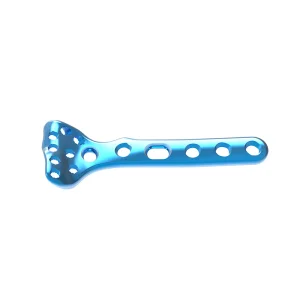
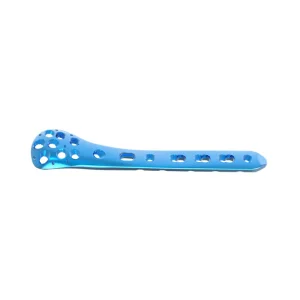
Global Procurement Demand for Distal Fibula Fixation Solutions
Ankle fractures remain among the most prevalent skeletal injuries treated in orthopedic trauma departments, representing nearly 10% of all fracture trauma cases globally. The lateral malleolus of the distal fibula acts as the primary lateral stabilizer of the talocrural joint, counteracting rotational and talar shift stresses.
Historically, conventional non-locking one-third tubular plates served as standard neutralization devices. However, epidemiological shifts toward geriatric trauma, coupled with increased osteoporotic comminuted fractures (Danis-Weber Type B and C, AO/OTA 44-B and 44-C), have triggered massive clinical and institutional shifts toward anatomical distal fibula locking compression plates (LCP).
Institutional Tender Requirements
B2B buyers face rigid budgetary constraints alongside intensifying surgical oversight. Key procurement vectors include:
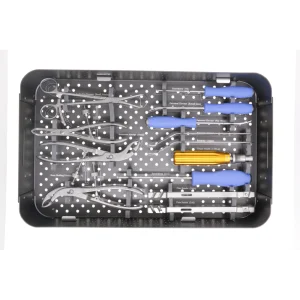
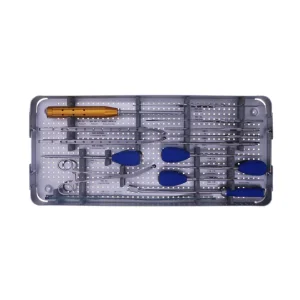
- Reduction of OR Inventory Burden: Universal instrumentation sets that accommodate both lateral and posterolateral fibular plating alongside syndesmotic screw guides.
- Documented Regulatory Compliance: Full audit dossiers encompassing ISO 13485:2016, CE marking under MDR (EU) 2017/745, and ASTM F136 metallurgical validation.
- Consistent Lead Times: Rapid supply assurance for national emergency trauma reserves with MOQ elasticity from trial lots to multi-thousand unit recurring containers.
Engineering Metallurgy & Structural Architecture
Designing a high-performance distal fibula locking plate requires an intricate balance between structural fatigue rigidity, low-profile tissue clearance, and anatomical multi-vector screw convergence.
Ti-6Al-4V ELI Metallurgy
Machined strictly from medical-grade Titanium Grade 23 (ASTM F136 / ISO 5832-3). Offering superior yield strength (>795 MPa) and fatigue resistance over pure titanium, with an elastic modulus of ~110 GPa that significantly minimizes stress shielding compared to 316L stainless steel (210 GPa).
Low-Profile Scalloped Edge
Distal fibular skin envelope thickness frequently does not exceed 2 to 4 mm. The plate features a tapered 1.5 mm to 2.0 mm thickness gradient and rounded, electro-polished perimeter edges that eliminate superficial peroneal nerve irritation and prevent wound dehiscence.
Multi-Vector Cluster Fixation
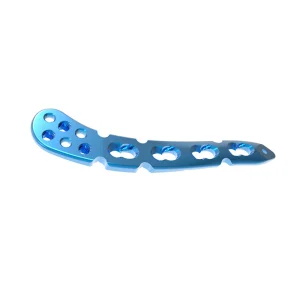
The distal expansion houses a constellation of 2.7 mm and 3.5 mm locking/cortex screw holes oriented in divergent and convergent trajectories. This maximizes subchondral purchase within the lateral malleolar tip while preventing intra-articular screw penetration into the talofibular joint.
| Biomechanical Attribute | Standard Distal Fibula LCP Specification | Clinical Performance Advantage |
|---|---|---|
| Raw Material Standard | Ti-6Al-4V ELI (ASTM F136 / ISO 5832-3) | Maximized biocompatibility, high strength-to-weight ratio, MRI artifact minimization |
| Plate Profile Thickness | 1.6 mm distal tapering to 2.8 mm diaphyseal shaft | Virtually eliminates skin tension over the lateral malleolus while preserving shaft bending stiffness |
| Screw Compatibility | 2.7 mm / 3.5 mm Locking Screws & 3.5 mm Cortex Screws | Modular anchoring allowing targeted bicortical purchase or fixed-angle subchondral scaffolding |
| Syndesmotic Fixation Slots | Dedicated non-locking elongated combi-holes | Permits 3.5 mm / 4.0 mm syndesmotic screw placement at 25°-30° anterior angulation relative to tibia |
| Surface Finishing | Type II Anodization (Grey/Titanium Matte) | Reduces cold-welding risk between screw head and plate hole threads; enhances osteoblast adhesion |
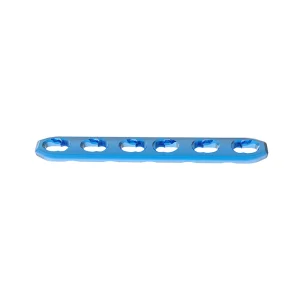
| Plate Length Variants | 3, 4, 5, 6, 7, 8, 10, 12-hole configurations (Left / Right) | Spans from localized avulsion tip fractures to extensive comminuted high-energy segmental fibular trauma |
Surgical Approaches & Macro Clinical Solutions
Meeting diverse orthopedic surgical philosophies through modular anatomical geometries optimized for both direct lateral neutralization and posterolateral anti-glide techniques.
Direct Lateral Plating Technique
The anatomical lateral plate conforms directly to the lateral surface of the fibula. Engineered with an offset distal cluster, it captures unstable Danis-Weber B oblique fractures without compromising the anterior talofibular ligament (ATFL) attachment. Built-in Kirschner-wire holes facilitate preliminary reduction validation under fluoroscopy.
Posterolateral Anti-Glide Plating
Used primarily for Weber B pronation-external rotation fractures, posterolateral placement utilizes the plate as a mechanical buttress against proximal-posterior shear displacement. The plate features contoured recesses that prevent irritation to the peroneal longus and brevis tendons gliding along the retro-malleolar groove.
Syndesmotic Disruption Management
Severe Danis-Weber C injuries involve disruption of the distal tibiofibular syndesmosis. Our plate incorporates specialized elongated combi-holes allowing trans-syndesmotic screws to engage 3 to 4 tibial cortices without altering the plate-to-bone mechanical interface or inducing secondary valgus tilt of the talus.
State-of-the-Art Production & Quality Governance
Every single distal fibula locking plate manufactured within our Beijing facilities undergoes rigorous multi-stage validation. Utilizing 5-axis high-speed CNC machining centers imported from Switzerland and Japan, tolerances are maintained strictly within ±0.005 mm.
- 100% Optical CMM Inspection: Contact and laser optical coordinate measurement systems verify precise hole threading angle, pitch, and contour parameters.
- Ultrasonic Solvent Degreasing: Validated multi-chamber medical ultrasonic washlines eliminate machining hydrocarbon residuals.
- Class 100,000 (ISO Class 7) Cleanroom: Automated double-blister medical tyvek packaging sealed under strictly monitored bioburden environments.
- Radiation & EO Sterilization Validation: Sterilization assurance level (SAL) 10⁻⁶ documented in accordance with ISO 11137 (Gamma) and ISO 11135 (EtO).
Traceability & Certificate of Analysis
We enforce full traceability from virgin raw bar stock to the operating theater. Each shipment incorporates lot-specific documentation verifying:
> Mechanical Tensile & Yield Strength Certifications
> Passivation & Anodization Layer Thickness Testing
> Biocompatibility Dossiers (ISO 10993 Cytotoxicity / Systemic Toxicity)
> Cleanroom Particulate & Endotoxin Bioburden Audits
Technology Roadmap: 2026–2032 Trauma Horizon
Addressing the evolutionary transition of trauma stabilization from passive mechanical splinting toward bio-interactive, smart-monitoring orthopedic implants.
Variable-Angle Polyaxial
Transition from monoaxial fixed-angle threads to ±15° polyaxial locking mechanisms, allowing intraoperative freedom to steer screws around comminuted bone fragments and preexisting implants without compromising load-to-failure ratios.
3D Trabecular Titanium
Selective Laser Melting (SLM) additive manufacturing of anatomically personalized distal hook plates featuring interconnecting micro-porosity (65% porosity, 400-600 μm pore size) for rapid osseointegration in complex revisions.
Bioabsorbable Magnesium
Deployment of high-purity rare-earth magnesium alloys (WE43 grade) for distal fibular plates that maintain load-bearing structural integrity through the primary 16-week osteotomy healing phase, safely resorbing to eradicate secondary hardware removal surgeries.
Telemetric Smart Implants
Integration of micro-electromechanical (MEMS) passive strain gauges within the titanium plate body. Enables contactless NFC telemetric data acquisition by clinicians, evaluating real-time callus union progression and early implant overload.
B2B Distributor Partnership & Compliance Assurance
Navigating complex international medical device regulations requires more than hardware production; it demands comprehensive technical documentation and supply chain agility.
Turnkey Registration Files
We provide authorized distributor partners with complete Technical Dossiers (STED format), Free Sale Certificates (FSC), ISO 13485:2016 declarations, biocompatibility reports, and clinical evaluation summaries to accelerate local Ministry of Health (MOH) product registrations across Europe, the Middle East, Latin America, and Southeast Asia.
Custom OEM/ODM & Private Labeling
Expand your market footprint using your established brand equity. We offer laser marking of distributor logos, customized color anodization for product line distinction, tailored sterilization labeling compliant with GS1 DataMatrix standards, and bespoke surgical caddy/case graphic arrangements.
Global Logistics & Buffer Inventory
Our global delivery framework operates through integrated contracts with DHL, FedEx, UPS, and air cargo forwarders. We maintain bonded buffer stock of standard distal fibula and trauma systems, ensuring emergency tender dispatch cycles within 48 to 72 hours from confirmation.
Complementary Trauma & Reconstruction Solutions
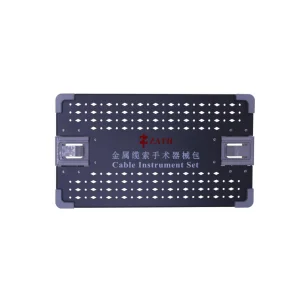
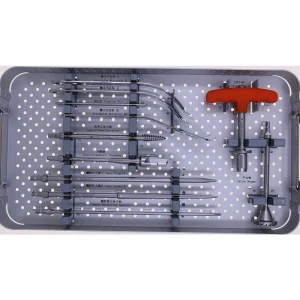
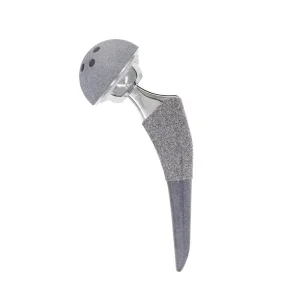
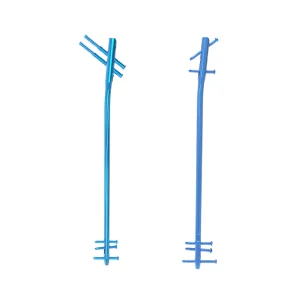
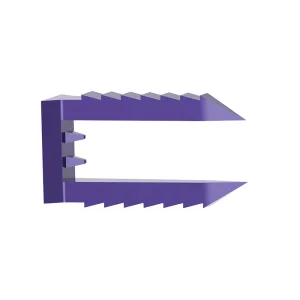
Integrate comprehensive orthopedic suites spanning modular intramedullary nail systems, spinal stabilization, and joint replacement implants into your institutional contracts.
Frequently Asked Questions for Clinical Importers
In-depth answers addressing surgical mechanics, quality assurance certifications, sterilization standards, and distribution terms.