Precision Instruments & Trauma Reduction Arrays
Sterile-packed implants and modular instrumentation engineered for biomechanical stability, anatomic congruence, and intraoperative efficiency in complex femoral and spinal reconstructions.
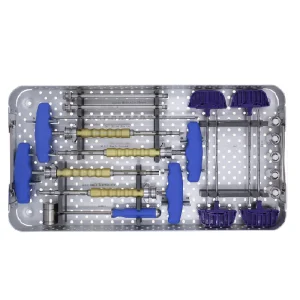
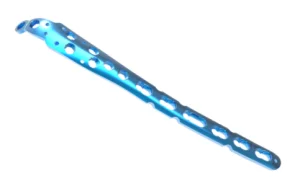
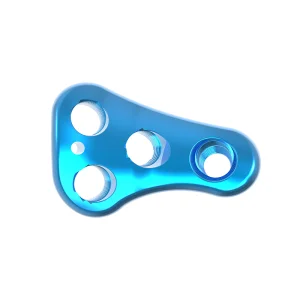

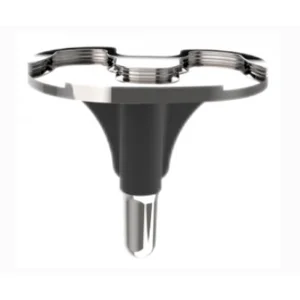
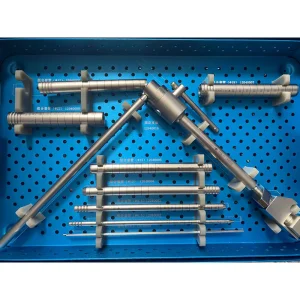
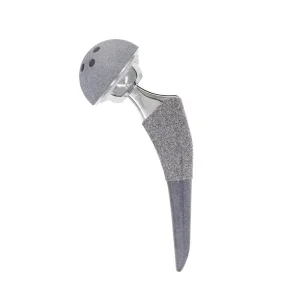
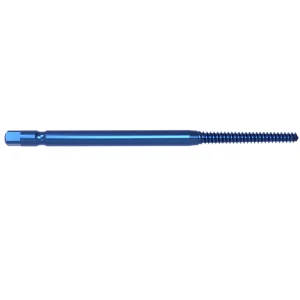
Femoral Reduction Trends: Biomechanical Integrity & MIS Integration
An engineering analysis of how clinical demands are shifting modern orthopedic factories toward sub-millimeter precision, multi-axial locking systems, and bio-compatible alloys.
Multi-Planar Anatomic Reduction
Traditional bone reduction forceps often induced cortical point-loading and periosteal devascularization. Modern OEM femoral reduction platforms employ contour-matching jaw geometries and calibrated collet chucks. This spreads clamping force over a broader surface area, preventing intraoperative stress risers while allowing sub-millimeter rotation adjustments during complex subtrochanteric fracture handling.
Ti-6Al-4V ELI & Bio-Tribology
The industry is transitioning toward Grade 23 Ti-6Al-4V ELI (Extra Low Interstitial) alloy per ASTM F136 standards. By drastically minimizing interstitial impurities such as oxygen, nitrogen, and carbon, implants and instruments exhibit superior cyclic fatigue resistance, eliminating micro-notch cracking during prolonged intramedullary reaming and mechanical levering.
MIS & Radiolucent Carbon Fiber Jigs
Minimally Invasive Surgery (MIS) imperatives demand femoral reduction clamps integrated with carbon fiber composite arms. These radiolucent frames allow continuous 360-degree intraoperative fluoroscopy without visual interference, decreasing surgical times and reducing radiation exposure for the entire operating theater team.
Global Procurement Dynamics: Mitigating Volatility & Regulatory Shifts
International orthopedics distributors face tightening profit margins, strict MDR audits, and fragile logistics. Direct alignment with primary manufacturing plants has become a baseline operational requirement.
Total Compliance (MDR & ISO 13485)
Global procurement directors require audit-ready technical document dossiers (Technical Files). Every batch of femoral reduction instruments and trauma plates must carry full metallurgical traceability, bio-burden testing validation, and lifetime passivation integrity reports to clear customs and health authority registrations.
TCO Reduction & Supply Consolidation
Sourcing fragmented items across multiple traders compounds risk, leads to instrument-plate mismatches, and inflates landed costs. Distributors are actively consolidating orders with scalable factories capable of delivering trauma, joint arthroplasty, and spine portfolios within a unified quality framework.
Turnkey OEM/ODM Agility
Whether configuring tailored modular trays for specific national tender specifications or laser-etching regional distributor brands, agile contract manufacturing guarantees rapid time-to-market. Factory-level customized dimensioning accelerates adoption in specialized teaching hospitals.
China Factory 4.0: Modern Manufacturing Infrastructure
Combining multi-axis CNC machinery, Swiss longitudinal turning, automated cleanrooms, and closed-loop ERP systems to deliver reliable surgical hardware.
5-Axis Simultaneous CNC Machining
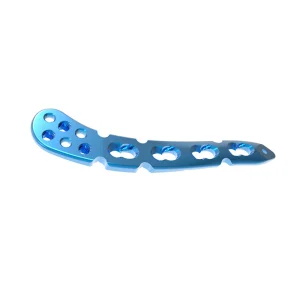
Our workshop floor utilizes state-of-the-art German and Swiss multi-axis machining centers. Complex anatomical shapes on proximal femur locking plates and intricate ratchets on reduction forceps are carved in single-setup operations, eliminating cumulative clamping errors and delivering tolerances within ±0.005mm.
Precision Wire EDM & Surface Passivation
Electro-discharge machining creates fine slotted junctions and flexible spring mechanisms without micro-fracturing raw blanks. Automated ultrasonic multi-bath degreasing, electro-polishing, and Type II anodization provide a passive titanium oxide film that resists corrosion across hundreds of steam autoclaving cycles.
ISO Class 7 Cleanroom & Verification
Finished implants and single-use reduction sets undergo final assembly within cleanroom environments validated per ISO 14644-1. CMM coordinate measuring machines, optical profilometers, and bio-burden assay systems run continuous statistical process control (SPC) on every manufacturing lot.
Specialized Applications in Modern Orthopedic Surgery
Engineered for intraoperative versatility across operating room scenarios, from acute emergency trauma interventions to elective arthroplasty revisions.
Periprosthetic Femur Fracture Fixation
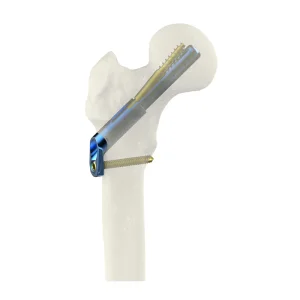
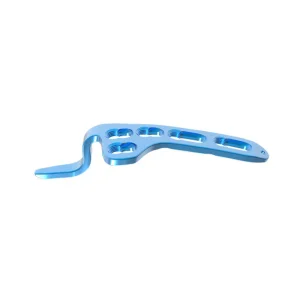
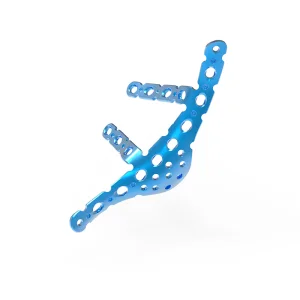
Vancouver B1 and B2 periprosthetic fractures require delicate stabilization around an existing stem. Our specialized femoral reduction forceps and winged plates integrate broad contour pads and cable-ready clamping slots, providing reliable rotational stability while cables or cerclage wires are looped without risking stem subsidence.
Complex Subtrochanteric Realignment
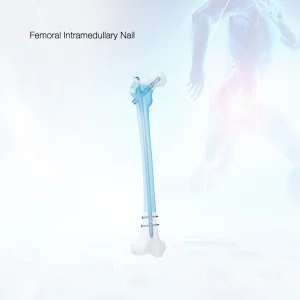
High deforming muscle forces around the proximal femur make anatomic reduction demanding. Using heavy-duty collet reduction devices with self-locking speed screws, surgeons can counteract iliopsoas and abductor tension, restoring length, alignment, and rotation before intramedullary nail introduction.
Emergency Polytrauma Damage Control
In acute polytrauma cases where patient stabilization is the primary goal, time is critical. Our rapid-lock femoral external fixation pins and modular reduction rods enable rapid temporary bridging across fractured femoral segments in under 15 minutes, preserving soft tissue and minimizing blood loss.
Buyer & Engineering Procurement FAQ
Direct answers to core questions concerning material specifications, regulatory documentation, logistics, and customized OEM protocols.
What raw materials and metallurgy standards are utilized in your femoral reduction instruments?
How does your factory ensure compliance with ISO 13485 and regional registration bodies?
What are the OEM/ODM customization capabilities for distributor private labeling?
What is the standard production lead time and international shipping timeline?
Are your surgical instrument sets compatible with major universal implant systems?
Specialized Arthroplasty, Plates & Intramedullary Solutions
Expand your hospital and distributor inventory with advanced orthopedic reconstructive hardware from our ISO 13485 certified production floor.