
Precision Titanium Implants & Screw-Plate Assemblies
Explore our sterile-packed, Swiss CNC-machined titanium trauma plates, anchor screws, and reconstructive systems compliant with ASTM F136 and ISO 5832-3 standards.
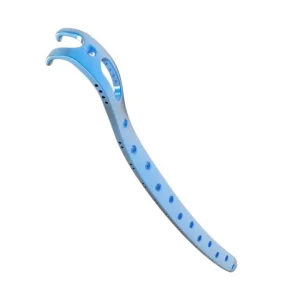
ODM Proximal Femur Locking Plate III Manufacturer, Suppliers
View Specifications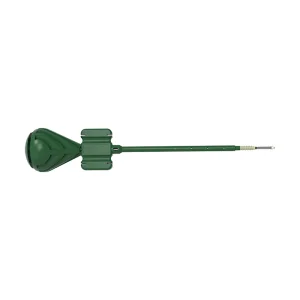
Wholesale SuperFix P Knotless Suture Anchor Manufacturer, Suppliers
View Specifications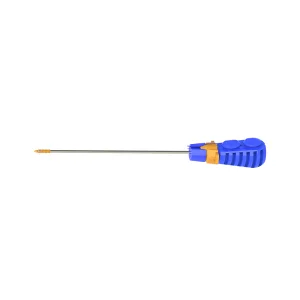
Wholesale Titanium Alloy knotless all adult titanium suture anchor with needle
View Specifications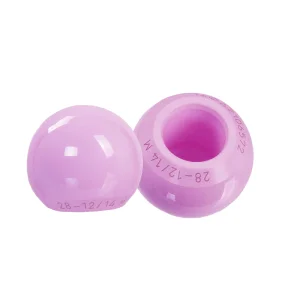
Buy Ceramic CDH Femoral Head Implant Hip Exporter, Company
View Specifications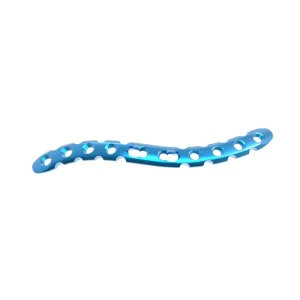
Wholesale Clavicle Reconstruction Locking Compression Plate Supplier
View Specifications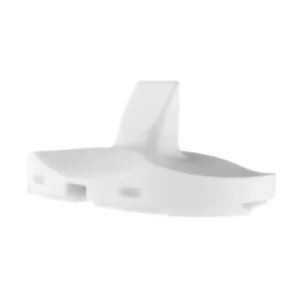
Wholesale Enable Tibial Insert Knee Joint Prosthesis Pricelist, Exporters
View Specifications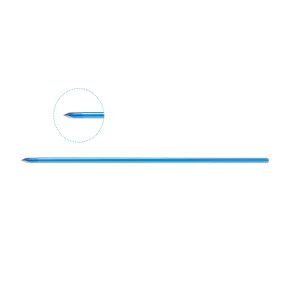
Best Diameter 1.5mm-3.0mm Titanium Alloy Threaded Bone Pin
View Specifications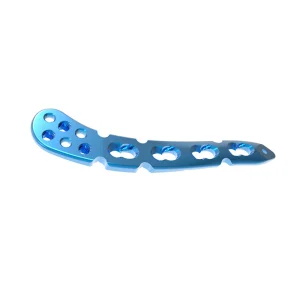
Wholesale Distal Clavicle Locking Compression Plate Manufacturers
View SpecificationsBiomechanical Engineering & Metallurgy of Medical Screws
A critical evaluation of Grade 5 (Ti-6Al-4V) vs. Grade 23 (Ti-6Al-4V ELI), thread kinematics, fatigue limits, and load sharing in human osteosynthesis constructs.
Ti-6Al-4V ELI Metallurgical Purity
Medical screw performance depends strictly on interstitial oxygen and iron controls. ZATH leverages vacuum-arc remelted (VAR) Ti-6Al-4V ELI (Extra Low Interstitial) per ASTM F136 and ISO 5832-3, maintaining oxygen thresholds below 0.13%. This lowers notch sensitivity and extends cyclic fatigue resistance beyond 10 million cycles under dynamic orthopedic physiological gait loading.
Modulus Matching & Stress Shielding
While 316L stainless steel has an elastic modulus near 210 GPa, Grade 23 Titanium operates at 110 GPa—much closer to human cortical bone (18–30 GPa). This modulus compliance reduces peri-implant bone resorption caused by stress shielding, preserves cortical thickness, and accelerates primary stability into secondary biological osseointegration.
Thread Geometry & Pull-Out Force
Screw anchorage relies on thread flank angle, pitch differential, and core-to-outer diameter ratios. Our cortical and cancellous screws integrate dual-lead threads with reverse-cutting flutes. Per ASTM F543 testing protocols, this design delivers 38% higher axial pull-out resistance while minimizing insertion torque to protect delicate osteoporotic bone.
| Material / Specification | Yield Strength (MPa) | Tensile Strength (MPa) | Elastic Modulus (GPa) | Biocompatibility Index | MRI Compatibility |
|---|---|---|---|---|---|
| Ti-6Al-4V ELI (ZATH Standard) | ≥ 795 MPa | ≥ 860 MPa | 110 GPa (Near-Bone) | Excellent (TiO2 Passive Film) | Zero Artifact Interference |
| Standard Ti-6Al-4V (Grade 5) | ≥ 825 MPa | ≥ 895 MPa | 114 GPa | High | Negligible Artifact |
| Medical Stainless Steel (316LVM) | ≥ 690 MPa | ≥ 930 MPa | 210 GPa (Risk of Shielding) | Moderate (Nickel ion elution) | Severe Scattering Artifacts |
| Cobalt-Chromium-Molybdenum | ≥ 500 MPa | ≥ 900 MPa | 220-240 GPa | High (Bearing Surfaces) | Moderate Artifacts |
Global Commercial Landscape & Supply Chain Resilience
Analyzing the economic and logistical paradigm shifts facing international orthopedic device importers, distributors, and hospital procurement groups.
EU MDR (2017/745) Regulatory Pressure
The transition from MDD to EU MDR has created substantial friction across Europe, causing major OEM lead times to balloon past 9–14 months. Established Chinese manufacturing centers like ZATH—operating cleanrooms with fully audited ISO 13485 QMS and UDEM technical files—fill this critical void by delivering validated documentation for expeditious CE and local MoH imports.
Capital Efficiency in High-Volume Sourcing
Hospitals and surgical networks face tightening reimbursement caps (DRG/VBP). Wholesale procurement from primary factories provides a 40%–60% margin buffer compared to Western-branded re-packagers, while maintaining micron-level tolerances through Swiss 7-axis CNC turning and Class 10,000 cleanroom sterilization packaging.
Global Multimodal Logistics Ecosystem
Supply chain security requires speed. Integrated logistics agreements with DHL, FedEx, UPS, and air cargo forwarders enable door-to-door transit times of 4 to 6 business days globally, supported by batch-specific Mill Test Certificates (EN 10204 3.1) and custom clearance paperwork for emergency re-stocking.
Localized Compliance & Multi-Stage Manufacturing Verification
Every titanium medical screw is tracked through a validated six-step manufacturing process inside our Zhongguancun Science Park industrial facility in Beijing.
Bar Stock Verification
Medical-grade titanium alloy bars undergo spectroscopic composition analysis and ultrasonic internal flaw detection to verify zero microstructure voids.
Multi-Axis Swiss CNC Lathing
Simultaneous 5-axis and 7-axis precision turning cuts micro-threads, cannulations, and self-tapping flutes within ±0.005mm mechanical tolerance.
Surface Anodization & Passivation
Electrochemical Type II anodization eliminates galling during high-torque bone penetration, while nitric acid passivation fortifies the corrosion-resistant TiO2 layer.
Optical Dimensional Metrology
100% automated optical coordinate measurement checks pitch, flank angles, runout, and head geometries against international design files.
Cleanroom Blister Packaging
Class 10,000 cleanroom sealing in medical Tyvek peel-pouches guarantees sterile barrier integrity per ISO 11607, ready for Gamma or EtO sterilization.
DHF & Registration Dossiers
Comprehensive Design History Files (DHF) and Free Sale Certificates (FSC) are supplied to streamline local MoH regulatory submissions.
Localized Surgical Application Scenarios
Engineered to deliver target-specific biomechanical fixation across diverse orthopedic, spinal, and reconstructive indications.
Craniomaxillofacial & Micro (CMF)
Micro screws from Ø1.0mm to Ø2.0mm engineered with cross-drive and star-drive recesses. Optimized for low-profile orbital floor, midface, and mandibular trauma reconstructions where soft-tissue irritation must be avoided.
Diaphyseal & Metaphyseal Trauma
Standard cortical and cancellous locking screws (Ø2.4mm to Ø5.0mm) designed to mate with anatomical LCP plates. Incorporates locking thread heads that form a fixed-angle construct to sustain comminuted peri-articular fractures.
Thoracolumbar & Cervical Spine
Polyaxial and monoaxial pedicle screws (Ø4.5mm to Ø7.5mm) paired with friction-fit heads and reverse-buttress threads. Backed by our Zenith 3-in-1 minimally invasive system for stable decompression and spinal fusion.
Sports Medicine & Extremities
Pre-loaded titanium suture anchors, knotless SuperFix screws, and cannulated headless Herbert screws. Provides controlled interfragmentary compression across scaphoid non-unions, osteochondral defects, and rotator cuff repairs.
Technology Roadmap & Next-Generation Fastening Systems
Pioneering advancements across additive manufacturing, bio-absorbable metallurgical alloys, and sensor-embedded intelligent orthopedic hardware.
3D Trabecular Titanium Printing (EBM/SLM)
Next-generation screws combine solid load-bearing cores with 3D-printed porous titanium sleeves. Featuring continuous 60%–70% interconnected porosity (pore size 300–500 μm), this structure promotes deep vascular osteoconduction directly through the screw shank, creating long-term biological fixation.
Antimicrobial Nano-Structured Surface Finishes
To combat implant-associated surgical site infections (SSI), our R&D team is developing atomic-layer deposited (ALD) silver-doped hydroxyapatite and TiO2 nanotube arrays. These coatings deliver localized bactericidal efficacy against Staphylococcus aureus without triggering systemic cytotoxicity.
Bio-Telemetric Strain-Sensing Smart Screws
Looking ahead, micro-electro-mechanical (MEMS) piezoresistive strain sensors integrated into hollow cannulated screw shafts will enable non-invasive, wireless tracking of bone callus maturation and hardware loosening, alerting clinicians prior to structural fatigue failure.
Frequently Asked Questions for Sourcing & Engineering Teams
Direct answers to the regulatory, metallurgical, and commercial inquiries most critical to hospital supply directors and implant distributors.
What specific titanium alloy grades are utilized for your medical screws?
How does your factory verify dimensional accuracy across micro-threads?
What documentation is provided to support our national health authority registration?
Do you support full-scope OEM/ODM private-label customization?
What is the standard production lead time and international shipping timeframe?
Specialized Trauma, Spinal & Instrument Systems
Engineered reconstructive implants, anatomically contoured locking plates, and companion surgical instrument cases ready for hospital distribution.
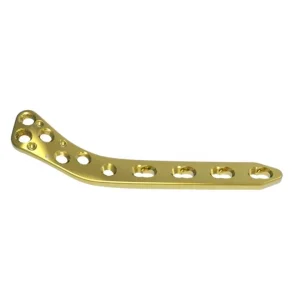
OEM Proximal Lateral Tibia Locking Compression Plate Supplier, Factories
View Specifications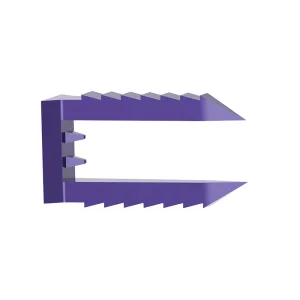
Famous Titanium Alloy Orthopedic Suture Anchor Titanium Manufacturer
View Specifications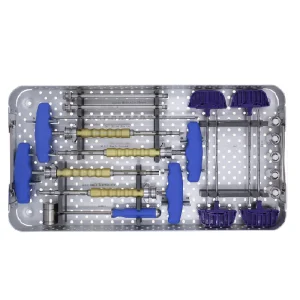
Spine Instrument Set (Zenith HE Instrument Set) Suppliers, Quotes
View Specifications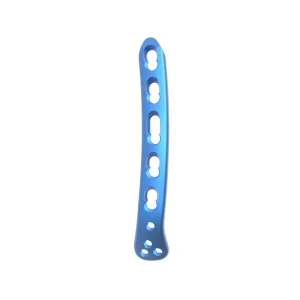
Distal Posterolateral Humerus Locking Compression Plate Suppliers
View Specifications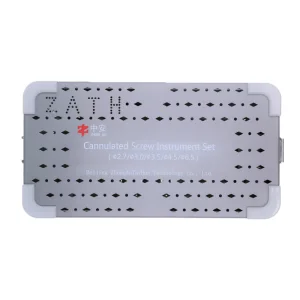
Orthopedic Surgical Instruments Stainless Steel Cannulated Screw Instrument Set
View Specifications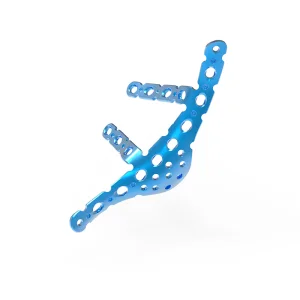
Custom Winged Pelvis Reconstruction Locking Compression Plate Factories
View Specifications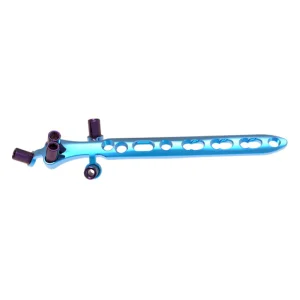
China Proximal Ulna ISC Locking Compression Plate I Pricelist, Service
View Specifications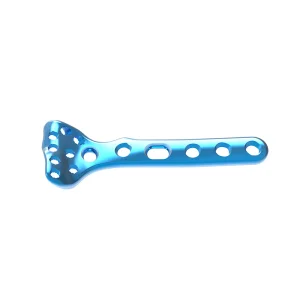
ODM DVR Locking Compression Plate I Exporter, Product
View SpecificationsEquip Your Surgical Distribution Portfolio
Request comprehensive implant catalogs, metallurgical mill test certs, or consult with our orthopedic biomedical engineering team for customized OEM production runs.