
OEM External Fixation & Core Assemblies for Turkish Hospitals
Engineered to meet the stringent demands of acute trauma resuscitation, high-energy blast fractures, and complex limb reconstruction across Turkish state city hospitals (Şehir Hastaneleri) and private health groups.
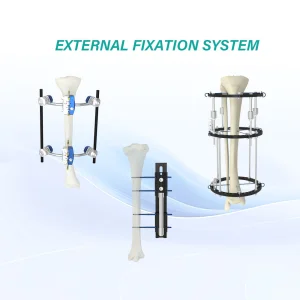
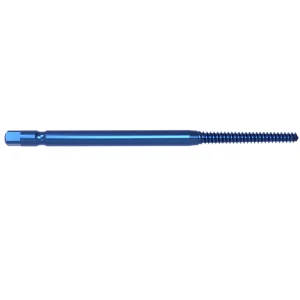
External Fixation in Turkey: The Intersection of Trauma Preparedness & City Hospital Centralization
The Turkish orthopedic landscape is undergoing an accelerated institutional and clinical transformation. As the Republic of Turkey expands its massive City Hospital Public-Private Partnership (PPP) model—operating mega-complexes in Ankara (Bilkent & Etlik), Istanbul (Başakşehir Çam ve Sakura), Adana, Konya, and Bursa—the clinical procurement protocols for trauma and limb salvage systems have shifted fundamentally toward industrial scalability, rapid availability, and uncompromising mechanical stability.
Situated along major seismic fault lines (North Anatolian and East Anatolian Fault systems), Turkish emergency orthopedic services maintain an acute structural emphasis on Damage Control Orthopedics (DCO). Immediate transfixing external fixators, bridging frames for open pelvic ring fractures, and pin-to-rod setups are front-line devices mobilized during natural mass-casualty disasters as well as severe high-speed transport trauma along national transit corridors.
Sağlık Bakanlığı (Ministry of Health) Operational Reality: External fixator frameworks in Turkey must satisfy dual requirements: exceptional ease of rapid clamp locking for emergency stabilization, followed by frictionless modular conversion or extended osteogenic distraction capability for tertiary reconstruction.
SGK / SUT Reimbursement Navigation
The Social Security Institution (Sosyal Güvenlik Kurumu - SGK) governs purchasing frameworks under Health Implementation Notifications (Sağlık Uygulama Tebliği - SUT). OEM pricing strategies must balance rigorous material benchmarks (ISO 5832-3 Ti-6Al-4V ELI & medical carbon composites) with sustainable landed import pricing points that allow local Turkish medical distributors viable tender margins.
Compulsory ÜTS Product Traceability
Every external fixator bar, multipin clamp, universal joint, and Schanz pin deployed in Turkey must maintain flawless registration in the Medical Device Tracking System (Ürün Takip Sistemi - ÜTS). Our OEM production chain incorporates primary GTIN matrix barcode engraving, lot-specific material mill verification, and validated sterile barrier packaging to ensure direct ÜTS compliance.
Macro Trauma Solutions: Engineering Predictable Callus Formation
From monolithic unilateral constructs to hexapod computer-guided multiplanar frames, external fixation operates at the fragile biomechanical interface of biological preservation and axial mechanical rigidity.
Axial Micromotion & Dynamization
Modern clinical data highlights that excessive frame rigidity suppresses secondary bone healing. Our modular clamps integrate controllable telescoping and dynamization inserts that permit 1.0–1.5 mm of controlled axial elastic deformation under physiological weight-bearing, inducing robust osteoblast proliferation while strictly eliminating shear stresses.
Radiolucent Hybrid Frame Modalities
Evaluating fracture reduction under intraoperative C-arm fluoroscopy demands uninterrupted visualization. We engineer multi-directional connecting rods using high-tenacity, aerospace-grade PEEK and carbon-fiber composite materials, allowing Turkish orthopedic trauma surgeons total radiolucency to verify alignment without frame shadows.
Infection Mitigation & Pin-Bone Interface
Pin tract infection remains the primary Achilles heel of extended external fixator therapy. Our OEM self-drilling and self-tapping Schanz pins incorporate plasma-sprayed Hydroxyapatite (HA) crystalline coatings or silver-ion anti-biofilm treatments, demonstrating up to 40% higher extraction torque resistance (bone-to-implant contact) after 12 weeks of treatment.
| Structural Subsystem | Raw Material Chemistry | Yield Strength / Fatigue Limit | Biocompatibility Benchmark | Turkish Clinical Applicability |
|---|---|---|---|---|
| Circular Ring Frameworks | Aviation Al-Alloy 7075-T6 / Carbon Fiber | 505 MPa Yield / >10^7 cycles | ISO 10993-5 / ISO 10993-10 | Complex Ilizarov deformity & non-union tibial salvage |
| Self-Tapping Schanz Pins | Ti-6Al-4V ELI (Grade 5) / 316LVM Stainless | 860 MPa (Ti) / 950 MPa (316L) | ASTM F136 / ASTM F138 | Transosseous bicortical pelvic & femoral anchorage |
| Universal Bar-to-Pin Clamps | High-Strength Titanium / Stainless Steel | Clamp slippage torque > 25 N•m | ASTM F1541-17 Static/Dynamic Test | Emergency room rapid damage-control bridging |
| Connecting Rod Assemblies | Cross-Ply Carbon Fiber / Medical Titanium | Bending stiffness > 35 N/mm | ISO 5832-11 / Radiolucent | Clear periarticular radiographic fracture evaluation |
TITCK, MDR 2017/745 & International Compliance Assurance
Navigating the stringent requirements of the Turkish Medicines and Medical Devices Agency (TİTCK) requires exhaustive technical documentation, unblemished quality management audits, and airtight lot-level traceability.
ISO 13485:2016 Certified QMS
Every step of our production ecosystem—from spectroscopic raw bar inspection to multi-axis Swiss CNC milling, passive ultrasonic chemical degreasing, cleanroom packaging (Class 10,000), and EO sterilization validation—is governed strictly under audited ISO 13485:2016 quality parameters.
MDR (EU) 2017/745 Conformity Dossiers
As Turkey harmonizes its national medical device directives directly with EU MDR standards, our engineering team supplies full Clinical Evaluation Reports (CER), Risk Management Files (ISO 14971), and Biocompatibility testing documentation (ISO 10993 complete profile) for swift importer registration.
Localized Private Labeling & Laser Engraving
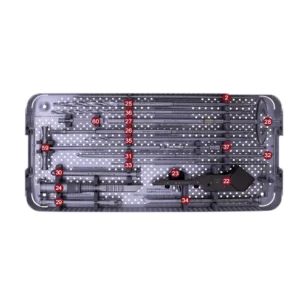
We provide full turnkey OEM/ODM personalization tailored to Turkish domestic distributor brands. This includes laser-etching customer trademarks, customized Turkish reference catalogs, customized surgical instrumentation trays, and GS1-compliant Datamatrix barcodes formatted for prompt ÜTS warehouse intake.
Targeted Clinical Scenarios Across the Turkish Healthcare System
Our OEM external fixation solutions are architected to deliver high-performance surgical utility across specific clinical pathologies commonly managed in Turkish tertiary clinics.
Disaster Mass-Casualty & Crush Injuries
Following high-magnitude seismic events or severe industrial collapses, emergency departments require sterile, rapidly assembled unilateral spanning frames. Our fast-lock clamps allow dual-pin engagement in under 90 seconds per bone segment, quickly stabilizing open compound comminuted tibial and femoral fractures prior to systemic patient stabilization.
Gustilo-Anderson Grade IIIB / IIIC Open Fractures
Severe soft-tissue stripping accompanied by vascular compromise precludes immediate internal plate or intramedullary nail placement. Our non-bridging and bridging external constructs maintain rigid anatomical alignment without disturbing regional periosteal vascularity, leaving open wound beds fully accessible for plastic reconstructive free-flap transfers.
Diabetic Charcot Neuroarthropathy & Limb Lengthening
With high regional prevalence of metabolic diabetes throughout the Eastern Mediterranean, Charcot foot collapse represents a major limb-threat. Our multi-ring circular frames distribute static compression across the midfoot and hindfoot, providing rigid multiplanar immobilization that preserves the plantigrade foot while mitigating chronic osteomyelitis risks.
Next-Generation External Fixation: Hexapod Software & Smart Telemetry
The boundary between mechanical hardware and digital health is dissolving. Our research and development roadmap focuses on providing Turkish orthopedic surgeons with intelligent, data-driven deformity correction solutions that enhance surgical precision and shorten patient recovery intervals.
We are actively standardizing our spatial hexapod external fixator system, coupling six variable-length struts with web-based radiological calculation algorithms. Turkish clinics can model post-operative complex angulation, translation, and rotational deformities on digital CT/X-ray inputs, generating a customized daily patient strut-turning schedule that achieves sub-millimeter precision over distraction osteogenesis courses.
Telemetric Micro-Strain Monitoring: Future iterations will integrate miniaturized piezoelectric sensors inside primary carbon-fiber connecting struts, wirelessly streaming callus stiffness data to the orthopedic surgical team to identify the exact window for safe frame removal.
Key R&D Milestones for 2026–2028:
- Transition of high-stress universal clamps to additive manufactured (3D-printed) porous titanium matrices for 35% weight reduction.
- Direct integration with Turkish digital hospital PACS systems for automated radiographic deformity modeling and strut calculations.
- Antimicrobial smart pin coatings releasing controlled gallium/silver nano-formulations to eradicate multidrug-resistant hospital pathogens.
- Ergonomic single-click snap-fit clamping assemblies requiring zero torque-wrench calibrations during acute resuscitative interventions.
Integrated Orthopedic Surgical Platforms for Turkish Distributors
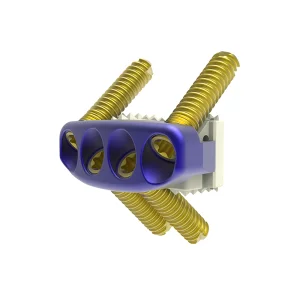
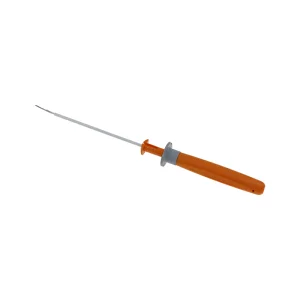
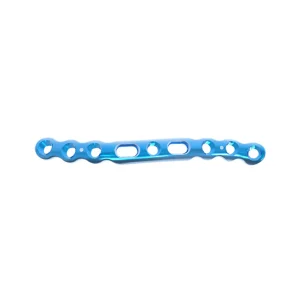
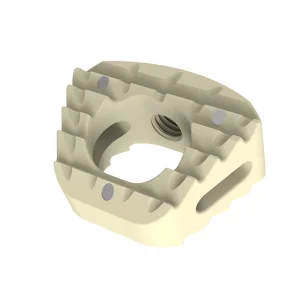
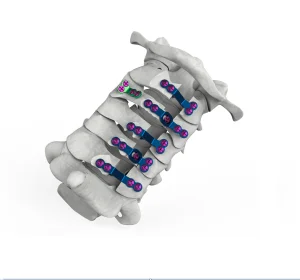
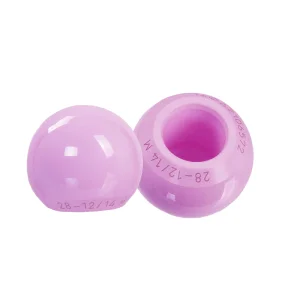
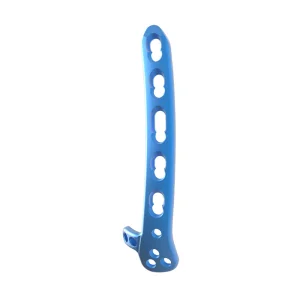
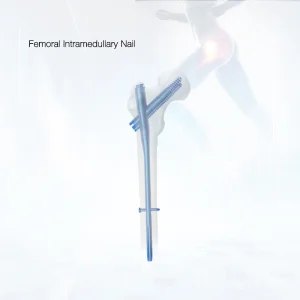
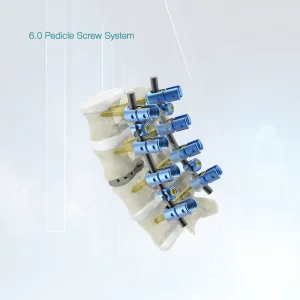
Beyond external fixation, our ISO 13485 manufacturing facilities produce comprehensive solutions across sports medicine, trauma locking plates, reconstructive arthroplasty, and complex spinal fusion assemblies.
Frequently Asked Questions for Turkish Medical Procurement
Critical answers regarding tender participation, ÜTS product registration, MDR technical documentation, and mechanical reliability.
How does your manufacturing facility support Turkish distributors with TİTCK and ÜTS registration?
What metallurgical standards and certifications apply to your external fixation rods and Schanz pins?
Can you manufacture customized external fixator sets tailored to Turkish City Hospital tender specifications?
How does your damage control external fixator perform under acute emergency conditions?
What are your delivery lead times, logistics channels, and minimum order quantities (MOQ) for Turkey?
Establish Your Dedicated OEM Orthopedic Supply Chain for Turkey
Partner with an accountable, ISO 13485-certified manufacturer equipped to meet strict hospital tender benchmarks, ÜTS tracking requirements, and high-volume delivery timelines.