Featured Titanium Bone Plates & Systems
Engineered for anatomical conformity, biomechanical stability, and accelerated osteosynthesis.
Navigating the Global Shift in Orthopedic Internal Fixation
Addressing clinical longevity, periosteal vascular protection, and the total cost of clinical care in adult and pediatric trauma settings.
Vascularity Preservation
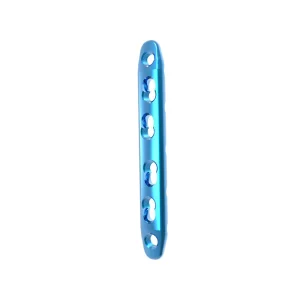
Traditional compression plates exert immense friction on the periosteum, causing local cortical necrosis. Modern Limited Contact Dynamic Compression Plates (LC-DCP) and Locking Compression Plates (LCP) maintain a biological gap, preserving cortical perfusion and mitigating late-stage refracture.
- Point-contact undercut geometries
- Reduced bone-to-implant contact area by up to 60%
- Accelerated callus formation through micro-motion control
Stress Shielding Mitigation
Medical Grade 5 Titanium (Ti-6Al-4V ELI) features an elastic modulus of ~110 GPa—significantly lower than 316L stainless steel (~200 GPa). This closer proximity to cortical bone elasticity (~18 GPa) substantially reduces stress shielding and secondary bone resorption around screw threads.
- Optimal fatigue resistance under cyclic physiological loads
- Enhanced load transfer encouraging physiological remodeling
- Superior biocompatibility minimizing foreign-body cellular response
Operating Room Modularization
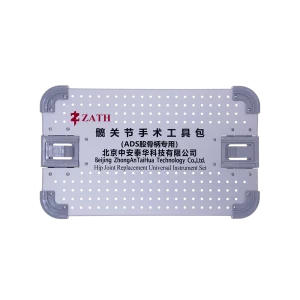
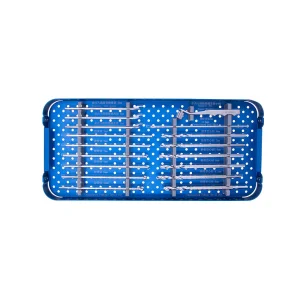
Streamlined tray architectures consolidate bone plates, variable-angle locking screws, non-locking cortical screws, and specialized drill guides. Modular setups lower hospital sterilization costs, reduce instrument clutter, and shorten surgical lead times in polytrauma emergencies.
- Single-driver compatibility across varied screw calibers
- Color-coded anodized trays for intraoperative accuracy
- Validated sterile-barrier options for emergency deployment
China Factory 4.0: Supply Chain Resilience & Precision Tooling
Combining five-axis simultaneous Swiss CNC machining with closed-loop computerized metrology to eliminate supply bottlenecks.
Multi-Axis Precision
High-speed German and Japanese multi-axis machining centers execute anatomical contours, combi-holes, and undercut locking threads within 5-micron tolerances.
Surface Treatments
Micro-arc oxidation, controlled electrochemical anodization (Type II), and automated electropolishing deliver wear resistance, fatigue enhancement, and passivity.
Optical In-Line CMM
Automated optical coordinate measurement machines (CMM) evaluate 100% of critical locking thread pitches, verifying load integrity prior to cleanroom passivation.
Sterile-Cleanroom Flow
Class 10,000 (ISO Class 7) packaging rooms assemble medical grade blister packs, preserving sterility assurance levels (SAL 10⁻⁶) under validated EO/gamma cycles.
Meeting the Procurement Matrix of Global Hospital Networks
Harmonizing price efficiency with uncompromised metallurgical standards for international tenders and private healthcare consortiums.
Tender-Winning Economies of Scale
By leveraging vertically integrated in-house manufacturing—from titanium bar stock to finished sterile-barrier packaging—we remove third-party contractor markups, enabling our distributors to remain competitive in national healthcare tenders.
MDR-Ready Technical Dossiers
Every plate family comes with full design history files (DHF), biocompatibility assessments (ISO 10993 series), and validated static and dynamic four-point bending fatigue reports compliant with ASTM F382 standards.
OEM/ODM Customization Programs
Tailored plate geometries, custom profile bending angles, bespoke laser-etching with buyer-specific catalog numbers, and language-specific IFU (Instructions for Use) printing to align with local regulatory frameworks.
Technology Roadmap & Clinical Horizons
Pioneering bioactive surface topography and patient-specific osteosynthesis implants.
Additive Trabecular Matrices
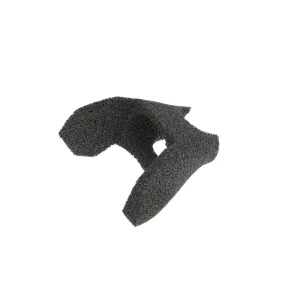
Employing Electron Beam Melting (EBM) and Direct Metal Laser Sintering (DMLS) to print continuous porous lattices (300–600 μm pore size) directly on bone plates for pelvic reconstruction, fostering rapid vascular ingrowth without compromising core structural fatigue life.
Antibacterial Nanocoatings
Advancing multi-functional coatings using silver-doped hydroxyapatite (Ag-HA) and titania nanotube (TNT) architectures designed to deter Staphylococcus aureus biofilm formation while maintaining favorable osteoblast adhesion parameters.
Bioabsorbable Magnesium Hybrids
Developing hybrid fixators combining titanium load-bearing trusses with biodegradable high-purity magnesium alloys for metaphyseal zones, facilitating targeted bone remodeling while eliminating hardware removal surgeries.
Global Compliance & Regional Regulatory Support
Full documentation systems designed to streamline clearance in Latin America, Southeast Asia, the Middle East, and the European Union.
Full Dossier Provision
We provide full Common Technical Document (CTD) formats, Risk Management files (ISO 14971), Usability Engineering dossiers (IEC 62366), and real-time accelerated aging reports conforming to ISO 11607 packaging integrity requirements.
Free Sale Certificates (FSC)
Supported by nationally recognized regulatory authorities and apostilled by foreign embassies, our comprehensive Free Sale Certificates and ISO 13485 QMS certifications expedite local Ministry of Health approvals.
Clinical & Tender Support
Dedicated medical affairs teams supply clinical whitepapers, biomechanical finite element analysis (FEA) reports, and customized surgeon instrumentation guides to address hospital technical committee inquiries.
Frequently Asked Questions for Clinical Importers
Detailed insights into regulatory pathways, manufacturing tolerances, and distributor agreements.
What grade of titanium is utilized in your orthopedic bone plates and screw systems?
How does ZATH safeguard against screw head stripping and cold welding in locking plates?
Are ZATH orthopedic titanium plates provided sterile or non-sterile?
What documentation is delivered to support local Ministry of Health registration?
What are your minimum order quantities (MOQ) and lead times for OEM trauma systems?
Comprehensive Surgical Fixation & Replacement Systems
Expanding clinical capabilities across joint replacement, spine stabilization, trauma recon, and instrument integration.