
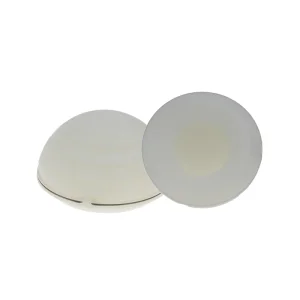
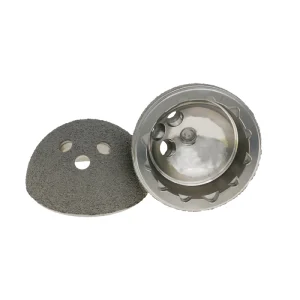
High-Quality TDC Cemented Acetabular Cup Artificial Hip Joint Prosthesis
View Specifications
Sterile-packaged implants and matching orthopedic instrumentation sets configured for minimal surgical steps and primary mechanical stability.
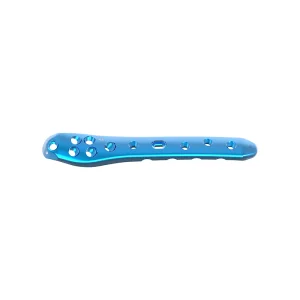
Addressing the shift from rigid non-reamed designs to dynamically balanced, anatomically bowed intramedullary nail (IM Nail) systems in adult and geriatric femoral osteosynthesis.
The global intramedullary nailing market has evolved past the historic debates of rigid plating versus non-reamed pin fixation. Contemporary trauma centers, operating under AO/ASIF therapeutic frameworks, regard the retrograde and antegrade intramedullary nail for femur fractures as the clinical gold standard. Pathophysiologically, femoral fractures—whether subtrochanteric, diaphyseal, or distally located—present significant shear forces, bending moments, and axial stresses during the early phases of mobilization. Modern IM nail systems act as internal splints centered within the neutral mechanical axis of the bone, mitigating stress-shielding while fostering secondary bone healing through controlled micromotion and endosteal callus formation.
Static and dynamic multi-planar interlocking bolt configurations resist torsional distortion in comminuted Winquist Type III & IV mid-shaft fractures.
Anatomical curvature reduction from 2.0m down to 1.2m–1.5m aligns accurately with normal sagittal anterior femoral bowing, minimizing anterior cortex impingement.
Medical-grade titanium Grade 5 alloy (ASTM F136 compliant) provides a close modulus of elasticity to cortical bone, significantly eliminating premature implant notch failure.
In high-income territories across the European Union and North America, strict MDR (EU 2017/745) and FDA 510(k) enforcement has driven device rationalization. Procurement executives can no longer tolerate ambiguous supply lines or non-validated sterilization methods. Meanwhile, in developing economic blocs (LATAM, Southeast Asia, MENA), the rising incidence of high-energy traffic trauma alongside an aging demographic susceptible to osteoporotic subtrochanteric fractures has led to soaring demand for high-grade, cost-rationalized titanium femoral nail platforms supplied alongside durable, ergonomic carbon-fiber/PEEK radiolucent aiming guides.
Operating from the Beijing Zhongguancun Science and Technology Park, ZATH bridges metallurgical engineering, micromachining, and Class III sterile medical device compliance.
From raw titanium bar stock micro-structure sonic testing to multi-axis Swiss-type lathe processing, gun-drilling deep cannulation, wire-EDM cutting, and automated anodization under ISO 13485 oversight.
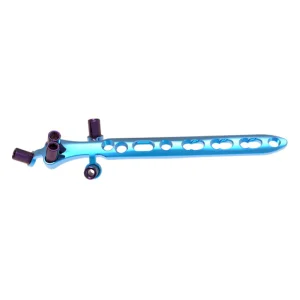
Multi-axis computerized machining achieves precision tolerances under ±0.005mm. This guarantees true collinear alignment between proximal locking screw holes and targeted carbon-fiber outriggers.
Sterile-packaged medical implants are encapsulated within ISO Class 7/Class 10,000 cleanroom environments, utilizing medical Tyvek and thermoformed blister packaging verified by ASTM F1980 accelerated aging tests.
Every IM nail features permanent laser marking detailing model, diameter, length, ROC, and unique lot identification, linking the implanted unit directly back to original ingot material melt data.
A detailed engineering comparison illustrating dimensional, mechanical, and instrumentation parameters across surgical configurations.
| Design Parameter | Antegrade Femoral Nail (AFN) | Retrograde / Distal Femoral Nail (DFN) | Cephalomedullary / Reconstruction Nail |
|---|---|---|---|
| Clinical Indications | Shaft fractures (32-A/B/C), subtrochanteric fractures | Distal 1/3 fractures (33-A/C), periprosthetic fractures | Pertrochanteric, intertrochanteric, subtrochanteric combinations |
| Material Specification | Ti6Al4V ELI (ASTM F136 / ISO 5832-3) | Ti6Al4V ELI / High-tensile Titanium Alloy | Ti6Al4V ELI Titanium Alloy |
| Diameter Matrix | Ø 9.0mm, 10.0mm, 11.0mm, 12.0mm | Ø 9.0mm, 10.0mm, 11.0mm, 12.0mm | Ø 9.0mm, 10.0mm, 11.0mm, 12.0mm |
| Length Range | 320mm – 440mm (20mm increments) | 160mm – 280mm / Full length options | 170mm (short) / 340mm – 440mm (long, L/R) |
| Radius of Curvature (ROC) | 1.5m Optimized Sagittal Arc | Straight anatomical distal design / 1.5m | 1.5m Bowing + 12° Anteversion Offset |
| Proximal Fixation | Multi-angle static/dynamic cross screws | Spiral blade or cross-locking angle bolts | Integrated dual lag screws / Anti-rotation lag screw |
| Aiming Jig Mechanics | Radiolucent Carbon-Fiber Arm, quick-snap | PEEK / Radiotranslucent Distal Target Guide | Heavy-duty alloy targeting frame with laser calibration |
Empowering distributor autonomy, tender profitability, and mitigating vulnerability to multinational pricing pressures.
Qualified distributor partners receive comprehensive technical files, biostatistical safety testing reports (ISO 10993 cytotoxicity, sensitization), and dynamic fatigue performance test dossiers (ASTM F1264/ISO 15025) essential for swift local MoH (Ministry of Health) registration.
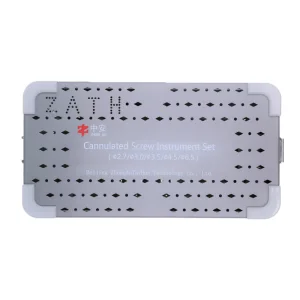
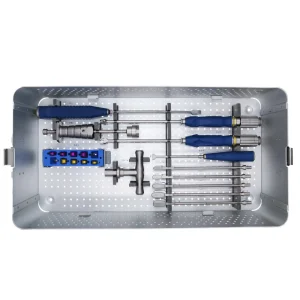
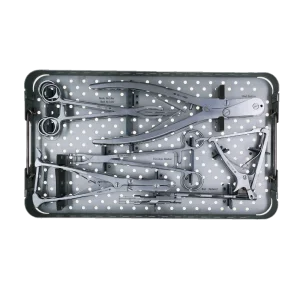
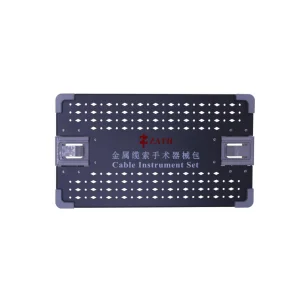
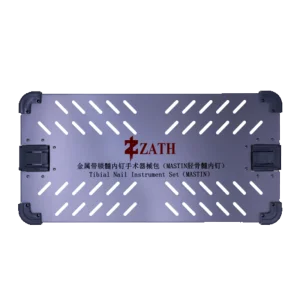
Trauma centers achieve operational efficiency when instruments never jam. ZATH instrument cases offer interchangeable carbon-fiber targeting arms, tear-drop reamers, ball-tip guide wires, and universal screw drivers with hardened PVD coatings that endure repetitive autoclave cycles.
Bypassing multi-tier distribution networks enables national suppliers to capture significant gross margin improvements. We offer private-label branding, customized custom laser markings, sterile label translation, and specific nail length matrices tailored to regional population anthropometry.
Immediate technical, metallurgical, and delivery inquiries addressed directly by our senior biomedical engineering team.
Comprehensive orthopedic devices designed to support hospital tenders, trauma theaters, and total joint revision suites.
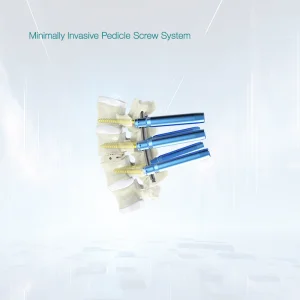
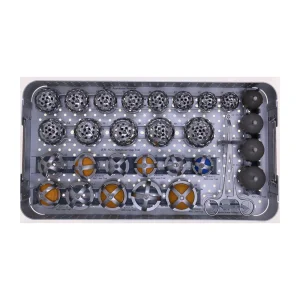
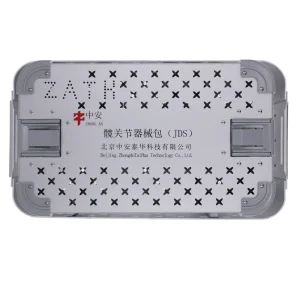
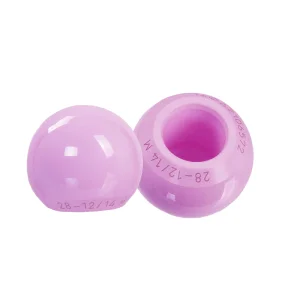
Engage directly with our clinical engineering desk to receive technical trial samples, validation dossiers, and wholesale distributor pricelists for CE certified femur intramedullary nail systems.