Certified Implant Platforms & Matching Surgical Instruments
Explore our top-tier CE and ISO 13485 certified orthopedic trauma and reconstruction systems, engineered for anatomical congruence and unyielding stability.
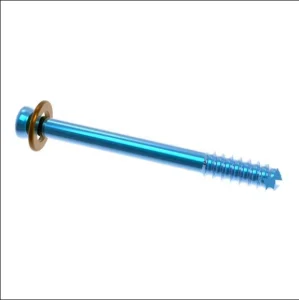
1. Executive Market Intelligence: Understanding Cheap Titanium Tibia Locking Plate Price Structures
In modern trauma orthopedic surgery, the titanium tibia locking plate remains the clinical gold standard for the internal fixation of complex tibial fractures, ranging from high-energy Schatzker Type I-VI proximal plateau disruptions to distal pilon and metaphyseal shaft fractures. However, hospital procurement managers, tender boards, and orthopedic distributors worldwide encounter enormous price disparities. The commercial term "cheap titanium tibia locking plate price" frequently creates ambiguity: does lower cost signify compromised biocompatibility, or does it reflect direct-to-manufacturer supply chain lean engineering?
Historically, multinational medical technology conglomerates maintained list prices between $850 and $2,400 USD per single anatomically pre-contoured titanium plate, excluding locking screws. In stark contrast, certified OEM manufacturing facilities operating under ISO 13485 regulations produce identical biomechanical constructs conforming to ASTM F136 / ISO 5832-3 (Ti-6Al-4V ELI) standards at ex-factory wholesale price tiers of $45 to $135 USD. Demystifying this pricing architecture requires understanding the core cost drivers: raw medical-grade ingot quality, multi-axis CNC swiss-machining tolerances, Type II surface anodization, sterility packaging validation, and regulatory compliance dossiers.
Global Pricing Matrix by Tibia Anatomical Region (B2B Factory Direct vs. Western Retail)
Locking plate cost scales directly with geometric complexity, anatomical pre-contouring accuracy, hole count, and screw interface dynamics (variable-angle locking versus fixed-angle comi-holes). Below is the comprehensive baseline price breakdown reflecting international wholesale quotation benchmarks:
| Implant Type & Anatomical Indication | Material Grade | Hole Range / Sizes | Direct Factory Pricelist (FOB USD) | Western Medtech Average List Price | Key Mechanical Target |
|---|---|---|---|---|---|
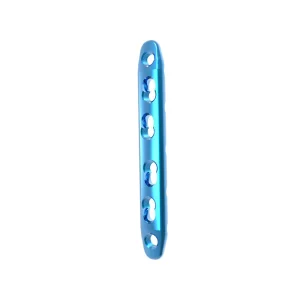
| Proximal Lateral Tibia LCP (Schatzker I-VI) | Ti-6Al-4V ELI / CP Grade 4 | 4 to 14 Holes (Left / Right) | $52.00 – $118.00 | $1,150.00 – $2,100.00 | Subchondral raft support, anatomical twist |
| Proximal Medial Tibia Buttress Plate | Medical Titanium Alloy | 4 to 12 Holes | $45.00 – $92.00 | $920.00 – $1,650.00 | Varus collapse prevention, buttress rigidity |
| Distal Medial Tibia Locking Plate (Pilon) | Ti-6Al-4V ELI | 4 to 14 Holes | $48.00 – $98.00 | $1,050.00 – $1,890.00 | Low profile, subcutaneous soft-tissue preservation |
| Distal Anterolateral Tibia Plate | Ti-6Al-4V ELI | 5 to 13 Holes | $56.00 – $122.00 | $1,220.00 – $2,300.00 | Articular reconstruction, multi-angle distal screw trajectory |
| Tibial Shaft Limited Contact LCP | Pure Titanium / Ti Alloy | 6 to 16 Holes | $38.00 – $78.00 | $780.00 – $1,400.00 | Axial compression with periosteal vascular preservation |
2. Commercial & Industrial Macro Landscape: Supply Chain Economics
The global demand for orthopedic trauma implants is projected to surpass $12.8 Billion USD by 2030, fueled by vehicular trauma in emerging economies, an aging worldwide population subject to osteoporotic fractures, and the expansion of ambulatory surgical centers (ASCs) demanding high-efficiency, cost-contained fixation hardware.
The shift toward cost-effective titanium tibial locking plates is governed by three macro-industrial factors:
Volume-Based Procurement (VBP)
National healthcare procurement systems across Asia, Europe, and Latin America have established centralized bidding tenders. Manufacturers that optimize multi-axis CNC milling efficiency can deliver ultra-competitive volume pricelists without eroding clinical efficacy.
Raw Material Supply Stability
Medical-grade titanium bar stock (Ti-6Al-4V ELI) represents 18-24% of manufacturing expenditure. Strategic manufacturing clusters in Beijing and regional industrial parks benefit from vertical raw material sourcing, mitigating market volatility.
CNC Machining Cycle Optimization
High-speed 5-axis DMG MORI and Citizen Swiss lathes have shortened cycle times for complex tibial plate contours by 42%, drastically reducing energy consumption and tooling wear per unit produced.
3. Localized Clinical Application Scenarios & Biomechanical Selection
Procuring an affordable titanium tibia locking plate requires strict clinical taxonomy matching. A distal tibia medial plate engineered for soft-tissue preservation cannot substitute for a proximal lateral plateau plate designed to resist massive axial tibial plateau loading.
A. Proximal Tibia Fractures (Schatzker Types II, V, and VI)
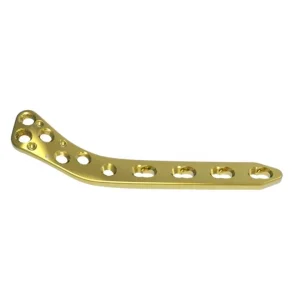
High-energy bicondylar plateau fractures require anatomical proximal lateral tibia locking plates featuring a raft arrangement of 3.5mm subchondral locking screws. These screws cross perpendicular to the joint line, supporting depressed articular fragments. Low-contact undercuts protect the periosteal blood supply, while bulleted plate tips permit minimally invasive percutaneous plate osteosynthesis (MIPPO). When pricing this implant, procurement directors must ensure that matching variable-angle guides and kickstand screw capabilities are accounted for in the quotation.
B. Tibial Diaphyseal Fractures (AO/OTA 42-A/B/C)
While intramedullary nailing represents an alternative for middle-third fractures, narrow medullary canals, polytrauma patients, or fractures adjacent to previous prostheses necessitate narrow tibial shaft locking compression plates (LCP). Featuring limited-contact dynamic compression (LC-DCP) geometries, these plates preserve cortical vascularization, yielding non-union rates below 2.8% in clinical retrospective cohorts.
C. Distal Tibial Pilon Fractures (AO/OTA 43-A/B/C)
The anterolateral and medial distal tibia presents minimal subcutaneous soft-tissue coverage. Implants here require ultra-thin distal profiles (under 1.5mm tapering) to avoid wound dehiscence and skin impingement, combined with high fatigue resistance to resist early weight-bearing deformities.
4. Technology Roadmap: Engineering Trends & Next-Generation Horizons (2025–2035)
The orthopedic trauma landscape is evolving from passive metallic fixation toward bioactive, digitally engineered structural systems. Leading manufacturers are investing heavily in technologies that redefine plate performance:
3D Electron Beam Melting (EBM)
Additive manufacturing enables plates with micro-trabecular undersurfaces (porosity 65-75%, pore size 300-500µm). This facilitates biological osseointegration at specific metaphyseal interfaces while preserving standard cortical clearance.
Bio-Absorbable Antimicrobial Nano-Coatings
Deposition of atomic silver (Ag+) and gentamycin-loaded polymer coatings significantly mitigates surgical site infections (SSI) in open Gustilo-Anderson fractures without altering base plate price structures.
Smart Sensor Telemetry Fixation
Micro-strain gauges embedded into titanium plate bridges wirelessly broadcast fracture callus stiffening and micro-movement to clinicians, validating safe weight-bearing protocols prior to radiographic confirmation.
5. Macro Healthcare Solutions: Total Cost of Ownership (TCO) in Hospital Sourcing
Smart procurement teams examine the Total Cost of Ownership (TCO) rather than unit implant acquisition price alone. An ultra-cheap titanium tibia locking plate that requires proprietary single-use disposable screwdrivers, suffers screw head stripping (cold welding), or lacks sterile blister packaging creates hidden surgical costs.
To maximize operational yield, health systems partner with integrated manufacturers like ZATH, where comprehensive orthopedic ecosystem benefits include:
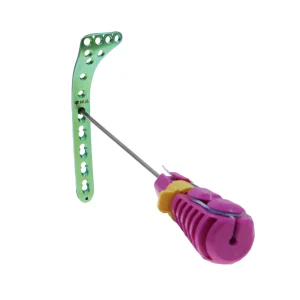
- Universal Screwdriver Compatibility: High-torque StarDrive / Torx (T15/T25) interfaces eliminate screw stripping and reduce operative revision time.
- Sterile Pre-Packaged Delivery: Pre-sterilized double-blister EO/Gamma packaging eliminates internal hospital autoclave processing cycles, saving approximately $68.00 USD per tray in sterile processing department labor.
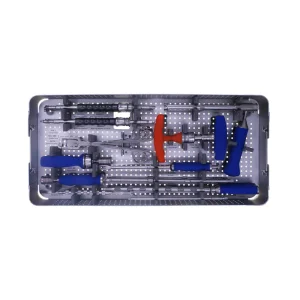
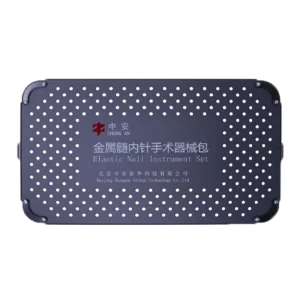
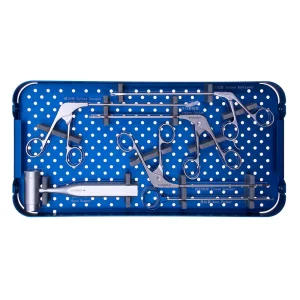
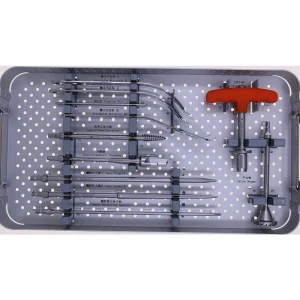
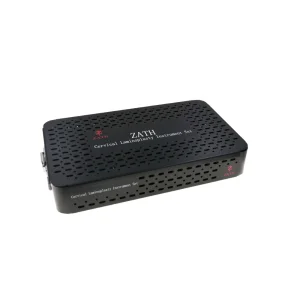
- Matched Surgical Instrumentation Trays: Durable 17-4PH stainless steel modular reduction forceps, drill guides, depth gauges, and torque-limiting drivers provided on long-term loan or volume consignment.
Frequently Asked Questions on Titanium Tibia Plate Pricing
Answers to common clinical, metallurgical, and international export questions for hospital purchasers and distributors.
Why does a titanium tibia locking plate cost significantly less from Chinese OEM manufacturers than Western brands?
What is the standard minimum order quantity (MOQ) and lead time for factory wholesale quotes?
Can OEM/ODM custom branding and localized registration dossiers be provided with low-cost titanium plates?
Are titanium tibia locking plates superior to 316L stainless steel alternatives in trauma surgery?
How do locking compression plates preserve periosteal blood flow compared to conventional plates?
Complete Surgical Systems & Advanced Traumatology Sets
Complement your tibia trauma hardware with our comprehensive spine, hip arthroplasty, and intramedullary fixation systems designed for total clinical integration.