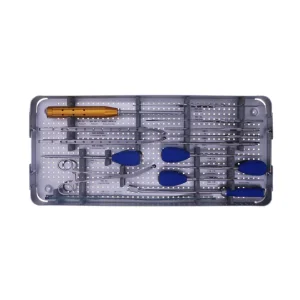
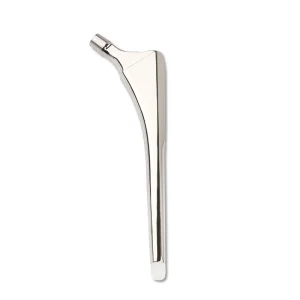
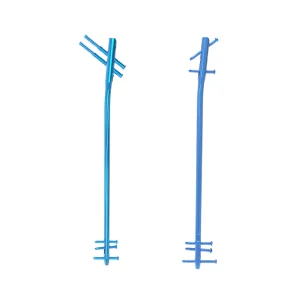
Precision Engineered Orthopedic Systems (Series Alpha)
Explore high-performance trauma, joint, and spinal fixation devices manufactured under strict cleanroom conditions with complete material traceability.
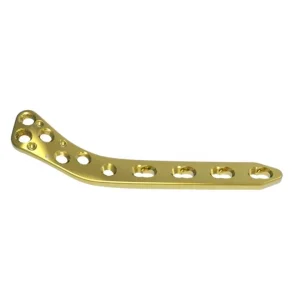
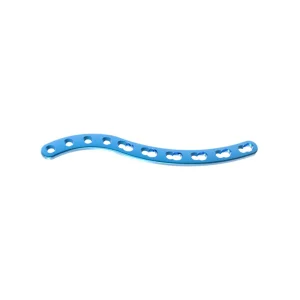
Distal Radius Fracture Biomechanics & Global Market Demand
Analyzing clinical shifts from external fixation to anatomical volar locking plates (VLP) across aging demographics and high-energy trauma cohorts.
Epidemiological Pressure & Fracture Geometry
Distal radius fractures (DRFs) represent approximately one-sixth of all fractures treated in hospital emergency rooms globally. The clinical landscape exhibits a bimodal incidence distribution: low-energy fragility fractures in postmenopausal, osteoporotic geriatric populations, and high-energy complex intra-articular comminuted fractures in young adults resulting from athletic trauma or vehicular collisions (AO/OTA Type 23-B and 23-C).
Traditional treatment modalities, such as closed reduction with plaster casting, percutaneous Kirschner wiring, and bridging external fixators, have systematically fallen out of clinical favor due to unacceptable rates of secondary displacement, pin-tract infections, malunion, Complex Regional Pain Syndrome (CRPS), and prolonged joint immobilization causing carpal stiffness.
Institutional Sourcing Shift Toward China
Global healthcare systems, operating under intense DRG (Diagnosis-Related Group) reimbursement constraints and national procurement reforms, are facing mounting budget pressures. Western multinational orthopedic brands typically market distal radius locking plate sets at significant price premiums driven by heavy sales representation margins and extensive marketing expenditures.
Tier-1 Chinese manufacturers like Beijing ZhongAnTaiHua Technology Co., Ltd. (ZATH), operating out of the Zhongguancun Science and Technology Park since 2009, have rewritten the international procurement matrix. By pairing direct ISO 13485 cleanroom manufacturing with 5-axis Swiss CNC milling, ZATH provides international hospital groups and distributors with tier-one mechanical performance at direct factory pricing.
Multi-Column Biomechanical Stability
Modern wrist reconstruction relies on the three-column mechanical theory popularized by Rikli and Regazzoni: the radial column (radial styloid and scaphoid fossa), intermediate column (lunate fossa and sigmoid notch), and ulnar column (distal radioulnar joint and triangular fibrocartilage complex - TFCC). Modern anatomical volar plates must securely anchor both the intermediate and radial columns through subchondral fixed-angle or polyaxial variable-angle locking screws.
By engineering pre-contoured trajectories that diverge under the subchondral bone raft without penetrating articular surfaces, ZATH plates resist physiologic dorsal tilt forces during early finger motion and rehabilitation, dramatically accelerating patient return to activities of daily living.
Volar Locking Plate Architecture & Metallurgical Science
Detailed technical analysis of raw materials, watershed line ergonomics, flexor tendon protection, and precision combi-hole engineering.
| Design Parameter | ZATH Volar Locking Plate System | Conventional Gen-1 Locking Plates | Clinical / Procurement Significance |
|---|---|---|---|
| Raw Material Grade | Ti-6Al-4V ELI (ASTM F136 / ISO 5832-3) | Commercial Pure Titanium / 316L SS | Superior yield strength (>860 MPa), fatigue limit, and ultimate biocompatibility. |
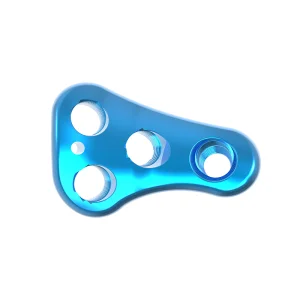
| Distal Plate Profile | 1.5 mm - 1.8 mm ultra-thin tapered profile | 2.2 mm - 2.8 mm thick blocky design | Eliminates soft tissue impingement; zero FPL flexor tendon irritation or late attrition rupture. |
| Watershed Line Fit | Anatomically sculpted distal lip seated proximal to ridge | Straight transverse distal boundary | Prevents prominent distal overhang; matches volar cortical slope across Asian & Caucasian anatomies. |
| Locking Interface | Variable-Angle (VA) ±15° combi-holes & fixed raft | Monoaxial fixed thread locking only | Allows customized screw vectors targeting individual small comminuted fragments & styloid tip. |
| Surface Treatment | Type II Anodization + Micro-bead deburring | Standard acid etching or unpolished mill | Dramatically reduces bacterial adhesion, micro-fretting corrosion, and plate cold-welding. |
| Traceability & QA | 100% 2D Laser DataMatrix + Lot Serialization | Batch stamp only | Full individual component traceability through sterile field and post-market clinical follow-up. |
Watershed Line Geometry & Tendon Safety
A catastrophic complication historically associated with volar plating is the delayed rupture of the Flexor Pollicis Longus (FPL) tendon and Flexor Digitorum Profundus (FDP) tendons, caused by repetitive frictional wear against an excessively prominent distal plate border. ZATH's engineering team utilizes extensive anatomical 3D computed tomography (CT) modeling across diverse demographics to establish a precise pre-contoured distal arch that rests comfortably behind the transverse volar ridge.
- Chamfered, high-polished peripheral edges completely prevent tendon abrasive rubbing.
- Recessed screw hole countersinks ensure locking screw heads seat fully flush with the plate surface.
- Anatomical left/right asymmetrical contours eliminate the necessity of intraoperative bending.
Variable-Angle (VA) Locking Dynamics
Complex intra-articular comminution demands flexibility. Fixed-angle constructs often force screws into fracture lines or penetrate the radiocarpal joint space. ZATH's Variable-Angle Combi-Hole technology incorporates four points of threaded engagement within a spherically shaped hole.
- Allows up to a 30° total cone of angulation (±15° off-axis trajectory).
- Enables surgeon to capture the radial styloid fragment, dorsolunate facet, and dorsal rim fragments.
- Retains 100% of pullout strength when tightened with calibrated torque-limiting screwdrivers.
Subchondral Raft Screw Orientation
Restoring and maintaining the 11° volar tilt and 22° radial inclination requires rigid underlying support. ZATH's distal screw configuration features an engineered subchondral raft where locking screws crisscross in two distinct rows.
- Distal row buttresses the subchondral bone directly beneath the joint cartilage.
- Proximal row locks the dorsal rim and stabilizes the intermediate column against axial shear loads.
- Provides an absolute angular stable construct that resists postoperative loss of reduction.
China Distal Radius Plate Quotes & Global Procurement Framework
A transparent breakdown of direct factory pricing models, volume tiers, OEM customization costs, and total cost of ownership (TCO).
Factory Quote Structural Determinants
When international procurement officers request quotations for distal radius locking plates from China, pricing structures reflect four key manufacturing variables:
- Raw Material Provenance: Certified medical implant-grade Ti-6Al-4V ELI (Grade 23) bar stock with chemical composition and tensile mill certificates vs. lower grade commercial titanium.
- Machining Axis & Cycle Time: 5-axis synchronized Swiss micro-milling ensuring zero micro-burrs and exact thread pitches, compared to secondary manual deburring.
- Packaging Specifications: Validated double-sterile blister packs (ISO 11607 Class 10,000 cleanroom packaged with 5-year shelf life) versus non-sterile bulk packaging for hospital central sterilization.
OEM / ODM Custom Contract Parameters
ZATH provides end-to-end turnkey OEM/ODM manufacturing partnerships for national orthopedic brands, distributor labels, and surgical implant distributors across Europe, South America, the Middle East, and Southeast Asia:
- Laser Marking & Branding: High-precision fiber laser etching of proprietary distributor logos, reference numbers, lot tracking codes, and UDI (Unique Device Identification) 2D barcodes.
- Custom Dimensional Variations: Development of ultra-narrow shafts, extended diaphyseal lengths (up to 12-hole plates), and specialized dorsal/rim buttress plates based on proprietary surgeon specifications.
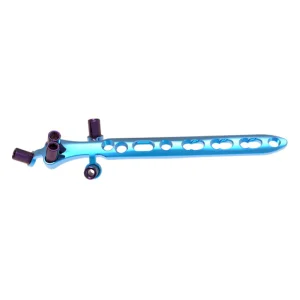
- Color Anodization Options: Type II surface anodization available in clinical green, surgical blue, deep gold, and rose for rapid intraoperative identification of left/right anatomy and screw diameters.
Total Cost of Ownership (TCO) Advantages
Procuring directly from an established Beijing manufacturing hub eliminates multi-layered broker markups and multinational brand overheads:
- Direct Price Savings: Hospital procurement networks and regional distributors typically realize a 55% to 75% landed cost reduction compared to equivalent European or North American tier-1 systems.
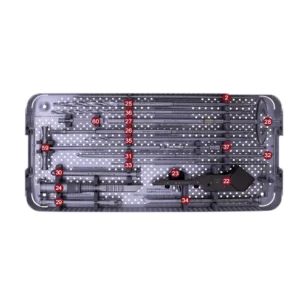
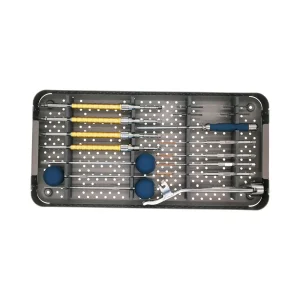
- Integrated Matching Instrument Sets: Custom aluminum alloy sterilization graphic trays containing custom drill guides, depth gauges, quick-coupling hex/stardrive screwdrivers, and carbon-fiber reduction forceps.
- Rapid Capital Return: Modest minimum order quantities (MOQs) allow distributors to preserve working capital while maintaining comprehensive hospital consignment inventories.
Inside the ZATH Precision Manufacturing Facility
Operating out of the Zhongguancun Science and Technology Park with over 300 skilled employees and nearly 100 senior engineering specialists.
1. Raw Material Inbound Control
Every single bar of medical titanium alloy (Ti-6Al-4V ELI) undergoes rigorous raw material verification. Chemical spectrometry checks ensure trace interstitial elements (Oxygen, Nitrogen, Hydrogen, Iron) remain well below critical thresholds to eliminate any risk of brittle fracture under fatigue loading. Mill test certificates are permanently mapped to internal batch control numbers.
2. Wire EDM & Synchronous CNC Milling
Plate blanks are profiled using high-precision low-speed Wire Electrical Discharge Machining (EDM) to prevent localized thermal degradation. Blanks are subsequently transferred to multi-axis CNC machining centers where anatomical curves, threaded locking holes, and non-threaded compression slots are micro-milled within ±5 micron tolerances in a single clamping setup.
3. Automated Deburring & Surface Passivation
Automated fluid-bed centrifugal polishing removes any residual machining micro-burrs, followed by ultrasonic multi-stage degreasing. Implants receive Type II electrochemical surface passivation, producing a micro-thin titanium oxide protective barrier that increases biological wear resistance and prevents bone-plate cold-welding during long-term implantation.
4. Metrology & Biomechanical Testing
Dimensional fidelity is inspected via automated Optical Coordinate Measuring Machines (CMM) and high-resolution video vision systems. Mechanical verification adheres strictly to ASTM F382 (Standard Specification and Test Method for Metallic Bone Plates), including 4-point dynamic bending stiffness, proof load verification, and 1,000,000-cycle fatigue endurance testing.
5. Class 10,000 Cleanroom Sterile Barrier
Sterile-packed implants are assembled within an ISO Class 7 (Class 10,000) cleanroom environment. Dual-blister medical grade Tyvek® heat-sealed packaging protects sterility, validated in compliance with ISO 11607-1/2. Ethylene Oxide (EO) sterilization validation follows ISO 11135 guidelines with verified sterility assurance levels (SAL 10⁻⁶).
6. Temperature-Controlled Logistics Hub
Centralized ERP inventory management facilitates immediate lot identification and dispatch. International express air freight networks (DHL, FedEx, UPS, EMS) operate with streamlined export customs green channels, ensuring delivered hospital replenishment orders reach primary international hubs in just 4 to 6 business days.
Global Medical Device Registration & Local Compliance
Comprehensive regulatory documentation, clinical evaluation reports, and technical dossiers supporting distributor market authorization worldwide.
ISO 13485:2016 Certified Quality Management
Beijing ZhongAnTaiHua Technology Co., Ltd. (ZATH) maintains a third-party audited ISO 13485:2016 Quality Management System spanning the complete life cycle of orthopedic implants: design engineering, risk management (ISO 14971), vendor auditing, precision manufacturing, packaging verification, cleanroom control, and post-market clinical surveillance.
Turnkey Technical Files (CE MDR & FDA 510k Ready)
Entering tightly regulated national healthcare systems requires robust technical dossiers. ZATH supports distributor partners by supplying ready-to-file Technical Files in STED (Summary Technical Documentation) format. Files include biocompatibility test reports (ISO 10993 cytotoxicity, sensitization, systemic toxicity), mechanical validation reports, shelf-life aging validations, and Free Sale Certificates (FSC).
Regional MoH Registration Support
We provide full documentation and regulatory assistance for submissions to regulatory authorities including ANVISA (Brazil), COFEPRIS (Mexico), INVIMA (Colombia), SFDA (Saudi Arabia), NPRA (Malaysia), and local European notified bodies. Dedicated bilingual regulatory affairs engineers work directly with your registration team to answer deficiency inquiries and deliver clinical equivalence data.
Future Horizons in Upper Extremity Osteosynthesis
Next-generation R&D pipelines integrating additive 3D titanium printing, bioabsorbable alloys, and patient-matched surgical execution.
3D-Printed Trabecular Bone Interface
Advancing from conventional subtractive milling, ZATH's advanced R&D pipeline incorporates Electron Beam Melting (EBM) and Selective Laser Melting (SLM) 3D titanium additive printing. These systems produce porous trabecular titanium coatings on the bone-contact underside of the plate, mimicking human cancellous architecture (65-75% porosity, 300-500 micron pore diameter) to encourage rapid biological osseointegration and biological fixation in severely osteopenic bone.
Bioresorbable Magnesium-Zinc Metallurgy
To eliminate the secondary surgical intervention required for implant removal due to soft tissue friction or cold sensitivity, research is underway on high-purity, bioabsorbable magnesium-zinc (Mg-Zn) alloys. These engineered alloys maintain full mechanical shear strength during the critical 12-week primary bone-healing phase, then safely degrade through natural metabolic absorption into harmless endogenous ions, leaving a healed, natural bone structure.
AI Preoperative Planning & PSI Guides
Merging deep learning CT reconstruction algorithms with rapid-turnaround localized 3D printing enables the fabrication of Patient-Specific Instruments (PSI) and patient-customized cutting/drill guides. Surgeons can upload DICOM image stacks to the ZATH cloud engineering portal, where clinical engineers simulate virtual reduction and map optimal screw trajectory paths to protect complex intra-articular fragments.
Distal Radius Plate Technical & Supply Chain Intelligence
Clear, definitive answers to questions frequently posed by hospital tender committees, import directors, and orthopedic distributors.
Orthopedic Solutions Across Trauma, Spine & Joints (Series Beta)
Review additional precision implants and surgical instrument systems manufactured with the same ISO 13485 quality control.