
Featured Titanium Orthopedic Systems & Instrumentation
Direct from our Class 100,000 cleanroom manufacturing center. Fully sterile-packed, CE-ready, and compliant with ISO 5832-3 ASTM F136 clinical metallurgy standards.
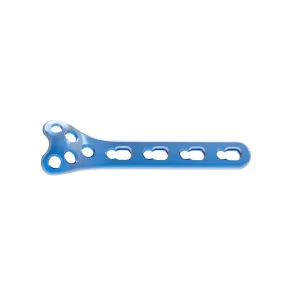
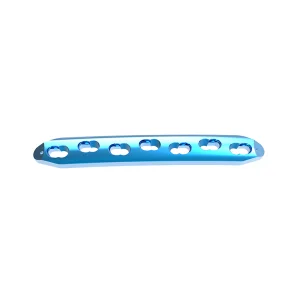
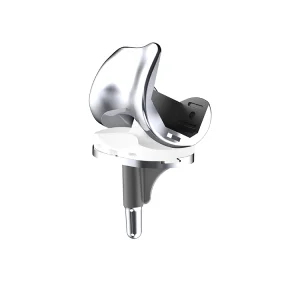
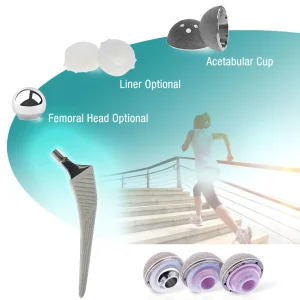
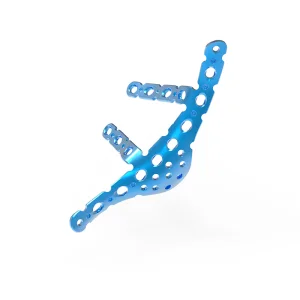
Global Macro-Industry Dynamics in Titanium Orthopedic Implants
The worldwide demand for reconstructive joint surgery, spinal stabilization, and complex fracture fixation has accelerated the requirement for ultra-pure titanium alloy orthopedic devices. As healthcare systems contend with cost pressures and stringent regulatory reforms, leading procurement organizations and distributors look to qualified Chinese manufacturers to provide world-class manufacturing standards without prohibitive premium markups.
Since our foundation in 2009 in Beijing's Zhongguancun Science Park, Beijing ZhongAnTaiHua Technology Co., Ltd. (ZATH) has maintained singular engineering dedication to titanium medical metallurgy, biomechanical FEA optimization, and automated CNC micro-machining. By deploying medical Ti-6Al-4V ELI (ASTM F136 / ISO 5832-3) and Commercially Pure Grade 4 Titanium (ASTM F67), we solve the clinical trifecta: superior osseointegration, reduced modulus stress shielding, and extreme fatigue longevity.
- Elastic Modulus Compatibility: Medical titanium delivers ~110 GPa modulus, significantly lower than stainless steel (210 GPa), minimizing peri-implant cortical bone resorption.
- Bio-Inert Passive Dioxide Film: Spontaneous formation of stable TiO2 surface layers ensures remarkable corrosion resistance and negligible ion cytotoxicity in vivo.
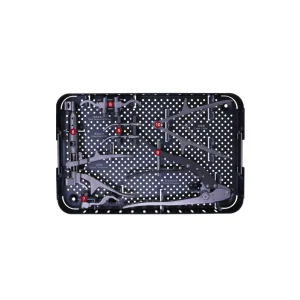
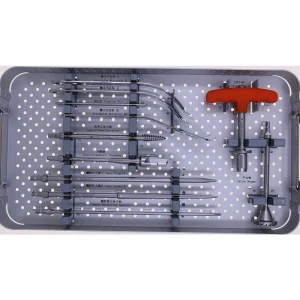
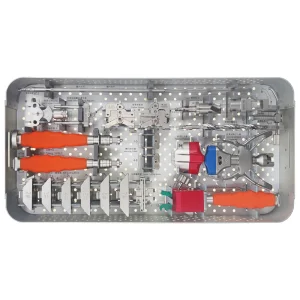
- Precision Instrumentation Co-Development: Every implant geometry is matched with ergonomic, surgical-grade stainless steel/titanium instruments for smooth OR workflow.

China Factory 4.0: Supply Chain Resilience & Micrometric Accuracy
From vacuum raw material control to multi-axis Swiss-type turning, our production infrastructure integrates German and Japanese high-precision machining with continuous digital laser metrology.
Sub-Micron CNC Tolerancing
Equipped with 5-axis simultaneous machining centers and wire electrical discharge machining (EDM), ZATH achieves dimensional precision within ±0.005mm, ensuring smooth thread-locking interaction and polyaxial articulation.
Scale Cost Competitiveness
By anchoring the titanium supply pipeline directly from audited metallurgical foundries, we neutralize raw metal volatility, delivering 30-45% procurement cost savings over Western counterparts while exceeding ASTM specifications.
100% In-Line Heat Treatment
Vacuum inert-atmosphere annealing eliminates residual internal shear stresses in complex locking compression plates and femoral hip stems, mitigating risk of intraoperative mechanical cracking or notch fatigue.
Optical & CMM Coordinate Metrology
Every production batch undergoes automated coordinate measuring machine (CMM) verification, non-contact optical profile matching, and surface roughness (Ra) profilometry prior to ultrasonic sanitization.
Full Lot Serialization & UDI
Laser annealing engraving ensures distinct Unique Device Identification (UDI) barcodes on each screw, plate, and prosthesis, ensuring indelible traceability throughout hospital sterilization cycles.
Dual Sterile Packaging Barrier
Implants are packaged in medical-grade Tyvek/PET blister packages within an ISO Class 7 cleanroom, ready for ethylene oxide (EO) or gamma irradiation sterilization to provide a 5-year guaranteed shelf stability.
Titanium Alloys vs. Legacy Orthopedic Biomaterials
A definitive metallurgical comparison demonstrating why Ti-6Al-4V ELI (Extra Low Interstitial) and Grade 4 Titanium remain the gold standards for clinical implants.
| Biomaterial Designation | Tensile Strength (MPa) | Yield Strength (MPa) | Elastic Modulus (GPa) | Corrosion Resistance | Biocompatibility Index | Clinical Applicability |
|---|---|---|---|---|---|---|
| Ti-6Al-4V ELI (ASTM F136) | ≥ 860 | ≥ 795 | 110 - 114 | Exceptional (Passive TiO2) | Class V (Highest Bone Ingrowth) | Pedicle Screws, Trauma Plates, Hip Stems |
| CP Ti Grade 4 (ASTM F67) | ≥ 550 | ≥ 483 | 105 | Exceptional | Class V (Zero Cytotoxicity) | Maxillofacial Plates, Suture Anchors |
| 316L Stainless Steel (ASTM F138) | ≥ 490 | ≥ 190 | 200 - 210 | Moderate (Pitting Susceptible) | Class III (Nickel Ion Release Risk) | Temporary Pins, Cerclage Cables, External Fixators |
| CoCrMo Alloy (ASTM F75) | ≥ 655 | ≥ 450 | 210 - 240 | High | Class IV (Wear Particle Sensitive) | Knee Femoral Components, Articulating Bearing |
| PEEK Optima (ASTM F2026) | 90 - 100 | N/A | 3.5 - 4.0 | Inert | Class IV (Requires Ti Coating) | Spinal Fusion Interbody Cages |
The 6-Stage Controlled Titanium Implant Lifecycle
Every implant produced at Beijing ZhongAnTaiHua Technology Co., Ltd. (ZATH) follows an unbroken chain of custody, ensuring absolute conformance to medical device directives.
Raw Material Ingestion
Certified titanium bar and billet stock receive spectrographic chemical analysis and ultrasonic defect scans to verify compliance with ASTM F136 interstitial nitrogen, oxygen, and carbon thresholds.
Precision Wire EDM Cutting
Low-thermal electrical discharge machining cuts anatomical blanks with zero mechanical distortion, preserving titanium metallurgical grain structure prior to high-speed profile milling.
Multi-Axis CNC Machining
Simultaneous multi-axis machining carves self-tapping threads, variable-angle combi-holes, and anatomic contours with chilled synthetic fluid cooling to prevent localized alpha-case oxidation.
Metrology & Clean Surface Finishing
Components undergo multi-stage ultrasonic chemical degreasing, electro-polishing, or grit-blasted micro-texturing, followed by multi-point optical laser and CMM coordinate dimensional validation.
Sterile Barrier Packaging
Within our ISO 14644 Class 7 cleanrooms, implants receive dual-layer medical grade Tyvek/PET blister packaging, barcoding, and validation under ISO 11607 packaging standards.
Controlled Global Dispatch
Stored in climate-monitored ERP-controlled warehousing, serialized lots are dispatched via DHL, FedEx, UPS, or air freight with complete batch release documentation within 4-6 days.
Meeting Global Corporate Sourcing & Hospital Tender Needs
International distributors, contract brand owners, and ministry-level health procurement agencies require more than high quality: they demand uncompromised supply continuity, swift lead times, and comprehensive regulatory documentation.
ZATH has refined its turnkey manufacturing protocols to seamlessly cater to private labeling, custom plate/screw geometry prototyping, and government public tender submissions worldwide.
- Private Label & OEM Customization: Laser-etched company branding, personalized anodized color codings (Gold, Blue, Magenta, Green), and bespoke surgical kit tray layouts.
- Regulatory Technical Dossier Support: We supply full 510(k), CE MDR technical dossiers, ISO 10993 biocompatibility test data, and Free Sale Certificates (FSC) to accelerate local Ministry of Health clearances.
- Agile Lead Times & Buffer Inventories: High-velocity automated production allows standard inventory shipment in 4-6 business days and custom OEM pilot batches within 3-4 weeks.
Direct Engineering Consultation
Partner directly with ZATH’s Beijing biomedical engineering group to review your CAD files, instrument tolerance requirements, or tender specification matrix.
Technology Roadmap: 3D Printing, Bio-Coatings & Smart Sensing
Orthopedic surgery is shifting from passive bone fixation toward active regenerative scaffolds and patient-specific kinematics. Here is how our R&D engineering program leads this paradigm transition.
EBM & SLM 3D Titanium Trabecular Lattice
Leveraging Electron Beam Melting (EBM) and Selective Laser Melting (SLM), ZATH manufactures biomimetic titanium porous structures with interconnected 600-800μm pore sizes and 70% porosity, replicating natural cancellous bone for accelerated osteoconduction.
Bio-Active Hydroxyapatite (HA) & Ag Nano-Coatings
Next-generation plasma-sprayed Hydroxyapatite (HA) and silver (Ag) nanoparticle antimicrobial surfaces prevent biofilm formation and implant-associated methicillin-resistant infections (MRSA) while accelerating bone mineral deposition.
Smart Telemetric Sensor Integrations
Research roadmaps focus on micro-piezoelectric wireless strain and temperature sensors integrated inside femoral intramedullary nails and vertebral cages, providing non-invasive real-time clinical assessment of fracture healing progression.
Frequently Asked Questions for Clinical Importers
Crucial technical, regulatory, and logistics answers for hospital purchasing directors and national medical device distributors.
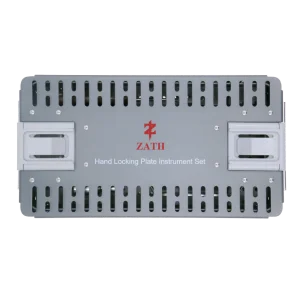
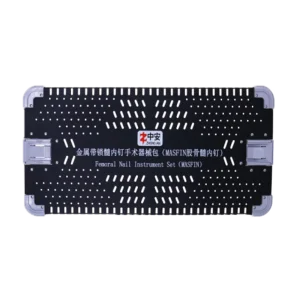
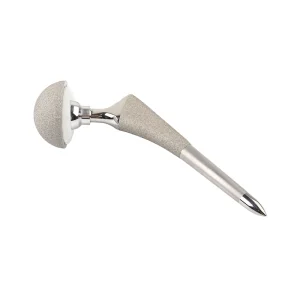
Full Clinical Catalog & Surgical Precision Hardware
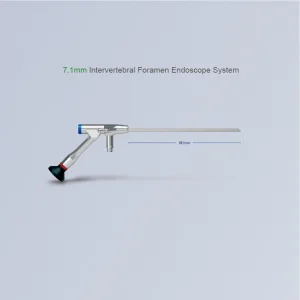
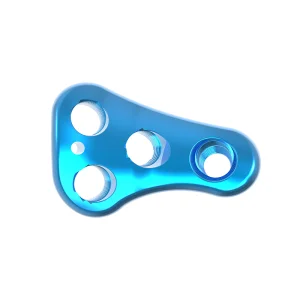
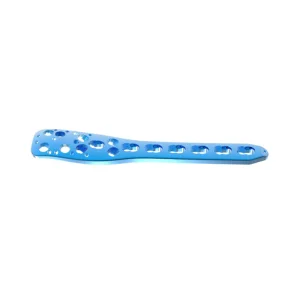
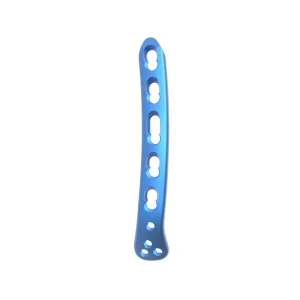
Explore additional trauma reconstruction locking plates, endoscopic spinal systems, precision bone pins, and total hip stems designed for surgical efficacy.

Request Complete Titanium System Catalogs & Technical Files
Equip your clinical sales network with certified orthopedic implants from Beijing ZhongAnTaiHua Technology Co., Ltd. (ZATH). Talk to our engineering department for rapid quotes, regulatory dossiers, and custom OEM manufacturing.