Integrated Trauma & Spine Matrix
Tier-1 Surgical Platforms & Associated Assemblies
ZATH manufactures comprehensive, complementary instrument sets and implants engineered under strict dimensional tolerance thresholds to pair seamlessly with cortical bone screw constructs.
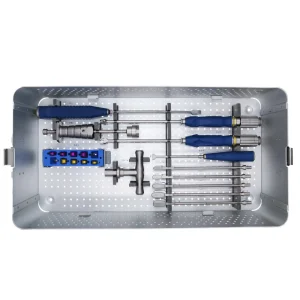
OEM Bone Surgical Instrument Sets Thoracolumbar TLIF Cage Instrument Set Factory, Exporters
Explore Clinical System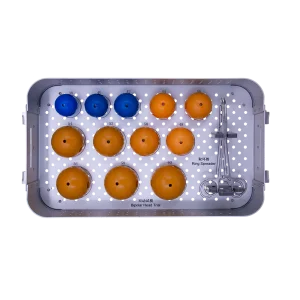
Famous Orthopedic Implant Human Use Bipolar Hip Instrument Set Suppliers, Exporter
Explore Clinical System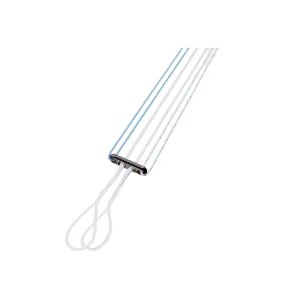
OEM SuperFix Titanium Endo Button With Loop Surgical Operations Company, Companies
Explore Clinical System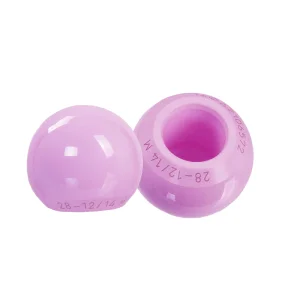
Buy Ceramic CDH Femoral Head Implant Hip Exporter, Company
Explore Clinical System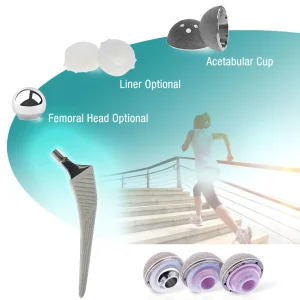
Discount Professional Medical Hip Implant Titanium Bipolar Hip Joint Prosthesis Manufacturers, Supplier
Explore Clinical System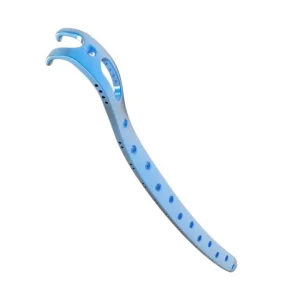
ODM Proximal Femur Locking Plate III Manufacturer, Suppliers
Explore Clinical System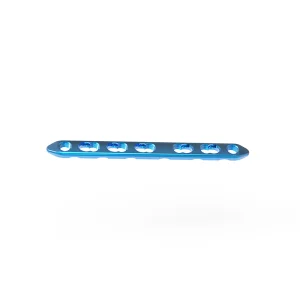
Custom Radius-Ulna Limited Contact Locking Compression Plate Factory, Exporter
Explore Clinical System
Executive Engineering Whitepaper
Biomechanics of 3.5mm AO Cortical Fixation in Small Fragment Repair
The 3.5mm AO (Arbeitsgemeinschaft für Osteosynthesefragen) cortical screw represents the fundamental cornerstone of internal osteosynthesis across upper extremity, fibular, and pelvic reconstruction. Specifically, the calibrated lengths of 15mm, 20mm, and 25mm provide surgeons with optimal bicortical purchase while minimizing soft tissue impingement.
3.5 mm
Outer Thread Diameter (Nominal)
1.25 mm
Standard AO Cortical Thread Pitch
2.4 mm
Core Diameter for Enhanced Shear
≥ 2.8 Nm
Torsional Yield Strength (Ti6Al4V)
Macro Industry Solutions
Global Trauma Care Demands & Industrial Supply Rationalization
Evaluating the convergence of demographic shifts, ambulatory surgical center (ASC) preferences, and lean hospital inventory requirements across mature and developing healthcare ecosystems.
The Small-Fragment Trauma Burden
Diaphyseal and metaphyseal forearm fractures, lateral malleolar fractures, and clavicular disruptions account for over 38% of global orthopedic emergency interventions. Surgeons demand high-retention cortical fixation that resists cyclical rotational shear.
The 3.5mm cortical screw serves as the standard lag screw and plate-securing vector. High manufacturing precision in standard sizes like 15mm, 20mm, and 25mm drastically lowers surgical revision rates resulting from screw cut-out or micro-movement.
Sterile-Packed Single-Kit Economics
Traditional non-sterile hospital screw caddies require expensive repetitive reprocessing, autoclaving cycles, and risk cross-contamination or screw cross-mixing.
ZATH has pioneered individually lot-traceable, sterile double-blister packaging for 15mm, 20mm, and 25mm cortical configurations, cutting processing overhead by 42% for Ambulatory Surgical Centers (ASCs) while achieving zero-defect sterility insurance level (SAL 10⁻⁶).
Decoupling Supply Chain Vulnerabilities
Volatile raw material costs and concentrated overseas logistics have placed hospital buying groups at risk of backorders.
As a vertically integrated enterprise located in the Zhongguancun Science Park (Beijing), ZATH leverages multi-axis Swiss-machining cells and local aerospace-grade alloy stocks, securing uninterrupted deliveries across EMEA, APAC, and the Americas within 4 to 6 business days.
Engineering Deep Dive
Parametric Metallurgy, Thread Mechanics & Torsional Dynamics
ZATH custom 3.5mm AO cortical screws are manufactured from certified medical-grade titanium alloy (Ti-6Al-4V ELI conforming to ISO 5832-3 / ASTM F136) or high-nitrogen austenitic stainless steel (ISO 5832-1).
| Dimensional & Mechanical Attribute | 15 mm Nominal Length | 20 mm Nominal Length | 25 mm Nominal Length | Engineering Significance |
|---|---|---|---|---|
| Primary Application Anatomy | Distal Radius / Distal Ulna, Small Bones | Forearm Shafts, Clavicle, Lateral Malleolus | Malleolar Lag Fixation, Pelvic Ring, Fibula | Optimal bicortical length avoiding soft tissue trauma |
| Major (Thread) Diameter | 3.50 mm (±0.04 mm) | 3.50 mm (±0.04 mm) | 3.50 mm (±0.04 mm) | AO-standard profile; consistent plate-hole engagement |
| Minor (Core) Diameter | 2.40 mm | 2.40 mm | 2.40 mm | Maximizes cross-sectional area to prevent shear snap |
| Thread Pitch & Flute Profile | 1.25 mm / Self-Tapping Dual Flute | 1.25 mm / Self-Tapping Dual Flute | 1.25 mm / Self-Tapping Dual Flute | Eliminates tapping tap step; ensures prompt bite |
| Drive Recess Architecture | Hexagonal 2.5mm / Torx T15 Option | Hexagonal 2.5mm / Torx T15 Option | Hexagonal 2.5mm / Torx T15 Option | Torx configuration enhances stripping resistance by 40% |
| Mean Pullout Load (Sawbones 20 PCF) | 1,210 N | 1,840 N (Bicortical model) | 2,360 N (Bicortical model) | High resistance to axial load under physiological stresses |
| Torsional Failure Limit (Nm) | 3.15 Nm (Ti6Al4V ELI) | 3.20 Nm (Ti6Al4V ELI) | 3.22 Nm (Ti6Al4V ELI) | Surpasses ASTM F543 requirements by > 35% margin |
Asymmetric Buttress Thread Profiles
Unlike symmetrical engineering fasteners, ZATH AO cortical screws feature asymmetric buttress threads with a trailing load angle of 35° and a leading cutting angle of 3°.
This geometry transfers maximal compressive loads to bone cortical lamellae without inducing radial splitting vectors, essential in osteoporotic or brittle bone stock.
Type II Anodization (Anti-Galling)
Titanium cold-welding (galling) between screw heads and limited-contact plates presents a significant intraoperative removal challenge.
ZATH employs proprietary electrochemical Type II surface anodization, creating an ultra-dense, low-friction oxide layer that suppresses titanium-on-titanium adhesion and enhances fatigue endurance limits.
Flute Geometry & Chip Evacuation
Precision dual-flute cutting tips generate accurate internal mating threads during manual drive.
Relief zones are dimensioned via dynamic computational fluid modeling to capture and channel morselized bone debris, preserving thread engagement and stabilizing torque-to-clamp translation.
Clinical Application Scenarios
Anatomical Indication Mapping for 15mm, 20mm, and 25mm Sizes
Translating surgical biomechanics into exact clinical workflows: why specific shaft, periarticular, and pelvic patterns require precise screw length selection.
Forearm Diaphyseal Fractures (Radius & Ulna)
Restoring the radial bow and maintaining interosseous membrane tension mandates absolute anatomical stability via 3.5mm LC-DCP or LCP systems.
- 15mm Screws: Ideal for distal third radius where anteroposterior diameter is reduced.
- 20mm Screws: Standard bicortical anchor for midshaft ulnar and radial diaphysis.
- Lag Screw: Yields interfragmentary compression across oblique fracture lines.
Distal Fibula & Ankle (Danis-Weber B/C)
Lateral malleolus stabilization requires a neutralisation plate or an independent interfragmentary lag screw placed perpendicular to the fracture plane.
- 20mm Screws: Optimal bicortical fixation through lateral fibular plates.
- 25mm Screws: Indicated for oblique lag screws running anterior-to-posterior.
- Clinical Benefit: Low-profile head avoids subcutaneous impingement at the lateral ankle.
Midshaft Clavicular Reconstructive Plating
Superior or anteroinferior locking plates demand precise screw length control to safeguard the underlying subclavian vessels and brachial plexus.
- 15mm Screws: Typical for anterior-inferior plating across smaller cortical depths.
- 20mm Screws: Provides safe bicortical purchase from superior-to-inferior drill paths.
- Safety Margin: Avoids over-penetration beyond the far cortex into the thoracic inlet.
Pelvic & Acetabular Auxiliary Fixation
Reconstruction plates (3.5mm system) curved along the pelvic brim or iliopectineal line require dependable anchor purchase into dense cortical columns.
- 20mm & 25mm Screws: Standard lengths for securing plates across quadrilateral surface fractures.
- Holding Power: High pitch-to-depth ratio ensures robust grip in subchondral bone layers.
- Compatibility: Fully matches ZATH pelvic reconstruction instruments.
Quality & Regulatory Assurance
Full Regulatory Compliance & OEM/ODM Engineering Capacities
ZATH operates under comprehensive ISO 13485:2016 quality management standards, backed by CE/UDEM technical files and global registration dossiers ready for regional commercialization.
Technical Documentation & Dossiers
Complete 510(k) predicate comparison testing data, biological evaluation reports (ISO 10993 series), and ASTM F543 torque/pull-out mechanical validation dossiers are available to qualified distributors.
Our in-house regulatory affairs team prepares country-specific registration files (such as COFEPRIS, ANVISA, SFDA, and EU MDR Class IIb technical design dossiers).
Custom OEM/ODM Engineering
Whether your hospital network or brand requires custom thread profiles, variable pitch, specialized surface finishes, or customized head recesses (Hex, Torx, Cruciform), ZATH provides end-to-end realization.
Our engineering center in Beijing deploys multi-axis CNC Swiss lathes capable of micro-tolerances down to ±0.005mm, with custom laser-marking of your private brand and lot code.
Cleanroom & Sterilization Assurance
Implant washing utilizes automated ultrasonic multi-stage passivation systems conforming to ASTM A967/F86, removing all machine oils and particulate residues.
Final packaging takes place inside certified ISO Class 7 (Class 10,000) cleanrooms. Screws are sealed in medical-grade Tyvek blister packs validated for 5-year shelf-life sterility (ISO 11607).
ISO 13485:2016
Medical Devices QMS Certified
ASTM F543
Mechanical Performance Validated
ISO 11137
Sterilization Dose Verification
Free Sale (FSC)
International Market Access
Forward Engineering Roadmap
Future Directions in Small Fragment Bone Fixation (2026–2030)
How additive manufacturing, bio-absorbable metallurgy, and digital intraoperative tracking are shaping the next generation of cortical screw manufacturing at ZATH.
Bioresorbable Magnesium-Zinc Alloys
To address the necessity of routine hardware removal in young and active patients, ZATH R&D is formulating magnesium-calcium-zinc alloy cortical screws.
Controlled biodegradation rates ensure the screw maintains structural rigidity during the initial 12-week osteogenesis window, gradually degrading thereafter and converting into native mineral bone.
Antimicrobial Ag-HA Functional Nanocoatings
Implant-associated surgical site infections (SSIs) remain a costly complication. Next-generation 3.5mm screws integrate thin-film physical vapor deposition (PVD) silver-doped hydroxyapatite nanocoatings.
This dual-action layer promotes rapid osteointegration at the bone-screw interface while releasing micro-dosed silver ions that inhibit bacterial biofilm colonization (e.g., S. aureus).
Smart RFID & Direct DataMatrix Laser Serialization
Traceability at the individual screw level simplifies automated OR tracking and eliminates miscounts.
ZATH has deployed high-resolution femtosecond laser ablation to micro-etch GS1-standard 2D DataMatrix codes directly onto the 3.5mm screw head perimeter, enabling optical intraoperative scanning without disrupting driver bit engagement.
Engineering & Clinical Q&A
Frequently Asked Technical & Procurement Questions
Direct insights on instrument sizing, drill bit protocols, torque limitations, and volume order logistics for procurement executives and surgical staff.
What is the recommended pilot drill bit size for 3.5mm AO cortical screws?
For standard cortical bone purchase, a calibrated 2.5mm drill bit is used through a 3.5mm neutral or load drill guide. If using the screw as a lag screw across a near-cortex fracture line, the near fragment must be overdrilled using a 3.5mm gliding drill bit to permit compression upon engaging the far cortex tapped with the 2.5mm pilot hole.
Why are 15mm, 20mm, and 25mm the most critical small-fragment inventory lengths?
Anatomical morphological studies across diaphyseal radii, ulnae, distal fibulae, and clavicles confirm that the median bicortical diameter ranges between 13.8mm and 23.4mm. Providing robust supply chain redundancy for 15mm, 20mm, and 25mm satisfies over 70% of standard small-fragment surgical screw length requirements, minimizing excess hospital stock.
What is the stripping torque threshold, and how does the Torx T15 drive compare to Hex 2.5mm?
Under ASTM F543 testing conditions, the typical stripping torque of a standard 2.5mm hexagonal recess in Ti6Al4V is approximately 2.6 to 2.8 Nm. The star (Torx T15) drive design distributes contact stresses tangentially rather than radially, boosting cam-out and stripping thresholds to > 3.6 Nm. This provides a 40% safety margin against screw head deformation during dense cortical bone seating.
Are these screws compatible with non-locking plates (DCP / LC-DCP) as well as locking plates (LCP)?
Yes. The conical head profile (spherical 6.0mm diameter) is fully compatible with standard dynamic compression plate (DCP) holes, limited-contact DCP (LC-DCP) holes, and the dynamic compression non-threaded segment of combi-holes in modern locking compression plates (LCP). This enables dynamic axial bone compression prior to placement of fixed-angle locking screws.
What quality control documentation accompanies bulk OEM export orders?
Each lot shipment includes comprehensive Inspection Certificates (EN 10204 Type 3.1) stating the raw bar stock chemical composition, tensile yield values, dimensional optical CMM verification charts, passivation reports, and ethylene oxide (EO) or gamma irradiation dosage release certificates.
What is the standard turnaround time for custom modifications and global shipping?
Standard catalog items (15mm, 20mm, 25mm in sterile or non-sterile packaging) ship within 48 hours via DHL, FedEx, UPS, or EMS, arriving at global hospital or distributor destinations in 4 to 6 business days. Custom dimensional or OEM branding modifications generally require a 3 to 4-week tooling, testing, and production window depending on order volumes.
Expanded Orthopedic Implants & Systems
Complementary Joint, Spine & Long-Bone Solutions
ZATH's production line spans 19 specialized product series. Review complementary intramedullary, spinal fixation, and arthroplasty platforms manufactured to the same rigorous quality criteria.
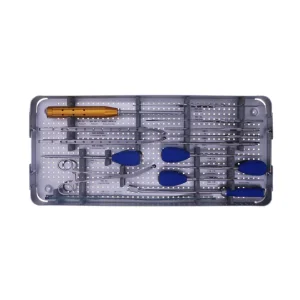
Best Zipper 6.0 System Spinal Internal Fixation System Instrument Universal Set Quotes, Company
Explore Clinical System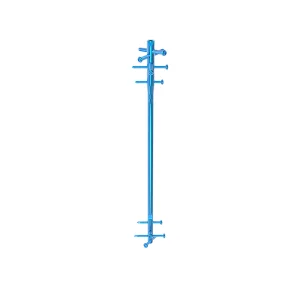
CE Certification Customized Expert Tibia Intramedullary Nail Implant Pricelist, Products
Explore Clinical System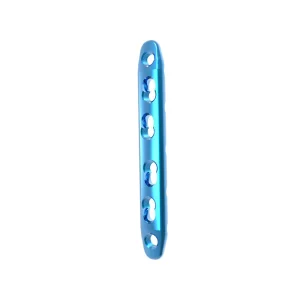
China Humerus Limited Contact Locking Compression Plate Manufacturer, Service
Explore Clinical System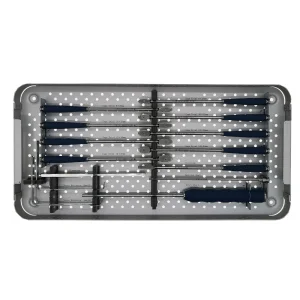
Famous Spine Surgery Thoracolumbar PLIF Cage Instrument Set Supplier, Suppliers
Explore Clinical System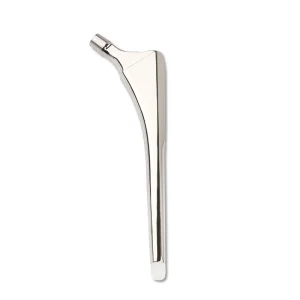
Cheap TDS Cemented Stem Orthopedic Implants Companies, Service
Explore Clinical System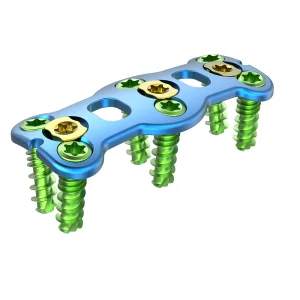
CE Certification High quality Orthopedic Cervical Shielder ACP Plate System Manufacturer, Suppliers
Explore Clinical System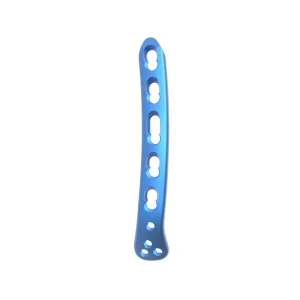
Cheap Distal Posterolateral Humerus Locking Compression Plate Suppliers, Exporter
Explore Clinical System