
Featured Precision Implants & Instrument Systems
Direct factory configurations engineered for international clinical standards, sterile barrier compliance, and rapid surgical reproducibility.
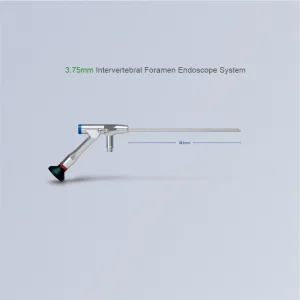
CE Certification 3.75mm Intervertebral Foramen Endoscope System

High Quality Orthopedic Implant Double Ended Bone Pin
CE Certified Elastic Nail Instrument Set (ZEIN) Systems
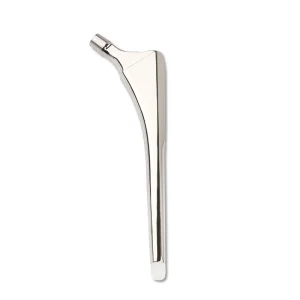
TDS Cemented Stem Orthopedic Hip Arthroplasty Implant
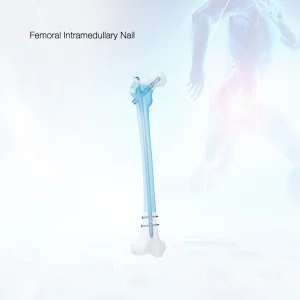
Titanium ZAFIN Interlocking Intramedullary Nail System
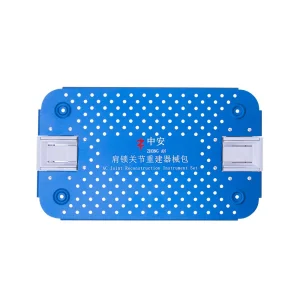
ODM AC Joint Anatomical Reconstruction Instrument Set
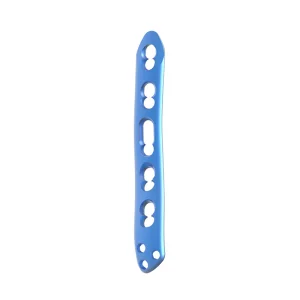
Distal Medial Humerus Locking Compression Plate (LCP)
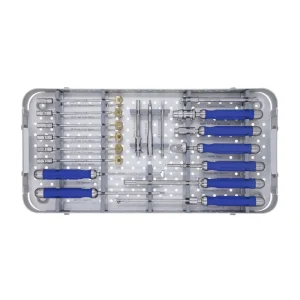
Cervical Interbody Fusion Cage Specialized Instrument Set
The Biomechanical Paradigm of Custom Intramedullary Fixation
Analyzing the shift from rigid extramedullary plating to biological load-sharing intramedullary nailing in complex trauma management.
Load Sharing vs. Load Bearing Dynamics
Intramedullary (IM) nails are centromedullary splints functioning on load-sharing principles. Positioned along the anatomical neutral mechanical axis of long bones, they exhibit far lower bending moments compared to laterally placed extramedullary plates. This mechanical position permits early controlled axial micromotion (typically 0.2 to 0.5 mm), accelerating secondary periosteal callus formation while mitigating stress shielding.
- Centralized axial loading minimizes mechanical lever-arm fatigue.
- Preservation of extraosseous periosteal vascularity via closed insertion.
- Dynamic distal locking configurations facilitate early weight-bearing.
Global Commercial & Industrial Landscape
The global orthopedic trauma fixation market is undergoing massive structural realignment. Public and private healthcare institutions worldwide face mounting financial pressure under DRG (Diagnosis-Related Group) reimbursement frameworks. Concurrently, rigorous medical regulatory transitions—such as the European MDR 2017/745—have created acute distributor shortages for tier-1 quality devices at sustainable margins.
- Heightened demand for custom OEM platforms with comprehensive MDR/FDA documentation.
- Decentralization of device manufacturing favoring vertically integrated hubs.
- Growth of surgical volume in Latin America, Middle East, and Asia-Pacific.
E-E-A-T Metallurgical Benchmark: Ti-6Al-4V ELI
Beijing ZhongAnTaiHua Technology Co., Ltd. (ZATH) uses medical-grade ASTM F136 Grade 5 ELI (Extra Low Interstitial) titanium alloy. Compared to conventional commercial stainless steel (316LVM) or commercial Ti-6Al-4V, ELI reduces interstitial oxygen, nitrogen, and carbon atoms, conferring superior fracture toughness (K1c ≥ 75 MPa·m^1/2) and extreme high-cycle fatigue life under cyclic bending.
- Modulus of Elasticity: ~110 GPa (closer to cortical bone than SS 200 GPa).
- Tested over 10 million cycles per ASTM F1264 biomechanical protocols.
- Electropolished & Type II anodized for biological inertness and lubricity.
| Biomechanical Attribute | Ti-6Al-4V ELI (ZATH Implants) | Medical Stainless Steel (316LVM) | Human Cortical Bone |
|---|---|---|---|
| Young's Modulus (Elasticity) | 110 – 114 GPa (Optimal flexural load share) | 190 – 210 GPa (High stress shielding risk) | 10 – 30 GPa (Dynamic bio-matrix) |
| Tensile Yield Strength (Yield) | ≥ 860 MPa (ASTM F136 Standard) | ≥ 690 MPa (ASTM F138 Standard) | 100 – 150 MPa |
| Fatigue Endurance Limit (>10^7 cycles) | > 500 MPa (Superior fatigue survival) | > 280 MPa (Fatigue susceptible) | N/A (Remodeling capacity) |
| MRI Artifact Magnetic Susceptibility | Extremely Low (Clear postoperative imaging) | High (Severe distortion & haloing) | Paramagnetic / Neutral |
| Corrosion Resistance & Cytocompatibility | Spontaneous TiO2 passivated inert film | Susceptible to pitting & fretting corrosion | Biological Host |
Localized Anatomical Application Matrix
Targeted engineering designs tailored to regional surgical preferences, varying bone canal curvatures, and complex diaphyseal trauma patterns.
Proximal Femoral & Trochanteric Nailing (PFNA)
Indicated for unstable intertrochanteric (AO/OTA 31-A1, A2, A3) and subtrochanteric fractures. The system integrates a dynamic helical blade or dual cephalomedullary lag screw construct. Compaction of cancellous bone around the blade enhances rotational stability and dramatically reduces screw cut-out rates in geriatric osteoporotic populations.
- 125° and 130° CCD angle geometries for variable anatomies.
- Valgus curvature angle of 4° to 6° for easy insertion through the greater trochanter tip.
- Cannulated helical blade provides bone-preserving rotational hold.
Anterograde & Retrograde Femoral Shaft Systems
Engineered for mid-shaft comminuted fractures, subtrochanteric extensions, and distal metaphyseal boundaries. Featuring a calibrated anatomical anterior bow radius (R1500–R2000 mm) that accurately matches global population variations, effectively preventing anterior distal cortex impingement or cortical breakthrough.
- Dual-mode entry: Piriformis fossa or greater trochanter tip.
- Multiplanar distal locking screws for multi-fragmentary stability.
- Full-length cannulation allowing smooth guide wire passage under fluoroscopy.
Tibial Expert Interlocking Systems
Designed for proximal, diaphyseal, and distal tibial metadiaphyseal fractures (AO/OTA 42 and 43). Supports both traditional infrapatellar approaches and contemporary suprapatellar approaches with semi-extended leg positioning, significantly easing fracture reduction and eliminating quadriceps tensioning during reaming.
- Proximal Herzog bend (10.5°) avoids intra-articular knee structure disruption.
- Tri-planar distal locking holes positioned within 5mm of the nail apex.
- Dynamic locking slot permits 5mm of postoperative controlled dynamization.
Pediatric Elastic Stable Intramedullary Nails (ESIN/TEN)
Specifically engineered for diaphyseal long bone fractures in pediatric and adolescent patients (ages 3–14). Relying on the biological principle of three-point fixation and symmetrical pre-bent titanium elastic nails inserted from opposing cortices, creating equal opposing elastic recoil forces that stabilize the reduction while preserving epiphyseal growth plates.
- High elasticity titanium alloy with diameters from 1.5mm to 4.5mm.
- Pre-curved tapered bullet tips prevent contralateral cortex penetration.
- End-cap compatibility to stop soft-tissue irritation and nail migration.
Humeral Diaphyseal & Subcapital Fixation
Optimized for proximal 1/3, diaphyseal, and distal 1/3 humeral fractures. Accommodates both antegrade (rotator cuff sparing insertion through the articular cartilage footprint) and retrograde portals, safeguarding the radial and axillary nerves while delivering firm rigid rotational fixation.
- Curved apex profile reduces rotator cuff subacromial impingement.
- Threaded multi-angle locking holes prevent screw back-out.
- Radiolucent proximal targeting jig ensures precise distal locking.
ZATH Manufacturing Resilience & Global Supply Chain Advantages
Operating from the Zhongguancun Science and Technology Park, Pinggu, Beijing. Fully integrated production from raw bar stock to sterile shelf-ready implants.
Vertical In-House Integration
Beijing ZhongAnTaiHua Technology Co., Ltd. (ZATH) eliminates third-party outsourcing dependencies. In-house facilities combine 5-axis DMG MORI and Citizen Swiss-type CNC centers, specialized deep-hole gundrilling machines, wire EDM, automated deburring, electropolishing, cleanroom packaging, and EO sterilization validation under single-roof governance.
Strict Metallurgical Quality Control
Raw material integrity forms the cornerstone of surgical safety. Every titanium batch undergoes spectrometer chemical analysis, metallographic crystal structure audits, and tensile modulus verification. Full material mill test certificates (EN 10204 3.1) accompany every production lot, offering uncompromised traceability from ore to operating room.
Agile OEM / ODM & 4–6 Day Logistics
Supporting international OEM/ODM distributors with custom laser markings, custom-sized nail diameters/lengths, bespoke targeting guides, and localized blister packaging. Backed by partnerships with DHL, FedEx, TNT, UPS, and air-freight logistics hubs, standard replenishments reach global distributor warehouses within 4 to 6 business days.
Compliance Assurance & Registration Dossier Support
Accelerating market authorization across five continents with complete, structured, and validated technical documentation.
Complete Technical Dossiers (STED)
We provide distributors with ready-to-file Summary Technical Documentation (STED) compliant with ASEAN CSDT, European MDR 2017/745 Class IIb, and US FDA 510(k) structural guidelines. Dossiers encompass risk management files (ISO 14971), clinical evaluation reports (CER), engineering drawings, and usability assessments.
Biocompatibility & Sterilization Validation
All ZATH custom implants possess comprehensive cytotoxicity, systemic toxicity, genotoxicity, and irritation test reports per ISO 10993 series standards. Sterile-packaged implants are processed in Class 100,000 cleanrooms and validated per ISO 11135 (EtO) and ISO 11607 (packaging barrier integrity over a 5-year accelerated shelf-life).
UDI Compliance & Traceability
Laser-etched Unique Device Identification (UDI) barcodes on implants and matching high-density data-matrix packaging guarantee seamless post-market surveillance. Barcodes encode production lot numbers, expiration dates, and Global Model Numbers (GMN), ensuring total transparency from supply chain to surgical scrub nurse.
Technology Roadmap & Next-Gen Intramedullary Systems
Pioneering additive manufacturing, bioresorbable metallurgy, and embedded sensor telemetry for the future of orthopedic trauma care.
3D Printed Trabecular Porous Lattice Nails
Employing Direct Metal Laser Sintering (DMLS) to produce gradient porous titanium surfaces with 60–70% interconnected porosity (pore size 300–500 μm). This structure mimics natural human cancellous trabeculae, facilitating rapid vascular infiltration and bone ongrowth in critical-sized segmental bone defects.
Biodegradable Magnesium Alloy Systems
R&D efforts are advancing high-purity magnesium-rare earth (Mg-RE) alloy intramedullary pins and pediatric nails. Controlled enzymatic degradation gradually shifts mechanical load to healing bone, degrading completely into harmless ions (Mg2+) and eliminating secondary hardware removal surgeries.
Smart Telemetric Nails with Strain Sensing
Developing micro-electromechanical (MEMS) sensors integrated directly into the nail cannulation cavity. Transmitting real-time micro-strain, cyclic loading, and local temperature data via RFID/NFC protocols to assess biological callus consolidation and flag early prosthetic infections non-invasively.
Frequently Asked Questions for Hospital Buyers & Distributors
Direct answers covering metallurgical specifications, surgical instrumentation tolerances, OEM custom branding, and international freight logistics.
What specific titanium alloy grade is utilized in ZATH intramedullary nails?
How does ZATH solve the problem of distal screw hole targeting misalignment?
Are ZATH orthopedic implants provided in sterile or non-sterile packaging?
What are the minimum order quantities (MOQ) and lead times for custom OEM/ODM orders?
What regulatory support documentation does ZATH provide for local Ministry of Health registration?
How does the biomechanical modulus of titanium compare to stainless steel regarding stress shielding?
Comprehensive Surgical Portfolio & Instrument Sets
Expanding clinical support across spinal interbody arthrodesis, distal limb trauma fixation, and specialized orthopedic instrumentation.
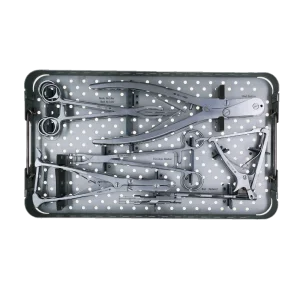
Custom CE Approved Orthopedic Ladder OCT Instrument Set
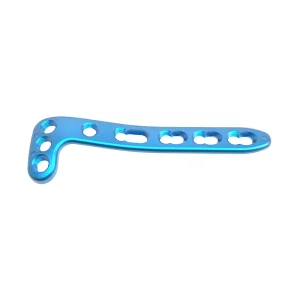
Proximal Medial Tibia Locking Compression Plate I
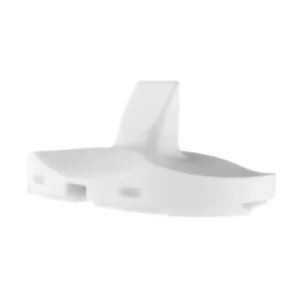
Enable Tibial Insert Knee Joint Prosthesis System
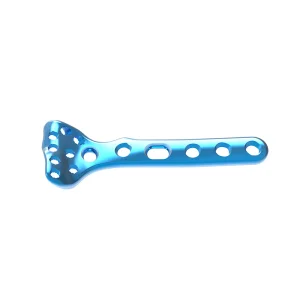
ODM Distal Volar Radius (DVR) Locking Plate I
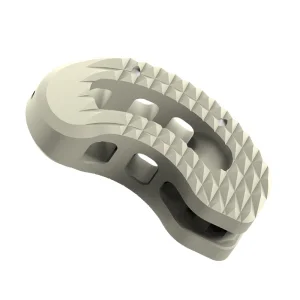
Thoracolumbar Interbody Cage (Angled PEEK) System
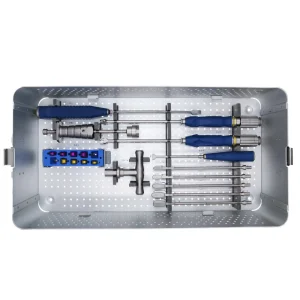
Thoracolumbar TLIF Cage Specialized Surgical Instrument Set
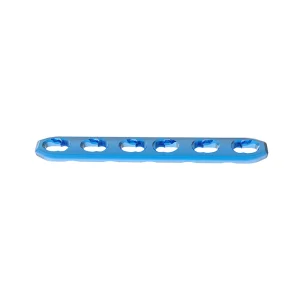
Tibia Limited Contact Locking Compression Plate (LC-LCP)
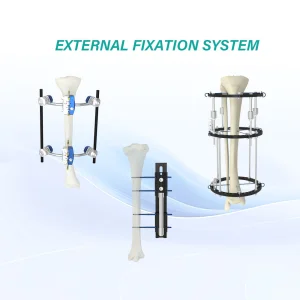
Orthopedic Synthes Type External Fixation Fixator System
Partner with an ISO 13485 Certified Orthopedic Manufacturer
Whether establishing national tender supply lines or developing custom-engineered OEM intramedullary implant systems, ZATH provides the direct engineering expertise, clinical documentation, and manufacturing agility your market requires.