
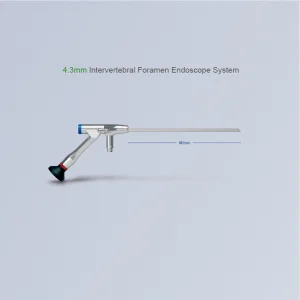
Surgical Instrumentation & Implant Portfolio
Precision Internal Fixation Systems & Endoscopic Instrumentation
Explore clinical-grade orthopedic implant solutions fabricated under validated cleanroom protocols, ready for immediate hospital dispatch and specialized surgical deployment.
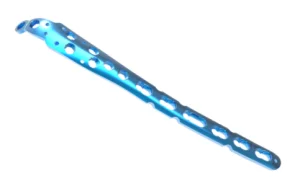
China Proximal Ulna Locking Compression Plate Quotes, Companies
View Product Detail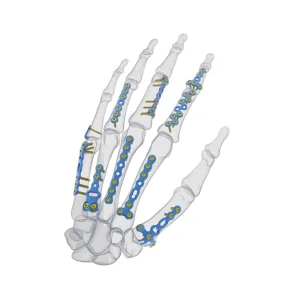
Best Hand Fracture Locking Plate System Exporter, Companies
View Product Detail
China High Quality Pelvic Reconstruction Plate Instrument Set
View Product Detail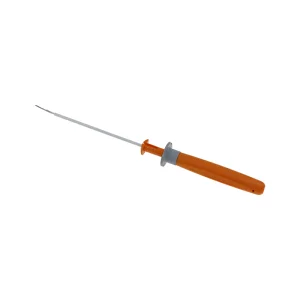
ODM Orthopedic Fast All Inside Meniscal Repair Device System
View Product Detail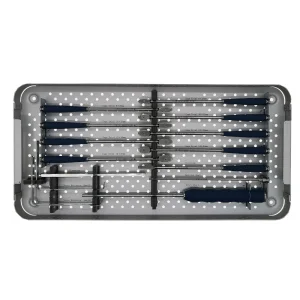
Famous Spine Surgery Thoracolumbar PLIF Cage Instrument Set
View Product Detail
Buy Medical Bone Surgery ZAFIN Femoral Nail Instrument Set
View Product Detail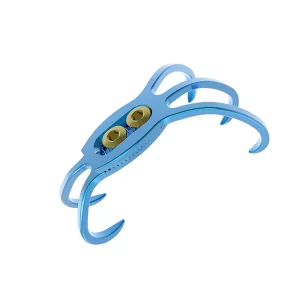
Patella Claw S M L Bone Fracture Solutions Supplier, Exporters
View Product Detail±0.005mm
CNC Machining Dimensional Tolerance
100%
Spectrographic Material Lot Traceability
>2.8×
Fatigue Endurance Over ISO Standard
4-6Days
Rapid Express Dispatch to Global Hubs
Technical Whitepaper: Clavicular Biomechanics
Clinical Architecture & Evolutionary Dynamics of Clavicle Plating Systems
Evaluating the shift from conventional non-operative sling immobilization and planar reconstruction plates to anatomically contoured locking compression constructs (LCP) in shoulder girdle trauma.
Anatomical Complexity of the S-Curvature
The human clavicle functions as a strategic osseous strut bridging the axial skeleton at the sternoclavicular articulation to the upper appendicular skeleton at the acromioclavicular (AC) junction. Morphologically, the bone presents a complex dual three-dimensional curve: convex anteriorly in the medial two-thirds and concave anteriorly in the lateral third.
Traditional non-contoured 3.5mm dynamic compression plates (DCP) required manual intraoperative bending that frequently caused metallurgical notch fatigue, micro-cracking, and imperfect axial alignment. Modern custom clavicle bone plates incorporate pre-formed anatomical contours established from wide-spectrum CT volumetric scanning data, mirroring ethnic skeletal variances and significantly reducing operating theater contouring time.
Subcutaneous Profile & Soft-Tissue Respect
Because the clavicle possesses minimal overlying soft tissue—covered primarily by thin skin, subcutaneous fascia, and the delicate platysma muscle—implant profile is paramount. Prominent hardware induces persistent post-operative pain, soft-tissue necrosis, plate erosion, and secondary surgical removal rates ranging from 15% to as high as 40% in clinical literature.
Next-generation custom clavicle plates utilize ultra-low-profile geometries (<2.5mm plate thickness at the shaft, tapering to <1.8mm at the distal extremity) with meticulously chamfered, rounded edges and fully recessed locking screw heads. This eliminates soft-tissue impingement while preserving robust flexural and torsional rigidity across unstable fracture gaps.
Locking Screw Angular Stability
Clavicle fractures subjected to multi-planar muscle forces (trapezius, deltoid, sternocleidomastoid, and pectoralis major) experience dynamic distraction, cantilever bending, and axial rotation. Standard screws rely solely on plate-to-bone frictional friction, which compromises periosteal microcirculation and frequently loosens in osteoporotic bone.
Fixed-angle and variable-angle locking screws engage internally threaded plate holes to construct an internally rigid scaffold. This fixed-angle interface shifts shear loads throughout the plate construct rather than relying on bone compression, preserving the sub-periosteal blood supply, eliminating secondary screw back-out, and accelerating osseous bridging in comminuted or osteopenic cohorts.
Global Market Landscape & Purchasing Dynamics
Tender Qualification, Regulatory Hurdles, and B2B Sourcing Demands
Analyzing the commercial demands of international healthcare tenders, hospital group purchasing organizations (GPOs), and regional distributors navigating medical device regulatory transitions.
Distributor Margin Compression & OEM Needs
Global orthopedic distribution networks face escalating margin pressures resulting from localized centralized drug/device volume procurement (such as China's VBP, European national single-payer pricing pressures, and US bundled reimbursement programs). Regional distributors can no longer sustain viable margins on multinational brand royalties.
Consequently, purchasing directors increasingly bypass tiers of third-party trading intermediaries to establish direct OEM/ODM supply alliances with qualified primary manufacturers. Strategic demands include private-label laser marking, custom surgical caddy/tray layouts, customized screw length gradations, and modular inventory replenishment systems.
EU MDR 2017/745 & Global Compliance
The stringent enforcement of the European Medical Device Regulation (MDR 2017/745) along with US FDA 510(k) clearance protocols has created substantial market disruption. International distributors require robust Technical Documentation Files (TDF), biocompatibility dossiers compliant with ISO 10993, and rigorous post-market clinical follow-up (PMCF) registries.
A premier clavicle bone plate exporter must maintain validated quality management architectures under ISO 13485:2016, supported by documented bio-burden testing, gamma/EO sterilization validation (ISO 11137 / ISO 11135), and accredited mechanical testing reports confirming static and dynamic four-point bending strength under ASTM F382.
Sterile Single-Unit Packaging Requirements
While bulk, non-sterile implant trays historically dominated orthopedic traumatology, hospital epidemiology groups and operating room managers increasingly mandate pre-sterilized, single-unit blister packaging. Sterile packaging eliminates the labor-intensive washing, ultrasonic decontamination, and autoclaving cycles previously performed by hospital sterilization departments.
Moreover, sterile double-barrier peel pouches equipped with multi-language GS1 DataMatrix barcodes and UDI (Unique Device Identification) codes eliminate OR cross-contamination hazards, streamline hospital inventory lot-tracking, and ensure immediate compliance with healthcare electronic medical record (EMR) integrations worldwide.
Smart Manufacturing Ecosystem
China Factory 4.0: Supply Chain Resilience, Automation & Quality Yield
How advanced medical device manufacturing clusters in Beijing and the greater industrial supply corridor deliver metallurgical consistency, precision tolerances, and exceptional production scalability.
Multi-Axis Swiss CNC Machining & Wire EDM
Clavicle locking compression plates exhibit intricate geometrical challenges: continuous 3D compound curvature, alternating combination dynamic compression locking holes, and beveled peripheral profiles. ZATH's automated workshop leverages synchronized 5-axis high-speed CNC milling machining centers and submerged wire electrical discharge machining (EDM).
By milling directly from homogeneous certified medical-grade titanium alloy billets (Ti-6Al-4V ELI / Grade 23), mechanical residual stress is virtually eliminated compared to post-machining cold-stamping methodologies. Screw threading, combi-hole counter-sink geometry, and plate radiuses achieve consistent repeatable micrometer tolerances within ±0.005mm.
Type II Electrochemical Anodization & Passivation
Surface chemistry dictates osseointegration, fatigue life, and post-implant biological inertness. Our advanced post-machining chemical processing incorporates automated ultrasonic micro-degreasing, acid etching passivation per ASTM F86, and controlled Type II electrochemical anodization.
This electrochemical conversion process produces a micro-stabilized titanium dioxide (TiO₂) protective passive layer that significantly reduces ion leaching, eliminates foreign-body inflammatory responses in vivo, elevates cyclical fretting fatigue resistance, and enables distinctive color-coding across anatomical configurations (e.g., golden superior midshaft vs. blue distal clavicle) for rapid surgical identification.
Comprehensive Quality Verification Chain
Every single manufactured production lot is governed by full end-to-end digital tracking from the moment raw titanium bar stock enters quarantine. Material verification entails X-ray fluorescence (XRF) spectrographic chemistry validation and tensile mechanical yield testing.
Intermediate and finished parts undergo non-contact automated optical inspection (AOI), 3D coordinate measuring machine (CMM) dimensional verification, and laser profilometry surface roughness analysis (Ra < 0.4μm). Finished assemblies undergo 100% thread gauge go/no-go validation to ensure zero screw cross-threading during critical operative windows.
Surgical Indication Mapping
Localized Surgical Application Scenarios & Anatomical Fixation Subtypes
Correlating Robinson and Allman fracture classifications with specialized anatomical clavicle plating designs to maximize surgical stability and functional shoulder recovery.
Allman I / Robinson 2B
Superior Midshaft S-Plates
Indicated for displaced mid-diaphyseal fractures. Positioned on the superior tension surface of the clavicle to resist intense biomechanical bending moments created by arm weight and pectoralis contraction. Features pre-contoured S-curves matching native left and right clavicular anatomy, with alternating screw trajectories preventing anterior-posterior neurovascular bundle penetration.
Anterior Minimally Invasive
Anteroinferior Midshaft Plates
Designed for sub-muscular insertion or patients with exceptionally lean subcutaneous builds. Placing the plate along the anteroinferior surface provides substantial screw purchase into thicker cortical bone while shielding the implant beneath the anterior soft-tissue envelope, virtually eliminating hardware prominence and enabling bicortical screw insertion directed away from subclavian vessels.
Allman II / Neer Type II
Distal Clavicle Hook Plates
Indicated for unstable lateral clavicle fractures and severe acromioclavicular (AC) joint dislocations (Rockwood III-V) with coracoclavicular ligament disruption. The anatomically angled posterior subacromial hook passes beneath the acromion to restore vertical shoulder stability without invading the AC joint cartilage, enabling early passive shoulder range-of-motion.
Reconstruction & Malunion
Multi-Axial Lateral LCPs
Ideal for severely comminuted distal lateral fractures (Robinson Type 3B) where small distal bone fragments offer minimal purchase. Features a clustered multi-hole distal paddle supporting divergence and convergence locking screw angles, maximizing construct purchase in cancellous subchondral bone without extending into the adjacent joint capsule.
| Plating Category | Anatomical Positioning | Raw Material Spec | Screw Dimensions | Primary Clinical Indications |
|---|---|---|---|---|
| Superior Midshaft Anatomical LCP | Superior clavicular cortical surface | Titanium Alloy (Ti-6Al-4V ELI) / ASTM F136 | Shaft: 3.5mm Locking / Cortical | Displaced midshaft fractures (Robinson 2A/2B), transverse or short oblique nonunions. |
| Anteroinferior Clavicle Plate | Anterior/inferior border | Titanium Alloy (Ti-6Al-4V ELI) / ISO 5832-3 | Shaft: 2.7mm / 3.5mm Low-Profile | Patients with prominent superior bone contours, complex comminution, revision plating. |
| Acromioclavicular Hook Plate | Superior distal shaft + Subacromial space | High-Tensile Medical Titanium (Gr 5) | Body: 3.5mm; Hook depth: 12-18mm | Neer Type II distal fractures, Tossy III / Rockwood IV & V acromioclavicular disruptions. |
| Distal Clavicle Multi-Hole Plate | Superior-lateral surface with divergent fan | Titanium Alloy (Ti-6Al-4V ELI) / ASTM F136 | Distal: 2.4mm / 2.7mm; Shaft: 3.5mm | Comminuted distal lateral fractures with small periarticular osseous fragments. |
Complete Orthopedic Reconstruction Portfolio
Specialized Traumatology, Arthroplasty & Sports Medicine Implants
Precision instrumentation kits and implants designed to integrate seamlessly across operating rooms, trauma centers, and tertiary healthcare institutions worldwide.
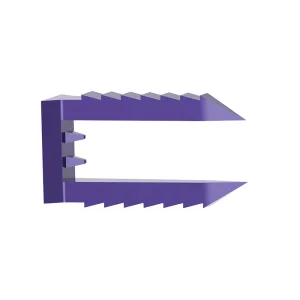
Famous Titanium Alloy Orthopedic Suture Anchor Manufacturer
View Product Detail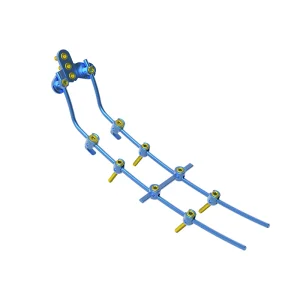
ODM Non-invasive Ladder Optical Coherence Tomography System
View Product Detail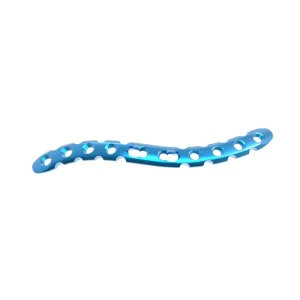
Wholesale Clavicle Reconstruction Locking Compression Plate
View Product Detail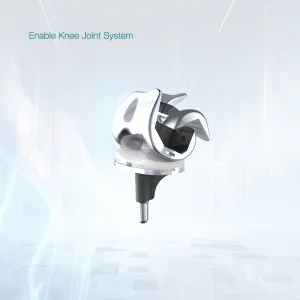
Buy High Quality Titanium Total Knee Joint Replacement Implants
View Product Detail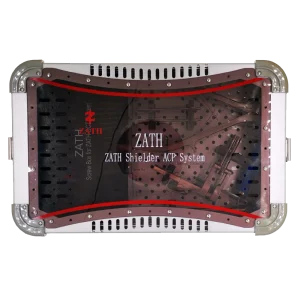
ODM Orthopedic Cervical ACP Plate System Instrument Set
View Product Detail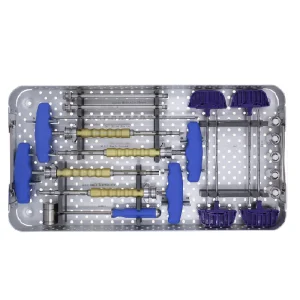
Spine Instrument Set Zenith HE Instrument Set Suppliers, Quotes
View Product Detail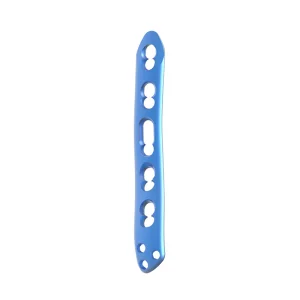
Buy Distal Medial Humerus Locking Compression Plate Factory
View Product Detail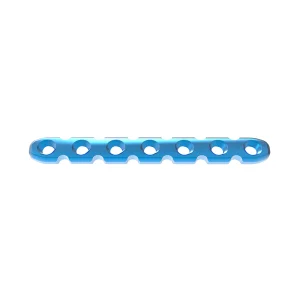
Cheap Reconstruction Locking Plate Quotes, Company
View Product Detail
Technical & Procurement FAQ
Essential Answers for Orthopedic Hospital Buyers & Importers
Direct technical, metallurgical, regulatory, and logistics intelligence addressing key qualification criteria for medical device distribution.
What metallurgical standards are utilized in custom clavicle bone plate fabrication?
ZATH manufactures all clavicle locking bone plates exclusively using certified medical-grade titanium alloy conforming to ASTM F136 and ISO 5832-3 (Ti-6Al-4V ELI - Extra Low Interstitial). Compared to standard commercially pure titanium or 316L medical stainless steel, Ti-6Al-4V ELI provides significantly higher ultimate tensile strength (≥ 860 MPa), superior fatigue endurance, and a modulus of elasticity closer to human cortical bone (approx. 110 GPa vs. 200 GPa for stainless steel).
This reduced stiffness gradient mitigates bone stress-shielding, minimizes post-operative cortical osteopenia beneath the plate, eliminates nickel-allergy immunogenic reactions, and ensures complete MRI conditional safety up to 3.0 Tesla imaging environments.
How do combi-holes function in anatomical clavicle locking compression plates?
Our engineered combi-holes unite two distinct biomechanical functions within a single monolithic slot. One side features a precision CNC-machined conical internal thread, while the adjoining section presents a smooth dynamic compression unit (DCU) counter-sink ramp based on the classic AO/ASIF eccentric compression principle.
This hybrid architecture grants orthopedic surgeons absolute intraoperative autonomy. The surgeon can place a 3.5mm standard cortical screw in the compression segment to bring the fractured bone fragments into anatomical interfragmentary contact, and subsequently introduce fixed-angle 3.5mm or 2.7mm locking screws into the threaded half to create an angularly stable internal splint without compromising periosteal microvascular circulation.
What regulatory documentation is provided to support regional medical device registrations?
We supply comprehensive technical dossiers designed to streamline market access through national health authorities (including European CE under MDR, US FDA 510(k), Latin American ANVISA/COFEPRIS, and Middle Eastern SFDA). Standard documentation packages include:
- Certified copies of ISO 13485:2016 Quality Management System accreditation.
- Free Sale Certificates (FSC) and Certificates of Analysis (CoA) per manufacturing lot.
- Biocompatibility evaluations conducted under ISO 10993 (cytotoxicity, sensitization, systemic toxicity, genotoxicity).
- Mechanical testing validation reports conforming to ASTM F382 (four-point bending fatigue strength and yield load).
- Ethylene Oxide (EO) or Gamma irradiation sterilization validation dossiers compliant with ISO 11135 / ISO 11137.
Can ZATH accommodate OEM private-labeling, custom plate geometries, and specialized tray designs?
Yes. As a primary manufacturer with in-house CAD/CAM engineering and prototyping capacity, we specialize in comprehensive OEM/ODM solutions for international brands and high-volume distributors. Customization capabilities include high-precision fiber laser marking for distributor trademarks and lot numbers, customized screw rack geometries, custom plate lengths and hole layouts, custom color anodization schemes, and bespoke surgical graphic sterilization cases.
Our rapid-prototyping workflow enables functional sample production within 10 to 15 working days, allowing clinical evaluation before entering commercial mass manufacturing.
What are the lead times and shipping guarantees for emergency distributor inventory replenishment?
We maintain buffer inventories of standard anatomical clavicle locking plates (superior S-shape, anteroinferior, and distal hook plates in sizes 5-hole through 10-hole) ready for rapid dispatch. Emergency distributor restock orders are typically processed and shipped via express air freight (DHL, FedEx, UPS, TNT) within 24 to 48 hours, arriving at major global air hubs within 4 to 6 business days.
For custom OEM bulk production campaigns, typical production turnaround ranges from 25 to 35 calendar days depending on batch quantities, packaging specifications, and sterilization validation requirements.