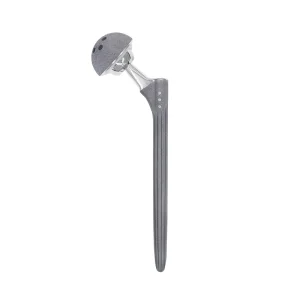
Precision Instruments & Complementary Implant Assemblies
Every custom orthopedic screwdriver shaft, hexalobe bit, and quick-coupling driver is engineered to interface seamlessly with our ISO 13485-certified internal fixation platforms and reconstructive assemblies.
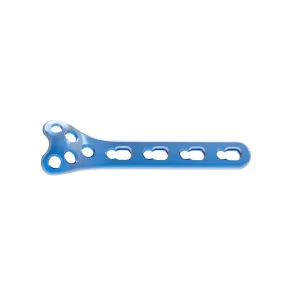
Best Radial Head Locking Compression Plate Manufacturer, Company
View Product Specs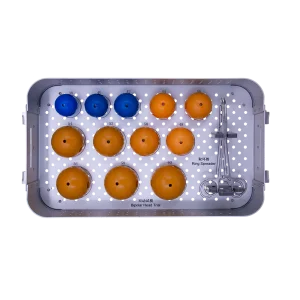
Famous Orthopedic Implant Human Use Bipolar Hip Instrument Set Suppliers, Exporter
View Product Specs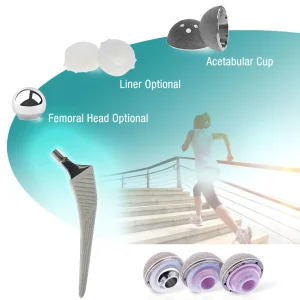
Discount Professional Medical Hip Implant Titanium Bipolar Hip Joint Prosthesis Manufacturers, Supplier
View Product Specs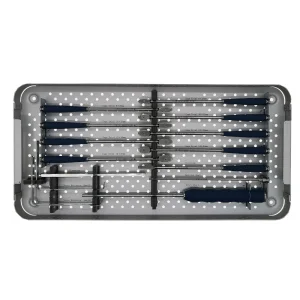
Famous Spine Surgery Thoracolumbar PLIF Cage Instrument Set Supplier, Suppliers
View Product Specs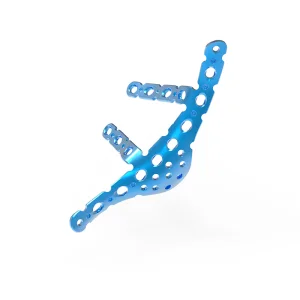
Custom Winged Pelvis Reconstruction Locking Compression Plate Factories, Exporter
View Product Specs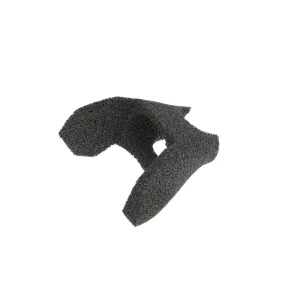
Famous China factory 3D Printing Knee Joint sleeve Germany quality Companies, Service
View Product Specs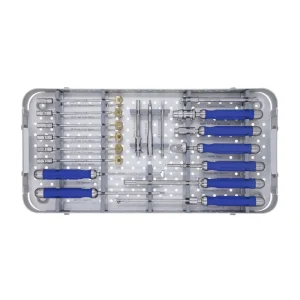
Famous Cervical Fusion Cage Instrument Set Exporters, Service
View Product Specs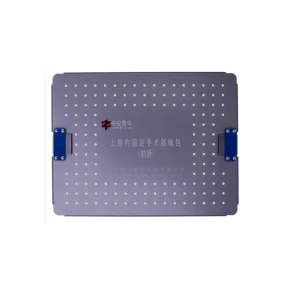
High-Quality CE Approved Traume Rib Locking Plate Instrument Set Quotes, Product
View Product SpecsThe Evolution of Orthopedic Driving Technology
From basic slotted and cruciform manual drivers to complex torque-limiting, bio-inert, robotic-navigated insertion instruments, the orthopedic screwdriver is the critical kinetic interface in internal fracture fixation.
In modern orthopedic surgery, mechanical failure of an internal fixation system rarely originates from plate fatigue alone; instead, clinical studies confirm that micro-galling, drive stripping, screw recess burring, and cold-welding during torque transmission remain leading causes of intraoperative complications. As an established custom screwdriver orthopedic manufacturer and global supplier, Beijing ZhongAnTaiHua Technology Co., Ltd. (ZATH) engineers instrument solutions that address the precise biomechanical interface between drive bit geometry and implant head recesses.
Clinical Truth & Regulatory Imperative: A stripped screw head in open reduction internal fixation (ORIF) or MIS spine pedicle fixation escalates operating theater time by an average of 22 to 38 minutes, dramatically compounding infection risks and tissue morbidity. Precision-manufactured custom orthopedic screwdrivers with exact micrometer tolerances are vital safety barriers in surgical theater workflows.
Drive Recess Geometry: Hexalobe (Torx) vs. Hexagonal vs. Cruciform
The biomechanical evolution of internal fixation has driven a paradigm shift from traditional cruciform and hexagonal designs toward Torx-like hexalobe geometries (ISO 10664). Hexagonal interfaces distribute shear forces over six sharp corners, creating high stress concentrations that result in plastic deformation at torque values exceeding 4.5 Nm. Conversely, hexalobe profiles transfer torque radially with an optimal drive angle close to zero degrees, virtually eliminating cam-out forces and radial expansion stresses.
Torque-Limiting Mechanisms
Integrated slip-clutch and cam-over mechanisms calibrated to tight tolerances (±5%) ensure definitive tactile feedback when locking screws engage titanium plates, actively preventing thread stripping and cold-welding.
- Preset 0.8 Nm to 8.0 Nm options
- Over 5,000 autoclave cycle longevity
Self-Holding Retention Sleeves
Friction-fit conical tapers and spring-actuated gripping sleeves allow surgeons to retrieve, place, and align titanium and PEEK screws one-handed under deep cavity or MIS percutaneous access corridors.
- Zero-drop security in MIS corridors
- Rapid push-button release action
Cannulated Shaft Fluidics
Precision deep-hole gun-drilled lumens ranging from Ø0.9mm to Ø2.5mm facilitate accurate tracking over Kirschner wires and guidewires during cannulated trauma compression and percutaneous sacroiliac fixation.
- Mirror-honed inner lumen finish
- Zero wire-binding tolerance
Global Sourcing Requirements for Tier-1 Brands & Hospitals
Hospital networks, group purchasing organizations (GPOs), and multinational orthopedic brand owners mandate rigorous qualification frameworks before signing instrument supply contracts.
| Procurement Pillar | Hospital GPO & Clinical Expectation | OEM Brand Partner Requirement | ZATH Manufacturing Compliance |
|---|---|---|---|
| Metallurgical Integrity | Passivation against corrosion; resistance to autoclave pitting (ASTM F899 compliance). | Traceable mill certificates, custom hardness (HRC 48-54), vacuum heat treatment. | 100% Custom 455 & 17-4PH SS with optical emission spectroscopy validation per lot. |
| Drive Tolerance & Cam-out | Zero wobbling; minimum 100 insertions without driver bit corner rounding. | Micron-level CNC tolerances (±0.005mm) matching proprietary screw drive geometries. | Swiss 5-axis CNC micro-milling verified by automated non-contact optical comparators. |
| Sterilization Validation | EN ISO 17665-1 compliant steam autoclave longevity; sterile-packed disposable options. | Validated cleaning instructions (AAMI TIR12) and biocompatibility (ISO 10993). | Multi-cycle autoclave stress tested (over 1,000 cycles); Class 100,000 cleanroom packaging. |
| Ergonomic & Modular Coupling | Silicone/Radel tactile grips; lightweight balance to mitigate surgical hand fatigue. | AO / Mini-AO / Hudson / Zimmer modular connections with zero radial backlash. | Medical-grade silicone overmolding & quick-disconnect mechanisms with micro-spring retention. |
| Traceability & UDI | High-contrast 2D DataMatrix laser-marking surviving caustic washing chemistry. | FDA 21 CFR Part 830 and EU MDR 2017/745 UDI compliance on instrument shafts. | Fiber laser UDI engraving with automated machine-vision readability verification. |
Supply Chain Resilience & Advanced CNC Automation
Operating from the Zhongguancun Science and Technology Park in Beijing, ZATH combines digital twin production scheduling, automated robotic cells, and comprehensive in-house testing.
5-Axis Swiss Lathe Precision
Multi-spindle Citizen and Star CNC sliding-headstock machines turn complex cannulated screwdriver bodies and intricate driver tips in a single continuous setup, eliminating re-clamping runout errors.
Atmospheric Vacuum Heat Treatment
Proprietary multi-stage heat hardening and cryogenic freezing transform martensitic stainless steels (Custom 455, 465, and 17-4PH) to reach optimum Rockwell hardness while preserving exceptional torsional elasticity.
Physical Vapor Deposition (PVD)
TiN (Titanium Nitride), AlTiN, and Diamond-Like Carbon (DLC) functional nanocoatings impart an ultra-hard surface finish (up to 3,000 HV), minimizing friction, galling, and bit wear during repetitive bone plate locking.
Automated Coordinate Metrology
Zeiss bridge CMMs and high-speed optical scanning comparators verify pitch, hexalobe lobe symmetry, taper angles, and cannulation concentricity against CAD masters with automated SPC statistical process recording.
Resilient Supply Chain Agility
Strategically buffered raw materials, redundant CNC capacity, and vertical integration from tooling design to ISO Class 7 cleanroom packaging enable rapid turnaround for both high-mix low-volume and mass production runs.
Comprehensive Clinical Application Scenarios
Every surgical discipline places distinct ergonomic, physical, and metallurgical demands on screw-driving instruments.
Trauma Fracture Fixation
Trauma screwdrivers must withstand high axial thrust and torque during self-tapping cortical screw insertion through dense diaphyseal bone. In locking compression plate (LCP) systems, our torque-limiting screwdrivers lock screw heads into threaded plate holes at precise torque values, guaranteeing angle-stable constructs without thread binding.
Spine Pedicle Screw Insertion
Spine surgery demands heavy-duty polyaxial pedicle screwdrivers with robust internal locking sleeves that rigidly secure the screw head during deep canal insertion. The driver shaft must transfer substantial torque through lumbar pedicles while resisting flexure, and release effortlessly once the screw achieves bicortical anchor purchase.
Sports Medicine & Arthroscopy
Miniaturized, cannulated screwdrivers for interference screws and bio-composite suture anchors must feature low-profile, ergonomic handles for tactile sensitivity in tight articular joint spaces. Bit geometry prevents cross-threading into pre-tapped bone tunnels during rotator cuff and ACL/PCL tendon reconstructions.
Cranio-Maxillofacial (CMF)
Ultra-fine micro drivers (drive sizes down to T4 or 1.0mm cross-pin) for orbital, midface, and mandibular reconstruction rely on precise magnetic or mechanical friction sleeves to ensure zero screw slippage in shallow, vascular surgical fields.
Arthroplasty & Revision Surgery
Specialized extraction screwdrivers equipped with left-hand reverse-threaded tap tips and heavy-duty slap-hammer connectors provide orthopedic surgeons with the mechanical leverage needed to retrieve damaged, stripped, or osseointegrated hardware safely.
Exhaustive Mechanical Testing & ISO 13485 Validation
Instruments are classified as Class I or Class II medical devices worldwide; our manufacturing protocols satisfy stringent FDA 510(k), EU MDR, and National Medical Products Administration (NMPA) standards.
Torsional Strength (ASTM F543)
Every production batch undergoes destructive and non-destructive torsional testing. Driver bits must achieve yield torques exceeding 150% of the maximum surgical insertion torque specified for the corresponding screw diameter.
Fatigue & Cyclic Endurance
Custom orthopedic screwdriver shafts are subjected to 100,000 cycles of dynamic reverse loading to verify microcrystalline grain stability and confirm the absence of notch-sensitivity propagation around connection junctions.
Passivation & Corrosion Resistance
Citric and nitric acid chemical passivation (ASTM A967) creates a dense chromium-oxide passive film. Products undergo boiling water immersion and copper-sulfate immersion testing to guarantee rust-free life across rigorous autoclave cleaning protocols.
Frequently Asked Questions for Medical Device Buyers
Key insights regarding custom engineering, contract manufacturing, compliance dossiers, and global supply logistics.
What medical-grade metals are utilized for custom orthopedic screwdriver shafts?
Can ZATH reverse-engineer or customize driver tips for proprietary screw recesses?
How are torque-limiting handles calibrated and verified for clinical repeatability?
What modular quick-coupling connections are supported?
What are the standard lead times for custom OEM/ODM orthopedic screwdriver projects?
Does ZATH provide technical documentation for regional medical device registration?
Matched Clinical Implants & Specialized Driving Solutions
Explore additional trauma, joint arthroplasty, and soft-tissue sports medicine devices fully compatible with our precision surgical instrumentation lines.
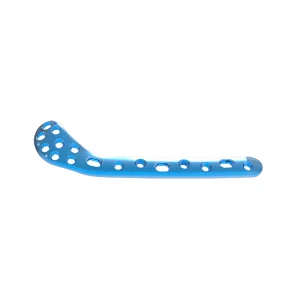
Discount Distal Medial Femur Locking Compression Plate Pricelist, Products
View Product Specs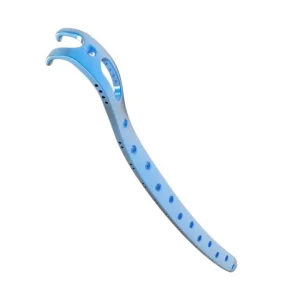
ODM Proximal Femur Locking Plate III Manufacturer, Suppliers
View Product Specs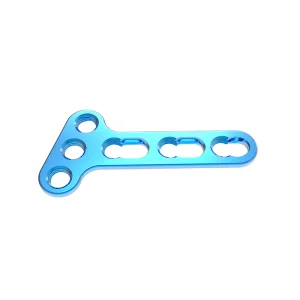
Buy Oblique T-Shape Locking Compression Plate Manufacturers, Pricelist
View Product Specs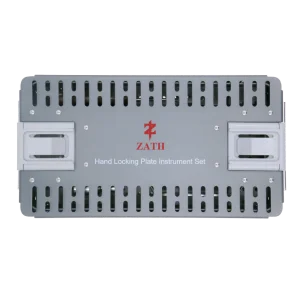
Cheap Hand Locking Plate Instrument Set (Lite) Pricelist, Exporters
View Product Specs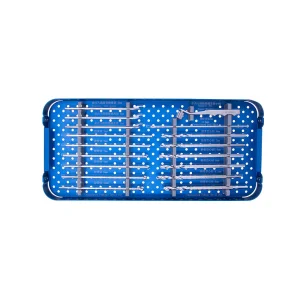
Buy ACL/PCL Reconstruction Instrument Set Supplier, Exporters
View Product Specs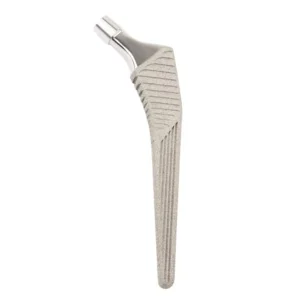
CE Certification ADS Stem For Hip Prosthesis Product, Service
View Product Specs
Wholesale Titanium Alloy knotless all adult titanium suture anchor with needle Pricelist, Products
View Product Specs