
Trauma / Upper Extremity
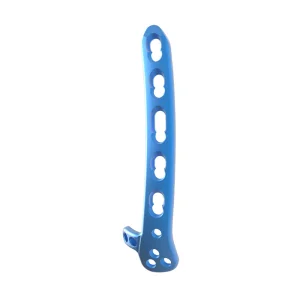
Engineered for anatomically pre-contoured biomechanical stability, reduced periosteal damage, and accelerated osteosynthesis in complex fracture geometries.
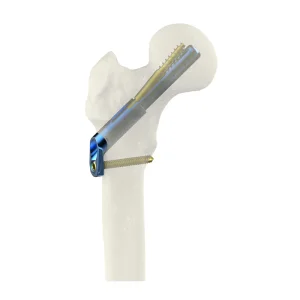
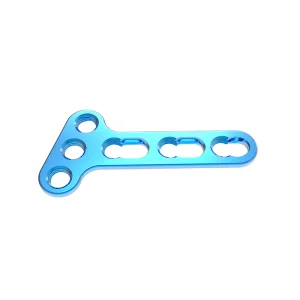
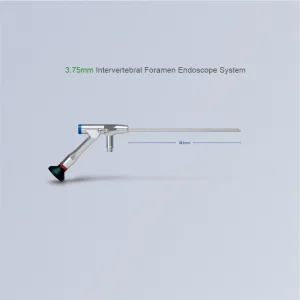
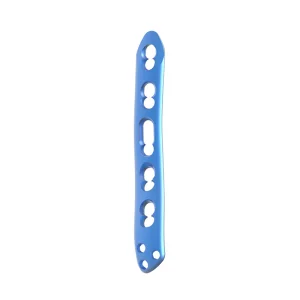
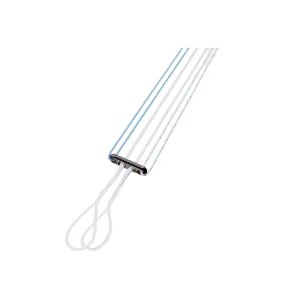
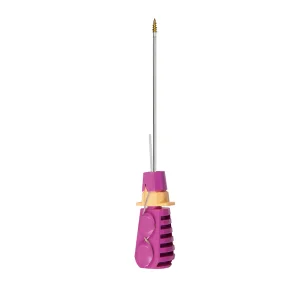
Analyzing modern osteosynthesis challenges across proximal, diaphyseal, and distal femoral fracture patterns with advanced metallurgic fatigue endurance.
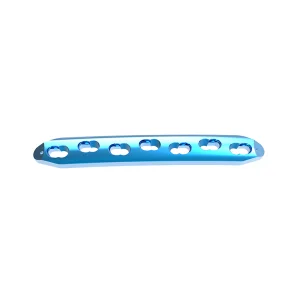
Treating trochanteric and subtrochanteric fractures requires addressing intense bending moments exceeding 300% of body weight. Modern placas para fémur integrate fixed-angle locking screw configurations that eliminate varus collapse while offering dynamic telescoping sliding options to avoid cut-out in osteoporotic bone.
Diaphyseal comminuted fractures require stable elastic fixation rather than rigid compressive locking. Low-contact plate profiles (LC-LCP) minimize periosteal vascular strangulation by limiting bone-to-plate contact, actively facilitating callus formation through secondary bone healing under micro-motion strain regimes.
Complex intra-articular distal femur fractures (AO/OTA 33-C3) require anatomically contoured lateral condylar plates. Incorporating multi-directional screw angulation (±15°) enables surgeons to reconstruct articular fragments precisely without risking intercondylar notch or patellofemoral impingement.
How direct procurement of discount placas para fémur leverages high-throughput CNC machining and raw-material scale without compromising ISO-certified precision.
Ultra-precise DMG MORI and Citizen Swiss turn-mill centers produce complex anatomical curvatures in one setup, eliminating re-clamping tolerances and keeping dimensional deviations under ±0.005mm.
By bypassing third-party trading markups and utilizing bulk-sourced titanium ingots compliant with GB/T 13810 and ASTM F136, our direct production cuts unit procurement costs by 35%–55% for distributors.
Cleanroom-certified terminal packaging prevents bioburden contamination. Sterile blister trays with dual Tyvek heat-sealing give products a 5-year shelf life, ready for direct hospital use.
Distributors can customize laser markings, anodized surface color codings (Gold/Green/Blue), screw thread pitches, and specialized instrument trays, with prototype verification in just 14 business days.
Comprehensive registration dossiers, biological evaluation (ISO 10993), and supply chain continuity tailored for Latin America, Southeast Asia, the Middle East, and Europe.
Navigating public healthcare tenders requires localized registration files. We supply pre-formatted Common Technical Documents (CTD), Free Sale Certificates (FSC), and ISO 13485 audit summaries, cutting ministerial approval cycles by up to 40%.
Standard trauma kits and high-demand placas para fémur are maintained under a rolling safety-stock program. Partnering with major air freight carriers guarantees delivery to regional distributor hubs within 4 to 6 business days.
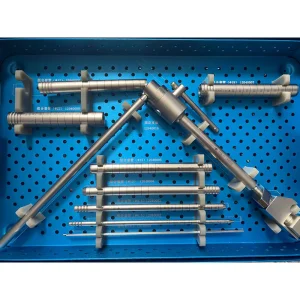
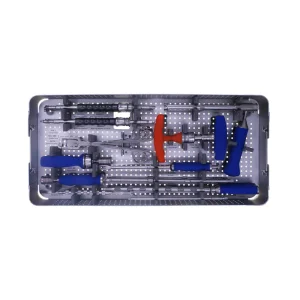
Implants rely on well-matched instrumentation. Every plate series is supported by dedicated surgical instrument trays featuring ergonomic quick-coupling AO handles, carbon-fiber radiolucent aiming arms, and calibrated torque limiters.
Advancing from static mechanical plating to biologically active, patient-specific orthopedic trauma solutions.
Integrating Electron Beam Melting (EBM) 3D-printing creates porous bone-contact under-surfaces that encourage rapid cellular osteointegration, preventing non-union in critical defect areas.
Developing secondary stabilization elements from magnesium-zinc alloy matrices that break down safely in the body, eliminating the need for routine hardware removal procedures.
Embedding micro-electromechanical sensors within femoral bridge plates to wirelessly stream fracture gap micro-strain and loading data directly to orthopedic care teams.
Applying physical vapor deposition (PVD) doped with ionic silver onto femoral plates to resist bacterial biofilms during compound high-energy open injury treatments.
Expanded trauma repair, minimally invasive femoral shaft plates, and specialized joint arthroplasty prostheses for comprehensive orthopedics.
Key technical, metallurgic, and supply chain queries addressed by our chief orthopedic bioengineers.
Titanium LCP systems function as internal fixators where screw threads thread securely directly into the plate hole. This eliminates the necessity of pressing the plate tightly against the periosteum, protecting periosteal blood flow. This significantly lowers non-union rates, improves stability in osteoporotic bone, and provides balanced elastic micro-motion that accelerates secondary bone healing.
We source certified medical-grade Ti-6Al-4V ELI (ASTM F136). Plates undergo CNC profile machining with generous radius transitions to eliminate stress risers. Following machining, specialized surface vibratory finishing and controlled shot-peening induce compressive surface stresses, and test samples complete 1,200,000 dynamic four-point bending cycles without structural failure.
We supply complete regulatory dossiers tailored to target ministries: apostilled Free Sale Certificates (FSC), ISO 13485:2016 management audit proofs, biosecurity evaluations compliant with ISO 10993, EO/Gamma sterilization validation under ISO 11137, accelerated aging shelf-life verifications, and bilingual (Spanish/English) Instructions for Use (IFU).
Discount pricing is built on high-volume manufacturing efficiency rather than compromises in quality. By standardizing high-capacity Swiss multi-axis machining cells in Beijing and maintaining direct raw-material procurement pipelines, we eliminate distributor layers and keep component yields above 99.4%, passing significant cost savings on to volume partners.
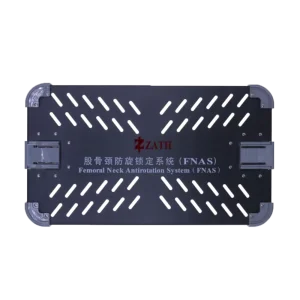
Yes. We offer extensive OEM/ODM customization for instruments, including customized drill guides, carbon-fiber radiolucent aiming arms, calibrated torque-limiting screwdrivers, and hard-anodized modular sterilization containers laser-engraved with your brand identity and hospital tray configurations.