
Featured Implant Platforms & Surgical Solutions
Sterile-packaged, high-precision orthopedic implants precision-machined under ISO 13485 certified quality management systems for international distributor networks and tertiary medical centers.
Global Orthopedic Manufacturing: Structural Shifts & Capacity Redistribution
Years of Engineering Since 2009
Full-Time Precision Specialists
Senior Metrology & QA Engineers
Lot Metallurgical Traceability
B2B Procurement Architecture: Optimizing Total Cost of Ownership (TCO)
Metallurgical Integrity & Yield
Raw medical-grade alloys must conform unreservedly to ASTM F136 (Ti-6Al-4V ELI), ASTM F138 (316L Stainless), and ASTM F2026 (PEEK). Inclusions or void defects drastically increase in-vivo notch sensitivity, accelerating micro-motion fretting and fatigue failure.
- 100% Raw material mill certification verification
- Tensile, yield, and elongation stress-tested
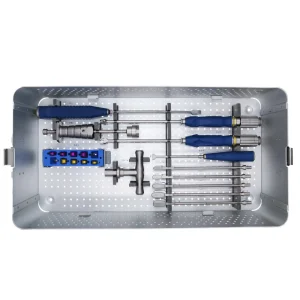
Modular Instrumentation Sets
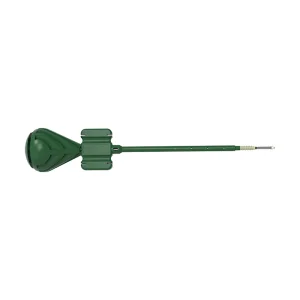
Implants and delivery tooling must function as a synchronized kinematic system. Fragmented procurement sourcing implants from Vendor A and surgical reamers or drivers from Vendor B results in intraoperative torque stripping and cross-threading.
- Integrated surgical instrumentation kits supplied per line
- Ergonomic silicone handles and quick-connect couplers
Pre-Sterilized Barrier Longevity
Pre-packaged, sterile-shipped implants bypass hospital autoclave queues, directly curbing CSSD (Central Sterile Services Department) bottlenecks and eliminating wet-pack contamination risks in demanding surgical environments.
- Double Tyvek blister seals preserving a 5-year barrier
- Validated EO and Gamma radiation sterilization routes
| Procurement Evaluation Vector | Legacy Western Multinationals | Tier-3 Local Machine Shops | ZATH Engineering Standard |
|---|---|---|---|
| Raw Material Provenance | Certified Titanium / CoCr Alloys | Uncertified commercial-grade bar stock | ASTM F136 / ISO 5832-3 Certified |
| Quality System & Auditing | ISO 13485 / MDSAP Compliant | Informal ISO 9001 (Non-medical) | ISO 13485:2016 + UDEM CE + FSC |
| Pricing Architecture & TCO | Extremely High (Brand & Overhead Burden) | Volatile / Marginal Initial Cost | Direct Ex-Factory Scale Efficiency |
| Lead Times & Supply Agility | 16–26 Weeks (Rigid Global Hubs) | Unpredictable batch delays | 4–6 Days Express Air / Scheduled Hubs |
| OEM / ODM Customization | Restricted to mega-contracts | Rudimentary reverse engineering | Full CAD/CAM Tailored Sizing & Branding |
Four Core Clinical Platforms: Biomechanical Engineering Depth
Every ZATH product family is calibrated to international biomechanical standards, ensuring physiological load dissipation, bone conservation, and low revision rates across major orthopedic indications.
1. Arthroplasty & Joint Reconstruction
Addressing complex end-stage hip and knee pathologies requires sophisticated tribological and geometry matching. ZATH’s arthroplasty platform encompasses both cemented and cementless regimes:
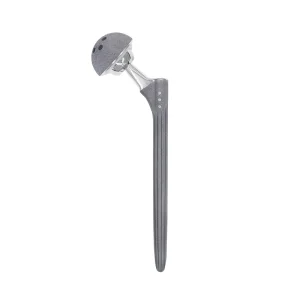
- Hip Arthroplasty: DDS cementless titanium stems featuring micro-porous plasma spray or hydroxyapatite (HA) surface treatment promoting rapid osteointegration; paired with double-mobility bipolar and modular acetabular cups to mitigate post-operative dislocation risks.
- Knee Arthroplasty: Enable Total Knee Systems featuring multi-radius femoral condyles engineered to replicate natural rollback kinematics, coupled with highly cross-linked GUR1020 UHMWPE tibial inserts resisting delamination and contact fatigue.
2. Comprehensive Spine Systems
Spinal instrumentation demands flawless pull-out resistance, fatigue life under cyclic flexion-extension loading, and low-profile anatomy preservation:
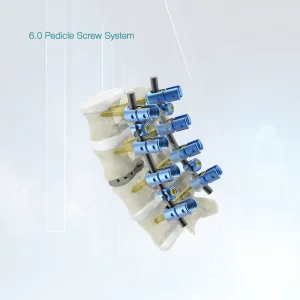
- Thoracolumbar Fixation: The Zenith Zipper Polyaxial Pedicle Screw System incorporates buttress-thread locking mechanisms that prevent head splay and cross-threading, alongside percutaneous MIS instrumentation minimizing paraspinal muscle detachment.
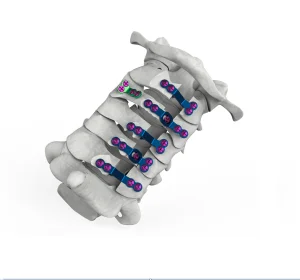
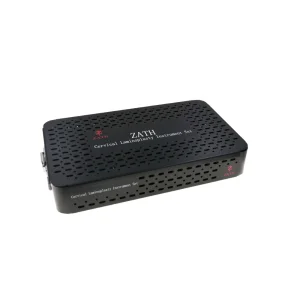
- Cervical Stabilization: Shielder Anterior Cervical Plates (ACP) engineered with dynamic settling windows and integrated anti-backout lock mechanisms, plus Dome Laminoplasty systems for posterior decompression stability.
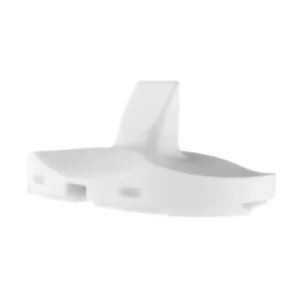
- Interbody Cages: Radiotranslucent medical PEEK cages with tantalum markers and anatomical biconvex profiles for TLIF, PLIF, and ALIF reconstruction.
3. Trauma & Fracture Fixation
From comminuted periarticular fractures to diaphyseal non-unions, mechanical stability must pair with periosteal biological preservation:
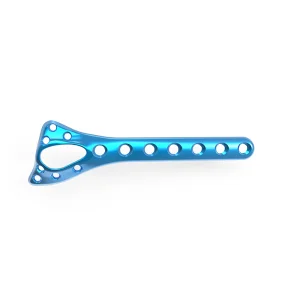
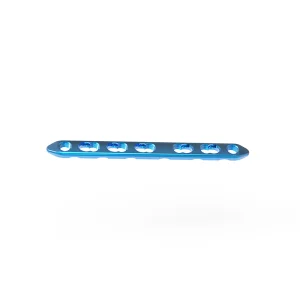
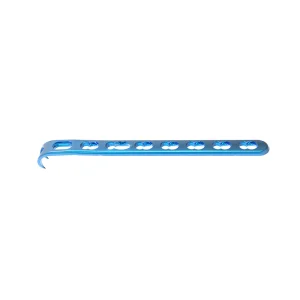
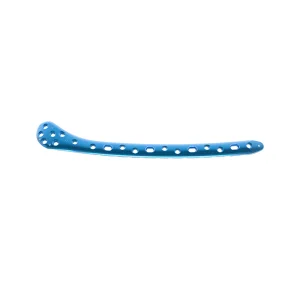
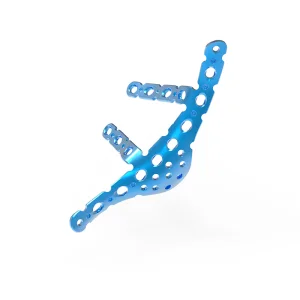
- Locking Compression Plates (LCP): Anatomic pre-contoured titanium plates (distal femur, radius-ulna, olecranon, and pelvis) utilizing combi-holes allowing standard dynamic compression and threaded angle-stable locking screw insertion.
- Intramedullary Systems: Interlocking titanium femoral and tibial nails engineered with proximal multi-planar locking options and dynamic slot configurations for biological axial dynamization.
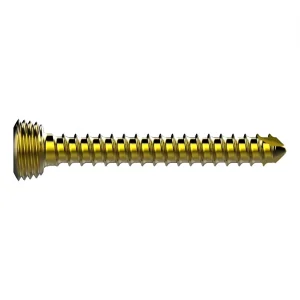
- Cannulated Screws: Headless cannulated compression screws (2.0mm to 7.3mm) with self-drilling, self-tapping flutes for precise percutaneous scaphoid and femoral neck fixation.
From Raw Titanium Billet to Sterile Operating Theater: 6-Stage Control
Implant longevity begins in the microscopic crystal lattice of the alloy. ZATH manages every transformational step within its Beijing manufacturing campus.
Metallurgical Ingestion & Spectroscopy
Every lot of ASTM F136 Ti6Al4V ELI and ASTM F138 316L Stainless bar stock undergoes optical emission spectrometry and ultrasonic flaw detection to verify chemical stoichiometry and internal structural homogeneity.
Precision Wire EDM Profiling
Slow-speed wire electrical discharge machining (EDM) blanks complex external anatomical profiles with minimal thermal heat-affected zone (HAZ), preventing micro-fracture nucleation during subsequent milling.
5-Axis Swiss CNC Machining
Simultaneous 5-axis high-speed CNC turning and milling stations machine intricate variable-pitch threads, undercut locking holes, and contoured articulating surfaces to sub-micron tolerances under controlled flood cooling.
CMM Metrology & Ra Surface Finishing
Zeiss 3D Coordinate Measuring Machines (CMM) and optical profile projectors perform 100% geometric validation. Surface finishing lines apply electropolishing, passivation, and controlled grit-blasting to meet Ra specifications.
ISO Class 7 Cleanroom & Packaging
Automated multi-stage ultrasonic de-greasing in purified water cascades precedes transfer to the certified ISO Class 7 cleanroom. Implants are heat-sealed inside medical-grade Tyvek blister barrier packs with thermoformed shells.
Validated Sterilization & Retention
Validated Ethylene Oxide (EO) or Gamma irradiation regimes achieve a Sterility Assurance Level (SAL) of 10⁻⁶ per ISO 11135 and ISO 11137. Lot retention samples, bioburden indicators, and records are archived for a full 10 years.
Navigating International Compliance: MDR, CE, & Regional Registration
Distributor expansion into new regional markets hinges upon documentation validity. ZATH bridges the regulatory divide with pre-compiled technical dossiers.
Complete Technical Documentation
ZATH equips registered channel partners with comprehensive Common Technical Documents (CTD), Biocompatibility Reports per ISO 10993 (cytotoxicity, systemic toxicity, irritation), accelerated aging shelf-life test reports, and finite element analysis (FEA) fatigue profiles.
UDEM CE & Free Sale Certificates (FSC)
Backbone certifications include ISO 13485:2016 Medical Devices Quality Management System, accredited European UDEM CE mark conformance, and Embassy-legalized Free Sale Certificates (FSC) enabling seamless product submission across Latin America, Southeast Asia, the Middle East, and Africa.
Distributor Enablement & Clinical In-Service
Beyond raw hardware delivery, ZATH provides distributors with surgical technique training manuals, plastic bone demonstration models, cadaveric workshop protocols, loaner instrument sets, and custom OEM branding (laser-marking, language-specific carton translation, barcode GS1 UDI formatting).
Technology Roadmap: Additive Trabecular Matrices & Bio-Sensing
The future of orthopedic reconstruction focuses on cellular affinity and kinetic diagnostics. ZATH's ongoing R&D pipeline bridges biological mechanics with digital fabrication.
Electron Beam Melting (EBM) 3D Trabecular Titanium
Next-generation joint acetabular cups and spinal interbody fusion devices feature direct laser/electron-beam additive manufactured trabecular structures mimicking cancellous bone modulus (0.5–2.0 GPa), drastically curtailing stress-shielding while yielding 65–80% interconnecting pore channels for early bony ingrowth.
Antimicrobial Surface Functionalization
To conquer post-surgical prosthetic joint infections (PJI), advanced physical vapor deposition (PVD) processes are being refined to infuse bioactive silver/copper nanoparticles and nano-textured titania patterns onto titanium substrate surfaces, actively preventing Staphylococcus aureus biofilm nucleation.
Robotic-Assisted Surgery (RAS) Instrument Nav-Pads
Instrumentation across all four platforms is transitioning to optical tracking array compatibility. Quick-connect adapters and pre-indexed geometric references ensure seamless integration with modern orthopedic robotic navigation systems, optimizing implant placement accuracy down to <0.5mm and <1° angular deviance.
Frequently Asked Technical Questions (B2B Buyer FAQ)
Direct answers to the regulatory, mechanical, metallurgical, and commercial inquiries most critical to surgical procurement directors and national importers.
What specific orthopedic platforms and surgical categories does ZATH manufacture in-house?
Which quality certifications and international regulatory standards do ZATH implants satisfy?
What raw materials are utilized, and what traceability controls are implemented?
Are ZATH implants supplied pre-sterilized, or is intra-hospital sterilization mandatory?
What are the minimum order quantities (MOQ) and customization capabilities for OEM / ODM partners?
What is the standard production timeline and international freight logistics speed?
Featured Implant Platforms & Surgical Solutions
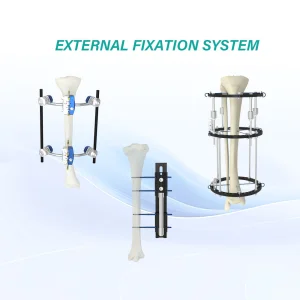
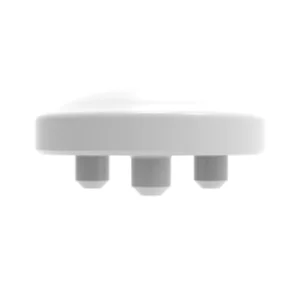
Precision surgical instrumentation kits, anatomical arthroplasty prostheses, and reconstruction plates built for predictable surgical outcomes and mechanical stability.
Request Clinical Dossiers, CAD Geometry, & Factory-Direct Tenders
Accelerate hospital accreditation and expand distributor margins through direct access to ZATH’s engineering teams, clinical evaluation kits, and certified Class III device export programs.
Direct Factory Inquiry
Connect directly with biomedical export specialists regarding tender allocations, container freight timelines, and technical registration dossiers:
- Email: [email protected]
- Phone: +86-10-61569104
- WhatsApp Support: +86 158 4655 4118
Factory Headquarters
Distributor delegations and audit inspection teams are welcome to visit our certified cleanrooms, metallurgical labs, and CNC processing centers:
- Building 6, No. 39 Pinghe Street, Xinggu A Area
- Zhongguancun Science and Technology Park
- Pinggu District, Beijing, China
Clinical Sampling Program
Qualified distributors and hospital review committees can request non-sterile demonstration units, laser-cut anatomical bone models, and surgical technique manuals for committee review prior to contract placement.
- Rapid sample dispatch via express courier
- Demonstration surgical instrument sets available