High-Performance Orthopedic Implants & Systems
Explore our certified trauma, joint replacement, and arthroscopy solutions engineered to deliver optimal clinical outcomes and absolute mechanical endurance.
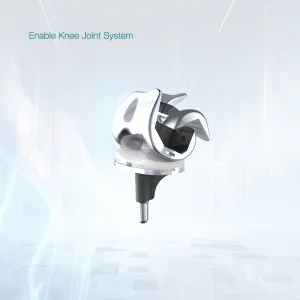
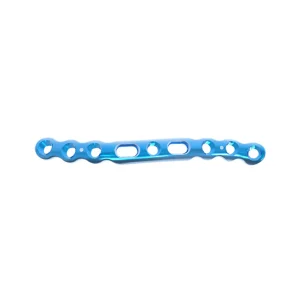
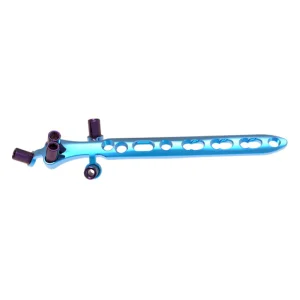
Macro-Level Engineering Solutions for Femoral Fracture Fixation
Overcoming the structural paradox of the human femur: balancing immense cyclic axial loading with biological osteosynthesis preservation.
The human femur represents the primary skeletal conduit for ground reaction forces, enduring bending moments exceeding 300 Nm and axial compressive forces between three to five times total body weight during normal ambulation. In high-energy trauma or severe osteoporotic degradations, subtrochanteric, diaphyseal, and distal condylar femoral fractures present insurmountable challenges to conventional non-locking osteosynthesis. Traditional compressive plating mandates extensive periosteal stripping, strangulating the crucial extraosseous blood supply derived from the perforating branches of the profunda femoris artery. This biologically destructive approach leads directly to delayed non-union, pseudarthrosis, and plate fatigue rupture under prolonged cyclical strain.
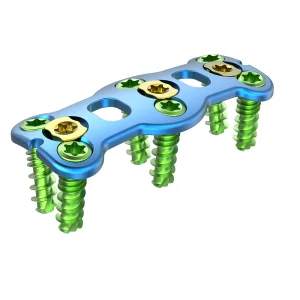
Our comprehensive orthopedic solution centers on the biomechanical paradigm shift of Biological Internal Fixation (BO Principles) enabled by advanced Titanium Locking Compression Plate (LCP) systems. By transforming bone-plate contact into a rigid, angle-stable internal-external fixator construct, locking screws mechanically anchor within the plate’s threaded combi-holes rather than relying on plate-to-bone friction. This preserves the delicate periosteal microcirculation, minimizing cortical bone necrosis while distributing bending, torsional, and shear stresses homogenously along the long titanium splint.
Stress Shielding Mitigation
Titanium alloy possesses an elastic modulus closely mirroring human cortical bone. This physiological compliance encourages micro-motion at fracture sites (75–150 μm), stimulating robust secondary bone healing and peripheral callus proliferation while protecting against bone resorption beneath the plate.
Multi-Axial Locking Integrity
Engineered dynamic locking combi-holes allow surgeons to seamlessly transition between interfragmentary dynamic compression (AO/ASIF principle) and rigid angular stability. Multi-planar screw configurations in condylar flared sections resist severe valgus/varus collapse in distal periarticular fractures.
Anatomical Pre-Contouring
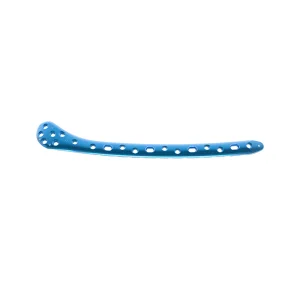
Manufactured from precision 3D CT scan multi-ethnic volumetric reconstructions, our titanium femur plates feature exact anatomical curvature conforming to the lateral distal femoral condyle and anterolateral bow of the femoral shaft, drastically decreasing operating room contouring duration.
Commercial Status & Supply Chain Economics in Orthopedic Traumatology
The global shift toward high-precision, cost-efficient, MDR-compliant titanium implants is reshaping orthopedic hospital procurement.
The global orthopedic trauma fixation market is undergoing unprecedented consolidation driven by two powerful counter-forces: demographic aging escalating geriatric osteoporotic fragility fractures (particularly subtrochanteric and distal periprosthetic femur breaks), and intensifying global healthcare budgetary scrutiny under national DRG (Diagnosis-Related Group) and volume-based procurement (VBP) policies. Western Tier-1 brands frequently impose prohibitive premiums on titanium locking plate systems—often exceeding $1,500 to $3,500 per sterile construct—straining both private health insurers and public hospital networks throughout Latin America, Eastern Europe, Southeast Asia, and the Middle East.
Concurrently, high-tier original equipment manufacturers (OEMs) possessing complete in-house CNC processing chains, cleanroom sterilization infrastructure, and ISO 13485 certification in Beijing's advanced industrial corridors (such as ZhongAnTaiHua / ZATH) offer identical metallurgical parity, bio-tolerance, and dynamic fatigue performance at a sustainable commercial quote. This macro-economic realignment empowers regional distributors to tender aggressively, secure public healthcare contracts, and maintain double-digit distributor gross margins without compromising clinical efficacy or regulatory compliance.
| Performance / Material Parameter | Ti-6Al-4V ELI (ZATH Titanium Standard) | 316L Medical Stainless Steel | Commercial Pure Titanium (Grade 4) |
|---|---|---|---|
| Elastic Modulus (Young's E) | 105 – 112 GPa (Optimal bone matching) | 200 – 210 GPa (Severe stress-shielding risk) | 100 – 105 GPa (Low structural stiffness) |
| Ultimate Tensile Strength (UTS) | ≥ 860 – 930 MPa | ≥ 580 – 680 MPa | ≥ 550 MPa |
| Fatigue Limit (Cyclic Bending Stress) | ≥ 510 MPa (High endurance limit) | ≥ 280 MPa (Fatigue micro-crack prone) | ≥ 300 MPa |
| MRI / CT Imaging Artifacts | Negligible artifact; paramagnetic low scatter | Extensive diagnostic scattering & void distortion | Extremely low artifact signature |
| Biocompatibility / Osseous Integration | Exceptional bio-inert TiO2 surface passivation | Potential nickel-ion leaching & tissue discoloration | Excellent, but mechanically soft |
Localized Support, Global Certifications & Registration Assurance
Overcoming regional market entry barriers through rigorous quality management, sterile packaging validation, and full technical documentation.
ISO 13485 & UDEM Accreditations
Our complete manufacturing footprint in Pinggu, Beijing operates strictly under a certified ISO 13485:2016 Quality Management System. Comprehensive factory audits, UDEM certifications, and valid Free Sale Certificates (FSC) ensure streamlined clearance through local ministries of health.
Cleanroom Gamma / EO Sterile Packaging
Every titanium femur plate and accompanying locking screw can be delivered pre-sterilized in medical-grade Tyvek blister packs (ISO 11607 compliant). This slashes operating theatre preparation time, mitigates nosocomial surgical site infection (SSI) vectors, and extends shelf-life to 5 full years.
Turnkey Technical Dossiers for Tender
We provide international distributors with localized technical documentation: bio-compatibility evaluation reports (ISO 10993 series), finite element analysis (FEA) models, accelerated aging verification, static/dynamic four-point bending validation (ASTM F382), and bilingual surgical technique manuals.
Localized Clinical Scenarios & Anatomical Plating Configurations
Targeted mechanical architectures specifically formulated for high-complexity femoral fracture geometries.
Distal Femur Condylar Fractures
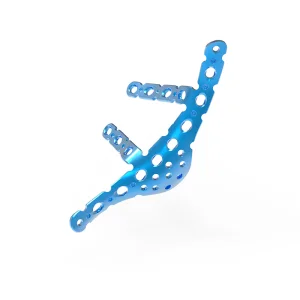
AO/OTA 33-A, B, and C complex articular splits. Anatomical distal lateral femur plates provide diverging, multi-planar distal subchondral screw trajectories that anchor firmly in the articular block without penetrating the patellofemoral joint space, neutralising varus moment.
Subtrochanteric High-Stress Zone
AO/OTA 31-A3 & 32-A/B/C proximal breaks. Extreme deforming forces driven by the iliopsoas, gluteus medius, and abductors cause pronounced flexion and external rotation. Heavy-duty proximal femur curved plates provide high section modulus to resist primary cyclic bending.
Periprosthetic Fractures
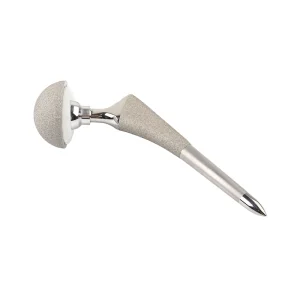
Vancouver Type B1 & C fractures around well-fixed total hip arthroplasty (THA) or knee arthroplasty (TKA) stems. Broad titanium locking plates accommodate eccentric unicortical locking screws and integrated cerclage cable eyelets to secure bone around intramedullary prostheses.
Osteoporotic Non-Unions & Callus Delay
Geriatric low-energy comminution characterized by poor trabecular density and thin cortices. The fixed-angle construct acts as an internal splint; screws will not loosen by toggle, ensuring rigid interfragmentary stability without overtightening and striping weakened bone.
Technological Roadmap & Next-Generation Trauma Systems
Pioneering the convergence of additive manufacturing, surface nanostructuring, and intelligent biomechanical sensing.
Type II Micro-Arc Anodization
Implementation of electrochemical micro-arc oxidation (MAO) processes creating dense, anti-galling titanium oxide surface ceramic layers. Reduces cold-welding risk between titanium locking screw threads and plate combi-holes, enabling effortless hardware removal post consolidation.
SLM 3D Trabecular Titanium
Selective Laser Melting (SLM) additive manufacturing of customized and standard periprosthetic femur plates featuring osteoconductive porous surfaces (60–70% porosity, 300–500 μm pore dimensions), promoting accelerated osseointegration at bone-contact interfaces.
Bioactive Nano-Coatings
Development of ultra-thin antimicrobial nanostructured coatings combining silver-ion/hydroxyapatite composite matrices designed to release antibacterial agents during the acute postoperative phase (0–72 hours) without inhibiting osteoblast attachment or osteogenesis.
Smart Telemetric Strain Plates
Embedding micro-electromechanical systems (MEMS) and passive RFID resonant strain sensors directly within the plate waist. Allows surgeons to wirelessly monitor real-time in-vivo fracture micro-motion, bone stiffness recovery, and early warning signs of hardware fatigue failure.
Frequently Asked Questions: Engineering, Clinical & Procurement
Comprehensive responses designed to accelerate supplier qualification and technical evaluation.
Why is Ti-6Al-4V ELI titanium preferred over stainless steel in femoral plating?
Ti-6Al-4V ELI (Grade 23) offers nearly half the elastic modulus of stainless steel (110 GPa vs 210 GPa), significantly mitigating the risk of stress shielding and adjacent cortical atrophy. Furthermore, its superior fatigue strength ensures resilience under high repetitive cyclical loads, while exceptional magnetic resonance compatibility prevents severe artifact distortion during postoperative MRI or CT evaluations.
How does ZATH prevent cold welding between titanium locking screws and plates?
Titanium-on-titanium threading can experience galling under high insertion torques. ZATH employs proprietary differential surface hardness treatments (Type II surface anodization) and micro-tolerance thread geometry machining on multi-axis Japanese CNC equipment. This ensures seamless screw head engagement, verified tactile locking resistance, and clean explantation when hardware removal is indicated.
What documentation is provided to support international regulatory dossiers?
Qualified distributors receive comprehensive technical documentation packages including ISO 13485:2016 audit certificates, UDEM conformity declarations, Free Sale Certificates (FSC) issued by national health authorities, complete ASTM F382 mechanical fatigue test dossiers, ISO 10993 cytotoxicity and biocompatibility evaluations, and validated sterilization protocol reports.
Can ZATH handle customized OEM/ODM branding and private-label packaging?
Yes. With over 300 employees and approximately 100 senior and mid-level engineering technicians, ZATH provides complete OEM/ODM manufacturing capability. We accommodate laser-etched custom logos, bespoke plate geometry modifications, color-coded anodization, customized instrument tray ergonomics, and private-label sterile blister carton packaging.
What is the standard production and shipping lead time for institutional orders?
Standard inventory catalogs are maintained for standard titanium trauma plates, cannulated screws, and instrument sets, enabling rapid warehouse dispatch. Customized production runs typically require 3 to 4 weeks depending on batch volume. International express shipments dispatched via DHL, FedEx, TNT, or UPS arrive within 4 to 6 business days worldwide.
Are matched surgical instrument sets available for each plate series?
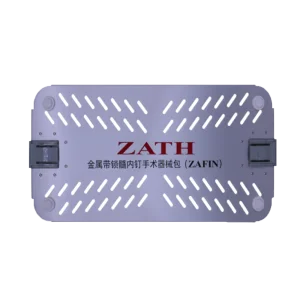
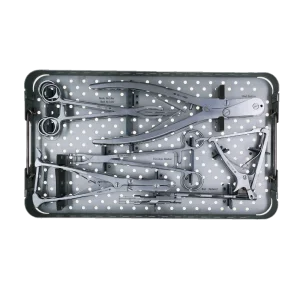
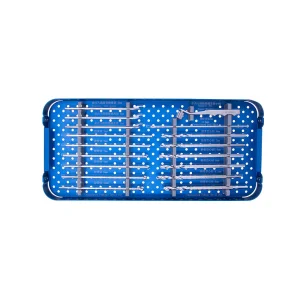
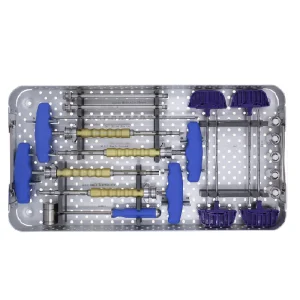
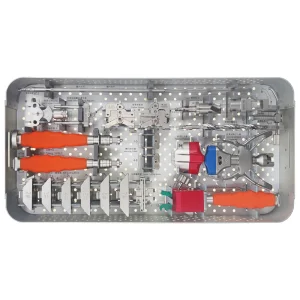
Every ZATH femoral locking plate system is complemented by dedicated surgical instrument sets manufactured from heat-treated medical stainless steel and high-grade aluminum alloys. Instrument kits feature torque-limiting screwdrivers, quick-coupling handles, anatomical radiolucent targeting drill guides, bone reduction forceps, and depth gauges ensuring seamless operative workflows.
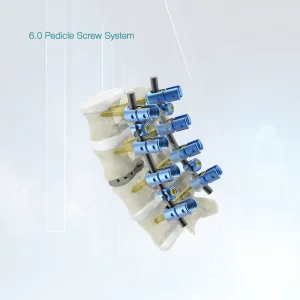
Advanced Surgical Platforms: Trauma, Spine, Joint & Reconstruction
In addition to femoral locking compression plates, evaluate our complete ISO 13485-certified orthopedic portfolio engineered for global distributors.