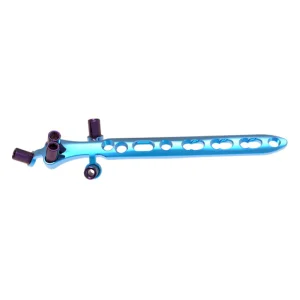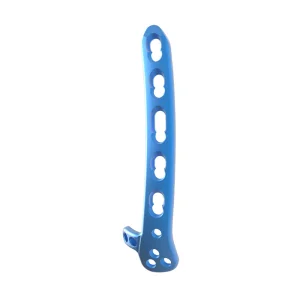
Direct From Production Line
Flagship Osteosynthesis & Clinical Implants
Sterile-packaged, traceable orthopedic plating systems and precision instruments engineered to international biomechanical standards.
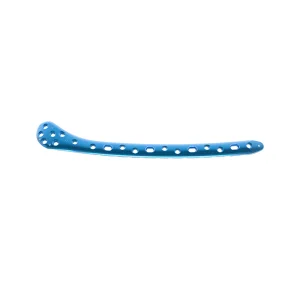
Best Distal Lateral Femur Locking Compression Plate I Factory, Company
Explore Product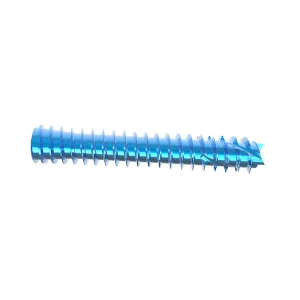
Buy Headless Screw Titanium Cannulated Screws Companies, Product
Explore Product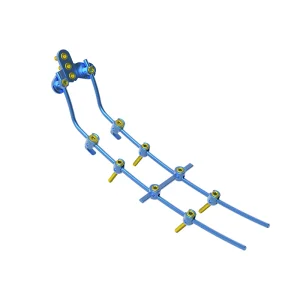
ODM Non-invasive Ladder Optical Coherence Tomography System Quotes, Company
Explore Product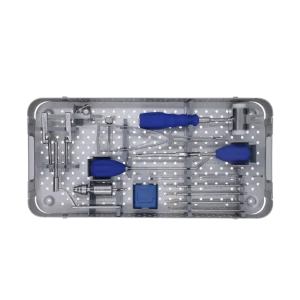
ODM High Quality ZP Cage Instrument Set Manufacturer, Manufacturers
Explore Product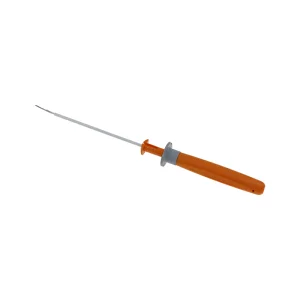
ODM Orthopedic Fast All Inside Meniscal Repair Device System Products, Service
Explore Product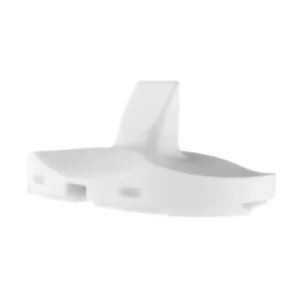
Wholesale Enable Tibial Insert Knee Joint Prosthesis Pricelist, Exporters
Explore Product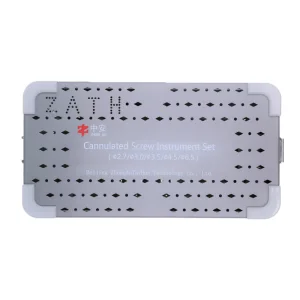
Discount Orthopedic Surgical Instruments Stainless Steel Cannulated Screw Set
Explore Product
Industry White Paper • Executive Insight
Pioneering the Modern "Placa Ortopedica": Clinical Authority
How Beijing ZhongAnTaiHua Technology Co., Ltd. (ZATH) transforms orthopedic trauma fixation through biomechanical design, precision five-axis CNC milling, and comprehensive regulatory clearance.
15+
Years of Focused Innovation (Since 2009)
300+
Dedicated Technicians & Biomechanical Experts
100%
Raw Material Traceability & Cleanroom Sterilization
50+
Global National Regulatory Registrations
In modern orthopedic traumatology, the term "Placa Ortopedica" (orthopedic bone plate) represents the cornerstone of internal fixation (osteosynthesis). Far beyond simple metallic splints, contemporary bone plates operate as sophisticated biological load-sharing constructs designed to respect the microvascular biology of the periosteum while establishing rigid absolute or flexible relative stability. Beijing ZhongAnTaiHua Technology Co., Ltd. (ZATH), established in 2009 in Beijing's national Zhongguancun Science Park (Pinggu Park), stands among the world's renowned manufacturers providing Tier-1 hospital systems, national tenders, and global distributors with ISO 13485-certified, sterile-packed osteosynthesis platforms.
Through the integration of high-grade biocompatible Grade 5 Titanium (Ti-6Al-4V ELI conforming to ASTM F136 / ISO 5832-3) and medical-grade 316LVM Stainless Steel (ASTM F138), ZATH has redefined periarticular anatomical fit. This eliminates excessive intraoperative bending, minimizes soft tissue stripping, and dramatically curbs post-operative complications such as aseptic loosening, implant failure, non-union, and secondary surgical revision.
Enterprise Procurement Strategy
Global Procurement Demands for Placas Ortopédicas
How international hospital groups, health ministries, and B2B medical supply chains evaluate manufacturer credibility, clinical efficacy, and economic sustainability.
Stringent Regulatory & Audit Viability
Global procurement teams in Latin America (ANVISA, COFEPRIS), the European Union (EU MDR 2017/745), and the Middle East demand rigorous technical dossiers, ISO 13485:2016 certification, and Free Sale Certificates (FSC).
- Full design history files (DHF) and biocompatibility test reports.
- Cleanroom validation conforming to ISO Class 7/8 standards.
- Immediate batch-level chemical analysis and mechanical pull-out metrics.
Sterile Packaging & Supply Chain Resilience
Modern surgical suites operate under stringent sterile processing department (SPD) bottlenecks. Hospital networks demand pre-sterilized, individually double-blister packed bone plates to eradicate nosocomial surgical site infections (SSIs).
- 5-year validated sterile shelf-life via Gamma or EO irradiation.
- GS1-compliant 2D DataMatrix barcodes for instant UDI tracking.
- Predictable express dispatch (4-6 business days via DHL/FedEx/TNT).
Ergonomic Instrumentation & Universality
Bone plates are clinically inert without matching instrumentation. Orthopedic surgeons reject systems requiring excessive screwdriver swaps or misaligned drill guides that prolong anesthesia duration.
- Color-coded, self-retaining Stardrive / Hexalobe screwdrivers.
- Hardened surgical-grade stainless steel reduction clamps and guides.
- Complete interchangeability across cortical, cancellous, and locking screws.
Clinical Biomechanics & Macro-Economics
Macro Industry Solutions: Resolving the Trauma Care Trilemma
How engineered placa ortopédica solutions balance anatomical preservation, operating theater turnover velocity, and national health budget ceilings.
1. Biological Internal Fixation vs. Mechanical Over-Rigidity
Historically, early bone plating relied on extensive periosteal compression using dynamic compression plates (DCP), which frequently caused periosteal devascularization, bone necrosis beneath the plate, and subsequent refracture upon hardware removal. ZATH’s Limited Contact Locking Compression Plate (LC-LCP) architecture incorporates scalloped undersurfaces. By reducing direct bone-to-plate contact by up to 60%, the capillary microcirculation supplying the cortical bone remains uncompromised.
2. Combating Osteoporotic Comminution via Angular Stability
In geriatric fractures (e.g., proximal humerus, distal radius, proximal tibia, distal femur), conventional non-locking screws depend entirely on bone mineral density to prevent pullout. In low-density osteoporotic bone, screw toggle leads to collapse. ZATH’s locking placa systems thread the screw head directly into the plate hole, creating a "fixed-angle construct." The load is transferred along the plate rather than relying solely on the friction between bone threads and porous trabeculae.
| Biomechanical Vector | Standard Dynamic Compression Plate | ZATH Advanced Locking Placa Ortopedica | Clinical / Economic Advantage |
|---|---|---|---|
| Periosteal Perfusion | Compressed continuously against cortex | Scalloped contact (Preserved microvascular bed) | Accelerated secondary callus formation by 28-35% |
| Screw-Plate Mechanism | Friction-dependent torque fit | Precision threaded taper lock (Fixed angle) | Eliminates toggle, preventing late varus/valgus collapse |
| Primary Indication | Simple transverse diaphyseal fractures | Complex intra-articular & osteoporotic trauma | Drastic drop in hardware revision rates in elderly cohorts |
| OR Preparation Time | Requires intraoperative plate bending | Pre-contoured 3D anatomical matching | Reduces fluoroscopy & surgical time by 20-30 minutes |
Scale Your Orthopedic Distribution Portfolio
Partner directly with Beijing ZhongAnTaiHua Technology Co., Ltd. for turnkey OEM/ODM licensing, private label manufacturing, and global regional distribution agreements.
Next-Gen Materials & R&D
Technical Roadmap & Future Outlook: Next-Gen Placas
Charting the evolution of surgical fixation from static metal hardware to intelligent, bio-adaptive, and patient-specific implant systems.
Variable-Angle (VA) Multi-Axial Locking
Moving beyond conventional monoaxial trajectories, ZATH’s latest R&D incorporates Variable-Angle Polyaxial Locking (allowing up to ±15° off-axis cone angles). This empowers surgeons to capture fragmented articular fragments without colliding with neighboring intramedullary pins or joint cavities.
Additive Manufacturing & Porous Trabecular Surfaces
By leveraging Electron Beam Melting (EBM) and Direct Metal Laser Sintering (DMLS), ZATH is pioneering porous titanium structures on specialized reconstructive placas. These mimic cancellous bone porosity (60-70% porosity, 300-500μm pore diameter) to induce rapid osteointegration and osseous bridging.
Bioactive Nano-Coatings & Infection Prophylaxis
Implant-associated infection (osteomyelitis) remains a catastrophic clinical complication. ZATH's laboratory pipeline is optimizing silver-nanoparticle (AgNP) and hydroxyapatite (HA) dual-sputtered thin films, conferring long-lasting bactericidal protection against Staphylococcus aureus biofilms.
Geographic Market Dynamics
Global Commercial & Industrial Landscape for Orthopedic Plating
Navigating regional shifts, regulatory barriers, and localized commercial strategies across major international surgical markets.
Latin America (LATAM)
High demand for trauma systems due to traffic injuries and industrial growth. National health authorities like ANVISA (Brazil) and COFEPRIS (Mexico) demand factory audits, FSC, and Spanish/Portuguese IFUs.
European Union (EU MDR)
The regulatory shift from MDD to EU MDR 2017/745 caused supply shortages as legacy manufacturers withdrew products. ZATH provides distributors with full clinical evaluation reports (CER) and robust PMCF data.
Middle East & North Africa
High-volume government tenders across Saudi Arabia, UAE, and Egypt prioritize comprehensive instrument kits, sterile single-pack trauma plates, and rapid air-cargo dispatch availability.
Asia-Pacific (APAC)
Rapidly aging populations in East Asia accelerate the need for anatomical periarticular distal radius and proximal tibia plates, while emerging markets in SE Asia require high-yield OEM cost structures.
Advanced Manufacturing Protocols
Six-Stage Precision Manufacturing: From Ingot to Sterile Placa
How ZATH's Beijing facility achieves micron-level tolerances and rigorous zero-defect quality control across every osteosynthesis batch.
01
Raw Material Metallurgical Validation
Every titanium bar stock undergoes ultrasonic testing, spectrometry analysis, and microstructural grain boundary verification to guarantee compliance with ISO 5832-3 / ASTM F136.
02
Precision Wire EDM & Profiling
High-speed wire cutting delivers blank shapes with near-zero heat-affected zones (HAZ), eliminating internal microcracking and preserving raw fatigue endurance.
03
5-Axis CNC Milling & Thread Whirling
Multi-axis computerized machining generates complex anatomical twist geometries, combination screw holes, and micro-locking threads in a single continuous clamp setup.
04
Surface Passivation & Anodization
Electrochemical Type II anodization creates a chemically inert titanium dioxide (TiO2) barrier, mitigating fretting corrosion and eliminating soft tissue adhesion.
05
Coordinate Measuring Machine (CMM) QC
Optical and CMM 3D scanning verify locking hole pitch, contour curvature, and screw seat angles within ±5 μm, with full documentation archived per ISO 13485.
06
Cleanroom Double-Blister Sealing
Class 10,000 (ISO Class 7) cleanroom sterile barrier packaging with Tyvek® lidding, followed by validated Gamma sterilization and climate-controlled storage.
Partner Enablement Ecosystem
Localized Regulatory Support & Global Distributor Assurance
Removing friction from cross-border hospital tenders and commercial distribution.
Turnkey Registration Dossiers
We provide full Common Technical Document (CTD) dossiers, bio-safety data (ISO 10993), aging validation, and authentic apostilled certificates to accelerate national import permits.
Bilingual Surgical Training Kits
Complete surgical technique manuals, synthetic sawbone practice modules, surgical step-by-step videos, and engineering direct support for hospital clinical evaluations.
Flexible OEM / Private Label
Distributors can customize laser markings, tray layouts, catalog numbering, and customized plate length arrays configured precisely to local population anthropometry.
B2B Procurement Knowledge Base
Frequently Asked Questions: Placa Ortopedica Sourcing
Authoritative answers to the most common clinical, technical, and commercial questions raised by medical device buyers.
What distinguishes a Locking Compression Plate (LCP) from conventional osteosynthesis plates?
A conventional bone plate relies entirely on friction generated between the underside of the plate and the periosteum as screws are tightened into the bone. In contrast, a Locking Compression Plate (LCP) features threaded combination holes that accommodate both standard compression screws and threaded locking screws. When a locking screw engages the plate hole, it locks rigidly to the plate itself, forming an internal fixed-angle construct. This eliminates periosteal compression, prevents screw toggling in osteoporotic bone, and provides superior mechanical retention across complex comminuted fractures.
Which titanium alloys does ZATH utilize for placa ortopédica manufacturing?
ZATH exclusively utilizes premium medical-grade Ti-6Al-4V ELI (Extra Low Interstitial) conforming strictly to ASTM F136 and ISO 5832-3 standards, as well as high-purity medical 316LVM Stainless Steel (ASTM F138). Our titanium plates provide exceptional strength-to-weight ratios, excellent fatigue endurance, MRI compatibility, and reduced modulus of elasticity closer to cortical bone, significantly diminishing stress shielding compared to heavy industrial stainless steels.
Are ZATH orthopedic plates and screws supplied pre-sterilized or non-sterile?
ZATH supplies both configurations according to market preference. Our international shipments are predominantly provided in validated sterile packaging (double-layer medical Tyvek® blister packs with 5-year shelf life under ISO 11137 / ISO 11607 validation). This relieves hospital sterilization burdens and reduces operating room turnaround times. Non-sterile sets with autoclavable anodized graphic aluminum trays are also available for localized institutional processing.
What regulatory documentation is provided for hospital tenders and national registration?
Qualified distributor partners receive comprehensive registration packages containing: certified copies of our ISO 13485:2016 Quality Management System, Free Sale Certificates (FSC) issued by national health authorities, complete chemical and mechanical material mill certificates, biocompatibility test summaries (ISO 10993), packaging stability test reports, and bilingual (English/Spanish) Instructions for Use (IFU) and Surgical Technique Guides.
Can ZATH accommodate OEM/ODM orders with customized branding and plate modifications?
Yes. With over 100 experienced technicians and state-of-the-art multi-axis CNC machining centers in Beijing, ZATH provides extensive OEM and ODM solutions. We support custom laser marking (distributor logo, custom part coding), specific anodization color identification, packaging redesign, and mechanical modifications to plate hole geometry or contour curvatures based on regional clinical data.
What is the standard lead time for international courier deliveries?
For standard stocked implant references and matching instrument kits, orders are processed and dispatched within 24 to 48 hours. Using international express carriers (DHL, FedEx, UPS, TNT, or air freight cargo), shipments typically arrive at destination international airports or distribution centers within 4 to 6 business days, subject to regional customs clearance procedures.
Comprehensive Trauma & Spine Portfolio
Featured Orthopedic Systems & Instrument Sets
Explore our expanded clinical matrix including specialized tibial compression plates, intramedullary nails, spine fixation, and surgical instrument kits.
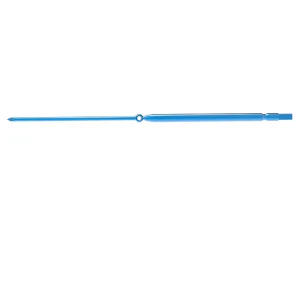
Discount Orthopedic Implants Titanium Alloy Material Patella Pin Suppliers
Explore Product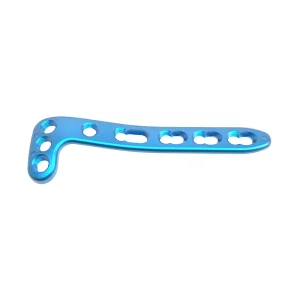
Best Proximal Medial Tibia Locking Compression Plate I Pricelist, Product
Explore Product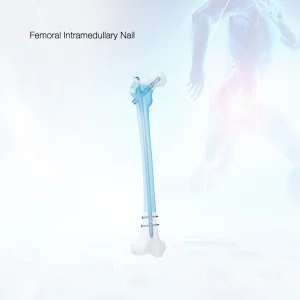
Cheap Surgical Orthopedic Implant Titanium ZAFIN Intramedullary Nail Pricelist
Explore Product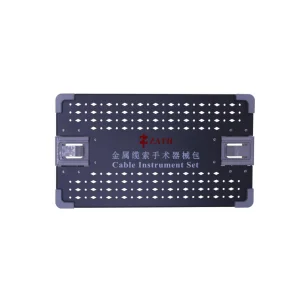
Discount Cable Instrument SetIII Exporters, Companies
Explore Product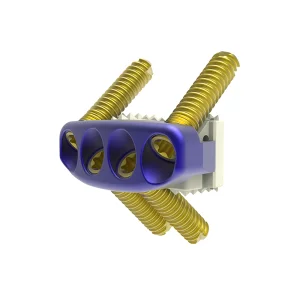
Buy ZP Cervical Cage Manufacturer CE FSC ISO Insured Supplier Exporter
Explore Product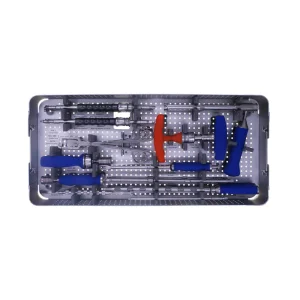
CE Certification Zipper 6.0 System Spinal Internal Fixation Instrument Set
Explore Product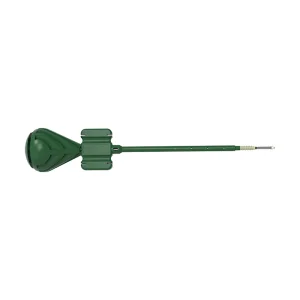
Wholesale SuperFix P Knotless Suture Anchor Manufacturer, Suppliers
Explore Product