Primary Precision Trauma & Deformity Platforms
Explore our top-tier CE and ISO 13485-certified intramedullary instruments, locking reconstruction plates, and specialized implants manufactured to micron-grade tolerances.
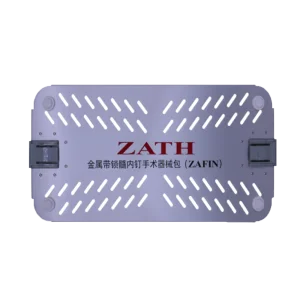

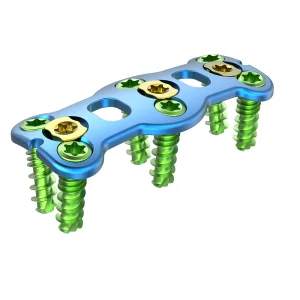
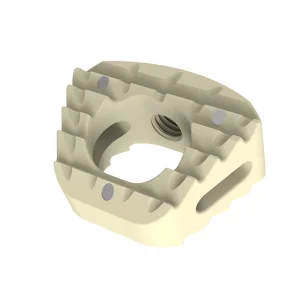
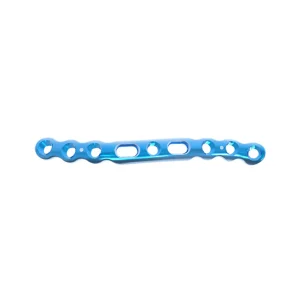
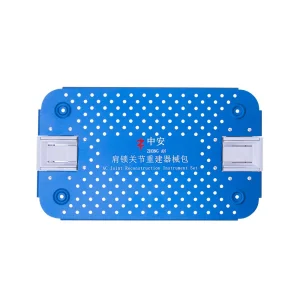
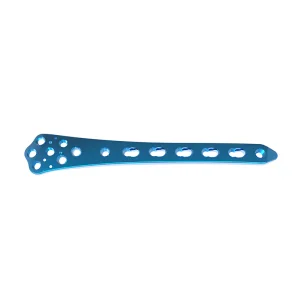
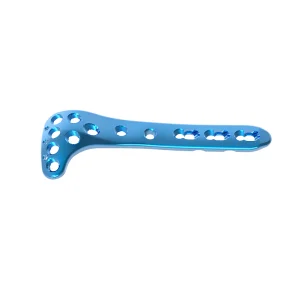
State of the Art: Precice Intramedullary Technology
Evaluating motorized magnetics versus traditional Ilizarov frames in distraction osteogenesis, soft tissue envelope preservation, and rotational alignment control.
Non-Invasive Magnetic Distraction Mechanism
The Precice intramedullary nail system represents a monumental paradigm shift from external ring fixators to fully enclosed motorized internal lengthening. Controlled by an external remote controller (ERC), neodymium magnets drive an internal planetary gear reduction mechanism, actuating telescopic expansion at millimeter-fraction increments (0.75 mm to 1.0 mm per day).
This closed mechanical environment reduces pin-site infection rates from over 45% in external frames to near zero, significantly mitigating deep osteomyelitis risks while promoting rapid biological osteogenesis in accordance with the tension-stress principle developed by Ilizarov.
Material Fatigue & Load-Bearing Biomechanics
Engineered from medical-grade Ti-6Al-4V ELI (ASTM F136) and specialized high-nitrogen stainless steel, the nail construct addresses challenging physiological bending moments during early functional rehabilitation. Dynamic finite element analysis (FEA) indicates critical stress concentrations occur around the internal telescopic juncture and transverse interlocking screw holes.
Advanced cross-sectional geometries and micro-shot-peened surface treatments delay cyclic fatigue failure, maintaining structural integrity across both distraction and consolidation phases while accommodating partial weight-bearing requirements.
Preservation of Endosteal Blood Supply
Conventional reaming protocols often compromise endosteal vascularization. Next-generation intramedullary systems employ optimized cannulated profiles and tapered distal geometries that facilitate smooth reamed entry without extensive intramedullary pressure spikes. Maintaining periosteal and endosteal microvascular networks remains vital for the transformation of soft fibrocartilage into organized woven and lamellar bone tissue.
Preoperative digital canal templating minimizes eccentric reaming and cortical thermal necrosis, directly accelerating the consolidation index (days/cm).
Comprehensive Clinical & Hospital Systems Integration
From pediatric congenital limb discrepancies to complex post-traumatic nonunion reconstructions, multi-disciplinary frameworks deliver superior long-term clinical outcomes.
Deformity Correction & Acute Angular Alignment
Limb discrepancy frequently coincides with multi-planar deformities (varus/valgus, procurvatum/recurvatum, or rotational torsion). Pairing modern intramedullary lengthening nails with pre-lengthening percutaneous osteotomies or intraoperative temporary plating ensures accurate correction of the mechanical axis prior to nail locking.
- Full mechanical axis restoration (MAD within 5mm)
- Elimination of joint contractures via proactive physical therapy
- Simultaneous rotational realignment under fluoroscopy
Oncological Reconstruction & Post-Traumatic Bone Defect
Following segmental limb-salvage tumor resections or high-energy open fracture nonunions, massive intercalary bone loss presents immense clinical hurdles. The combination of induced membrane techniques (Masquelet) with specialized telescopic intramedullary transport nails eliminates massive bone grafting morbidity.
- Eliminates bulky, high-maintenance external fixator frames
- Shortens hospital stays and lowers rehabilitation costs
- Promotes early dynamic vascularized callus remodeling
Cosmetic Stature Lengthening Protocols
Bilateral femoral or tibial lengthening mandates conservative distraction strategies to prevent Achilles tendon tightness, neurological stretch injuries (peroneal nerve), and joint stiffness. Automated patient compliance software integrated with external magnetic controllers provides clinicians with real-time audit logs of distraction cadence.
- 0.25 mm four times daily micro-lengthening protocol
- Dynamic ultrasound monitoring of regenerate morphology
- Reduced soft-tissue scarring for superior cosmetic outcomes
| Evaluation Parameter | Magnetic Precice System | Motorized / Electrical IM Nails | Traditional Ilizarov / Monolateral Frames |
|---|---|---|---|
| Infection Profile | Negligible deep infection (< 1.5%), zero pin-tracks | Low risk; hermetic wire/battery degradation challenges | High pin-site sepsis incidence (35% - 60%) |
| Patient Comfort Index | Exceptional; normal clothing, pain-free distraction | High comfort; occasional subcutaneous implant bulk | Poor; sleep impairment, soft tissue impingement |
| Daily Precision Control | ±0.05 mm accuracy via External Remote Controller (ERC) | Micro-drive electric stepping (high precision) | Manual nut rotation by patient; user error frequent |
| Early Weight-Bearing Capacity | Restricted to partial (advanced Ti/Steel models higher) | Moderate depending on drive casing architecture | Immediate full weight-bearing on ring constructs |
| Consolidation Index (Days/cm) | 28 - 35 days/cm (superior regenerate quality) | 30 - 40 days/cm | 35 - 50 days/cm (prolonged external frame wear) |
Supply Chain Resilience & Manufacturing Precision
How high-tier Chinese biomedical manufacturing clusters deliver unmatched cost efficiencies, lot traceability, and precision engineering for multinational orthopedic brands.
Multi-Axis Swiss CNC Precision Machining
Manufacturing micro-planetary gear assemblies and telescopic inner rods for intramedullary systems demands sub-micron level tolerances. Operating imported DMG MORI and Citizen 9-axis Swiss-turn lathes within Class 100,000 cleanrooms, our facility shapes biocompatible Grade 5 Titanium and medical PEEK with absolute repeatability.
Every internal threaded component undergoes non-contact optical CMM validation, ensuring smooth telescopic travel under multi-vector torque constraints without risk of internal binding or premature wear.
Tier-1 Raw Material Sourcing & Traceability
Quality begins with alloy chemistry. We exclusively process certified medical-grade titanium bars conforming to ASTM F136 / ISO 5832-3 and cobalt-chromium-molybdenum alloys. Each heat lot undergoes comprehensive spectrometer chemical assays, mechanical tensile testing, and ultrasonic non-destructive flaw inspection.
Complete traceability is maintained via laser UDI (Unique Device Identification) serialization from the raw ingot through wire EDM cutting, precision turning, passivating, and packaging.
End-to-End Sterile Barrier Packaging Cleanrooms
Implant-associated infection prevention begins at the manufacturing source. Implant systems and dedicated single-use instruments are processed through validated ultrasonic cleaning stations, high-vacuum de-greasing, and sealed in medical Tyvek® double-barrier blister packs within Class 10,000 cleanroom environments.
EO (Ethylene Oxide) and Gamma radiation sterilization cycles are continuously validated under ISO 11135 and ISO 11137, delivering a Sterility Assurance Level (SAL) of 10⁻⁶.
Global Enterprise Procurement & Competitive Quotes
Balancing initial capital expense against clinical revision rates and supply chain bottlenecks for hospital networks, distributors, and OEM brands.
Total Cost of Care vs. Acquisition Price
Procuring advanced intramedullary lengthening nails involves sophisticated total cost of ownership (TCO) evaluation. While traditional Ilizarov systems show lower initial procurement quotes, the compounding costs of extended operating times, recurring pin-site debridement treatments, high revision frequencies, and extended physical therapy tilt overall expenditure in favor of internal intramedullary nailing.
By securing direct factory partnerships in China, hospital networks and authorized international distributors unlock 35% to 50% cost reductions over legacy Western brands without compromising clinical tolerances or mechanical reliability.
OEM/ODM Customization & Surgical Tooling Kits
Global medical device distributors require customized solutions adapted to regional surgeon preferences and anthropometric differences across populations (e.g., smaller canal diameters or distinct femoral radius of curvature in Asian vs. European cohorts). We provide end-to-end turnkey OEM/ODM services:
- Custom nail lengths (160mm - 380mm) and diameters (Ø8.5mm - Ø12.5mm)
- Branded graphic anodization and customized laser etching
- Ergonomic radiolucent carbon fiber aiming guides and instrumentation
- Customized sterilization container layouts for rapid OR turnover
Buffer Inventory & Expedited Global Air Logistics
Elective limb reconstructions and trauma surgeries operate on strict hospital scheduling. Supply chain delays can result in severe clinical scheduling disruptions. We operate a dedicated consignment buffer stock model for key distribution partners worldwide.
Partnering with DHL, FedEx, TNT, and air medical freight handlers, urgent clinical orders and supplementary instrument sets are dispatched within 24 to 48 hours, providing predictable 4 to 6 day global door-to-door delivery with live tracking and customs clearance pre-filing.
Localized Regulatory Support & Compliance Assurance
Navigating stringent worldwide medical device requirements with complete technical dossiers, biocompatibility validations, and accredited third-party certifications.
ISO 13485:2016 Certified Quality System
Our quality management ecosystem is audited and verified under ISO 13485:2016 standards for medical devices. Every stage from initial R&D verification to production post-market surveillance complies with rigorous medical device directives.
Standardized documentation ensures that full Device Master Records (DMR) and Device History Records (DHR) are archived for a minimum of 15 years, safeguarding distributors during regulatory audits.
MDR (EU) 2017/745 & Free Sale Certification
Transitioning from MDD to EU MDR represents a critical hurdle for global implant distributors. We provide end-to-end technical documentation including Clinical Evaluation Reports (CER), Risk Management Files (ISO 14971), and biocompatibility validations according to ISO 10993 series (cytotoxicity, sensitization, systemic toxicity, and genotoxicity).
Notarized Free Sale Certificates (FSC) and Apostille authentications are readily accessible to expedite local Ministry of Health (MOH) product registrations across Latin America, Southeast Asia, and the Middle East.
Comprehensive Biomechanical Testing (ASTM F1264)
Intramedullary fixation devices require exhaustive dynamic fatigue testing. Our intramedullary nails undergo static four-point bending, dynamic bending fatigue (tested beyond 1,000,000 cycles without failure), and torsional yield strength verification per ASTM F1264 standards.
Distributors receive certified biomechanical testing dossiers generated by ISO/IEC 17025 accredited laboratories, substantially streamlining local clearance procedures.
Technological Roadmap: The Next Generation of IM Nails
Pioneering smart telemetry, active sensor feedback, and bio-absorbable internal interfaces to redefine orthopedic reconstruction.
Smart Telemetric Load & Pressure Sensing
Current distraction protocols rely on subjective radiographic evaluation to estimate callus mineralization. Emerging R&D initiatives incorporate passive micro-electromechanical (MEMS) strain sensors within the nail's cannulated hollow shaft. Powered via near-field inductive coupling (NFC) from the handheld controller, these sensors transmit real-time axial stiffness data directly to the surgeon's tablet.
By continuously quantifying regenerate stiffness, surgeons can dynamically adjust distraction rates—slowing during delayed consolidation or accelerating to prevent premature consolidation.
Additive Manufacturing & Trabecular Porous Coatings
Integrating Electron Beam Melting (EBM) 3D-printing technologies allows for titanium intramedullary nails engineered with graded stiffness profiles. By producing a hollow cellular diamond lattice near the diaphysis, the modulus of elasticity is tailored to mirror cortical bone (18-20 GPa), drastically reducing stress shielding.
Simultaneously, bioactive porous hydroxyapatite/tantalum coatings at the distal and proximal locking zones accelerate osseointegration, preventing long-term nail toggle and hardware loosening.
Anti-Bacterial Active Silver Ion Surfaces
To eliminate risks of hematogenous seeding and biofilm formation over prolonged consolidation periods (frequently 6 to 12 months), advanced surface technologies employ magnetron-sputtered active silver-titanium nitride (Ag-TiN) thin coatings. Releasing sub-inhibitory antimicrobial ions, these coatings suppress Staphylococcus aureus and epidermidis biofilm colonization without causing osteoblast cytotoxicity or impairing bone regeneration.
Frequently Asked Questions for Orthopedic Buyers
Critical clinical, logistical, and technical insights addressing the key decision factors of hospital procurement officers and orthopedic distributors.
What is the fundamental working mechanism behind Precice intramedullary lengthening nails?
The Precice intramedullary nail utilizes an internal rare-earth neodymium magnet connected through a precision planetary gear reduction transmission to a lead screw assembly. When the patient places the non-invasive External Remote Controller (ERC) against the limb, rotating magnetic fields induce physical rotation of the internal magnet. This mechanical action advances or retracts the telescopic rod at controlled fractions of a millimeter (typically 0.25 mm per session, 3 to 4 times daily), promoting continuous osteogenesis across the osteotomy gap without open surgical intervention.
How does the complication profile of motorized internal nails compare to external fixators?
Clinical literature indicates external fixator frames have a minor-to-major complication rate exceeding 50%, predominantly due to chronic pin-track infections, tethering of muscular and fascial planes, severe joint stiffness, and refracture after frame removal. In contrast, internal intramedullary nails eliminate transfixing pins through skin and muscle envelopes, virtually eliminating superficial infections, preserving range of motion, reducing patient narcotic dependency, and lowering revision surgical intervention rates by up to 70%.
What weight-bearing protocols are recommended following Precice nail implantation?
Weight-bearing guidelines depend on nail diameter, patient body mass index (BMI), material composition (titanium alloy vs. high-strength stainless steel), and anatomical location (femur vs. tibia). Standard titanium models generally restrict ambulation to partial weight-bearing (30 to 50 lbs) during the active distraction phase to protect the internal telescopic drive from shear stress and bending fatigue. High-strength stainless steel iterations and larger nail profiles allow early progressive weight-bearing, transitioning to full weight-bearing once tri-cortical consolidation is documented radiographically.
Can custom lengths, diameters, and curvature radii be engineered under OEM/ODM contracts?
Yes. As a primary manufacturer operating extensive CNC multi-axis machining facilities, ZATH provides complete OEM and ODM customization. We can engineer anatomical curvature radii ranging from 1.0m to 1.5m, diameters from Ø8.5mm to Ø13.0mm, and distraction stroke lengths ranging from 30mm to 80mm. Custom laser marking, sterile barrier packaging configurations, and specialized radiolucent aiming guides can be produced to match regional brand and regulatory specifications.
What quality verification and regulatory documentation accompany international distributor shipments?
Each production lot is accompanied by a formal Certificate of Analysis (CoA), raw material mill test certificates (showing chemical spectrometry and mechanical tensile performance), ISO 13485:2016 audit declarations, biocompatibility dossiers per ISO 10993, and validated ethylene oxide/gamma sterilization dosage records. Complete technical files, Free Sale Certificates (FSC), and authorized representative agreements are provided to facilitate smooth local registration across international Ministries of Health.
Specialized Arthroplasty, Pelvic & Fixation Implants
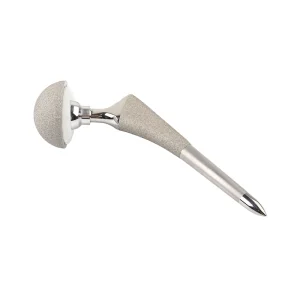
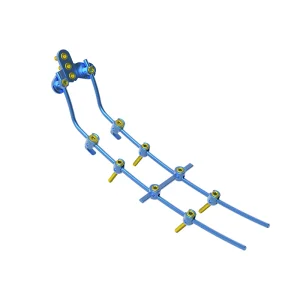
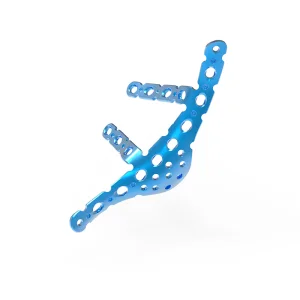
Expanding beyond intramedullary nails, explore our advanced hip prostheses, pelvic reconstruction plates, and trauma compression screw systems.