Precision Platforms: Primary Joint & Trauma Fixation
Explore high-tolerance orthopedic devices and matching instrument systems manufactured under verified ISO 13485 cleanroom protocols.
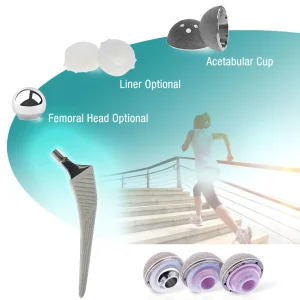
Titanium Bipolar Hip Joint Prosthesis System
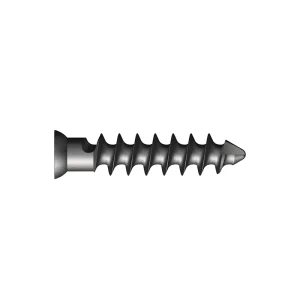
ODM Titanium FDN Acetabular Screw Exporters
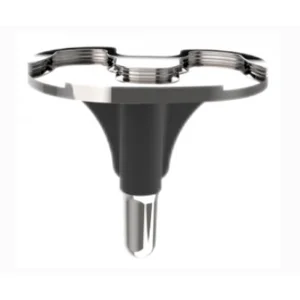
Enable Tibial Baseplate Knee Replacement Implants
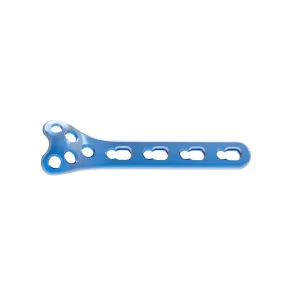
Best Radial Head Locking Compression Plate
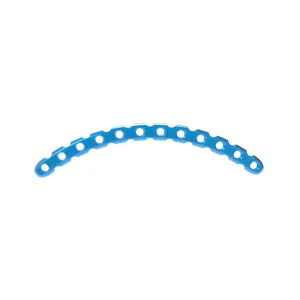
Custom Curved Reconstruction Locking Plate
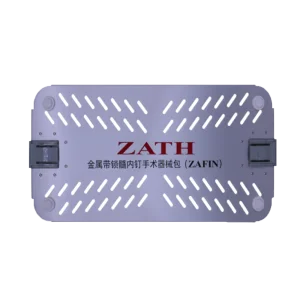
ZAFIN Femoral Nail Precision Instrument Set
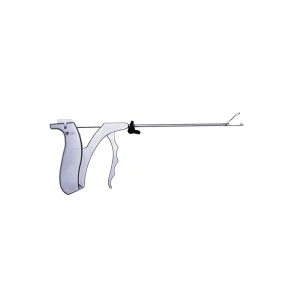
SuperFix Suture Passer Arthroscopic Device
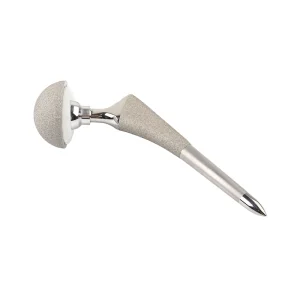
Famous FDS Cementless Stem Hip Joint Prosthesis
The Evolution of Pubic Ramus Fixation
A critical shift from invasive open plating toward minimally invasive intramedullary osteosynthesis, addressing high-energy trauma and geriatric osteoporotic fragility.
Neurovascular Sparing Design
Traditional open reduction internal fixation (ORIF) requires extensive dissection near the Corona Mortis (anastomosis of external iliac and obturator systems). Closed retrograde pubic nailing eliminates dangerous tissue stripping, dramatically lowering iatrogenic bleeding risks.
Centralized Load-Sharing
Unlike eccentric bone plates that endure high cantilever bending moments and prone screw pull-out in osteoporotic bone, intramedullary pubic nails sit within the mechanical neutral axis of the superior ramus, providing continuous axial load-sharing and superior resistance to cyclic shear forces.
Immediate Patient Mobilization
Rigid interlocking mechanisms at the pubic tubercle and supra-acetabular corridor neutralize multi-planar micro-instability. Patients with Fragility Fractures of the Pelvis (FFP) achieve immediate weight-bearing tolerance, drastically mitigating pneumonia, DVT, and bed-rest mortality.
Biomechanics of the Transpubic Corridor: Why Retrograde Nailing Outclasses Cannulated Screws
The superior pubic ramus exhibits a narrow, curved osseous corridor with significant anatomical variance between genders and ethnicities. Historically, trauma surgeons utilized large-diameter (6.5mm to 7.3mm) cannulated cancellous screws for percutaneous fixation. However, clinical follow-ups have documented alarming rates of screw back-out, anterior cortical breach, and mechanical loss of reduction in osteopenic patients.
A purpose-built Pubic Intramedullary Nail (PIN) introduces an engineered curved radius matching the arc of the pubic brim, coupled with dual-plane locking screws. By engaging both the cortical bone of the pubic body medially and the dense bone corridor superior to the acetabulum laterally, the construct achieves superior torsional rigidity. Finite element analysis (FEA) confirms that peak stress at the bone-implant interface is decreased by more than 42% compared to standard anterior subcutaneous internal fixator (INFIX) rods and reconstructive locking plates.
- Minimally Invasive Portal: Reduced infection rates (<1.2% vs. up to 14% in open plating among elderly cohorts).
- Avoidance of LFCN Impingement: Eliminates lateral femoral cutaneous nerve entrapment frequently associated with INFIX subfascial rod placement.
- Radiolucent Targeting Guidance: High-precision carbon-fiber carbon jigs ensure rapid fluoroscopic alignment through the obturator oblique and inlet/outlet views.
Hospital Tendering & Global Sourcing Specifications
Strategic purchasing criteria for medical device distributors, tertiary hospital consortia, and defense trauma response procurement officers.
Material Certification
Must utilize medical-grade Ti-6Al-4V ELI (ASTM F136 / ISO 5832-3). Mill test certificates must document tensile strength (>860 MPa), yield elongation, and deep micro-structure purity without inclusion defects.
Sterile Barrier Validation
Implants supplied in pre-sterilized medical blister trays (ISO 11607-1/2) with verified 5-year accelerated aging shelf life, cutting operating theater autoclaving overhead and eradicating pathogen transmission vectors.
Regulatory Dossier (MDR/FDA)
Procurement mandates full technical documentation: ISO 13485:2016 quality systems, UDEM certification, Free Sale Certificates (FSC), clinical evaluation reports (CER), and biocompatibility data conforming to ISO 10993.
Instrument Modularity
Instrumentation kits must incorporate radiolucent carbon-fiber insertion handles, flexible reamers, quick-docking guide sleeves, and laser-marked depth gauges compatible with standard operating room fluoroscopy.
China Factory 4.0: Precision Engineering & Supply Resilience
How Beijing ZhongAnTaiHua Technology Co., Ltd. (ZATH) transforms raw titanium into high-integrity orthopedic solutions through integrated robotic CNC centers and end-to-end quality control.
ZATH Industrial Heritage & Advanced Manufacturing Infrastructure
Founded in 2009 within the Zhongguancun Science Park (Pinggu, Beijing), Beijing ZhongAnTaiHua Technology Co., Ltd. (ZATH) has established itself as an authoritative force in the global orthopedic manufacturing sector. Spanning a modern manufacturing footprint with over 300 experienced professionals—including nearly 100 dedicated senior and mid-level mechanical engineers and bio-materials specialists—ZATH operates a fully integrated supply chain across five key platforms: Joint Replacement, Spine Fixation, Trauma Osteosynthesis, Sports Medicine, and Matching Surgical Instruments.
The manufacturing of delicate pelvic trauma implants like the pubic intramedullary nail demands unprecedented dimensional accuracy. A minor angular deviation of 1.5 degrees could lead to cortical perforation of the pelvic wall. By deploying high-precision multi-axis Swiss-type CNC machining centers, wire-cutting EDM (Electrical Discharge Machining), and robotic automated surface finishing, ZATH ensures micron-level adherence to surgical CAD specifications.
Raw Material Integrity & Ingot Testing
All titanium and stainless steel stocks undergo 100% optical emission spectrometry, ultrasonic flaw detection, and grain boundary metallographic checks to eliminate micro-voids prior to machining.
Simultaneous Multi-Axis Machining
Implant contours, dynamic locking slots, and precision internal cannulations are turned and milled under continuous coolant filtration, maintaining tolerances within ±0.005mm.
Anodization & Ultrasonic Decontamination
Type II electrochemical anodization increases fatigue endurance and prevents galling during locking screw insertion. Multi-stage ultrasonic baths eliminate all hydrocarbon residues.
Automated Coordinate Verification
Every production lot is measured against CAD nominal coordinates via automated Zeiss Coordinate Measuring Machines (CMM) and optical profile projectors, ensuring zero non-conformity.
Sterile Packaging & Sealing
Conducted in certified ISO Class 7 (Class 10,000) and Class 8 cleanrooms. Double Tyvek blister packaging guarantees microbial barrier integrity conforming to ISO 11607.
Agile Supply Chain Logistics
Strategic warehousing protocols ensure standard SKU availability. International air express orders (DHL, FedEx, UPS) are dispatched within 24-48 hours, reaching global ports in 4-6 business days.
Localized Clinical Scenarios & Operative Strategies
Evaluating clinical pathways where pubic intramedullary nailing represents the gold standard surgical intervention over alternative modalities.
Geriatric Fragility Fractures (FFP II - IV)
Elderly patients suffering from low-energy ground-level falls present with poor bone density and multi-morbidities. Percutaneous retrograde nailing restores immediate anterior pelvic ring stability without systemic surgical trauma, drastically shortening hospital stays.
High-Energy Polytrauma (Tile B & C)
In high-speed motor vehicle accidents or falls from heights, pubic ramus disruption often coexists with thoracic trauma or cranial injuries. Fast-track closed pubic nailing delivers definitive fixation without contributing to the "second-hit" inflammatory cascade.
Morbid Obesity & High Soft-Tissue Risk
Open anterior Stoppa or Pfannenstiel incisions in obese patients carry high rates of seroma formation and surgical site infection (SSI). A 15mm percutaneous puncture portal effectively bypasses problematic subcutaneous fat aprons.
Frequently Asked Questions: Technical & Sourcing Insights
Authoritative answers addressing engineering tolerances, surgical navigation, biocompatibility, and OEM/ODM procurement protocols.
What anatomical constraints govern pubic intramedullary nail sizing?
The pubic ramus corridor presents a narrow cross-sectional isthmus often measuring between 6.5mm and 9.5mm in females and 8.0mm to 11.5mm in males. Modern pubic nails are engineered in diameters of Ø5.0mm, Ø6.0mm, and Ø7.0mm with lengths from 90mm to 130mm, featuring an anatomical curvature radius (ROC) calibrated to match the pelvic brim and prevent acetabular joint penetration.
How does the retrograde pubic nail prevent vascular injury to the Corona Mortis?
The Corona Mortis lies on the posterior aspect of the superior pubic ramus, approximately 40mm to 60mm lateral to the pubic symphysis. Retrograde intramedullary nailing is performed completely within the medullary canal. Because periosteal elevation is unnecessary, the venous and arterial anastomoses remain undisturbed, reducing hemorrhage risks to near zero.
Can pubic intramedullary nails be used in combination with posterior sacroiliac screws?
Yes. Pelvic ring injuries (Tile B and C) almost universally feature both anterior and posterior ring instability. A classic minimally invasive construct combines percutaneous iliosacral (IS) screws or trans-sacral trans-iliac (TSTI) screws posteriorly with a pubic intramedullary nail anteriorly, yielding a complete, highly stable internal pelvic ring frame.
What quality certifications accompany ZATH orthopedic export shipments?
All ZATH orthopedic device platforms conform to ISO 13485:2016 Quality Management Systems. Export consignments are supplied with Certificates of Analysis (COA), mill material traceability certs, sterile barrier validation records, Free Sale Certificates (FSC), and full technical dossiers supporting national registration with MoH/FDA agencies worldwide.
What are the lead times and MOQ parameters for OEM / ODM customization?
For custom implant specifications, specialized laser labeling, or modified instrument ergonomics, ZATH offers agile OEM/ODM cycles. Prototype sampling is completed within 3 to 4 weeks. Minimum Order Quantities (MOQs) are tailored to market introduction phases, supported by rapid batch manufacturing through our 300+ staff facility in Beijing.
How does ZATH ensure instrument durability across multiple autoclave cycles?
Surgical instruments are fabricated from medical-grade martensitic and austenitic stainless steels (such as 17-4PH and Custom 455) subjected to specialized heat treatment and passivation. Jigs and guide sleeves maintain high dimensional stability and corrosion resistance across more than 500 validated autoclave sterilization cycles.
Spine, Extremity & Trauma Reconstruction Platforms
Explore ZATH's broader portfolio of sterile-packaged locking plates, spinal systems, and specialty trauma instrumentation.
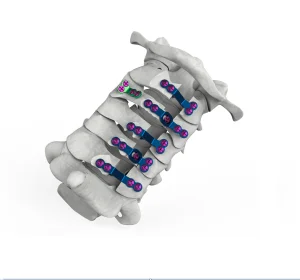
ODM Posterior Cervical Plate Laminoplasty Bone Implant
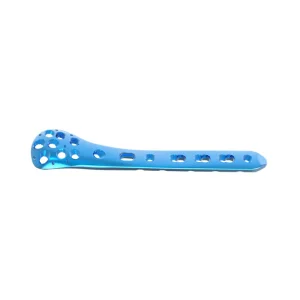
Proximal Lateral Humerus Locking Plate II
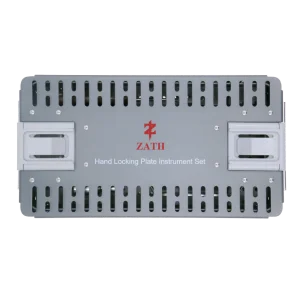
Hand Locking Plate Instrument Set (Lite)
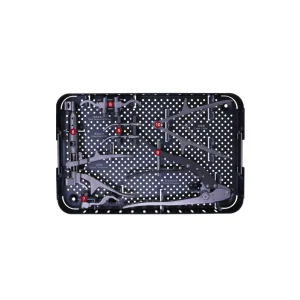
Famous Cable Instrument Set TypeII System
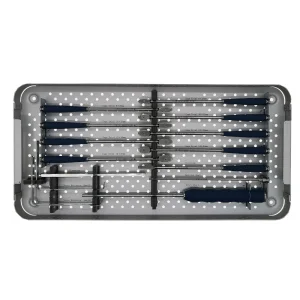
Thoracolumbar PLIF Cage Instrument Set
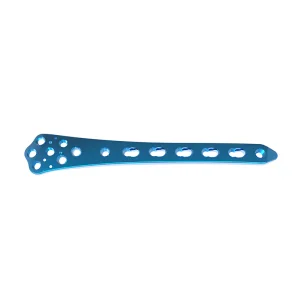
Distal Lateral Femur Locking Compression Plate
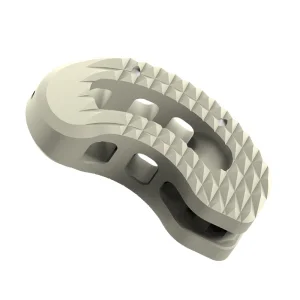
Thoracolumbar Interbody Cage (Angled)