
Clinical Product Series: Featured Orthopedic Systems
Precision-manufactured titanium implants and matched surgical instruments designed for high biomechanical stability, reduced soft-tissue disruption, and predictable intraoperative outcomes.
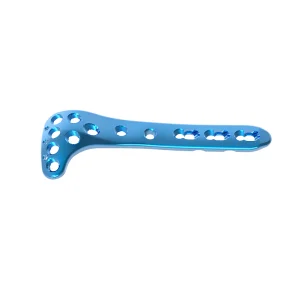
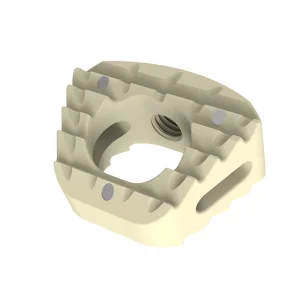
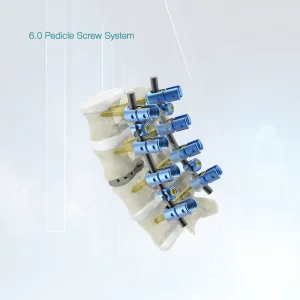
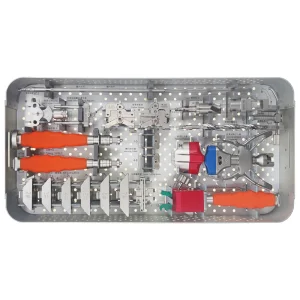
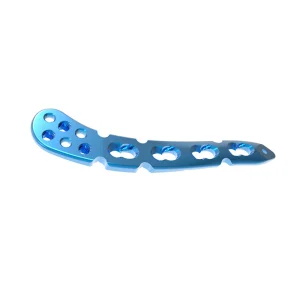
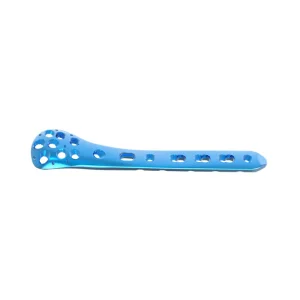

Femoral Nail Hip & Reconstruction: Technical Architecture
A deep dive into load-bearing intramedullary fixation, stress distribution mechanics, and the anatomical co-evolution between femoral nail hip systems and total hip arthroplasty (THA).
Cephalomedullary Load Sharing
Modern femoral hip nails (PFNA and InterZan models) are engineered around the principle of load sharing. By transferring proximal bending moments axially down the intramedullary canal, femoral hip nails mitigate the high cantilever forces inherent in lateral extramedullary plates, slashing the incidence of varus collapse in osteoporotic trochanteric fractures by up to 42%.
Rotational Stability & Cut-Out Resistance
Dynamic helical blades and dual interlocking cephalic screw mechanisms compact cancellous bone rather than reaming it away. This localized bone impaction elevates tip-apex distance (TAD) tolerance, providing rigid cut-out prevention even within poor trabecular bone stock (Singh Index ≤ 3), making early postoperative weight-bearing clinically feasible.
Anatomical Radius of Curvature (ROC)
Early-generation intramedullary femoral nails carried a standardized 2.0m ROC, which regularly created anterior cortical impingement during distal seating. Contemporary precision manufacturing integrates a pre-curved radius of curvature (1.5m to 1.65m), aligning smoothly with the natural sagittal bow across polymorphic demographics.
| Fixation Modality | Mechanical Principle | Implant Material Grade | Failure Mode Risk | Indication Scope |
|---|---|---|---|---|
| Cephalomedullary Femoral Nail | Centromedullary load-sharing, minimal working lever arm | Ti-6Al-4V ELI (ISO 5832-3) | Distal tip anterior perforation (avoided with ROC 1.5m) | Unstable Trochanteric (AO 31-A2/A3), Subtrochanteric |
| Extramedullary Sliding Hip Screw (DHS) | Lateral load-bearing, large moment arm | Medical Stainless Steel / Titanium | Varus collapse, screw cut-out in comminuted fractures | Stable Intertrochanteric (AO 31-A1) |
| Bipolar Hemiarthroplasty Stem | Direct articular substitution, metaphyseal press-fit | CoCrMo + Ti Plasma Spray | Stem subsidence, acetabular cartilage erosion | Femoral Neck Fractures (Garden III/IV) in elderly |
| Modular Femoral Reconstruction Nail | Segmental bridging with multi-angle locking | High-Cycle Fatigue Resistant Ti | Locking screw breakage at nonunion threshold | Ipsilateral Femoral Neck + Shaft Complex Fractures |
Global Enterprises Procurement Requirements
Analyzing hospital tender criteria, supply chain risk mitigation, and the rising global demand for standardized orthopedic implant instrumentation.
Inventory Holding Optimization
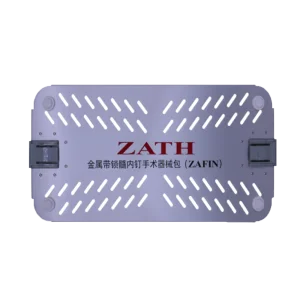
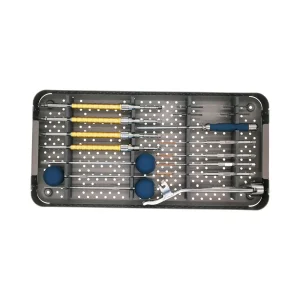
Global hospital purchasing groups (GPOs) increasingly reject non-integrated trauma instrumentation. The ZATH universal nail platform features streamlined instrument trays that service both antegrade femoral nails and retrograde configurations with fewer than 32 core tools, cutting autoclave sterilization turnover cycles by 35%.
Direct-to-Sterile Packaging Protocols
Operating room costs in developed healthcare systems exceed $60 per minute. ZATH delivers pre-sterilized implants individually packaged in medical blister packs compliant with ISO 11607, ensuring 100% barrier integrity for up to 5 years, dropping hospital in-house sterile wash burdens to zero.
Customized OEM/ODM Flexibility
Regional anatomy variations across Latin America, Southeast Asia, and the Middle East require adaptable proximal diameters and CCD angles (ranging from 125° to 135°). We engineer bespoke dimensional curves and client-branded laser labeling without compromising regulatory file coherence.
China Factory 4.0: Supply Chain Resilience & Precision
Operating from the Beijing Zhongguancun Science and Technology Park since 2009, ZATH pioneers end-to-end medical implant fabrication with high-precision CNC automation.
Multi-Axis Swiss CNC Machining
Utilizing ultra-precise multi-axis turning-milling centers, our workshops execute intricate cannulated boring, thread skiving, and blade contouring in single-clamping operations, guaranteeing axial concentricity tolerances down to ±0.005mm.
Digital Lot Lineage & ERP Integration
Every titanium bar stock receipt is cross-referenced with spectroscopic chemical assay sheets and physical tensile stress test logs. Barcodes bind the raw ingot to the final sterile carton, enabling 100% digital backward and forward traceability.
Class 100,000 Cleanroom Packaging
Post-ultrasonic cleaning passivation occurs under monitored environments. Automated blister sealing prevents particulates, bioburden, or pyrogen intrusion, conforming to endotoxin thresholds defined in ISO 14644-1 and European pharmacopeia standards.
Regulatory Compliance & Next-Gen Technological Roadmap
Navigating stringent worldwide market entrance protocols while leading R&D breakthroughs in 3D porous lattices, bioactive surface coatings, and smart fracture telemetry.
Global Dossier Support (MDR & FDA 510k)
We provide licensed international distributors with turnkey technical dossiers, including biocompatibility documentation (ISO 10993), static and dynamic biomechanical testing (ASTM F543, ASTM F382, ASTM F1839), sterilization validation, and UDEM certification files.
Additive Manufacturing & Porous Titanium
Advancing from conventional subtractive milling, ZATH's active pipeline incorporates Electron Beam Melting (EBM) additive printing to create trabecular biomimetic surface coatings on hip stems, accelerating osteointegration and biological bone ingrowth.
Smart Telemetry & Sensor-Integrated Fixation
Collaborating with university biomechanics institutes, our technical roadmap investigates micro-strain gauge sensor implants embedded in intramedullary cannulations to wirelessly quantify callus stiffness, alerting orthopedic surgeons in real-time to delayed nonunions.
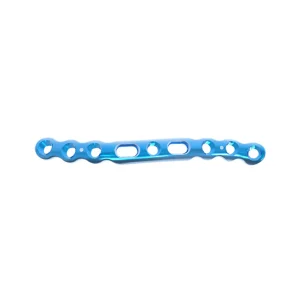
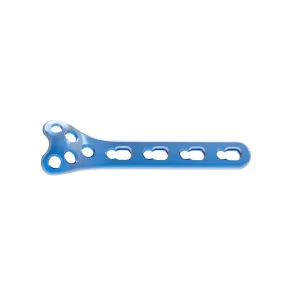
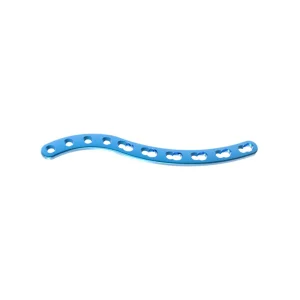
Selected Clinical Catalog: Hip, Plate & Anchor Series
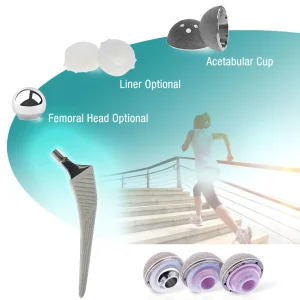
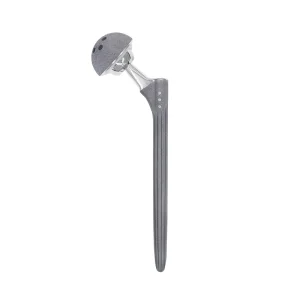
Comprehensive arthroplasty prostheses, anatomical clavicular locking plates, and arthroscopic fixation devices certified under single-source accountability.
Frequently Asked Questions: Femoral Nail Hip Sourcing
Comprehensive answers addressing metallurgic specifications, instrument compatibility, regulatory documentation, and logistical fulfillment.