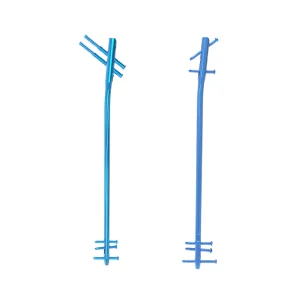
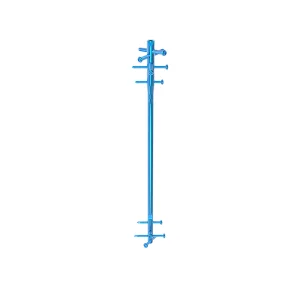
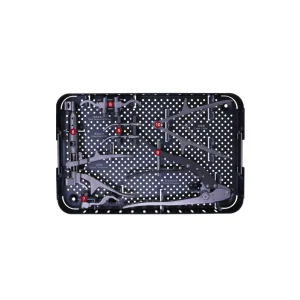
Featured Orthopedic Systems: Joint, Trauma & Reconstruction
Precision-machined implant systems and dedicated surgical instrumentation meeting rigorous international biomechanical endurance criteria.
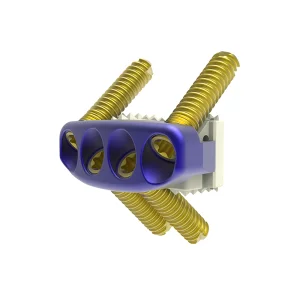
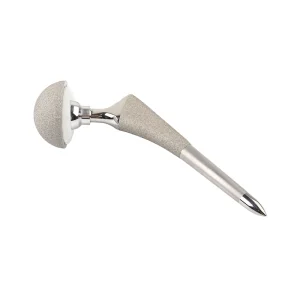
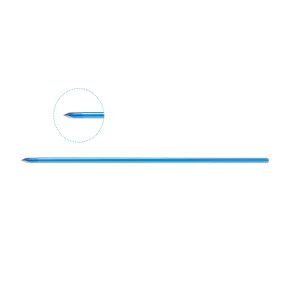
The Orthopedic Implants Market in India: Scale, Trends & Supply Realities
Evaluating the operational paradigm between regional Indian implant fabricators and international procurement networks across South Asia and global distribution hubs.
The orthopedic implants market in India has undergone transformative shifts over the past decade. Driven by rising domestic surgical volumes, state-subsidized universal healthcare programs like Ayushman Bharat (PM-JAY), and an exponential increase in high-energy traffic trauma alongside age-related osteoarthritis, India represents one of the fastest-growing destinations for trauma, spine, and arthroplasty consumption worldwide. While hubs such as Gujarat, Maharashtra, and Delhi NCR have given rise to numerous domestic implant fabricators under the "Make in India" initiative, significant industrial bottlenecks persist.
Procurement directors and hospital networks face critical challenges in domestic sourcing: localized capacity constraints in multi-axis CNC micro-machining, heavy dependency on imported medical-grade titanium bar stock (Ti6Al4V ELI) and implantable PEEK, and fluctuating regulatory hurdles overseen by the Central Drugs Standard Control Organisation (CDSCO). Consequently, while domestic demand escalates, top-tier healthcare providers and discerning distributors increasingly adopt a blended supply chain strategy—combining regional supply with large-scale, high-precision industrial manufacturing powerhouses that offer certified metallurgical consistency, rapid OEM turnarounds, and lower cost-per-unit economics.
CDSCO Regulatory Harmonization
Indian Medical Device Rules (MDR 2017) classify joint prostheses, spinal cages, and intramedullary nails under Class C and Class D. Securing compliance necessitates comprehensive master device files, bio-compatibility reports, and audit trails that global Tier-1 manufacturing facilities maintain natively.
Arthroplasty Demographic Surge
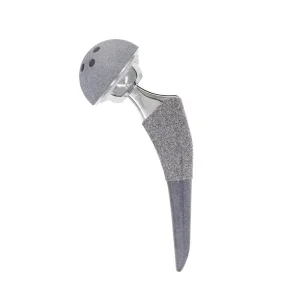
India’s total joint arthroplasty (TJA) volume is expanding exponentially. Driven by early-onset osteoarthritis and avascular necrosis (AVN) of the femoral head, surgeons demand high-integrity cementless titanium hip stems, bipolar heads, and primary knee systems that guarantee prolonged mechanical longevity.
High-Energy Trauma Demands
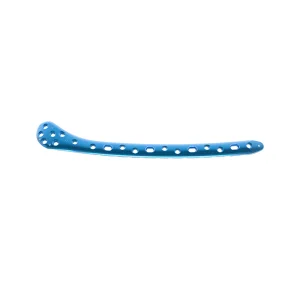
With severe road traffic accidents contributing substantially to acute trauma admissions, hospital networks require dependable locking compression plates (LCP), anatomical distal lateral femur plates, and cephalomedullary systems engineered to resist high-cycle fatigue.
Why Global & Indian Enterprises Partner with Advanced China Factories
Leveraging vertical supply-chain integration, Swiss-type 5-axis CNC machining, and high-volume quality engineering to achieve exceptional price-to-performance parity.
In modern medical engineering, the intersection of clinical precision and unit economics determines distributor profitability and hospital accessibility. Advanced manufacturers in China—such as Beijing ZhongAnTaiHua Technology Co., Ltd. (ZATH)—operate mature, vertically integrated production infrastructures. By controlling the entire lifecycle from raw ingot testing to multi-axis CNC machining, electropolishing, cleanroom packaging, and EO sterilization, Chinese manufacturing platforms eliminate multi-tiered supplier markups while executing tolerances measured in microns.
For international buyers and Indian healthcare enterprises navigating price-ceiling regulations (such as NPPA price caps on knee implants in India), this manufacturing efficiency offers a decisive commercial edge. Distributors can source CE-certified, ISO 13485-validated joint, trauma, and spine assemblies at predictable costs, backed by rapid container freight and dedicated OEM customization capabilities that localized small-scale workshops cannot match.
| Evaluation Parameter | Typical Indian Regional Workshop | Advanced Tier-1 China Facility (e.g., ZATH) | Procurement Advantage |
|---|---|---|---|
| Machining Infrastructure | Primarily 3-axis to 4-axis CNC; secondary outsourcing for complex threading | Multi-axis Swiss longitudinal turning & 5-axis simultaneous high-speed milling | Superior dimensional repeatability; eliminates micro-burrs in locking screw threads |
| Raw Material Provenance | Fragmented titanium stock imports; fluctuating batch-to-batch metallurgical purity | Direct mill partnerships with medical-grade Ti6Al4V ELI & PEEK bar stock certs | Guaranteed tensile strength, fracture toughness, and zero heavy metal contamination |
| Quality Management | Basic ISO 9001 or domestic CDSCO baseline compliance | ISO 13485:2016 audited, UDEM CE certified, Free Sale Certificates (FSC) | Streamlined global tender qualifications and rapid local regulatory approvals |
| Turnaround & Scalability | Limited batch production; extended backorder delays on non-standard sizes | Scalable high-volume production lines; standardized rapid dispatch | Eliminates surgical backorders and maintains stock reliability during clinical surges |
| OEM / Customization Scope | Restricted to existing tooling dies; costly prototyping iterations | In-house CAD/CAM R&D team; flexible custom laser marking, sizing, and packaging | Tailored implants aligned directly with regional surgeon preference and anatomy |
Localized Clinical Application Scenarios: Anatomical Alignment in India
Optimizing implant geometry for Asian skeletal morphology, severe proximal femoral fracture patterns, and minimally invasive spinal interventions.
Orthopedic reconstruction cannot rely on a one-size-fits-all paradigm. Biomechanical studies consistently confirm that South Asian skeletal profiles exhibit distinct anthropometric characteristics compared to Western populations. Specifically, Indian patient cohorts generally present with smaller femoral canal diameters, shorter femoral neck lengths, narrower acetabular dimensions, and more pronounced anterior femoral bowing. Applying standard Western-proportioned implants frequently results in cortical impingement, anterior thigh pain, or rotational mismatch.
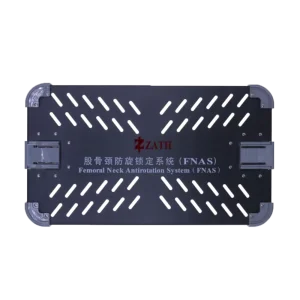
Consequently, implant systems engineered with versatile radius profiles and lower-profile anatomically contoured locking plates yield substantially better clinical outcomes. In trauma surgery, the high incidence of comminuted, unstable intertrochanteric fractures calls for solutions like the Femoral Neck Antirotation System (FNAS) and cephalomedullary nails that offer antirotation dynamic stabilization, resisting the varus collapse frequently encountered in osteopenic Asian bone structures.
Proximal Femur Antirotation
Unstable intertrochanteric and subtrochanteric fractures represent a major acute admission volume in Indian government and corporate hospitals. Systems combining integrated antirotation lag screws preserve femoral neck blood flow while ensuring stable medial buttress reconstruction.
Anatomical Distal Femur LCP
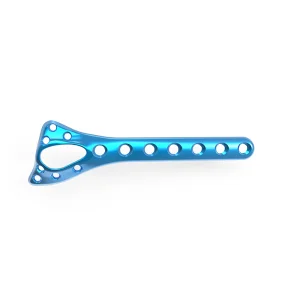
Distal femoral comminution from motorcycle and industrial injuries requires pre-shaped anatomical locking plates. Low-profile designs minimize irritation of the iliotibial band while multi-angle locking screws securely anchor intra-articular condylar fragments.
Cervical & Lumbar Spinal Arthrodesis
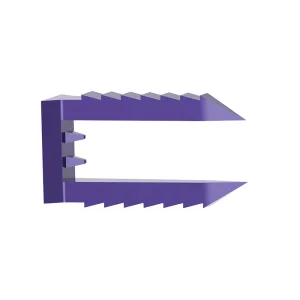
Degenerative disc diseases in active rural and urban labor populations are treated with zero-profile PEEK or titanium cervical cages and minimally invasive pedicle screw systems, maximizing bone graft contact area and fusion rates.
Emerging Trends Shaping Orthopedic Device Innovation
From additive electron beam melting to bioactive surfaces, next-generation implant systems elevate clinical outcomes and simplify surgical workflows.
The global orthopedic implant sector is advancing beyond simple mechanical stability toward biological integration. Leading manufacturers are investing heavily in technologies that actively stimulate osteogenesis and reduce surgical complexity. Among these, three technical frontiers dominate R&D roadmaps:
3D Printed Trabecular Titanium
Direct Metal Laser Sintering (DMLS) constructs fully interconnected porous titanium scaffolds mimicking natural cancellous bone structure. Modulus matching significantly mitigates stress shielding while maximizing cellular infiltration and early biological fixation.
Bioactive & Antimicrobial Coatings
Advanced surface modifications—including plasma-sprayed hydroxyapatite (HA), electrochemical anodic oxidation, and silver-doped nano-coatings—counter postoperative surgical site infections (SSI) while accelerating osseointegration.
Minimally Invasive Instrumentation
Surgical instrumentation is evolving in lockstep with implants. Low-profile percutaneous screw-rod systems, expandable MIS channel retractor sets, and radiolucent carbon-fiber targeting guides decrease intraoperative blood loss and surgical fatigue.
B2B Procurement Protocol: Supplier Qualification Framework
Key verification benchmarks international tenders, distributor qualification committees, and hospital procurement boards mandate before onboarding an orthopedic manufacturing partner.
Procuring Class III / Class C & D orthopedic medical devices requires exhaustive due diligence. In an increasingly regulated global market, relying merely on price points invites catastrophic legal and clinical risks. Strategic procurement officers utilize an objective verification matrix comprising four fundamental pillars:
1. Traceability & Raw Material Provenance
Strict adherence to ASTM F136 (Ti-6Al-4V ELI) and ASTM F138 (Medical Grade Stainless Steel 316L). Every batch must carry mill test certificates, chemical composition analyses, and melt lot numbers traceable down to each individual screw or plate.
2. Biomechanical Fatigue Validation
Complete dynamic and static mechanical test validation per ASTM F1717 (spinal constructs), ASTM F543 (bone screws), and ISO 7206 (hip components) confirming endurance limit against post-implantation failure under cyclic body weight loads.
3. Sterile Barrier Packaging & Cleanroom
Certified Class 10,000 / ISO Class 7 cleanroom packaging systems conforming to ISO 11607. Implants must provide an indisputable Sterility Assurance Level (SAL 10-6) via validated Ethylene Oxide (EO) or gamma irradiation protocols.
Frequently Asked Questions for B2B Importers & Hospital Groups
Clarifying technical, regulatory, and supply chain questions surrounding international orthopedic sourcing, OEM customization, and CDSCO compliance.
To import and distribute orthopedic implants in India, distributors submit an application for an Import License (Form MD-14) under Medical Device Rules 2017. A world-class manufacturer provides a complete Device Master File (DMF), Plant Master File (PMF), Free Sale Certificate (FSC), ISO 13485:2016 verification, and CE certification, enabling authorized Indian agents to secure swift regulatory clearance.
Yes. Contract manufacturing includes laser marking distributor logos, customizing plate hole configurations, tailoring intramedullary nail lengths and distal curvatures, and creating dedicated localized packaging and barcode labels that adhere directly to the distributor’s brand specifications and regional legal mandates.
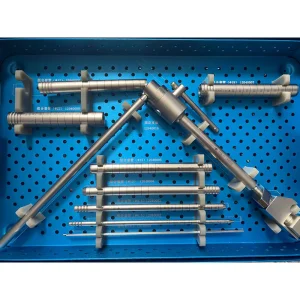
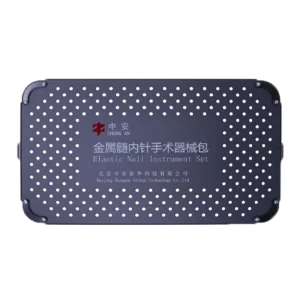
Complete dedicated surgical instrument sets—such as the ZEIN Elastic Nail Set, FNAS Instrument System, MIS Spinal Channels, and Hip Reaming Sets—are engineered and supplied in tandem. Instruments are manufactured from medical-grade surgical stainless steel (17-4PH, 420) to guarantee precise tactile feedback, perfect drive engagement, and autoclavable endurance.
Standard express sample and urgent replenishment consignments ship via air freight (DHL, FedEx, air cargo) within 4 to 6 business days directly to international airports including New Delhi (DEL), Mumbai (BOM), and Bengaluru (BLR). High-volume sea-freight orders arrive at major deep-water ports (Nhava Sheva, Chennai) within 15 to 22 transit days.
Ti6Al4V ELI (Grade 23) offers superior biocompatibility, heightened fatigue strength, and an elastic modulus significantly closer to human cortical bone (approx. 110 GPa vs 210 GPa for stainless steel). This greatly reduces stress shielding, promotes bone preservation, and guarantees full MRI conditionality without producing extensive magnetic distortion artifacts.
Every production run follows a 6-stage quality protocol under ISO 13485: raw material spectrographic verification, automated multi-axis CNC machining, coordinate measuring machine (CMM) dimensional checks, surface roughness optical profilometry, automated ultrasonic cleaning, and cleanroom vacuum blister heat-sealing.
Specialized Spinal, Sports Medicine & Intramedullary Systems
Expand your hospital and distribution catalog with specialized fracture fixation, intramedullary nailing sets, and soft-tissue anchors.