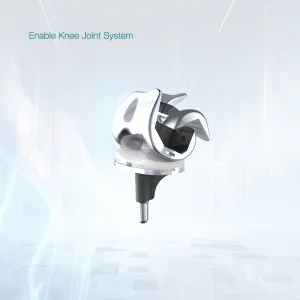
Buy High Quality Titanium Total Knee Joint Replacement Implants Pricelist, Companies
View Specifications
Browse high-precision trauma, joint arthroplasty, and spinal fixation systems manufactured under strict cleanroom conditions with full material traceability.
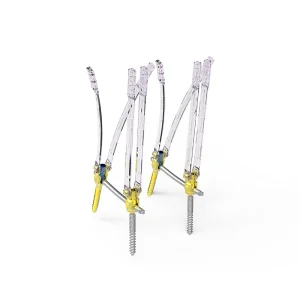
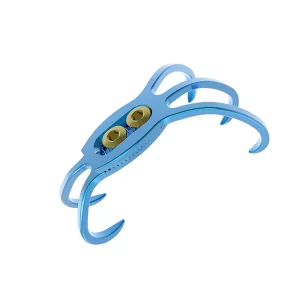
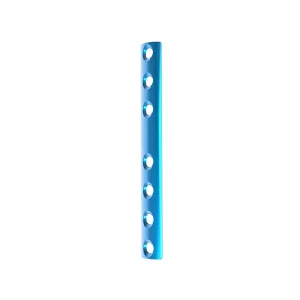

Understanding trabecular bone mechanics, thread shear area, and lag-screw interfragmentary compression in epiphyseal and metaphyseal reconstructive surgery.
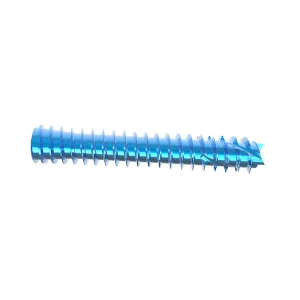
Unlike cortical screws engineered with shallow, dense threads for dense Haversian bone, OEM cancellous bone screws feature an increased thread pitch (typically 1.75mm to 2.75mm) and a dramatically enlarged outer-to-core diameter ratio. This geometry maximizes the volumetric contact area against sparse cancellous trabeculae, significantly increasing axial pull-out strength.
Partially threaded cancellous screws (16mm and 32mm thread runs) function under the classical lag principle. As the threaded portion engages solely within the distal fragment, the smooth shank glides unimpeded through the near fragment. Driving the spherical head into the near cortex creates high interfragmentary compression across the fracture gap, accelerating primary bone healing.
For complex intra-articular interventions such as femoral neck or tibial plateau stabilization, cannulated cancellous screws permit percutaneous introduction over calibrated Kirschner guide wires. Concentric axial cannulation ensures absolute trajectory accuracy under fluoroscopy without compromising torsional yield strength or cyclic fatigue life.
Hospital tenders, orthopedic device brands, and regional importers face intensifying margin pressures and shifting demographic imperatives across trauma surgery.
With global life expectancies extending across the Americas, Europe, and Asia-Pacific, the incidence of fragility fractures—predominantly intracapsular femoral neck fractures, distal radius fractures, and proximal humerus collapses—has surged. Orthopedic procurement bodies actively demand cancellous screws capable of achieving rigid fixation in compromised bone mineral density (BMD), prioritizing optimized thread depth, reverse-cutting flutes, and bio-inert titanium alloys (Ti6Al4V ELI) over conventional stainless steel.
Procurement directors can no longer afford supply chain disruptions caused by ambiguous compliance. The stringent transition to EU MDR (Medical Device Regulation 2017/745), alongside US FDA 510(k) mandates, requires that contract OEM manufacturers deliver comprehensive technical documentation, including ASTM F543 biomechanical test reports, validated biocompatibility dossiers (ISO 10993), and sterile packaging seal integrity studies (ISO 11607).
At Beijing ZhongAnTaiHua Technology Co., Ltd. (ZATH), our centralized production park in Zhongguancun Science Park integrates end-to-end device realization under one unified quality management system.
Sourcing strictly certified medical-grade titanium alloy (ASTM F136 / ISO 5832-3) and implant-grade 316LVM stainless steel. Every raw rod is ultrasonic tested and accompanied by original mill test certificates before admission.
High-speed Citizen Swiss-type 5-axis CNC lathes mill intricate cancellous screw threads, self-tapping flutes, and internal cannulations in a single continuous setup, eliminating re-clamping run-out errors.
Electropolishing and Class II anodization eliminate micro-burrs and establish an ultra-stable titanium oxide passive layer, preventing metallic ion leaching and promoting rapid osseointegration in vivo.
Cleanroom packaging operations (ISO Class 7 / Class 10,000) seal implants inside double peelable Tyvek® blister pouches, verified for complete microbial barrier protection under ISO 11607.
Unlike brokers who outsource critical steps across disparate workshops, ZATH operates an integrated facility spanning tooling, wire cutting, multi-axis machining, optical inspection, chemical surface treatment, and cleanroom packing in Beijing. This minimizes logistic friction, secures tight revision control, and guarantees lot-to-lot dimensional repeatability with a standard tolerance window of ±0.005mm.
Recognizing that surgical schedules cannot tolerate stockouts, our logistics protocol links our ISO-certified buffer warehouse directly to major air cargo hubs. With pre-cleared customs lanes and direct DHL, FedEx, and UPS commercial contracts, critical orders and instrument set replenishments reach hospital centers worldwide within 4 to 6 business days.
Standard production parameters for solid and cannulated cancellous bone screws. Custom pitches, drive recesses (Torx/Hex), and shank profiles are fully customizable under private label contracts.
| Nominal Diameter | Core Diameter | Cannulation Bore | Thread Configuration | Drive Recess | Standard Lengths | Material Standard |
|---|---|---|---|---|---|---|
| Ø 3.5 mm Mini | 1.9 mm | 1.25 mm (Cannulated) | Full / Partial (10mm/14mm) | Hex 2.5 / Torx T15 | 10 mm – 50 mm (2mm inc.) | Ti6Al4V ELI (ASTM F136) |
| Ø 4.0 mm Small | 1.9 mm | 1.35 mm (Cannulated) | Full / Partial (16mm) | Hex 2.5 / Torx T15 | 16 mm – 70 mm (2mm inc.) | Ti6Al4V ELI / 316LVM |
| Ø 6.5 mm Large | 3.0 mm | Solid Non-cannulated | 16mm / 32mm / Fully Threaded | Hex 3.5 / StarDrive | 25 mm – 140 mm (5mm inc.) | Ti6Al4V ELI (ASTM F136) |
| Ø 7.0 mm Large | 3.2 mm | 2.2 mm (Cannulated) | 16mm / 32mm Thread Run | Hex 5.0 / Torx T25 | 30 mm – 130 mm (5mm inc.) | Ti6Al4V ELI (ASTM F136) |
| Ø 7.3 mm Heavy Duty | 3.2 mm | 2.7 mm (K-wire guided) | 16mm / 32mm / Full Length | Hex 5.0 / StarDrive | 40 mm – 150 mm (5mm inc.) | Ti6Al4V ELI / 316LVM |
Engineered to deliver predictable primary stability across high-stress anatomical junctions subject to physiological shear and rotational forces.
Employed in the inverted triangular configuration (three parallel cannulated cancellous screws: posteroinferior, anterosuperior, and posterosuperior). This construct resists varus displacement, counteracts shearing forces in Garden Type I–III and Pauwels Type II fractures, and achieves controlled axial collapse while preserving delicate retinacular femoral head vasculature.
In Schatzker Type I and II lateral tibial plateau fractures, partially threaded 6.5mm or 7.0mm cancellous bone screws are placed directly beneath the subchondral surface. Combined with spherical washers to prevent cortical sink-in, they pull depressed lateral condylar fragments into anatomical congruity against the intact medial pillar.
High-velocity pelvic ring disruptions involving sacroiliac joint subluxation demand long-reach 7.0mm/7.3mm cannulated cancellous screws seated into the S1 vertebral body corridor. In subtalar and ankle fusion, heavy-duty thread engagement through the calcaneus and talus resists high rotational shear during early functional mobilization.
From initial 3D STEP design optimization to regional commercial registration, our engineering office partners with your technical team at every milestone.
Our senior orthopedic toolmakers review your CAD designs to optimize thread flute entry angles, driver recess geometry (preventing cam-out), and cannulation tolerances, ensuring structural strength while curtailing unnecessary machining cycle costs.
Every custom screw family undergoes rigorous static and dynamic mechanical qualification: torsional yield strength, maximum torque, breaking angle, driving torque, and axial pull-out resistance testing in polyurethane test blocks (Sawbones) per ASTM F543 standards.
We offer high-definition fiber laser marking of customer logos, lot identification, and QR traceability codes. Packaging options include bulk non-sterile hospital trays or sterile Tyvek blister packs configured with your language and regional barcode requirements.
Technical, regulatory, and supply chain insights for orthopedic medical device buyers and international distribution partners.
Consult directly with our senior orthopedic engineering team. Request comprehensive CAD technical files, ASTM test data, and competitive wholesale price schedules.
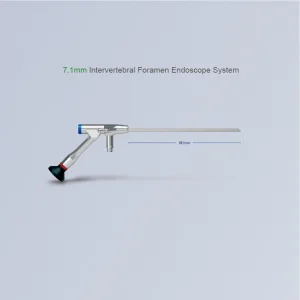
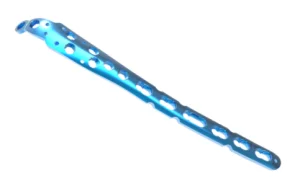
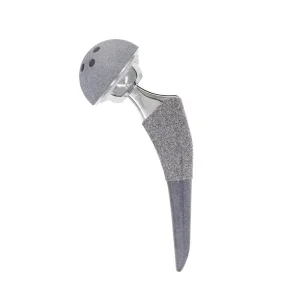
Explore our broader ecosystem of trauma plates, minimally invasive spinal systems, endoscopic towers, and arthroplasty prostheses.