
Precision Orthopedic Implants & Screw Systems
Explore our top-tier trauma, sports medicine, joint arthroplasty, and internal fixation systems fabricated to micro-millimeter dimensional tolerances.
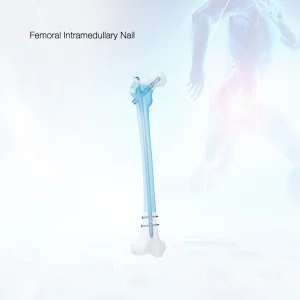
Cheap Surgical Orthopedic Implant Titanium ZAFIN Intramedullary Nail Pricelist, Exporters
View Specifications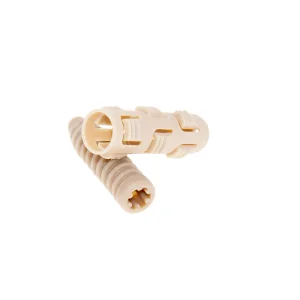
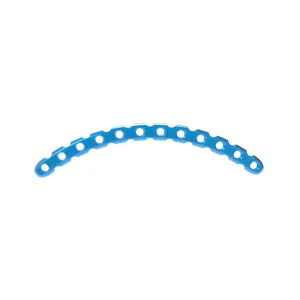
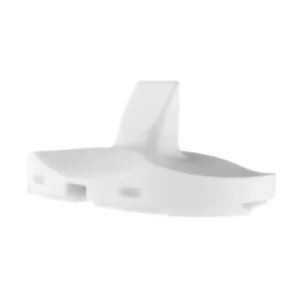
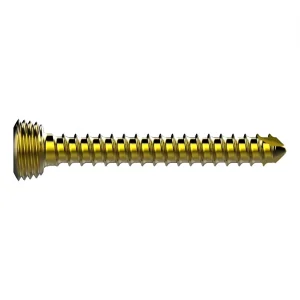
OEM 2.0mm 2.7mm 3.5mm 5.0mm Locking Screw Orthopedic Screw Implants Suppliers, Companies
View Specifications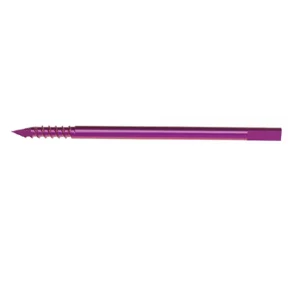
China Self Drilling and Self Tapping Triangular Cutting Edge Pin for Orthopedic External Fixation Supplier, Products
View Specifications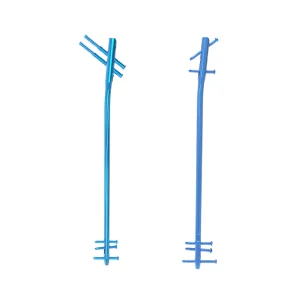
Engineering Principles of OEM Implant Orthopedic Screws
Internal bone fixation demands absolute fidelity in metallurgical purity, thread profile mechanics, torsional shear capacity, and osseointegration dynamics.
Metallurgical Substrates & Fatigue Life
Surgical screws endure extreme cyclic loading in vivo. Contract manufacturing relies principally on certified medical-grade Ti-6Al-4V ELI (ASTM F136 / ISO 5832-3) and vacuum-arc remelted 316LVM implant stainless steel (ASTM F138 / ISO 5832-1). ELI (Extra Low Interstitial) formulations control interstitial oxygen below 0.13%, maximizing fracture toughness and dynamic fatigue threshold against bending notch fatigue during early ambulation.
Thread Geometry & Pullout Force
The mechanical grip of an orthopedic screw correlates directly with its thread pitch, flank angle, and shear area. Cancellous bone screws utilize deep, widely spaced buttress threads with a pitch up to 2.75mm to capture trabecular architecture, whereas cortical screws feature fine pitches (1.0mm to 1.75mm) and a 35°/3° asymmetric load angle to convert tightening torque into controlled axial compression without micro-cracking the haversian canal.
Drive Recess & Anti-Stripping Torque
Stripping an implant screw during surgical insertion or explantation represents a critical clinical complication. State-of-the-art OEM orthopedic screws have shifted from cruciform and hexagonal recesses to Torx and Stardrive (hexalobular, ISO 10664) profiles. This geometry aligns drive engagement angles nearly perpendicular to rotational vector lines, virtually eliminating cam-out force and maximizing drive torque transmission even under angled access.
Enterprise Procurement Insight: The medical device procurement landscape has shifted fundamentally toward integrated risk elimination. Tier-1 hospital purchasing consortiums, OEM brand owners, and multinational distributors no longer evaluate orthopedic screws solely on piece-part unit pricing. True supply chain resilience hinges on complete Device Master Records (DMR), fully characterized Material Test Reports (MTR) showing melt source traceability, cleanroom validation protocols (ISO 14644-1), and documented dynamic torsional testing conforming to ASTM F543.
Comprehensive Screw Platforms Across Orthopedic Specialties
OEM contract manufacturing requires modular design architectures that integrate seamlessly into plating systems, nail interlocks, and spinal constructs.
1. Locking Compression Plate (LCP) Fixation Screws
Modern trauma reconstruction relies heavily on internal fixators where the screw head features a precision conical thread that locks solidly into the plate eyelet. This eliminates the need for plate-to-bone compression, preserving periosteal blood supply and reducing infection rates. Our OEM locking screws range from 2.0mm micro-fragment screws for distal radius reconstruction up to 5.0mm variable-angle locking screws engineered for distal femur and proximal tibia non-unions, tolerating angular deviation up to ±15° off-axis while maintaining full thread lock security.
2. Spinal Pedicle & Facet Screw Architecture
Posterior thoracolumbar spinal stabilization demands screws capable of sustaining immense cantilever bending and pullout stresses. Our OEM spine portfolio encompasses monoaxial, polyaxial, uniplanar, and cannulated cement-augmented pedicle screws ranging from Ø4.5mm to Ø8.5mm. Featuring dual-lead threads for accelerated insertion velocity and tapered core shafts that maximize bone-to-thread contact in the vertebral pedicle isthmus, these implants couple with spherical saddle friction locks to secure Ø5.5mm and Ø6.0mm titanium or CoCr stabilizing rods without slippage.
3. Cannulated & Headless Herbert Compression Screws
For scaphoid fractures, femoral neck fractures, and intra-articular osteochondral reconstructions, cannulated headless screws provide stable interfragmentary compression without soft-tissue impingement. Manufactured with inner bore concentricity under 0.02mm along guide wire pathways, these screws incorporate differential thread pitches between the leading (proximal) and trailing (distal) segments. As the screw advances across the fracture line, the pitch differential draws fragments together with uniform axial force, sinking flush beneath cartilage surfaces.
4. Sports Medicine & Arthroscopic Interference Screws
In anterior cruciate ligament (ACL) and posterior cruciate ligament (PCL) reconstructions, securing patellar tendon bone blocks or soft-tissue hamstring autografts within femoral and tibial tunnels necessitates interference screws with rounded, non-cutting thread flanks. Available in high-strength biomedical titanium alloy, PEEK-OPTIMA®, or osteoconductive bioabsorbable composites (PLDLA/beta-TCP), these screws deliver rigid initial graft fixation while eliminating the hazard of graft laceration during torque drive advance.
Engineering Specifications & Mechanical Benchmarks
Direct comparative parameters of major OEM orthopedic screw families fabricated in accordance with ISO and ASTM medical device testing protocols.
| Screw Classification | Available Diameters | Standard Materials | Thread Pitch / Flank Profile | Drive Recess System | Primary Clinical Standard |
|---|---|---|---|---|---|
| Cortical Self-Tapping | Ø1.5mm – Ø4.5mm | Ti-6Al-4V ELI / 316LVM | 1.0 – 1.75mm / Asymmetric Flank | Hexalobular (T6 – T25) / Hex | ASTM F543 / ISO 5835 |
| Cancellous Bone Screws | Ø4.0mm – Ø6.5mm | Ti-6Al-4V ELI / ISO 5832-3 | 1.75 – 2.75mm / Deep Buttress | Stardrive / Hex 3.5mm | ASTM F543 / ISO 6475 |
| Locking Head Screws (LCS) | Ø2.0mm – Ø5.0mm | Grade 5 ELI Titanium | Conical Head / Dual Core Pitch | Self-Retaining Torx | ASTM F543 / ASTM F382 |
| Cannulated Headless Compression | Ø2.5mm – Ø7.3mm | Ti-6Al-4V / Biodegradable Mg | Differential Pitch (Head vs Tip) | Cannulated Hex / Torx | ASTM F543 / ISO 13485 |
| Polyaxial Pedicle Screws | Ø4.5mm – Ø8.5mm | Ti-6Al-4V ELI / CoCr Head | Dual-Lead Cortico-Cancellous | T25 / T30 Locking Saddle | ASTM F1717 / ASTM F1798 |
| Interference Ligament Screws | Ø7.0mm – Ø12.0mm | PEEK / PLLA-HA / Titanium | Blunt Atraumatic Thread | Full-Length Trilobe / Hex | ASTM F2502 / ISO 13781 |
Precision CNC Machining, Surface Treatments & Next-Gen Materials
The intersection of ultra-precision Swiss-turning, bio-functional surface engineering, and biodegradable metallurgy defining orthopedic implant evolution.
Thread Whirling vs. Cold Rolling
High-efficiency thread whirling on 7-axis Swiss CNC machines allows single-pass generation of complex, variable-pitch, and dual-lead screw profiles without tool deflection or thermal material degradation. The multi-insert whirling ring spins eccentrically at high speeds while the bar rotates slowly, yielding optical-grade surface smoothness (Ra < 0.2 μm) that minimizes soft-tissue irritation and eliminates micro-burrs along cutting flutes.
Anodization & Bioactive Coatings
Type II hard anodization substantially enhances surface hardness, fatigue resistance, and galling resistance during dynamic plate engagement. Concurrently, electrochemical deposition of hydroxyapatite (HA) and Plasma Electrolytic Oxidation (PEO) produces microporous titania layers infused with calcium phosphate. In osteoporotic applications, these active biomimetic coatings accelerate osteoblast proliferation, securing bone-to-implant contact (BIC) 40% faster than standard passivated metal.
Resorbable Magnesium Alloys (Mg-Zn-Ca)
The vanguard of orthopedic trauma research focuses on bioresorbable metals. Ultra-high purity magnesium alloys provide an elastic modulus (41–45 GPa) closely matching human cortical bone, virtually eliminating stress shielding. As the screw degrades harmlessly in physiological fluid into naturally metabolizable magnesium and calcium ions over 12–18 months, full native mechanical load transfers gradually back to healed bone tissue, completely eliminating surgical hardware removal operations.
Regulatory Harmonization: MDR, FDA 510(k) & Supply Chain Resilience
Overcoming regulatory barriers, dual-sourcing requirements, and regional tendering mandates with a fully certified Chinese OEM manufacturing partner.
Navigating EU MDR 2017/745 & FDA 510(k) Submissions
The transition from MDD to EU MDR 2017/745 has increased technical documentation demands exponentially for Class IIb and Class III surgical implants. Our OEM facility maintains active Technical Documentation files containing exhaustive mechanical bench validation: axial pullout resistance (ASTM F543 Annex A1), driving torque and insertion torque curves (Annex A2), self-tapping performance (Annex A3), and torsional yield strength (Annex A4). This data directly accelerates 510(k) premarket notification submissions to the US FDA and expedites Notified Body audits for CE mark recertification.
Volume-Based Procurement (VBP) & Dual-Sourcing Strategies
Global healthcare systems face mounting economic strain, evidenced by centralized Volume-Based Procurement (VBP) policies in East Asia and aggressive DRG capitation in the European Union and the Americas. Multinational orthopedic conglomerates now actively de-risk single-source Western fabrication footprints by partnering with validated, large-scale Chinese contract manufacturers. By leveraging our certified cleanrooms, dedicated Swiss automated turning lines, and in-house tool design, OEM brands achieve 30% to 55% reduction in production cost without compromising biocompatibility or surgical reliability.
Frequently Asked Questions by OEM Buyers & Distributors
Comprehensive answers regarding contract manufacturing capabilities, regulatory dossier readiness, packaging choices, and custom engineering.
What specific titanium and stainless steel grades are used for orthopedic screw fabrication?
We exclusively mill surgical implants from certified medical-grade raw bar stock: Titanium Grade 5 ELI (Ti-6Al-4V ELI conforming to ASTM F136 and ISO 5832-3), Pure Titanium Grade 4 (ASTM F67 for selected maxillofacial applications), and high-nitrogen vacuum-arc remelted Stainless Steel 316LVM (ASTM F138 and ISO 5832-1). Every lot is delivered with full metallographic certificates of analysis (CoA) detailing ultrasonic flaw detection, grain size validation, and chemical composition.
How do you validate the mechanical performance of custom OEM screw threads?
Every custom screw profile undergoes mechanical characterization in our in-house ISO 17025 compliant biomechanical laboratory. Testing protocols strictly follow ASTM F543 (Standard Specification and Test Methods for Metallic Medical Bone Screws), encompassing: Torsional Yield Strength and Breaking Angle, Driving Torque and Insertion/Removal Torque into synthetic bone substrate (Sawbones 20 PCF / 40 PCF polyurethane foam blocks), and Axial Pullout Resistance (testing retention force under tensile loading).
Can you provide ready-to-use sterile packaging, or are screws supplied non-sterile?
We provide both workflows according to customer commercial channels. Implants can be supplied non-sterile in bulk protective packaging with complete cleaning and autoclave sterilization validation instructions (ISO 17665). Alternatively, we provide medical-grade sterile barrier blister packaging (Tyvek® / PETG trays) heat-sealed within an ISO Class 7 (Class 10,000) cleanroom, validated to maintain a 10−6 Sterility Assurance Level (SAL) over 5-year accelerated aging shelf life (ISO 11607-1/2 and ASTM F1980).
What is the typical production lead time and Minimum Order Quantity (MOQ) for custom OEM screws?
Standard OEM production batches for established catalog screw geometries require 4 to 6 weeks. For completely bespoke OEM/ODM custom geometries requiring tailored tool path cam-programming, custom thread whirling inserts, and initial first-article inspection reports (FAIR / PPAP Level 3), initial engineering turnaround averages 8 to 10 weeks. Our flexible manufacturing cells accommodate trial clinical batch sizes as low as 200–500 pieces per size, ramping to monthly volumes exceeding 100,000 units for multinational tenders.
How do you assist international distributors with local health ministry registrations?
Our dedicated regulatory affairs division generates comprehensive Dossier Registration Technical Files. We provide valid ISO 13485:2016 certificates, Free Sale Certificates (FSC / CFS) issued by national medical product administrations, biocompatibility evaluation reports (ISO 10993 cytotoxicity, sensitization, and systemic toxicity), sterilization validation dossiers (ISO 11137 for radiation / ISO 11135 for EtO), and packaging seal integrity test reports.
Specialty Trauma, Spine, Clavicle & Arthroplasty Platforms
Precision anatomical plates, joint heads, and fusion cage instrumentation manufactured for complex surgical intervention.
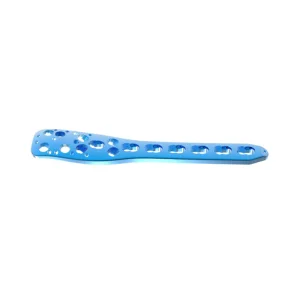
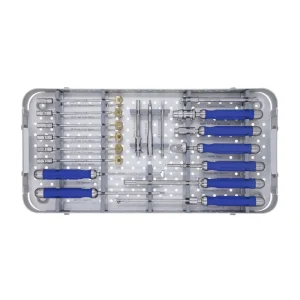
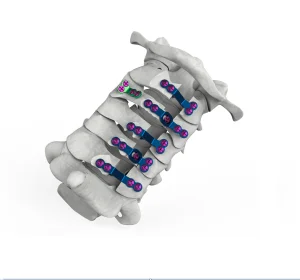
ODM Posterior Cervical Plate Fixation Dome Laminoplasty Plate Bone Implant Pricelist, Service
View Specifications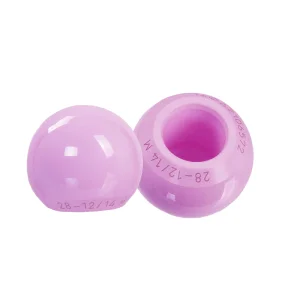
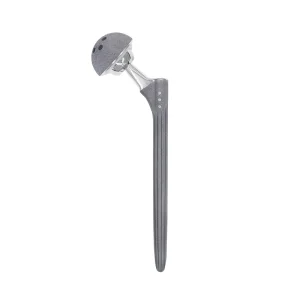
ODM Best Selling DDS Titanium Hip and Joint Implant Prosthesis Suppliers, Factories
View Specifications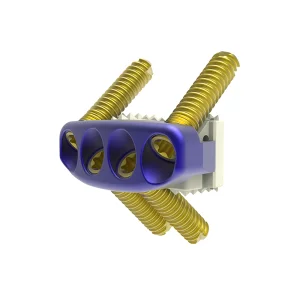
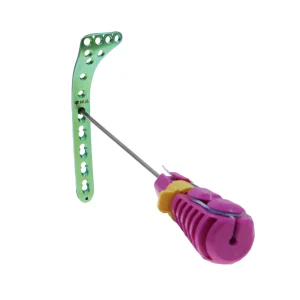
CE Certification CE Approved Hospital Use All Suture Anchor Titanium With Needle Factory, Companies
View Specifications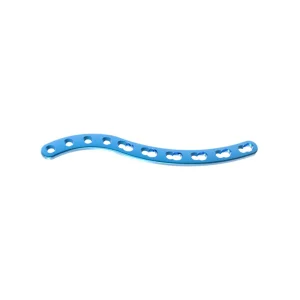
Partner with an Accountable Orthopedic Screw Manufacturer
Whether establishing a dual-source contract manufacturing hedge or engineering a next-generation patent-protected locking screw platform, our engineering teams provide immediate DFM feedback, tooling development, and regulatory dossier support.