Featured Orthopedic Systems & Precision Instrumentation
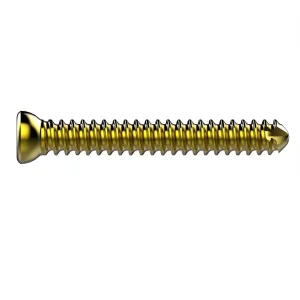
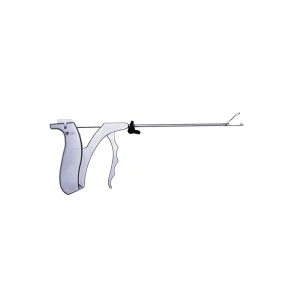
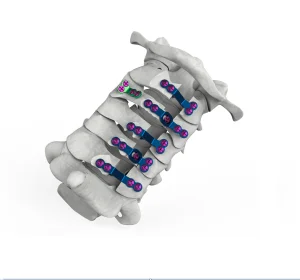
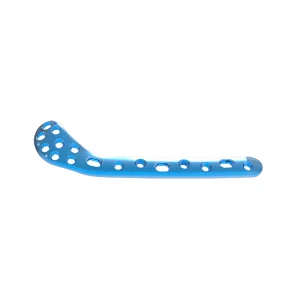
Explore our flagship orthopedic devices, trauma fixation screws, cervical plates, and spine instruments manufactured under ISO 13485 cleanroom protocols for international distributors.
The Engineering Shift in Patellar Fracture Fixation
Patellar fractures represent approximately 1% of all skeletal injuries, yet managing comminuted, osteoporotic, and multi-fragmentary articular disruptions remains one of the most mechanically demanding challenges in orthopedic trauma surgery.
Tension Band Wiring (MTBW) Deficits
Traditional Kirschner-wire modified tension band wiring exhibits documented complication rates ranging up to 52%, characterized by wire migration, soft-tissue impingement, skin breakdown, and secondary loss of reduction under high quadriceps distraction forces exceeding 3,000 N.
- High re-operation rate for symptomatic hardware removal
- Inadequate inter-fragmentary compression in coronal fractures
Fixed-Angle Anatomical Locking
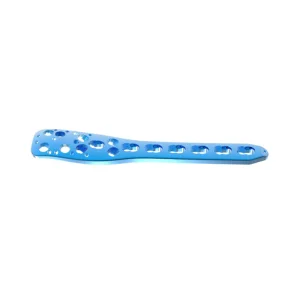
Modern titanium anatomical patella plates utilize fixed-angle multidirectional locking screws creating a rigid subcutaneous scaffold. This architecture neutralizes severe tensile, bending, and torsional forces during active knee flexion from 0° to 120°, supporting aggressive early rehabilitation.
- Preserves patellar anterior cortical perfusion
- Superior screw purchase in inferior pole avulsions
Ultra-Low Profile Profile Geometries
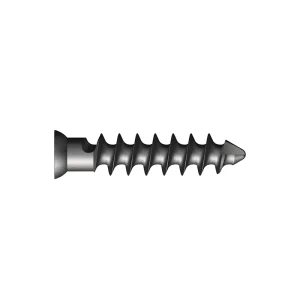
Because the anterior patella possesses virtually no deep muscle coverage, implant prominence directly induces chronic anterior knee pain. OEM patella plating engineering focuses on 1.5mm–2.0mm ultra-low profile contoured titanium plates with counter-sunk screw heads.
- Chamfered edges minimize patellar tendon friction
- Integrated suture suture eyelets for soft-tissue re-attachment
| Fixation Modality | Yield Load (N) | Dynamic Fatigue Resistance | Soft Tissue Irritation | Inferior Pole Purchase | Secondary Dislocation Rate |
|---|---|---|---|---|---|
| Modified K-Wire Tension Band (MTBW) | 420 ± 45 N | Low (< 20,000 cycles) | High (Up to 52%) | Poor (Prone to cutout) | 11.4% |
| Cannulated Lag Screws + Cable Tension Band | 730 ± 60 N | Moderate (50,000 cycles) | Moderate (Cable fraying) | Moderate | 6.8% |
| OEM Anatomical Patella Locking Plate (ZATH System) | 1,280 ± 85 N | Superior (> 250,000 cycles) | Low (< 4.8%) | Excellent (Multi-angle 2.7mm locking) | < 1.2% |
Global Enterprise Procurement Demands
International hospital tenders, regional orthopedics distributors, and private-label medical device brand owners require strict compliance, uncompromised metallurgy, and guaranteed supply continuity when selecting an OEM Patella Plate factory.
Metallurgical Integrity & Certification
Hospital procurement boards enforce zero tolerance for alloy impurities. OEM patella plates must be milled exclusively from certified medical-grade titanium alloy (Ti-6Al-4V ELI conforming to ASTM F136 / ISO 5832-3). Every raw billet requires spectrographic verification, microstructural grain analysis, and tensile yield certification.
Dual-Pouch Sterile Barrier Packaging
Eliminating autoclave logistics inside surgical centers has driven international demand for EO or Gamma-irradiated sterile-packed trauma plates. ZATH manufactures and seals implant kits in Class 100,000 cleanrooms using medical-grade Tyvek and thermoformed PETG trays with 5-year validated shelf life under ISO 11607-1/2.
Matching Dedicated Instrumentation Trays
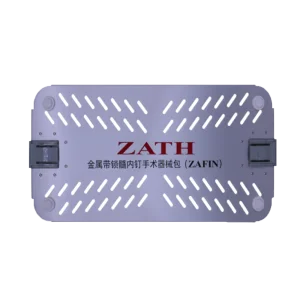
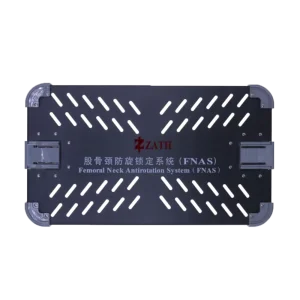
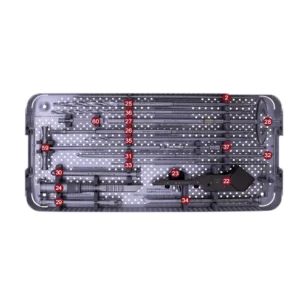
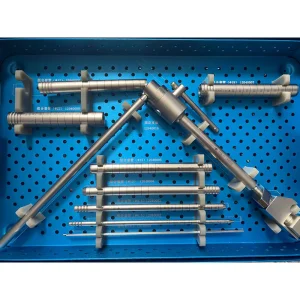
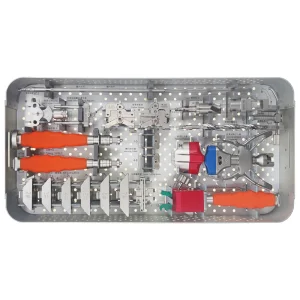
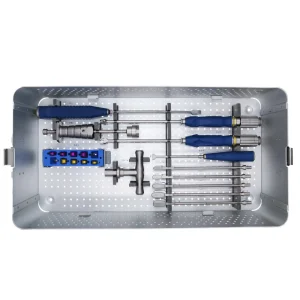
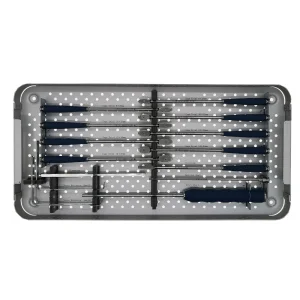
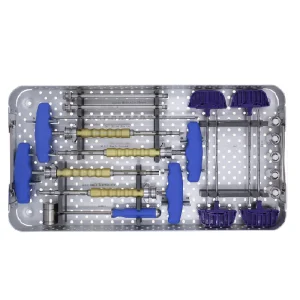
An implant system cannot succeed without ergonomic, intuitive surgical instrumentation. OEM partners expect color-coded drill guides, radiolucent holding forceps, quick-coupling depth gauges, and torque-limiting screwdrivers manufactured from German surgical-grade 17-4PH stainless steel and PEEK components.
Six-Stage In-House Quality Assurance System
Operating from our modern manufacturing base in the Zhongguancun Science and Technology Park, Pinggu, Beijing, Beijing ZhongAnTaiHua Technology Co., Ltd. (ZATH) deploys end-to-end manufacturing control across every millimeter of bone plate fabrication.
01. Inbound Material Assay
Every shipment of medical titanium rods is segregated, barcoded, and subjected to ultrasonic flaw detection, X-ray fluorescence (XRF) elemental verification, and Vickers hardness testing before entering the machine shop.
02. Slow-Feeding Wire EDM
Precision low-speed wire electrical discharge machining (WEDM) cuts complex 2D patellar boundary contours without introducing thermal deformation or micro-fractures in the crystalline metal matrix.
03. 5-Axis Simultaneous CNC
High-speed DMG MORI and Citizen multi-axis machining centers carve anatomical concavity, countersinks, and variable-angle combination locking threads with repeatability tolerances held within 5 micrometers.
04. Surface Anodization & Passivation
Components undergo Type II electrochemical anodization and nitric acid passivation (ASTM F86). This process grows a uniform titanium dioxide (TiO2) passivation barrier, enhancing wear resistance and reducing metallic ion elution in vivo.
05. Optical CMM & Fatigue Validation
Every production batch undergoes 100% laser vision gauging and ZEISS Coordinate Measuring Machine (CMM) verification. Biomechanical testing rigs simulate 1,000,000 cycles of dynamic patellar bending stress to ensure fatigue longevity.
06. Cleanroom Packaging & Lot Serialization
Implants receive UDI (Unique Device Identification) laser markings before entering ISO Class 7 cleanrooms for ultrasonic 7-stage deionized water washing, visual inspection, and robotic sterile heat-sealing.
Technical Roadmap & Future Perspectives
As knee trauma surgeries advance toward minimally invasive procedures and biological augmentations, next-generation OEM patella plating integrates additive manufacturing, porous bio-integration, and telemetry.
Phase 1: Selective Laser Melting (SLM) Additive Fixation
Standard subtractive CNC plates, while highly rigid, have uniform modulus. ZATH R&D is pioneering 3D-printed titanium patellar scaffolds featuring open-cell trabecular porous networks (pore sizes 300–500 μm) on the bone contact side. This promotes rapid osteoinduction and stable osseointegration, preventing stress shielding in elderly osteoporotic knees.
Phase 2: Hybrid Bio-Resorbable Inferior Pole Augmentation
Avulsion fractures of the inferior patellar pole often leave negligible osseous anchors. The development of hybrid magnesium alloy (Mg-Zn-Ca) or bio-composite anchor plates provides structural stabilization for 16–24 weeks before safely degrading into endogenous magnesium ions, eliminating secondary hardware extraction entirely.
Phase 3: Sensor-Embedded Smart Telemetry Plating
In cooperation with biomedical research universities, miniature piezoresistive strain sensors integrated within the central titanium bridge measure real-time micro-strain during post-operative patient ambulation. Data beamed via RFID to clinician tablets provides quantitative feedback on fracture union progress and warns against excessive loading.
Global Commercial Landscape & OEM Dual-Sourcing Strategy
Healthcare expenditure containment policies, such as DRG (Diagnosis Related Groups) in Europe and VBP (Volume-Based Procurement) in Asia, have compelled medical device brands to evaluate direct-from-source manufacturing alliances.
Margin Optimization for Regional Brands
Procuring patella locking plate assemblies from Western multinational manufacturers entails substantial tier-1 marketing surcharges. Partnering directly with an established Beijing orthopedic OEM like ZATH reduces unit acquisition costs by 40% to 65% while preserving identical raw material certifications and clinical efficacy.
Mitigating Supply Chain Single-Point Vulnerability
Global distributor networks increasingly mandate a dual-sourcing framework. Establishing a qualified, audited OEM pipeline in China provides supply redundancy against Western factory labor backlogs, raw material quotas, and regional logistics disruptions, ensuring uninterrupted delivery to surgical suites.
Private-Label Turnkey Customization (ODM)
Beyond standard geometries, our experienced engineering group of 100+ technical specialists provides bespoke plate contouring, custom hole density patterns, specialized laser etching of distributor logos, and tailor-made graphics on anodized aluminum sterilization containers to match target hospital branding.
Localized Registration & International Compliance Guarantee
Navigating complex regulatory transitions requires comprehensive technical documentation, full biocompatibility validation, and transparent audit trails.
MDR & FDA Technical Dossiers (STED)
ZATH delivers comprehensive Summary Technical Documentation (STED) compliant with European Union Medical Device Regulation (EU MDR 2017/745 Class IIb) and United States FDA 510(k) standards, including biomechanical fatigue reports, risk management files (ISO 14971), and clinical evaluation reports (CER).
Biological Evaluation (ISO 10993 Series)
Every implant variation is evaluated under GLP-accredited laboratory settings for cytotoxicity, systemic toxicity, sensitization, intracutaneous reactivity, and chronic sub-chronic implantation effects to ensure safe in vivo tissue tolerance.
UDI & Global Traceability Integration
Direct 2D DataMatrix laser marking complies with European EUDAMED and US GUDID databases. Unique Device Identification enables end-to-end trace from raw material ingot lot numbers to the patient surgical chart.
Frequently Asked Questions for Distributors & OEMs
Authoritative answers concerning manufacturing capabilities, contract lead times, surgical compatibility, and regulatory deliverables.
1. Why are anatomical locking patella plates superseding tension band wiring in global clinical guidelines?
2. What medical grade titanium alloys are utilized in your OEM patella plate production?
3. What is the typical Minimum Order Quantity (MOQ) and lead time for OEM private-label branding?
4. How does ZATH guarantee quality conformity across international borders?
5. Are patella plates supplied in non-sterile bulk or sterile pre-packaged kits?
Trauma, Spine & Arthroplasty Systems
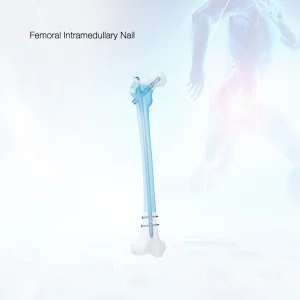
Explore complementary surgical solutions: intramedullary femoral nails, antirotation systems, radius-ulna compression plates, and total joint replacement instruments.