Precision Trauma & Arthroplasty Fixation Portfolio
Direct supply from Beijing ZhongAnTaiHua Technology Co., Ltd. (ZATH) — engineered with micro-tolerance CNC milling, ISO 13485 quality control, and CE-compliant cleanroom packing.
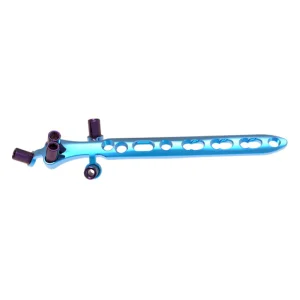
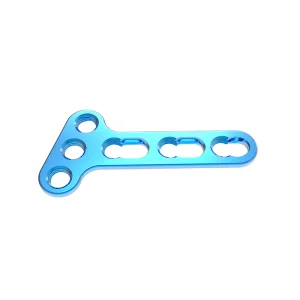
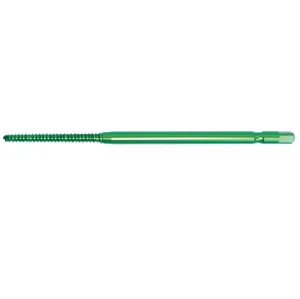
Global Commercial & Clinical Landscape of Distal Radius Plates (Radio Distal Placa)
Understanding anatomical fracture epidemiology, global trauma device procurement dynamics, and the shifting clinical standard toward low-profile volar locking osteosynthesis.
Epidemiological Dominance
Distal radius fractures (DRFs) represent between 17% and 25% of all adult fractures diagnosed in emergency departments globally. With expanding geriatric demographics suffering from osteoporotic fragility fractures alongside active lifestyle injuries in younger populations, the worldwide demand for reliable, stable internal fixation implants has multiplied consistently over the past decade.
Clinical preference has decisively transitioned from percutaneous Kirschner wiring and external fixators toward open reduction and internal fixation (ORIF) utilizing volar locking compression plates (known in Hispanic and European markets as Placa de Bloqueo para Radio Distal).
Watershed Line Precision
The distal radius architecture presents complex mechanical challenges. The anatomical "watershed line" represents the highest margin of the volar radius margin. Plates placed distally past this ridge jeopardize the flexor pollicis longus (FPL) and flexor digitorum profundus (FDP) tendons, risking late attrition and rupture.
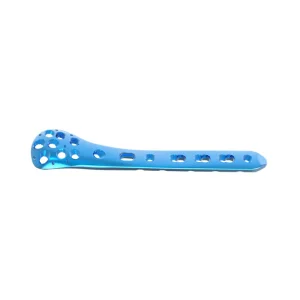
Consequently, premier OEM facilities like ZATH engineer ultralow-profile plate profiles with polished, rounded distal edges and chamfered screw holes that sit flush beneath the pronator quadratus muscle, neutralizing flexor tendon irritation while maintaining subchondral buttress integrity.
Global Procurement Modernization
Hospital purchasing groups, public healthcare ministries, and orthopedic implant brands are undergoing massive supply chain consolidation. High product liability risks and strict regulatory mandates (such as European EU-MDR and US FDA 510k) require distributor brands to contract directly with fully accredited Tier-1 factories.
By establishing long-term OEM partnerships with an integrated Chinese manufacturer founded in 2009 with dedicated CNC machining parks, global brand owners eliminate trading margins while securing end-to-end material traceability and rigorous dimensional validation.
Material Science & Micromechanical Engineering Standards
How certified Ti-6Al-4V ELI titanium alloys and Swiss multi-axis CNC processing achieve biomechanical compliance and long-term fatigue resistance in distal radius plate systems.
ASTM F136 Medical Grade 5 Titanium (Ti-6Al-4V ELI)
Every radio distal placa manufactured at our facility utilizes medical-grade Extra Low Interstitial (ELI) titanium alloy conforming strictly to ASTM F136 and ISO 5832-3 standards. Unlike standard industrial titanium, ELI grade limits oxygen, carbon, and iron impurities, significantly boosting ductility, fatigue life, and fracture toughness under cyclical wrist stress.
- Tensile Yield Strength: $\ge 795\text{ MPa}$, preventing plate deformation during early post-operative mobilization.
- Elastic Modulus Parity: Elastic modulus of $\approx 110\text{ GPa}$, dramatically reducing stress shielding compared to stainless steel (316L $\approx 200\text{ GPa}$).
- Superior Biocompatibility: Spontaneous formation of a stable $\text{TiO}_2$ passivation layer prevents metallosis and ionic leaching into surrounding synovial tissue.
Multi-Axis Synchronized Swiss Machining & Surface Passivation
Complex anatomical geometries cannot be stamped without introducing dangerous micro-cracks and residual crystal stresses. Our factory deploys high-speed multi-axis DMG Mori and Citizen Swiss turning-milling centers that sculpt bone plates from cold-worked rod stock in a continuous thermal-controlled environment.
- Tapered Volar Lip Contouring: Tapering edge thickness down to 1.5mm–2.0mm at the distal extremity to prevent soft tissue impingement.
- Multi-Directional Combi-Holes: Precision internal threading allowing both fixed-angle locking screws for rigid columnar support and dynamic cortex screws for reduction.
- Electrolytic Anodization Type II: Specialized anti-galling surface conversion that prevents cold-welding between titanium screw heads and plate locking threads while increasing surface hardness.
| Feature Parameter | Standard Volar Locking Plate | Variable-Angle (VA) Radio Distal Placa | Dorsal Buttress / Spanning Plate | ZATH OEM Customization Capability |
|---|---|---|---|---|
| Targeted Anatomy | Juxta-articular Volar Metaphysis | Comminuted Intra-articular Fractures | Dorsal Rim Comminution / High-Energy Distraction | Anatomical pre-contouring matched to regional patient CT scans |
| Screw Locking Mechanism | Uniaxial Conical Thread ($0^\circ$ Fixed Angle) | Spherical Polyaxial Lock ($\pm 15^\circ$ Cone of Angulation) | Rigid Locking / Non-Locking Combination | Proprietary thread pitch, Quad-thread, or Torx drive integration |
| Plate Thickness Profile | $2.0\text{mm} - 2.4\text{mm}$ continuous | Distal $1.6\text{mm}$ tapered to $2.2\text{mm}$ shaft | $1.8\text{mm} - 2.5\text{mm}$ heavy-duty bridge | Ultralow-profile distal lip polishing down to $1.2\text{mm}$ options |
| Subchondral Screw Array | Single-row or 4-screw dual styloid | Dual-row rafter design (Radial & Intermediate columns) | Columnar longitudinal array | Customized hole distribution for osteoporotic bone anchorage |
| Material Specification | ASTM F136 Ti-6Al-4V | ASTM F136 Ti-6Al-4V ELI | ISO 5832-3 Titanium | Grade 5 ELI titanium or implant-grade 316L stainless steel |
Localized Applications & Regional Clinical Scenarios
How surgical techniques and anatomical variances across Latin America, Europe, North America, and the Asia-Pacific shape radio distal plate manufacturing and instrument configuration.
Latin America: Placas de Bloqueo & Tender Specifications
In key markets including Mexico, Brazil, Colombia, and Chile, public healthcare tenders (IMSS, SUS) and private clinic networks demand high-durability, cost-effective titanium locking systems. The clinical focus relies heavily on standard volar anatomical plates paired with intuitive, color-coded instrument sets that reduce OR turnover time and permit universal screw pickup.
Our OEM factory supports Latin American partners by manufacturing laser-etched anatomical plates in Spanish/Portuguese designations, accompanied by full Free Sale Certificates (FSC) and technical files that expedite COFEPRIS, ANVISA, and INVIMA sanitary registrations.
Europe & EU-MDR: Stringent Biocompatibility & Cleanroom Packing
European clinical practice enforces rigorous MDR (EU 2017/745) requirements regarding bio-burden, particulate contamination, and sterile packaging validation. Surgeons across Germany, Italy, and France prioritize variable-angle locking plates that allow precise targeting of the dorsal lip fragment without penetrating the radiocarpal joint.
ZATH provides pre-validated Class 10,000 (ISO 7) cleanroom sealing in double sterile barrier blister packs with medical-grade Tyvek lids, ensuring ready-to-use implants that eliminate hospital autoclaving errors and guarantee complete chemical residue testing compliance.
Asia-Pacific: Morphological Sizing for Smaller Skeletal Envelopes
Metaphyseal skeletal dimensions vary significantly between demographic groups. Clinical studies indicate that Asian patients frequently possess narrower radial styloid widths and smaller radial inclination angles than standard Caucasian reference models.
To address this clinical reality, our OEM facility manufactures "Narrow Distal Radius" variants featuring condensed 3-hole distal head clusters and contoured radial curves that seat perfectly on smaller bone structures without overhang, minimizing soft tissue tension and secondary debridement procedures.
Future Trends & Engineering Evolution in Trauma Fixation
Strategic advancements shaping the next era of distal radius osteosynthesis: from additive 3D manufacturing to smart bio-absorbable composites and AI-driven instrument trays.
Additive Manufacturing & Trabecular Lattice Integration
Traditional subtractive machining delivers immaculate mechanical surfaces, but electron beam melting (EBM) and direct metal laser sintering (DMLS) 3D printing are revolutionizing subchondral bone interaction. Future iterations of the radio distal placa integrate open-pore trabecular scaffold structures directly onto the bone-interfacing side of the distal cluster.
This allows rapid vascular ingrowth, enhances osteointegration in osteoporotic patients, and reduces mechanical stiffness discrepancies, preventing peri-implant bone resorption without compromising tensile load resistance.
Carbon-PEEK Radiolucency & Intra-operative Fluoroscopy
Titanium plates create metal artifact scatter on intra-operative fluoroscopy and post-surgical computed tomography (CT). This visual shadow occasionally obscures intra-articular screw penetration into the radiocarpal joint or subchondral collapse.
Next-generation R&D pipelines explore continuous carbon-fiber-reinforced polyetheretherketone (CFR-PEEK) constructs. With radiolucent plate bodies accented only by tantalum radiographic markers, surgeons achieve 100% visualization of articular joint reduction under the C-arm during complex surgery.
Single-Use Procedural Kits
Distributors and hospitals are rapidly moving away from bulky 50-piece metal loaner trays that require hospital-side sterilization, reprocessing, and missing-part tracking. Pre-sterilized single-use kit configurations featuring one anatomical plate and exact pre-loaded screw selections are slashing hospital operating overhead.
Variable-Angle Locking ($15^\circ$ Polydirectional)
Fixed-angle locking screws can restrict optimal fragment capture in complex intra-articular fractures (AO/OTA type C3). Modern manufacturing emphasizes variable-angle columns where screws lock securely at angles up to 15 degrees in any direction, providing tailored subchondral raft support for idiosyncratic fracture fragments.
Automated Micro-Visual Laser Quality Inspection
Manual micrometer inspection is being augmented by fully automated optical 3D scanners. By comparing finished machined plates directly to native CAD 3D models with 2-micron precision, contract manufacturing achieves absolute batch consistency, zero screw binding in ORs, and verifiable traceability.
End-to-End OEM & ODM Industrial Solutions for Brands
From initial CAD tooling to certified cleanroom blister sealing, ZATH provides complete supply chain execution backed by 15+ years of orthopedic engineering heritage.
1. Co-Engineering & CAD Design
Our 100+ mid-to-senior technical engineering specialists assist global partners in optimizing plate hole configurations, radius curves, and low-profile beveling. We deliver rapid CNC prototype samples within 10 to 14 working days for surgical evaluation and mechanical testing.
2. Regulatory & Registration Dossiers
Entering new medical device markets requires exhaustive compliance documentation. We equip distributors with full technical dossiers, ISO 13485 QMS audit certificates, UDEM certificates, Free Sale Certificates (FSC), and biocompatibility reports (ISO 10993) to accelerate national health approvals.
3. Private Labeling & Custom Packaging
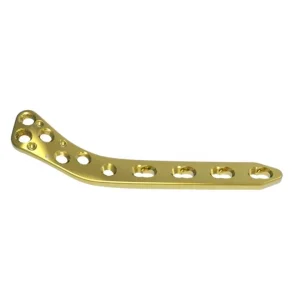
Elevate your orthopedic brand identity with custom ultra-crisp fiber laser marking (logos, lot numbers, 2D UDI matrix codes), specialized custom anodized color schemes (gold, teal, blue, magenta), and multi-lingual sterile packaging designed to match regional hospital tender requirements.
Clinical, Engineering & Procurement Inquiries
Essential questions asked by medical device distributors, regulatory officers, and hospital procurement directors before qualifying an OEM radio distal plate manufacturer.
What differentiates ZATH's OEM Radio Distal Placa from conventional trauma plates?
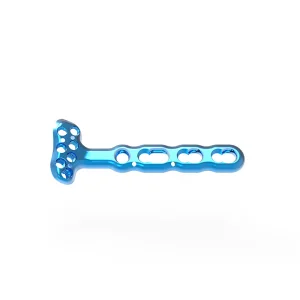
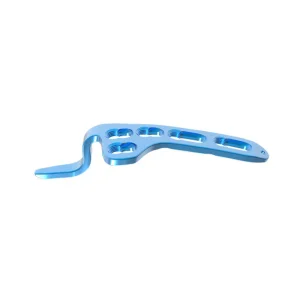
Our distal radius plates feature an anatomical design engineered specifically to sit sub-watershed, preventing flexor tendon rupture—a leading complication in wrist trauma fixation. Machined exclusively from certified ASTM F136 Ti-6Al-4V ELI medical-grade titanium alloy, our plates boast ultra-smooth chamfered edges, low-profile screw heads that seat flush within the plate surface, and dual-column multi-axial locking combi-holes that provide rigid subchondral support for both radial and intermediate columns.
What quality management certifications and test reports accompany OEM shipments?
Every production batch operates under a certified ISO 13485 Quality Management System. Implant shipments are supplied with raw material mill test certificates confirming ASTM F136 chemical composition and mechanical tensile limits, Type II anodization thickness reports, dimension verification CMM reports, cleanroom particle testing, and sterilization validation documentation (covering Ethylene Oxide or Gamma irradiation).
Can your factory customize plate geometry and screw configurations for regional markets?
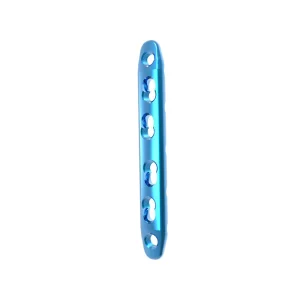
Yes. As a direct manufacturer established in 2009 with over 100 experienced technicians, our in-house engineering department handles custom plate curvature profiles, variable hole spacing, unique screw drive interfaces (such as Stardrive / Torx or Hexagonal), narrow shaft variations for smaller skeletal anatomy, and tailored plate lengths (3 to 12 shaft holes) to satisfy specific regional clinical tenders.
Are matching surgical instruments and sterilization cases included in OEM agreements?
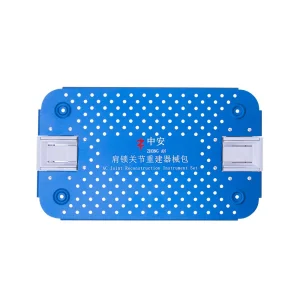
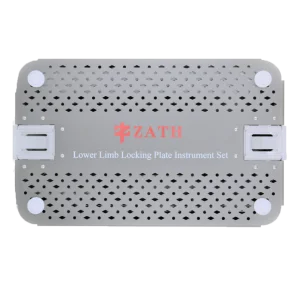
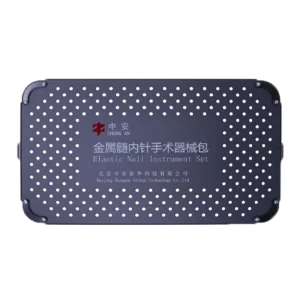
Yes. Complete trauma fixation requires a seamless interface between screw recess, screwdriver, drill guides, and plate holes. We manufacture complete, customized surgical instrument sets—including calibrated depth gauges, self-holding screwdrivers, variable-angle drill sleeves, bone reduction forceps, and custom anodized aluminum sterilization containers bearing your private brand graphics.
What is the standard production lead time and international delivery window?
For catalog implants and standard configurations, warehouse dispatch occurs within 48 to 72 hours. OEM mass production runs generally ship within 4 to 6 weeks depending on volume and packaging customization. Express international shipments are routed via DHL, FedEx, TNT, or UPS, typically arriving at customer hubs within 4 to 6 business days worldwide.
How does ZATH prevent cold welding between titanium locking screws and plates?
Titanium-on-titanium threading is prone to galling and friction welding under high torque insertion. We mitigate this through controlled multi-axis CNC thread-milling with tight surface finishes, complemented by an advanced Type II electrochemical anodization process. This surface treatment modifies the titanium crystal boundary layer, decreasing the friction coefficient and eliminating intra-operative jamming during screw removal or final tightening.
Additional Orthopedic Implants, Spine Systems & Instruments
Explore ZATH's broader multi-platform orthopedic ecosystem: hip and knee arthroplasty, vertebral compression instruments, humerus and tibial trauma locking plates.