
Precision Trauma & Joint Arthroplasty Platforms
Direct wholesale implants manufactured under ISO 13485 cleanroom parameters, utilizing medical-grade titanium alloys and fully validated CNC tolerances.
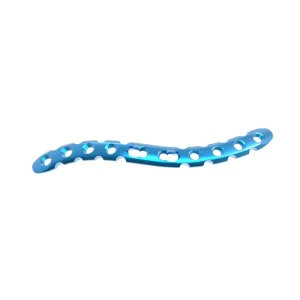
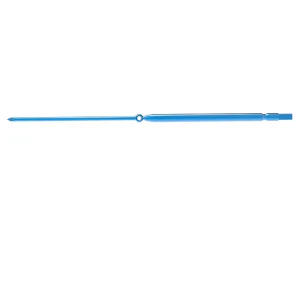
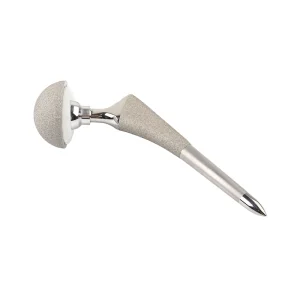
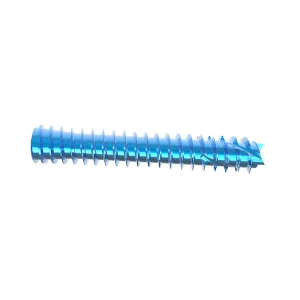
Biomechanical Principles & Structural Metallurgy of Reconstruction Plates
An in-depth whitepaper evaluating multi-planar contourability, stress-distribution profiles, and fatigue endurance in high-load pelvic, mandibular, and periarticular osteosynthesis.
In contemporary orthopedic trauma surgery, reconstruction plates (recon plates) represent a biomechanically distinct class of internal fixation devices. Unlike rigid dynamic compression plates (DCP) or conventional straight locking compression plates (LCP), a reconstruction plate is specifically engineered with lateral notches between screw holes. This deep scalloped geometry reduces the torsional resistance and cross-sectional polar moment of inertia, enabling orthopedic surgeons to manually bend, twist, and contour the implant in three dimensions (in-plane edgewise bending, out-of-plane flatwise bending, and axial torsion) to conform accurately to non-planar, complex anatomical bone topographies without deforming the precision internal locking threads.
1. Metallurgical Formulations: Pure Titanium Grade 4 vs. Ti-6Al-4V ELI
The clinical efficacy of a wholesale reconstruct plate supplier hinges on metallurgical precision. At ZATH, manufacturing utilizes two primary biocompatible alloys compliant with ASTM F136 (ISO 5832-3) and ASTM F67 (ISO 5832-2):
- Ti-6Al-4V ELI (Grade 23 Titanium Alloy): Exhibiting superior fatigue resistance and tensile yield strength (> 820 MPa), this alpha-beta alloy is the gold standard for load-bearing reconstruction, notably the pelvic brim, acetabular columns, and distal humerus. The extra-low interstitial (ELI) rating ensures maximized fracture toughness and reduced micro-crack propagation under cyclic walking forces.
- Commercially Pure Titanium (CP-Ti Grade 4): Engineered for maxillofacial, mandibular, and rib osteosynthesis where extreme intraoperative malleability is paramount. CP-Ti Grade 4 provides high elongation (≥ 15%) without suffering severe notch-stress embrittlement during aggressive contouring around acute angles.
| Mechanical Characteristic | Ti-6Al-4V ELI (ASTM F136) | CP-Ti Grade 4 (ASTM F67) | 316L Stainless Steel (ASTM F138) |
|---|---|---|---|
| Ultimate Tensile Strength (UTS) | 860 – 930 MPa | 550 – 680 MPa | 650 – 880 MPa |
| Yield Strength (0.2% Offset) | 790 – 830 MPa | 480 – 520 MPa | 310 – 580 MPa |
| Modulus of Elasticity (GPa) | 110 – 114 GPa (Closer to cortical bone) | 105 GPa | 200 GPa (High stress-shielding risk) |
| Corrosion Resistance / Passivation | Ultra-stable TiO₂ passivation layer | Exceptional inert biological profile | Susceptible to fretting & crevice corrosion |
| Clinical Contourability Index | Moderate-High (Requires gradual radius tools) | Maximum (Extreme plastic deformation) | High work-hardening rate |
2. The Combi-Hole Mechanics & Fixed-Angle Stability
Modern surgical fixation demands hybrid capabilities. ZATH reconstruction locking plates integrate advanced combination holes (combi-holes) that unite an elongated Dynamic Compression Unit (DCU) with a threaded, conical locking hole. This dual geometry provides surgical teams with unmatched intraoperative flexibility:
When axial compression is necessary to stimulate primary secondary bone healing across transverse fractures, standard cortical bone screws can be driven eccentrically into the dynamic compression portion of the hole, translating downward screw travel into horizontal fragment approximation. Conversely, when addressing comminuted fractures or osteoporotic bone beds where cortical screw purchase is compromised, threaded locking screws are engaged at zero-degree perpendicular or predetermined variable angles. This creates a rigid "internal fixator" framework where load transfer occurs between bone, screw, and plate—drastically minimizing compressive periosteal contact, preserving local cortical micro-vascularity, and virtually eliminating late screw pull-out.
Localized Anatomical Applications for Reconstruction Plates
Engineered for complex fracture geometries where standard anatomical contouring is insufficient to restore mechanical axis alignment and anatomical articular congruity.
Pelvic & Acetabular Ring Disruption
Pelvic fractures (Tile Type B & C, Letournel column fractures) involve 3D curves spanning from the anterior superior iliac spine along the iliopectineal line down to the quadrilateral plate. ZATH 3.5mm titanium pelvic reconstruction plates feature reinforced bridges that permit multi-planar pre-contouring using anatomical bending templates without pinching screw threads.
Complex Clavicular Midshaft Fractures
The human clavicle exhibits a pronounced double S-curve that varies considerably between genders and statures. While pre-contoured clavicle plates fit normal anatomy, severely displaced comminuted midshaft fractures often require custom in-plane and out-of-plane adjustment. Our 3.5mm low-profile reconstruct plates preserve subclavius clearance and minimize soft tissue protrusion.
Distal Humerus & Periprosthetic Fixation
Comminuted distal humerus fractures (AO/OTA 13-C) require orthogonal or parallel double-plating constructs. When fracture lines extend proximally around existing total elbow or shoulder arthroplasty stems, straight plates fail. ZATH reconstruction plates allow surgical contouring around prosthesis stems, enabling bicortical locking fixation without cement interference.
Mandibular Angle & Subcondylar Nonunions
In oral and maxillofacial surgery (OMFS), our 2.0mm and 2.4mm reconstruct mini-locking plates bridge segment defects caused by tumor resections or ballistic trauma. Made of Grade 4 CP-Ti, these plates endure alternating masticatory forces while providing sufficient ductility to mold precisely along the inferior mandibular border and ascending ramus.
Severe Flail Chest & Thoracic Cage Stability
Multiple contiguous rib fractures destabilize respiratory mechanics. Specialized thin-profile (1.5mm–2.0mm) reconstruct rib plates contour across the curved, twisting surfaces of the rib cage. The low-profile footprint prevents intercostal nerve impingement and minimizes pleural irritation during high-excursion respiratory ventilation.
Calcaneal Sanders Type III/IV Joint Fixation
Joint depression calcaneal fractures involve intricate sustentaculum tali fragments and severe lateral wall comminution. Reconstruction plates molded to span from the calcaneal tuberosity into the cuboid joint recreate Böhler’s angle, supporting the subastragalar articular facet with non-collapsing multi-screw locking arrays.
Why Tier-1 Global Brands Source from Our Beijing Production Base
Combining world-class CNC machine centers, zero-defect quality systems, and optimized supply-chain resilience for medical distributors and private-label partners.
5-Axis CNC Precision Lathes
Our workshop houses high-precision DMG MORI, Citizen, and Star multi-axis CNC machines capable of holding micro-tolerances within ±0.005mm. This guarantees flawless engagement of internal screw-locking threads and ultra-smooth plate contours.
Class 100,000 Cleanrooms
Every reconstruct plate undergoes automated ultrasonic multi-stage degreasing, Type II anodization for anti-galling thread performance, and final packaging inside certified Class 10,000 / Class 100,000 medical cleanroom environments.
Integrated Instrument Tooling
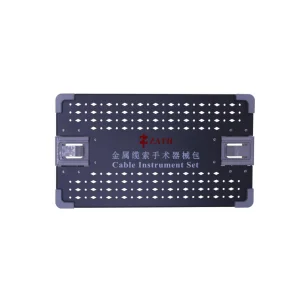
Unlike suppliers offering implants alone, ZATH manufactures dedicated surgical instrument sets (reconstruction bending pliers, threaded drill guides, depth gauges, torque limiters) calibrated specifically to plate metallurgy.
Rapid Logistics & Lead Times
Located in the Zhongguancun Science and Technology Park, Pinggu, Beijing, our central distribution hub connects directly with Beijing Capital International Airport (PEK), delivering fast 4–6 day air dispatches worldwide via DHL, FedEx, and UPS.
Wholesale Procurement Dynamics: Navigating Global Tenders & OEM Needs
A strategic blueprint for medical device procurement executives, regional distributors, and hospital supply chain managers.
Tendering Competitiveness & Cost Rationalization
National healthcare frameworks across Europe, Latin America, Southeast Asia, and the Middle East are shifting toward value-based procurement. Health authorities demand stringent compliance with ISO 13485 standards alongside aggressive cost containment. Wholesale reconstruction plate suppliers in China provide international distributors with a decisive advantage: reducing unit acquisition costs by 40% to 60% compared to Western multinationals, while matching or exceeding ASTM F382 fatigue performance benchmarks.
This gross margin expansion empowers distributors to bid aggressively on institutional hospital tenders, fund localized surgical workshops, and provide comprehensive loaner-kit consignments to trauma centers without overleveraging working capital.
OEM, ODM & Private-Label Localization
For established orthopedic brands seeking contract manufacturing or mid-sized distributors building proprietary brand equity, ZATH provides complete turnkey OEM/ODM solutions:
- Laser Marking & UDI Compliance: High-resolution fiber laser marking for 2D DataMatrix Unique Device Identification (UDI), lot numbers, and custom distributor branding.
- Sterile vs. Non-Sterile Supply: Options for bulk non-sterile packaging in protective trays for local hospital sterilization, or fully validated double-barrier Tyvek blister packaging with gamma radiation or ethylene oxide (EO) sterilization.
- Custom Dimensional Runs: Customization of hole count (from 3 holes up to 24 holes for extensive pelvic reconstruction), plate thickness, and screw pitch tailored to regional anthropometric datasets.
Localized Support & Rigorous Regulatory Compliance
Comprehensive technical dossiers, biocompatibility testing, and quality systems audited for global market clearances.
Technical Documentation (EU MDR)
We provide full technical documentation aligned with EU MDR 2017/745 Class IIb standards, including Clinical Evaluation Reports (CER), Risk Management Files (ISO 14971), and post-market clinical follow-up protocols.
Biocompatibility ISO 10993
All titanium and cobalt-chromium implants are certified non-cytotoxic, non-sensitizing, non-irritating, and non-pyrogenic through rigorous ISO 10993 biological evaluations performed by GLP-accredited testing laboratories.
ASTM F382 Biomechanical Validation
Every reconstruction plate geometry undergoes static four-point bending and dynamic fatigue life cycle testing under ASTM F382. We guarantee structural stability through 1,000,000 cyclic loading runs without micro-fissuring.
Emerging Technological Trends in Bone Reconstruction Systems
How digital surgical planning, selective laser melting (SLM), and variable-angle polyaxial locking are reshaping osteosynthesis.
3D-Printed Trabecular Lattice Meshes
The convergence of additive manufacturing (SLM/EBM) and reconstruct plate architecture enables porous titanium lattice structures directly on bone-contact surfaces, accelerating osteointegration and biological bone bridging.
Variable-Angle (Polyaxial) Locking Mechanisms
Modern surgical reconstruction demands moving beyond monoaxial screws. Next-gen plates feature hardened cobalt-chromium or treated titanium multi-axial locking rings, allowing surgeons to angulate screws up to ±15° off-axis to avoid articular surfaces or adjacent hardware.
Bioresorbable & Magnesium Alloy Matrices
Advancements in bio-absorbable magnesium-zinc-calcium alloys are pioneering temporary stabilization in craniomaxillofacial and pediatric reconstruction, maintaining initial rigid fixation while progressively degrading to eliminate implant removal surgeries.
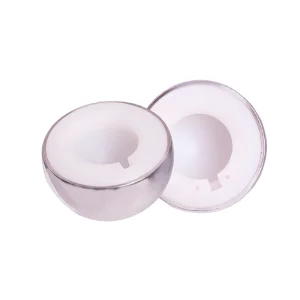
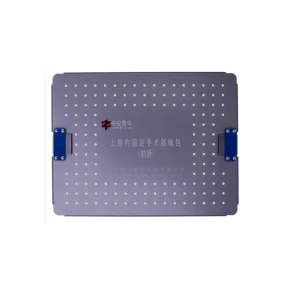
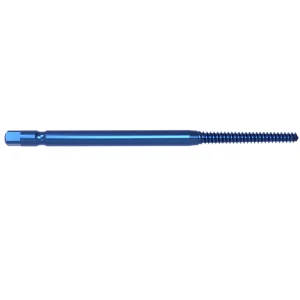
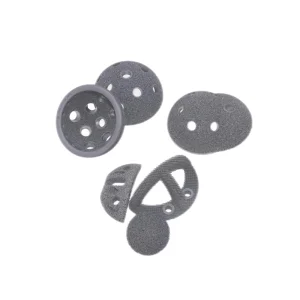
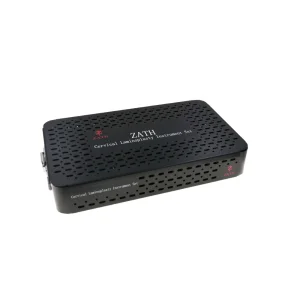
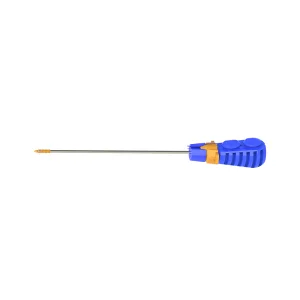
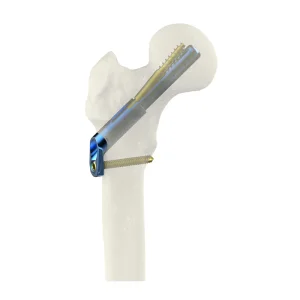
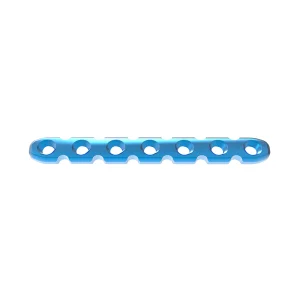
Comprehensive Trauma, Spine & Soft-Tissue Fixation Catalog
Complementary reconstructive components and specialized surgical instrument arrays engineered for global surgical readiness.
Frequently Asked Questions: Wholesale Reconstruct Plate Suppliers
Detailed technical, regulatory, and commercial insights for orthopedic device purchasers, regulatory affairs teams, and hospital committees.