
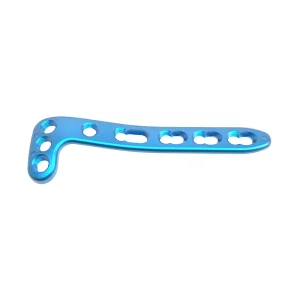
Primary Trauma & Spine Portfolio
Precision Osteosynthesis Engineering Showcase
Engineered to anatomical contours with rigid locking compression mechanics, providing exceptional load distribution and accelerated osseointegration.
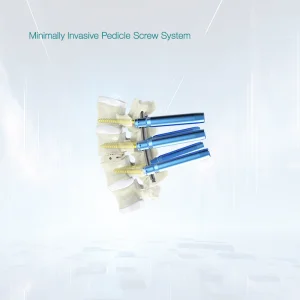
OEM ZATH HE Minimal Invasive Spine Pedicle Screw
Product Details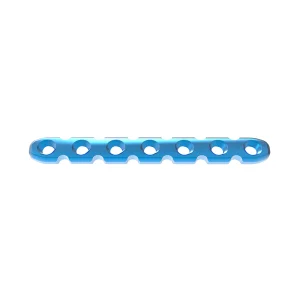
Multi-Segment Reconstruction Locking Plate
Product Details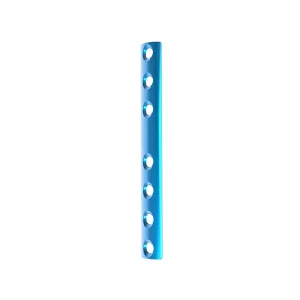
Metacarpal & Metatarsal 1/3 Tubular Locking Plate
Product Details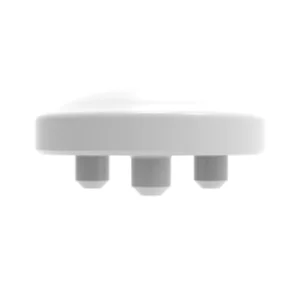
Patella Knee Joint Arthroplasty Component
Product Details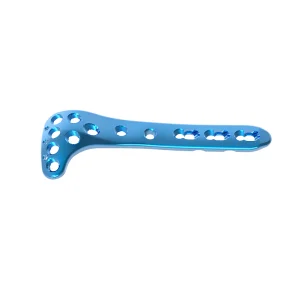
Proximal Lateral Tibia Locking Compression Plate IV
Product Details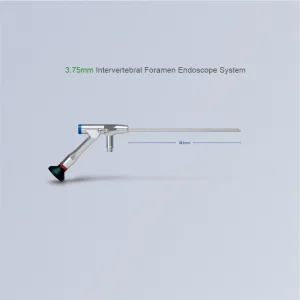
3.75mm Intervertebral Endoscope System (CE)
Product Details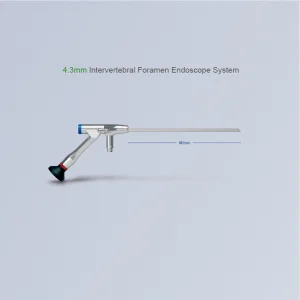
4.3mm Intervertebral Endoscope Visualization System
Product Details
Industry Whitepaper Depth
Global Titanium Plate Implant Ecosystem & Commercial Landscape
An authoritative analysis of metallurgical progress, structural bio-mechanics, and regulatory-driven manufacturing shifts across worldwide orthopedic networks.
Material Science & Biocompatibility
Medical-grade titanium (Ti-6Al-4V ELI conforming to ASTM F136 / ISO 5832-3) remains the gold standard in trauma reconstruction. Its low elastic modulus (~110 GPa) significantly mitigates the stress-shielding effect compared to traditional stainless steel (~200 GPa), stimulating secondary bone remodeling and preserving periosteal blood flow.
Global Procurement & Localization
With tightening healthcare budgets and MDR/FDA oversight, Tier-1 distributors require certified contract manufacturing partners offering complete technical dossiers, cleanroom validation, and high-precision multi-axis CNC repeatability. Factory direct OEM/ODM streamlines supply chains and guarantees regulatory pass rates.
Smart Locking Compression Mechanics
Modern plate fixation relies on dual-function combi-holes, accommodating standard cortical screws for dynamic compression alongside threaded locking caps for angular stability. This provides surgical teams with unmatched intraoperative flexibility in osteoporotic bone conditions and complex comminuted fractures.
6.8%
CAGR Global Trauma Implants Market Growth (2024–2032)
ISO 13485
Unified Full Cleanroom Traceability & Quality System
100%
Medical Ti-6Al-4V ELI Certified Metallurgical Batches
< 0.01mm
High-Precision 5-Axis CNC Dimensional Tolerances
Clinical Indications & Solutions
Localized Surgical Applications & Clinical Scenarios
Engineered specificities addressing diaphyseal, metaphyseal, and periarticular bone trauma architectures.
Proximal Tibia & Femur Fractures
Complex high-energy intra-articular injuries require multi-planar screw trajectories. Anatomically pre-contoured proximal lateral plates eliminate excessive bending intraoperatively, minimizing soft-tissue stripping and devitalization of periosteal blood networks.
Small Fragment & Hand/Foot Anatomy
Metacarpal and metatarsal injuries demand ultra-low-profile mini-locking plates. The rounded plate edges and countersunk screw heads protect delicate overlying flexor/extensor tendons from hardware impingement and inflammatory adhesion.
Periprosthetic & Non-Union Revisions
Multi-hole reconstruction plates provide dynamic bridging flexibility. Locking constructs anchor securely across sparse bone beds adjacent to total joint stems without disrupting existing prosthetic stability or compromising medullary vascularization.
| Implant System Classification | Alloy Grade & Standard | Screw Interface Design | Clinical Specialization | Sterility Compliance |
|---|---|---|---|---|
| Proximal Tibia Locking Plate | Ti-6Al-4V ELI (ISO 5832-3) | Fixed-Angle Variable Locking (Ø3.5 / Ø5.0) | Metaphyseal plateau fractures | Class 10,000 Cleanroom Sterile Barrier |
| Reconstruction Locking Plate | Pure Titanium / Ti Alloy | Limited-Contact Combi-Hole | Pelvic, clavicle & complex osteotomies | Pre-sterilized Gamma / EO Options |
| Mini-Fragment 1/3 Tubular | Ti-6Al-7Nb or Ti-6Al-4V | Low-Profile Threaded Screw Hole (Ø2.7) | Metatarsal, metacarpal, fibula | Blister Pack Double Barrier |
| Minimally Invasive MIS Pedicle | Ti-6Al-4V ELI High Tensile | Polyaxial Friction Head Screw-Rod | Thoracolumbar spinal stabilization | Sterile Pack with Lot QR Verification |
R&D Horizons
Technological Roadmap & Next-Gen Bio-Manufacturing
Continuous evolution from conventional subtractive CNC machining to 3D trabecular lattices and anti-microbial smart coatings.
Phase 1: Additive Trabecular Architecture
Integrating Electron Beam Melting (EBM) and Direct Metal Laser Sintering (DMLS) to print biomimetic porosity (60–75% interconnected pores, 300–500 µm) matching trabecular bone modulus for instant mechanical interlock.
Phase 2: Nano-Engineered Anti-Biofilm Surfaces
Application of anodized titanium nanotube (TNT) matrices infused with silver nanoparticles (AgNP) and gentamycin release systems to drastically lower surgical site infection (SSI) risks during initial 72-hour trauma windows.
Phase 3: Patient-Specific AI Planning Integration
Translating pre-operative CT DICOM data directly via AI algorithms into custom-milled anatomical plates, minimizing surgical theater duration, patient anesthesia exposure, and postoperative implant dislocation.
Comprehensive Joint, Spine & Sports Medicine
Extended Clinical Platform Ready for Export
Every product is delivered sterile-packed with mill test certificates, CE conformity, and comprehensive OEM/ODM packaging customization.
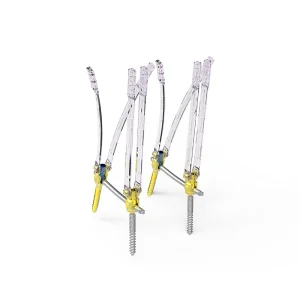
ODM Minimally Invasive Spinal Pedicle Screws
Product Details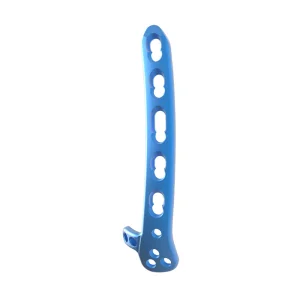
Distal Posterolateral Humerus Locking Plate
Product Details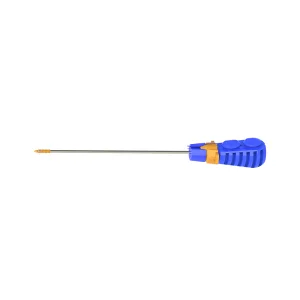
Titanium Knotless Suture Anchor with Needle
Product Details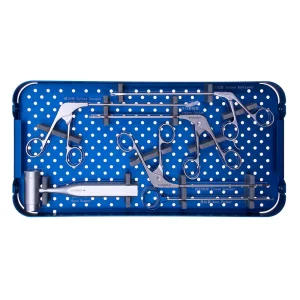
Shoulder Arthroscopy Surgical Instrument Set
Product Details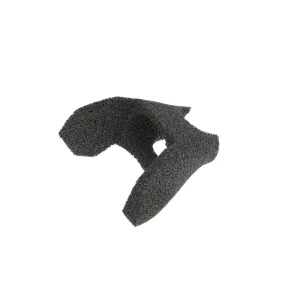
3D Printed Knee Joint Trabecular Sleeve
Product Details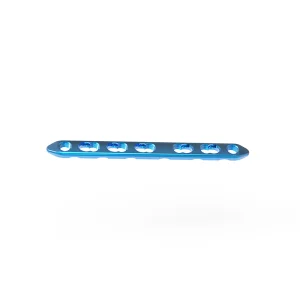
Radius-Ulna Limited Contact LC-LCP Plate
Product Details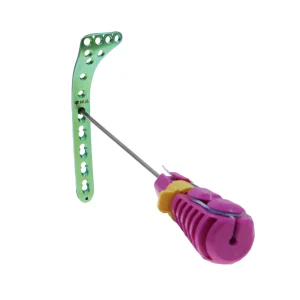
All-Suture Anchor Titanium with Surgical Needle
Product Details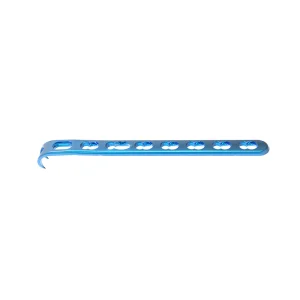
Olecranon Hook Locking Compression Plate
Product Details
Procurement Advisory
Frequently Asked Questions & Regulatory Support
Essential technical and supply chain clarity for medical device tender committees and international distributors.
What specific titanium grade is utilized for trauma locking plates?
We primarily utilize certified medical-grade Ti-6Al-4V ELI (Grade 23, ASTM F136 / ISO 5832-3) and Commercially Pure Titanium (Grade 3/4, ISO 5832-2) for contour-critical reconstruction plates. Every raw material batch is verified with mill certificates detailing tensile yield strength, elongation, and chemical purity.
How does the company support international regulatory registrations (MDR, FDA, MOH)?
Our dedicated regulatory affairs team provides complete Technical Documentation (DMR, DHR, Risk Management reports per ISO 14971, Biocompatibility testing per ISO 10993, and Sterilization Validation reports). We facilitate notarized Free Sale Certificates (FSC) and certificates of analysis to accelerate local tender qualification.
Can customized locking screw thread pitches and plate profiles be manufactured under OEM?
Yes. Our in-house R&D engineering center and multi-axis CNC machines support complete customization of screw head geometries, variable-angle combi-holes, surface anodization colors, and sterile packaging branding according to your local market protocols.
What packaging and cleanroom standards are maintained prior to delivery?
All implants are processed through multi-stage ultrasonic cleaning and packed inside ISO Class 7 cleanrooms into double-layer medical Tyvek blister seals, compatible with ethylene oxide (EO) or gamma radiation sterilization protocols for immediate surgical readiness.
What is the typical production lead time and global shipping protocol?
Standard warehouse catalog configurations ship within 4 to 6 business days via air express (DHL, FedEx, UPS). Bulk contract OEM/ODM production cycles typically run 4 to 6 weeks, accompanied by continuous manufacturing status tracking and inspection reports.