
Precision Arthroplasty & Surgical Core Systems for Paris Clinics
Fully compliant with ISO 13485:2016 manufacturing benchmarks. Immediate allocation available for public teaching hospitals, private ambulatory surgical centres, and French national healthcare tenders.
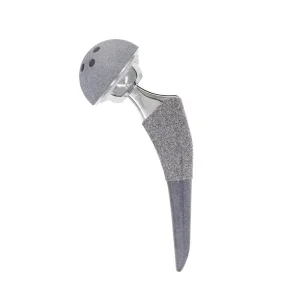
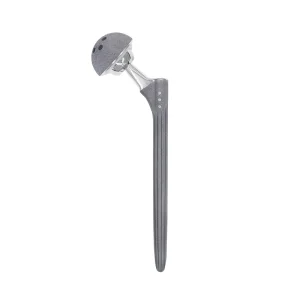
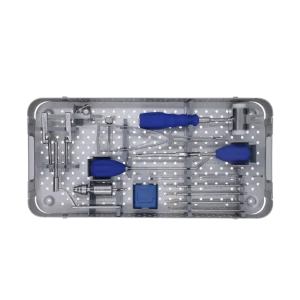
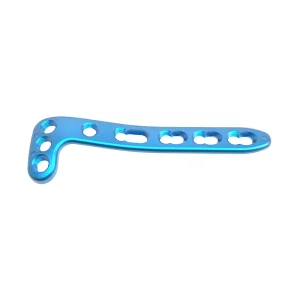
The Paris Arthroplasty Ecosystem: Structural Demands & Clinical Procurement
An in-depth industrial examination of total hip arthroplasty (THA) dynamics across the Greater Paris (Île-de-France) hospital framework, evaluating tender pressures, public-private operational models, and patient demographics.
The Greater Paris region (Île-de-France) represents one of Europe's dense concentrations of advanced orthopaedic surgery. With a regional population exceeding 12.3 million and a rapidly ageing demographic cohort, the demand for primary, complex, and revision total hip arthroplasty (THA) continues to expand at a compound annual rate of over 4.8%. The metropolitan market operates through two distinct institutional pillars: the formidable public academic infrastructure steered by the Assistance Publique – Hôpitaux de Paris (AP-HP)—encompassing globally recognised centres such as Hôpital Cochin, Hôpital Pitié-Salpêtrière, and Hôpital Européen Georges-Pompidou—and a highly agile private network dominated by entities such as Ramsay Santé, Groupe Elsan, and prestigious non-profit foundations like the Institut Mutualiste Montsouris (IMM).
Both sectors face severe macroeconomic and clinical pressures. Public university hospitals are bound to competitive regional tenders managed through Groupements Hospitaliers de Territoire (GHT) and the UniHA purchasing alliance. These tenders demand maximum pricing transparency, strict conformity to the French Liste des Produits et Prestations Remboursables (LPPR) reimbursement caps, and demonstrable clinical longevity verified through registry data. Concurrently, private orthopaedic clinics in Paris have accelerated the adoption of RRAC protocols (Réhabilitation Améliorée Après Chirurgie) and outpatient/ambulatory hip surgery (chirurgie ambulatoire), where patients are mobilised within two to four hours post-operatively and discharged within 24 hours. This operational paradigm requires implants with uncompromising primary stability, minimal soft-tissue disturbance, and highly optimized, reproducible surgical instrumentation.
Public AP-HP & GHT Tendering
Public procurement across Paris centralizes demand through GHT structures. Implants must demonstrate pristine metallurgical trace dossiers, ISO 13485:2016 verification, and strict unit pricing within the LPPR code limits.
- Direct integration into UniHA purchasing grids
- Traceability linked to hospital ERP (SAP/Medasys)
- Consignment stock management with 24h replenishments
Ambulatory & Fast-Track (RRAC)
Private Paris clinics prioritize tissue-preserving approaches (direct anterior Hueter or micro-posterior). Stems and cups must guarantee initial press-fit stability to facilitate same-day full-weight bearing.
- Double-layer micro-porous hydroxyapatite (HA) coating
- Broach-only instrumentation reducing OR cycle times
- Zero intraoperative fluoroscopy friction
French Dual-Mobility Tradition
Rooted in Professor Gilles Bousquet's pioneering Lyon legacy, the French orthopaedic community demands high-performance dual-mobility acetabular systems to neutralize post-operative dislocation risks.
- Mirror-polished internal spherical bearing (Ra < 0.02 μm)
- Highly cross-linked UHMWPE retentive mobile liners
- Optimal jumping distance under dynamic impingement
Macro Supply Economics & Advanced Biomechanical Architecture
Overcoming the clinical trilemma: Mitigating stress shielding, maximizing tribological wear resistance, and stabilizing component costs amidst titanium and medical cobalt raw-material volatility.
The global orthopaedic implant sector has entered a critical juncture. Medical device manufacturers face escalating material costs—particularly for vacuum arc remelted Titanium alloy (Ti-6Al-4V ELI conforming to ASTM F136 / ISO 5832-3) and High Nitrogen CoCrMo alloys (ISO 5832-12). Simultaneously, procurement offices across European healthcare clusters are aggressively compressing purchasing prices. Delivering viable, premium-grade arthroplasty platforms requires advanced engineering that eliminates manufacturing scrap, utilizes direct multi-axis Swiss CNC milling alongside Selective Laser Melting (SLM) additive manufacturing, and leverages high-yield robotic polishing.
Biomedically, modern custom and modular hip joint replacement systems must overcome proximal bone resorption caused by stress shielding. Traditional high-stiffness metallic stems transfer loading distally to the femoral diaphysis, leaving the proximal metaphyseal calcar unburdened, triggering aseptic bone loss. Our custom hip engineering integrates differential stiffness profiles: solid core Ti-6Al-4V cores for structural load-bearing paired with highly porous, 3D additive trabecular outer lattices mimicking human cancellous bone (Young's modulus calibrated between 3.0 and 4.5 GPa, compared to 110 GPa for bulk titanium). This structural continuum stimulates genuine osteointegration within 4 to 6 weeks while reducing interface micromotion well beneath the critical 40-micrometre threshold.
Tribological Bearing Pairs
We deploy three bearing combinations tailored to patient physiological age, activity index, and Paris clinic preferences:
- BIOLOX® delta Ceramic-on-Ceramic: Near-zero volumetric wear (< 0.5 mm³/million cycles), total bio-inertness.
- Ceramic-on-Vitamin E UHMWPE: Infused antioxidant cross-linked polyethylene eliminating free radical degradation.
- Dual-Mobility CoCr/Ti: Unmatched dislocation resistance for active and neuromuscular-compromised patients.
Plasma Spray & Trabecular Topology
Our dual-coating surface engineering creates an ideal micro-environment for immediate osteoblast migration:
- Undercoat: Vacuum plasma-sprayed rough titanium (50 μm thickness, Ra 35 μm) for robust shear adhesion.
- Overcoat: Electrochemical hydroxyapatite layer (30 μm, crystallinity > 65%) for rapid biological bone bridging.
- Pore diameters optimized at 500–650 μm with 75% open interconnected porosity.
Modular 12/14 Euro-Taper Precision
Trunnionosis and taper fretting corrosion represent major long-term arthroplasty failure mechanisms. Our production guarantees:
- Sub-micron angular taper tolerances (±0.005°) under 3D optical profilometry.
- Micro-grooved trunnion topography distributing assembly stress peaks uniformly.
- Full compatibility with standardized femoral heads across international size spans (28mm to 40mm).
Paris & European B2B Pricelist & Product Specification Matrix
Indicative wholesale pricing for hospital purchasing bodies (UniHA, AP-HP), GPOs, orthopaedic distributors, and OEM partners. Values calculated on volume tiers with full CE/MDR documentation packages included.
| System Component | Material Specification | Clinical Indication | Size / Dimension Range | Benchmark Price (EUR €) | Reimbursement / GPO Tier |
|---|---|---|---|---|---|
| JDS Cementless Femoral Stem | Forged Ti-6Al-4V ELI + Double HA Coat | Primary Osteoarthritis / Avascular Necrosis | Sizes 1 to 10 (Standard / High-Offset) | €380 – €560 | UniHA / LPPR Eligible |
| DDS Biological Rectangular Stem | Ti-6Al-4V ELI (Micro-grooved proximal) | Dorr Type A/B Femoral Morphologies | Sizes 0 to 9 (Collarless & Collared) | €360 – €520 | Private Clinic Tier A |
| Dual-Mobility Press-Fit Acetabular Cup | Ti-6Al-4V Shell + Mirror CoCr Articulation | High Dislocation Risk / Elderly / Revision | Outer Diameters 44mm to 64mm | €420 – €610 | LPPR Code 3182103 |
| Custom 3D-Printed Titanium Stem | Selective Laser Melted (SLM) Ti-Alloy | Severe Dysplasia (Crowe III/IV) / Oncologic | Patient-Specific via Pre-Op CT DICOM | €1,650 – €2,400 | Custom Device Direct |
| Trabecular Acetabular Revision Augment | Additive Porous Trabecular Titanium | Paprosky Type II/III Acetabular Defects | Shapes: Wedge, Chiquita, Custom Cage | €680 – €1,150 | Hospital Tender Tier 1 |
| BIOLOX® delta Ceramic Femoral Head | Zirconia-Toughened Alumina (ZTA) | Low-Wear Articulation Pairing | Ø28mm, 32mm, 36mm, 40mm (-4 to +8) | €310 – €450 | Standard Multi-Source |
| Vitamin-E Crosslinked PE Liner | Radiation Crosslinked UHMWPE + α-Tocopherol | Conventional 180° Hemispherical Cups | Internal ID 28/32/36mm, Neutral & 10° Hooded | €160 – €240 | Standard Reimbursable |
| Precision Hip Instrument Set | 17-4PH Hardened Surgical Stainless Steel | Complete Broaching, Reaming & Trialing | Supplied in 3 Autoclavable Aluminium Trays | €3,800 – €5,400 | Consignment / Capital Asset |
Stringent Regulatory Compliance, ANSM Surveillance & Paris Regional Hub
Robust documentation and rapid logistics guaranteeing seamless operation under the EU Medical Device Regulation (EU 2017/745) Class III framework and French National Vigilance requirements.
EU MDR 2017/745 Class III Dossiers
Joint prostheses are classified under the strictest Class III pathway. All systems are provided with comprehensive Clinical Evaluation Reports (CER), PMCF protocols, and ISO 10993 biocompatibility portfolios.
- Notified Body audited technical documentation
- Unique Device Identification (UDI) laser-marked
- EUDAMED database registration synchronization
HAS Registration & LPPR Alignment
Navigating the French Haute Autorité de Santé (HAS) Commission Nationale d'Évaluation des Dispositifs Médicaux (CNEDiMTS) is essential for reimbursement eligibility under national health insurance (Assurance Maladie).
- Full conformity to LPPR line items (Titres I & III)
- Validated post-market clinical follow-up (PMCF)
- ANSM materiovigilance reporting readiness
Dedicated Île-de-France Logistics
Operating rooms demand immediate emergency availability. Our rapid express supply-chain leverages Paris-Charles de Gaulle (CDG) and Paris-Orly logistic corridors for dependable inventory delivery.
- Emergency trauma implants delivered within 4–6 hours in Paris
- Standard replenishment dispatch: 24 to 48 hours
- Gamma-irradiated sterile double-blister packaging
Localized Clinical Application Scenarios Across Île-de-France
From routine primary interventions to heroic salvage reconstructions, explore how our hip replacement platforms meet real-world surgical challenges in Parisian operating theatres.
Scenario A: Complex Primary Dysplastic Hip (Crowe III/IV)
Clinical Challenge: High dislocation of the hip with a shallow neo-acetabulum, significant pelvic hypoplasia, and an excessively narrow, retroverted femoral canal typical in tertiary referral cases at AP-HP hospitals.
Custom Solution: 3D-engineered micro-stems with modular proximal cones combined with patient-matched acetabular cages. The porous titanium lattice allows stable press-fit fixation at the true anatomical hip centre without mandatory massive bone grafting.
Scenario B: Revision Arthroplasty with Severe Acetabular Loss
Clinical Challenge: Aseptic loosening with Paprosky Type IIIB pelvic dissociation in elderly patients presenting at private orthopaedic clinics in Neuilly-sur-Seine and Paris 16th arrondissement.
Custom Solution: Additively manufactured trabecular titanium revision augments paired with dual-mobility reconstruction rings. The high-friction porous interface ensures instant primary mechanical grip, bridging extensive supra-acetabular structural bone voids.
Scenario C: Fast-Track Day-Surgery Arthroplasty (RRAC)
Clinical Challenge: Ambulatory protocols demanding minimal surgical invasiveness, preservation of the abductor mechanism, and zero tolerance for peri-prosthetic fracture or intraoperative subsidence.
Custom Solution: Collarless tapered lateral-flare stems with double-taper geometry. The distal relief geometry eliminates thigh pain, while the dual-mobility liner configuration minimizes any micro-subluxation during early rapid gait rehabilitation.
Technology Roadmap: The Next Era of Arthroplasty Engineering
Bridging generative design, digital surgical navigation, and bio-responsive surface treatments to shape orthopaedic care for the next decade.
CT-to-Implant AI Reconstruction
Deep-learning algorithmic analysis of pelvic DICOM images, auto-generating patient-specific 3D implant geometries and customized surgical resection guides within 48 hours of radiological scanning.
Sub-Micron Functional Gradients
Electron Beam Melting (EBM) engineered titanium scaffolds with dynamically varying pore gradations from 200 μm (calcar contact) to 700 μm (metaphyseal integration), achieving perfect biomimicry.
Antimicrobial PVD Silver/Cu Coatings
Plasma-applied sub-microscopic physical vapour deposition layers that inhibit bacterial biofilm formation (Staphylococcus epidermidis / aureus) without eliciting cytotoxicity in human osteoblasts.
Integrated Sensorized Bio-Telemetry
Passive micro-electromechanical sensors embedded within the neck trunnion transmitting real-time intra-articular pressure, wear velocity, and early septic inflammation markers directly to hospital clinical dashboards.
Frequently Asked Questions: Technical, Commercial & Clinical
Direct answers for orthopaedic surgeons, hospital procurement directors, biomedical engineers, and specialized distributors serving the Paris healthcare corridor.
How does your custom hip joint replacement series comply with the EU MDR (2017/745) Class III framework?
Our entire joint reconstruction matrix is manufactured under an ISO 13485:2016 audited quality system and holds CE conformity under strict Notified Body surveillance. Every batch possesses exhaustive Technical Documentation, including clinical evaluation reports (CER) following MEDDEV 2.7/1 Rev 4 guidelines, ISO 10993 cytotoxicity and biocompatibility validations, validated gamma sterilization validation (SAL 10⁻⁶), and full UDI-DI/UDI-PI barcoding ready for EUDAMED integration.
What is the lead time for patient-specific custom 3D-printed implants delivered to Paris clinics?
For custom oncological or severe revision acetabular/femoral components, the standard turnaround cycle from receiving patient pelvic DICOM CT data to delivery at Paris healthcare centres is 10 to 14 business days. This pipeline encompasses: 48 hours for 3D multi-planar surgical CAD reconstruction and surgeon sign-off, 96 hours for Selective Laser Melting (SLM) Ti-6Al-4V printing and vacuum stress-relief annealing, followed by 5-axis precision CNC taper finishing, chemical etching, ultrasonic cleaning, double-barrier sterile packaging, and express air courier dispatch to CDG/Orly.
Are your femoral stems and dual-mobility cups fully compatible with existing European standard heads?
Yes. Our femoral stems incorporate a standardized 12/14 Euro-taper engineered to sub-micron angular tolerances. They exhibit verified mechanical compatibility with major certified femoral heads, including BIOLOX® delta ceramic heads, CoCrMo modular heads, and dual-mobility mobile-bearing inserts in 28mm, 32mm, 36mm, and 40mm diameters, providing total intraoperative flexibility for the orthopaedic surgical team.
What support is offered to French orthopaedic distributors regarding UniHA and GHT public tenders?
We provide exclusive regional distributor partners with complete administrative and clinical tender submission portfolios. This includes full product technical files, Declarations of Conformity, bilingual French-English product brochures, surgical technique manuals, sterilization validation certificates, and guaranteed long-term price holding structures that align with the French LPPR reimbursement schedules.
What are the mechanical and histological benefits of your titanium plasma-sprayed and HA coating?
Our dual-coating architecture features an initial commercially pure titanium vacuum plasma spray layer (Ra ≈ 35 μm) providing a mechanical shear bond strength exceeding 40 MPa directly against the metallic substrate. This is surmounted by a 30 μm electrochemical hydroxyapatite coating with over 65% crystallinity. This combination guarantees both immediate press-fit frictional stability and stimulates osteoconduction, leading to confirmed clinical bone ingrowth within weeks post-implantation.
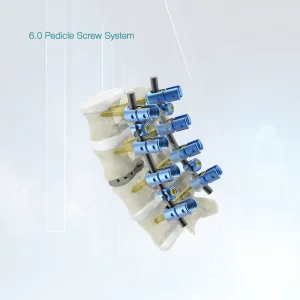
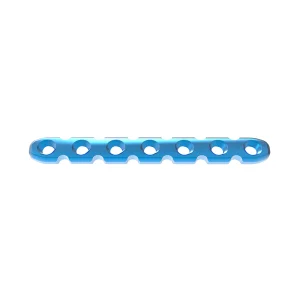
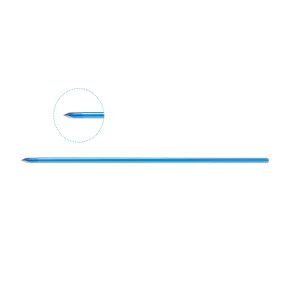
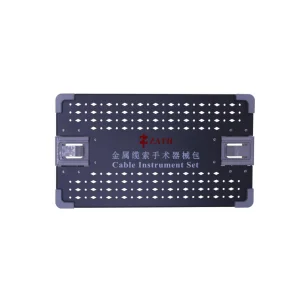
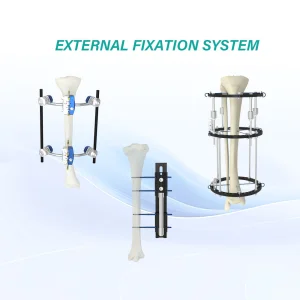
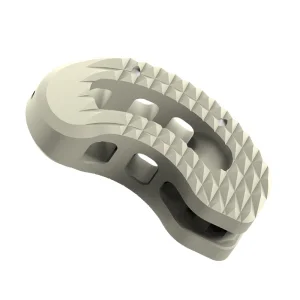
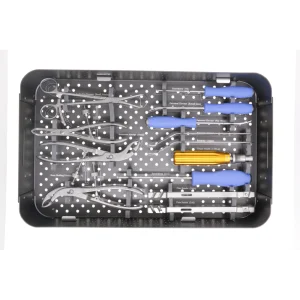
Secondary Orthopaedic Reconstruction, Spine & Trauma Platform
Complementing our total hip arthroplasty line, these certified trauma fixation and spinal stabilisation systems provide Paris health networks with a unified single-source procurement solution.
Partner with an Accountable Orthopaedic Manufacturer
Whether you are assembling a competitive GHT tender proposal for the AP-HP network, outfitting a private clinic in Île-de-France, or seeking an OEM/ODM manufacturing partner for custom arthroplasty systems, our technical directors and regulatory affairs team are prepared to support your requirements.