
Featured Orthopedic Screw & Instrumentation Systems for Japan
Precision-machined from medical-grade Titanium Alloy (Ti-6Al-4V ELI) and implantable stainless steel, customized for advanced trauma, fracture fixation, and joint reconstruction procedures.
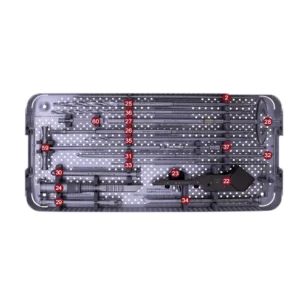
InterZan Intramedullary Nail Instrument Set (Japan Trauma Standard)
Famous Surgical InterZan Intramedullary Nail Instrument Set Factory, Quotes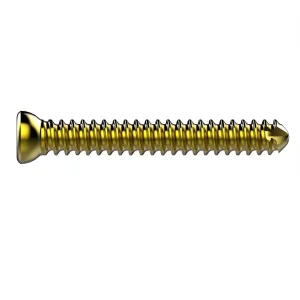
2.0mm / 2.7mm / 3.5mm / 4.5mm Medical Cortical Bone Screw Range
Best 2.0mm 2.7mm 3.5mm 4.5mm Cortical Screw Suppliers, Exporters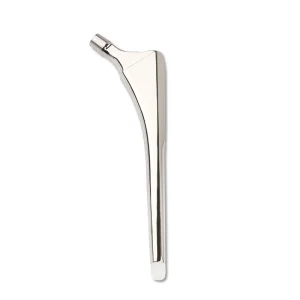
TDS Cemented Stem & Complementary Fixation Screws (High Reliability)
Cheap TDS Cemented Stem Orthopedic Implants Companies, Service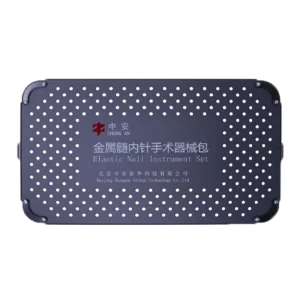
Elastic Nail Instrument Set (ZEIN) & Locking Screw System
CE Certification Elastic Nail Instrument Set (ZEIN) Supplier, FactoriesThe Japanese Orthopedic Screw Market: Demographics, Chuikyo Price Cuts & Regulatory Demands
An authoritative analysis of Japan's shifting medical device landscape, balancing the extreme structural demand of a super-aged society against statutory biennial reimbursement contractions.
1. The Super-Aged Demographic & Osteoporotic Bone Fixation
Japan represents the world’s most demographically mature healthcare theater, where nearly a third of the population is senior. This shift has escalated the incidence of osteoporotic fragility fractures—predominantly affecting the femoral neck, intertrochanteric junction, distal radius, proximal humerus, and lumbar-thoracic vertebrae. Standard metallic bone screws routinely fail in osteopenic cancellous architecture due to low bone mineral density (BMD). As a result, Japanese orthopedic surgeons require precision cortical and cancellous screws featuring deep thread profiles, differential pitch configurations, dual-core tapers, and self-tapping cutouts that maximize pull-out strength without stripping bone trabeculae.
2. Hospital Fiscal Pressures & Chuikyo Tariff Revisions
Under the Japanese Ministry of Health, Labour and Welfare (MHLW), the Central Social Insurance Medical Council (Chuikyo) conducts rigorous biennial medical fee and reimbursement price revisions (Shinryo Hoshu Kaitei). Orthopedic internal fixation hardware, categorised under designated special medical materials (Tokutei Hoken Iryo Zairyo), faces persistent systemic downward price pressure. Traditional Western multinational brands (e.g., Synthes, Stryker, Zimmer Biomet) carry inflated brand premiums and bureaucratic overheads that strain university hospitals and regional red-cross medical centers. Consequently, Japanese distributors and hospitals actively seek verified, discount-yielding OEM manufacturers who can provide equivalent biomechanical performance at 30% to 50% lower unit procurement costs.
3. Japanese PMDA & PAL Regulatory Compliance Hurdles
Entering Japan’s medical device ecosystem demands uncompromising conformity with the Pharmaceuticals and Medical Devices Act (PMD Act) monitored by the PMDA. Orthopedic screws and plates fall under Class II (Controlled Medical Devices) or Class III (Specially Controlled Medical Devices). Navigating Third-Party Certification (Ninsho) or Direct PMDA Pre-market Approval (Shonin) requires exhaustive Technical Construction Files (STED), rigorous biocompatibility test suites complying with ISO 10993 and JIS T 0311, full lot-level trace records, and foreign manufacturer accreditation (Toroku). Providing reliable technical documentation is non-negotiable for foreign manufacturers partnering with Japanese Marketing Authorization Holders (MAH / D-MAH).
4. Clinical Ergonomics & Zero-Tolerance Flaw Standards
Japanese orthopedic surgical societies (such as JOA - Japanese Orthopaedic Association) operate with distinct clinical preferences. Japanese surgeons demand low-profile screw heads that eliminate soft tissue impingement, precise Torx (Stardrive) or deep-hex driver recesses to prevent driver cam-out or head stripping during insertion, and flawless burr-free microscopic finishes. In a culture centered around "Monozukuri" (perfection in craftsmanship), zero microscopic burrs, razor-sharp self-tapping cutting flutes, and laser-etched dimensional markings are vital prerequisites for hospital procurement qualification.
Biomechanical Engineering & Metallurgical Standards
Every orthopedic screw manufactured for our Japanese distribution partners meets or exceeds ASTM F136, ISO 5832-3, and JIS T 0311 specifications for yield strength, fatigue endurance, and biological inertness.
| Material / Parameter | Ti-6Al-4V ELI (Grade 23 / ISO 5832-3) | 316LVM Stainless Steel (ISO 5832-1) | Clinical Advantage in Japanese Indications |
|---|---|---|---|
| Ultimate Tensile Strength | ≥ 860 MPa (High load bearing) | ≥ 800 - 1000 MPa (Cold worked) | Prevents shear failure during high torsional insertion torque in cortical bone. |
| Yield Strength (0.2% Offset) | ≥ 790 MPa | ≥ 690 MPa | Maintains dynamic compression force between plate and osteotomized bone fragments. |
| Modulus of Elasticity (GPa) | ~110 - 114 GPa (Closer to human cortex) | ~193 - 200 GPa (Significantly stiffer) | Titanium reduces stress-shielding phenomena, accelerating callus formation in geriatric patients. |
| MRI Compatibility | Non-ferromagnetic (Minimal artifact bloom) | Mild susceptibility to MRI distortion | Crucial for Japan's high MRI density (highest MRI scanners per capita globally for post-op imaging). |
| Surface Treatment Options | Type II Anodization / Micro-arc Oxidation | Electropolishing / Passivation (ASTM F86) | Prevents cold-welding in titanium locking plates; reduces tissue adhesion on soft-tissue contact. |
| Fatigue Limit (10^7 Cycles) | ≥ 500 MPa | ≥ 380 MPa | Surpasses cyclic fatigue demands during extended healing phases in elderly patients with delayed union. |
Thread Profile Optimization
Our screws feature asymmetrical buttress thread configurations. The load-bearing flank angle is engineered at 5° to 10° to optimize pull-out resistance against axial forces, while the trailing angle eases initial bone tapping. In cancellous variants, pitch is expanded to 1.75mm - 2.50mm to grip fragile osteoporotic trabeculae.
Self-Tapping & Self-Drilling Flutes
Precision-milled cutting flutes feature aggressive rake angles with dual relief chambers that capture displaced bone debris. This design reduces insertion torque by up to 35%, preventing iatrogenic fractures and micro-cracking in brittle cortical bone during emergency surgical interventions.
Driver Recess Integrity (Stardrive / Hex)
We utilize deep cold-forging and multi-axis EDM for Torx-equivalent Stardrive and hexagonal recesses. Dimensional tolerances are held within ±0.005mm, preventing driver wobble, stripped recesses, and surgical frustration when reversing or locking screws under maximum torque.
Chinese Factory 4.0: Precision Engineering Meets Cost-Leadership
How our high-yield automated production facility in Beijing drives down production overheads while matching and exceeding Japanese and European dimensional tolerances.
Certified Raw Material Sourcing
We exclusively utilize medical-grade titanium bars (Ti-6Al-4V ELI) and implantable stainless steel with genuine spectral mill test certificates (MTR). Every lot undergoes ultrasonic non-destructive flaw detection and chemical composition spectrometry before entering machining lines.
High-Speed Swiss-Type Lathes
Our workshop is outfitted with 7-axis and 9-axis Citizen and Star Swiss-type longitudinal CNC turning centers. Continuous single-setup machining completes thread-whirling, cannulation drilling, head contouring, and slot cutting with zero repositioning error, guaranteeing sub-micron accuracy.
Sub-Micron Optical Inspection
Every batch of screws undergoes rigorous multi-sensor automated optical dimensional inspection (AOI), 3D coordinate measuring (CMM), surface roughness analysis (Ra ≤ 0.4 μm), and microscopic deburring verification under 50x magnification to guarantee mirror-smooth finishes.
Electrochemical Passivation
Automated ultrasonic degreasing lines followed by nitric and citric acid passivation cycles remove free iron particles and generate a uniform, biocompatible titanium oxide (TiO2) passivation barrier, eliminating risk of local tissue toxicity, metallosis, or postoperative infection.
ISO Class 7 Cleanroom Blister Packaging
Finished orthopedic screws are sealed in medical-grade Tyvek double-blister packaging within an ISO 14644-1 Class 10,000 (Class 7) cleanroom environment. Validated for EtO (Ethylene Oxide) or Gamma irradiation sterilization, guaranteeing a proven 5-year sterile shelf-life.
Rapid Direct Logistics to Japan
Located adjacent to major transit corridors in Beijing, our consolidated air-freight logistics connect seamlessly with Tokyo Narita (NRT), Tokyo Haneda (HND), and Kansai (KIX). Orders clear customs and reach Japanese distributor warehouses within 4 to 6 business days with complete chain-of-custody documentation.
Localized Application Scenarios in Japanese Orthopedic Surgery
Tailored engineering configurations designed to integrate seamlessly into routine trauma and orthopedic procedures across Japanese surgical wards.
Proximal Femur & Hip Fractures
For elderly patients presenting with trochanteric and neck fractures (AO/OTA 31-A & 31-B), our cannulated compression screws (6.5mm / 7.3mm) and cephalomedullary lag screws provide optimal sliding compression while mitigating the dreaded "cut-out" complication in porotic bone stock.
Distal Radius Volar Locking Fixation
One of the most frequent surgical procedures among elderly Japanese women following accidental falls. Our 2.4mm / 2.7mm variable-angle locking screws engage distal articular fragments firmly, creating a rigid subchondral scaffold that allows early functional hand rehabilitation without external splints.
Spinal Fusion & Deformity Correction
In adult spinal deformity, degenerative spondylolisthesis, and kyphoscoliosis, our polyaxial pedicle screws—equipped with dual-lead cortical-cancellous thread transitions—provide robust vertebral body anchoring, significantly reducing the incidence of screw loosening in elderly spines.
Ankle & Pilon Fractures
In high-energy distal tibia and trimalleolar injuries, our 3.5mm cortical and 4.0mm cancellous screws maintain anatomic reduction of the syndesmosis and medial malleolus, resisting dynamic physiological loading while safeguarding delicate articular cartilage.
Scaphoid & Small Joint Arthrodesis
Headless compression cannulated screws (Herbert type) allow countersunk placement beneath the articular surface of small bones. Dual differential pitches exert controlled inter-fragmentary compression without soft-tissue irritation or cartilage scuffing.
Ligament Reconstruction & Sports
In anterior cruciate ligament (ACL) and soft tissue repair, our titanium and bioabsorbable interference screws offer smooth rounded threads that protect graft fibers from laceration while providing dependable femoral and tibial tunnel interference hold.
Frequently Asked Questions for Procurement Officers & Distributors
Addressing common clinical, commercial, regulatory, and technical inquiries regarding the procurement of orthopedic screws for Japan and international markets.
How does your factory offer discount pricing while meeting Japanese quality expectations?
Are your orthopedic screws compliant with Japanese PMDA and MHLW regulations?
What specific orthopedic screw types and diameter ranges do you produce?
Can you provide customized OEM / ODM services with Japanese-language labeling?
What is the typical lead time and shipping duration to Tokyo or Osaka?
How do you address screw-head stripping and cold-welding in titanium locking plates?
Extended Orthopedic Implants & Reconstruction Assemblies
Explore our comprehensive array of joint reconstruction liners, 3D acetabular systems, spine cages, hip prostheses, and anatomical trauma locking plates available for hospital distribution.
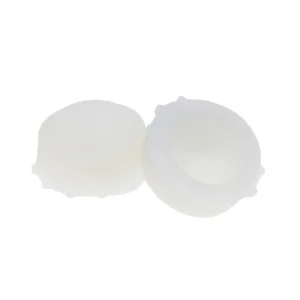
ADC Acetabular Liner & Bone Fixation Cup System (Japan Standard)
High-Quality Hip Joint ADC Acetabular Liner Manufacturer, Supplier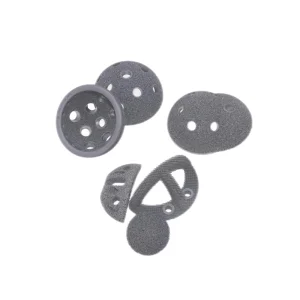
3D-Printed Trabecular Acetabular Revision System (Complex Hip Defects)
ODM 3D Printing Acetabular Revision System Manufacturers, Pricelist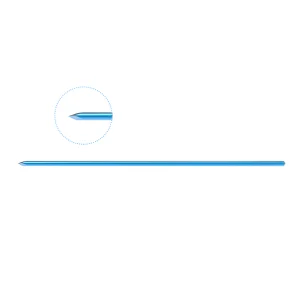
High-Tensile Titanium Alloy Orthopedic Bone Pin & K-Wire System
Best Titanium Alloy Orthopedic Bone Pin Factories, Company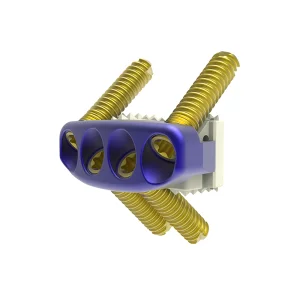
ZP Cervical Interbody Fusion Cage (Certified Biocompatible PEEK/Ti)
Buy ZP Cervical Cage Manufacturer CE FSC ISO Insured Supplier Exporter, Company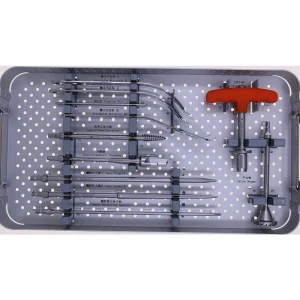
THA Hip Instrument Set Femoral Part (CE & ISO Certified Surgical Kit)
Famous CE Approved Orthopedic Implant THA Hip Instrument Set Femoral Part Supplier, Service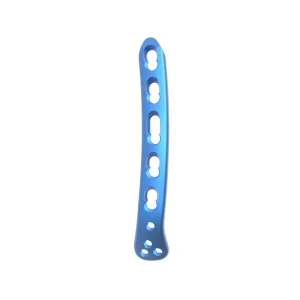
Distal Posterolateral Humerus Anatomical Locking Compression Plate
Cheap Distal Posterolateral Humerus Locking Compression Plate Suppliers, Exporter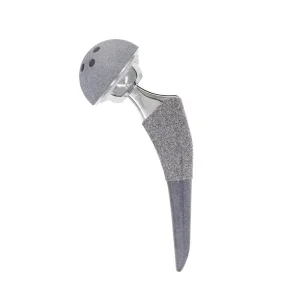
JDS Ti-Alloy Total Hip Replacement System (High Stability Femoral Stem)
Cheap Hot sale Ti alloy JDS total hip replacement titanium joint prosthesis Quotes, Company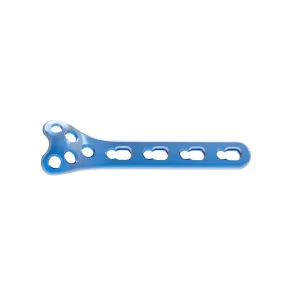
Low-Profile Radial Head Locking Compression Plate (Elbow Arthroplasty)
Best Radial Head Locking Compression Plate Manufacturer, CompanyOptimize Your Orthopedic Hardware Supply Chain in Japan
Connect directly with our biomedical engineering and international registration division. Obtain comprehensive product dossiers, mechanical test reports, sample batches, and custom OEM wholesale rate cards.