
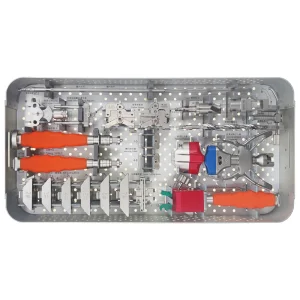
ODM Total Knee Joint Replacement Resection & Trial Instrumentation System for Finnish Hospitals
ODM New design quality guaranteed total knee joint instruments Manufacturer, Exporter
Engineered for high procedural repeat rates, strict bone resection accuracy, and complete compatibility with Nordic Arthroplasty Register (NARA) standard protocols.
A data-informed evaluation of Finland's specialized joint replacement ecosystem, health-tech governance under Fimea, and hospital operational frameworks.
Finland presents one of the most rapidly aging populations in the European Union, with citizens aged 65 and older projected to exceed 26% of the national census within this decade. This demographic reality places acute demands on primary and revision knee arthroplasties. Leading orthopedic specialty centers—most notably Coxa Hospital for Joint Diseases in Tampere, alongside university hospitals under the HUS (Helsinki University Hospital) district, Turku University Hospital (Tyks), and OYS in Oulu—execute thousands of total knee arthroplasties (TKA) annually.
Consequently, procurement protocols across the reorganized 21 Wellbeing Services Counties (hyvinvointialueet) demand instrumentation that drastically curtails surgical turnover times while maintaining absolute cutting-block stability. Surgical instrument sets serving Finland cannot merely be functional; they must deliver tactile feedback through passivated, anti-reflective surfaces adapted to high-luminance LED surgical theaters.
Supplying Finnish healthcare providers mandates non-negotiable compliance with EU Medical Device Regulation (MDR 2017/745). Under the supervision of the Finnish Medicines Agency (Fimea), all surgical instruments—whether Class I reusable surgical instruments (Class Ir) or specialized trial/cutting guide components—require exhaustive technical files, validated cleaning instructions (EN ISO 17664), and rigorous biocompatibility profiles.
Bridging tier-1 manufacturing hubs with Nordic clinical markets through vertically integrated engineering, traceability, and OEM flexibility.
Historically, European orthopedic distributors relied on multi-tiered, fragmented subcontracting networks across Central Europe, resulting in compounding margins, extended lead times, and brittle logistics. Today, institutional purchasing bodies in Scandinavia actively support direct partnerships with large-scale, ISO 13485-certified factories that retain in-house capabilities from raw titanium/stainless bar forging to multi-axis 5-axis CNC machining, electropolishing, laser marking, and cleanroom packaging.
By consolidating the instrument manufacturing cycle under a single accountable engineering governance, medical brand holders distributing into Finland achieve unprecedented consistency in metallurgical microstructure, dimensional tolerance, and batch-to-batch repeatability.
Custom-tempered surgical steels (AISI 420B, 17-4PH / DIN 1.4542) are calibrated to maintain razor cutting guide surfaces over 300+ autoclaving cycles without dimensional distortion or galvanic corrosion.
Sub-millimeter physical validation for bone resection jigs within 10 business days, utilizing rapid CNC and metal 3D printing to accelerate surgeon-driven instrument revisions.
Every single instrument batch features optical UDI (Unique Device Identification) direct-part-marking complying with GS1 standards. Chemical assay testing certificates (Spectrometry) and mechanical elongation test reports are maintained digitally for 15 years, giving Finnish authorized representatives (EC REP) ironclad audit defensibility before notified bodies.
Examining the intersection of mechanical arthroplasty tools, computer-assisted surgery (CAS), and additive manufacturing.
Total knee arthroplasty is transitioning from purely manual alignment systems to semi-autonomous robotic milling, optical navigation, and Patient-Specific Instrumentation (PSI). Finnish surgical clinics emphasize kinematically aligned TKA (KA-TKA) alongside restricted kinematic alignment (rKA) protocols. These nuanced surgical philosophies demand next-generation instrument sets with 0.5° angular increment adjustments on distal femoral resection guides and anterior-posterior (A/P) chamfer blocks.
Our manufacturing engineering laboratories are directly addressing this frontier by fabricating ultra-lightweight hybrid instrument sets featuring medical-grade polyphenylsulfone (Radel® PPSU) combined with hardened surgical steel inserts. This combination slashes instrument tray weight by up to 38%, addressing occupational safety concerns in Finnish hospital central sterile supply departments (CSSD) and reducing autoclaving thermal mass.
Reduction of standard TKR trays from 6 containers down to 2 streamlined containers.
Direct hospital CT/MRI DICOM file conversion to patient-matched single-use resection guides.
Wireless micro-sensor embedded trial inserts giving intraoperative balance feedback.
Specific procedural configurations tailored to the challenges encountered in Finnish operative environments.
Rapid switching mechanisms between intramedullary (IM) and extramedullary (EM) tibial alignment rods allow surgeons to preserve bone stock efficiently in young, active Nordic patients exhibiting osteoarthritis secondary to winter sports trauma.
Graduated ligament tensioning spreaders and calibrated tibial offset adapters provide accurate soft-tissue balancing metrics before permanent bone resections are executed, drastically minimizing postoperative collateral instability.
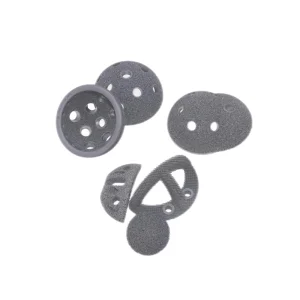
Specialized revision instrument modules feature conical reamers, intramedullary stem trial extensions, and augments provisionally sizing severe metaphyseal bone defects according to the Anderson Orthopaedic Research Institute (AORI) classification.
For medical brand holders and distributors establishing supply agreements serving Finnish hospital procurement channels:
Hospital tenders across Finland frequently penalize delivery disruptions and stock-out incidents with severe contractual fines. Relying on an agile manufacturing backbone guarantees consistent production slot reservations and rapid reserve replenishments.
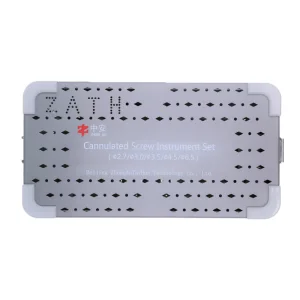
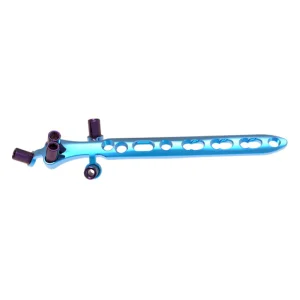
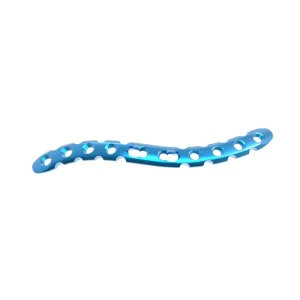
Whether configuring tailored total knee instrument kits or supplying sterile-packaged trauma plates and cannulated screw sets, our factory leverages unified ISO 13485 quality systems to provide Nordic commercial distributors with sustainable cost advantages without compromising precision tolerances.
Direct, authoritative answers addressing regulatory conformity, metallurgy, sterilization, and commercial terms for Finland.
Our manufacturing facility operates under an accredited ISO 13485:2016 quality system. For reusable surgical instruments classified as Class Ir, we provide comprehensive Technical Documentation files, including cleaning and steam sterilization validation reports according to EN ISO 17664, biocompatibility assessments under ISO 10993, and biological safety evaluations. These dossiers allow distributors in Finland to obtain Notified Body approval smoothly or register products directly under Class I/Ir pathways with Fimea.
We predominantly employ custom-heat-treated martensitic precipitation-hardening stainless steels, such as AISI 630 (17-4PH) and DIN 1.4542, alongside high-hardness AISI 420B for cutting slot surfaces. These alloys guarantee high Rockwell hardness (HRC 45–50) to resist saw-blade skiving and micro-burr generation, while retaining corrosion resistance during intensive, alkaline washer-disinfector cycles customary in Finnish hospitals.
Yes. Through our comprehensive ODM engineering service, we receive client 3D CAD step files under strict Non-Disclosure Agreements (NDAs). We machine trial components in medical-grade Radel® PPSU, ultra-high-molecular-weight polyethylene (UHMWPE), or titanium alloy, calibrated exactly to your implant's locking mechanism, AP/ML dimensions, and cam-post profiles with micro-tolerances within ±0.02 mm.
For existing production platforms, standard manufacturing runs are fulfilled within 4 to 6 weeks. Express sample dispatch or emergency hospital buffer replenishment via air express (DHL/FedEx/UPS) reaches Helsinki-Vantaa Airport within 4 to 6 business days following customs clearance.
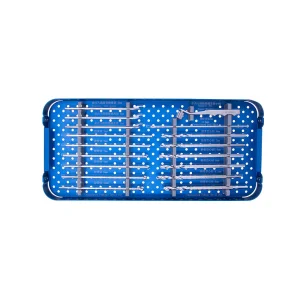
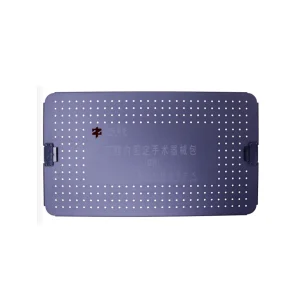
Yes. We design and fabricate custom anodized aluminum and stainless steel graphic sterilization containers. Trays feature silicone brackets, ergonomic handles, laser-etched component layout maps, and optimized perforation arrays validated to ensure rapid steam penetration and moisture evacuation in accordance with ANSI/AAMI ST77 and EN 285 standards.
Complete surgical lines manufactured under ISO 13485 standards, available for hospital tenders and clinical supply chains serving Northern Europe.

Connect directly with our chief biomedical design engineers and international regulatory specialists to evaluate instrument sample sets, request technical dossiers, or negotiate custom OEM production agreements.
Send Inquiry Now