Primary Trauma & Spine Fixation
High-Performance Locking Systems for New York Healthcare Providers
Pre-contoured anatomical profiles, combi-hole versatility, and sterile-barrier packaging designed to meet the rigorous demands of metro NY operating theaters and ambulatory centers.
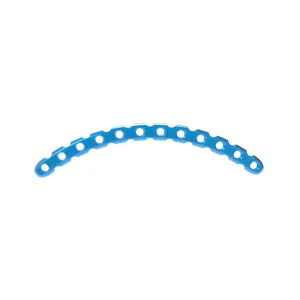
Custom Curved Reconstruction Locking Plate (Tri-State Edition)
View Product Details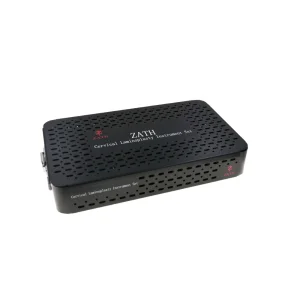
Cervical Laminoplasty Instrument Set (Hospital Grade)
View Product Details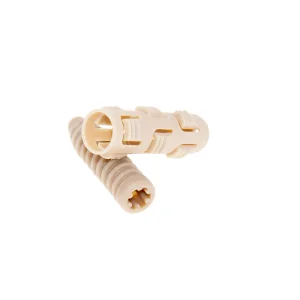
Orthopedic Suture Anchor Implant System (Sports Repair)
View Product Details
Regional Clinical Landscape
Navigating the New York Orthopedic Trauma Ecosystem
The New York State healthcare sector represents one of the most clinically sophisticated yet fiscally regulated medical device markets globally. From Level 1 trauma centers such as Bellevue Hospital Center, Mount Sinai, NewYork-Presbyterian, and Westchester Medical Center down to rapidly growing Ambulatory Surgery Centers (ASCs) throughout Long Island, Westchester, and Upstate New York, orthopedic trauma hardware faces dual demands: uncompromising biological efficacy and rigorous cost containment.
In metropolitan New York, high-velocity urban trauma (pedestrian collisions, transit injuries, construction falls) converges with an expanding demographic of geriatric osteoporotic fractures. This requires bone fixation devices that deliver exceptional screw-to-plate mechanical interlocking without stripping fragile bone trabeculae. Concurrently, New York State Department of Health hospital oversight, combined with CMS Medicare bundled payment programs (such as CJR and BPCI Advanced), has placed immense pressure on hospital supply chains to bypass traditional middleman markups.
The Ambulatory Shift in the Tri-State Area:
More than 65% of distal radius, clavicle, and fibula locking plate procedures across New York, New Jersey, and Connecticut are migrating to outpatient ASCs, demanding pre-sterilized, single-use plate-and-screw procedure kits that eliminate hospital reprocessing cycles.
New York Inpatient vs. Outpatient Trauma Trends
While tertiary academic centers handle multi-fragmentary periarticular reconstructions requiring complex distal femoral and proximal tibial locking plates, suburban ASC networks seek turnkey titanium systems with standardized instrumentation footprints to reduce autoclave downtime.
GPO Procurement & Value Analysis Committees (VAC)
New York hospital Value Analysis Committees demand extensive technical files, biocompatibility data (ISO 10993), and mechanical fatigue testing under ASTM F382 before clearing implants for institutional formulary inclusion.
Global Macroeconomics
The Global Locking Plate Industrial Paradigm & Supply Volatility
The worldwide orthopedic internal fixation market is undergoing unprecedented supply chain realignments, creating strategic opportunities for agile OEMs and agile North American surgical distributors.
European MDR Bottlenecks
The transition from MDD to EU MDR (Regulation 2017/745) has clogged European notified bodies, forcing legacy orthopedic suppliers to discontinue niche locking plate lines and delay North American delivery schedules.
Titanium Grade 23 (ELI) Economics
Fluctuating raw material indices for Ti-6Al-4V ELI (ASTM F136) and implant-grade 316L stainless steel (ASTM F138) require vertically integrated manufacturers capable of securing mill certifications and hedging metal stocks.
Vendor Rationalization in the US
Hospital systems across North America are shedding excessive single-specialty vendor accounts in favor of consolidated partners offering multi-platform stability across trauma, spine, and arthroplasty portfolios.
| Evaluation Parameter | Traditional US Tier-1 Brands | Domestic Machine Shops (US) | ZATH Advanced Manufacturing Hub |
|---|---|---|---|
| Raw Material Origin | ASTM F136 Ti-6Al-4V ELI / F138 | Domestic stock (high scrap costs) | Certified Medical-Grade Titanium / Mill Traceable |
| Manufacturing Precision | Multi-axis Swiss CNC | 3-axis to 5-axis standard milling | Ultra-precision 5-Axis Citizen / Star Swiss CNC |
| Lead Times for Custom OEM | 24–36 Weeks | 16–20 Weeks | 4–8 Weeks (Rapid tooling & DFM) |
| Cleanroom Packaging | Centralized (often outsourced) | Rarely in-house (additional cost) | ISO Class 7 Cleanroom & Gamma/EO Sterile Barrier |
| Procurement Cost Structure | High premium (reimbursed via legacy models) | High unit manufacturing cost | Streamlined factory-direct pricing (35–55% savings) |
Manufacturing Superiority
Chinese Industrial Efficiency: Scale, Precision, and Certified Quality
Based in the national-level Zhongguancun Science and Technology Park in Pinggu, Beijing, Beijing ZhongAnTaiHua Technology Co., Ltd. (ZATH) embodies the next evolutionary leap of Chinese medical device manufacturing. With over 300 dedicated specialists and nearly 100 senior biomechanical technicians, our facility bridges high-speed industrial execution with surgical rigor.
Our competitive advantage for the New York market lies not merely in lower bill-of-materials cost, but in closed-loop manufacturing integration:
- Sub-Micron Multi-Axis Machining: Utilizing synchronized 5-axis Swiss-lathes to cut anatomically complex thread pitches, variable-angle combi-holes, and low-profile beveled edges in a single setup, eliminating micro-burrs.
- Electropolishing & Type II Anodization: In-house electrochemical surface treatments that drastically suppress nickel-ion leaching, optimize fatigue limits, and yield distinct color coding for immediate OR screw-size recognition.
- Complete Lot Traceability: Laser-etched Unique Device Identification (UDI) directly embedded into every plate and cortical/locking screw, ensuring compliance with FDA GUDID indexing.
Engineering Fundamentals
Biomechanical Principles of Next-Generation Locking Compression Plates
A comprehensive examination of internal fixator mechanics, load distribution dynamics, and periosteal blood supply preservation.
Fixed-Angle vs. Variable-Angle (VA) Technology
Traditional fixed-angle locking holes lock screws at a perpendicular trajectory, optimal for primary diaphysial shaft stabilization. ZATH's Variable-Angle (VA) locking clusters permit up to a ±15° cone of angulation, enabling surgeons to capture comminuted periarticular fragments and avoid collision with existing intra-articular prosthetic stems.
Limited-Contact Periosteal Sparing Profiles
Conventional dynamic compression plates (DCP) required intense plate-to-bone friction, strangulating periosteal microcirculation and precipitating secondary necrosis. ZATH locking plates feature scalloped undercuts, preserving haversian remodeling and stimulating robust secondary callus formation.
Combi-Hole Hybrid Utility
Every ZATH LCP construct features synchronized combi-holes comprising a threaded locking segment and a dynamic compression unit. This empowers the trauma specialist to achieve axial anatomical interfragmentary compression prior to securing rigid fixed-angle locking fixation.
Global OEM & Supply Chain
OEM/ODM Engineering & Tri-State Distribution Support
Streamlined contract manufacturing, private-label capabilities, and dedicated regulatory dossiers tailored for US distributor networks.
Turnkey OEM/ODM Private Label Programs
Whether you are a specialized orthopedics master distributor in Upstate New York or a surgical group seeking proprietary branded implant systems, ZATH offers end-to-end contract manufacturing. Our engineering services encompass design-for-manufacturing (DFM) analysis, customized instrument caddies, laser marking, and customized sterile blister packaging.
Our Quality Management System operates under strict compliance with ISO 13485:2016, with full audit trail capabilities. We supply technical documentation packages including:
- Biocompatibility test reports conforming to ISO 10993 (cytotoxicity, sensitization, systemic toxicity).
- Static and dynamic 4-point bending fatigue certificates in compliance with ASTM F382.
- Sterilization validation files for ethylene oxide (EO) and gamma radiation (ISO 11137 / ISO 11135).
- Accelerated aging packaging shelf-life validation data (ASTM F1980) supporting 5-year sterile integrity.
Sterile Single-Procedure Kits vs. Non-Sterile Sets
To reduce orthopedic turnover latency in Manhattan ambulatory surgical theaters, ZATH delivers sterile pre-packaged kits: single plate with paired color-coded locking/cortical screws, pre-mounted drill guides, and disposable drivers. This eliminates hospital CSSD reprocessing expenses and cross-contamination liability.
JFK / Newark Air Cargo Logistics Protocol
Our international logistics pipeline utilizes established partnerships with DHL Express, FedEx, UPS, and expedited air cargo channels. Consignments destined for the New York Metropolitan area enjoy pre-cleared customs documentation, averaging 4 to 6 business days from Beijing hub dispatch to regional distribution warehousing.
Technical & Commercial FAQ
Frequently Asked Questions for US Procurement Directors
In-depth responses covering material grades, FDA regulatory alignment, mechanical testing, and distributor terms.
What medical-grade alloys are used in ZATH locking plate systems?
All ZATH titanium locking plates and corresponding locking/cortex screws are manufactured from certified medical-grade Ti-6Al-4V ELI (Extra Low Interstitial) alloy conforming to ASTM F136 and ISO 5832-3 standards. For stainless steel specifications, we exclusively utilize high-grade implant-quality 316L stainless steel meeting ASTM F138 / ISO 5832-1 requirements. Raw material mill test certificates (MTC) detailing chemical composition, tensile strength, and microstructure are cataloged with each manufacturing batch.
How do your locking plate fatigue testing protocols comply with ASTM F382?
Our plates undergo 4-point dynamic bending fatigue testing per ASTM F382 (Standard Specification and Test Method for Metallic Bone Plates). Tests are run up to 5,000,000 cycles at physiological frequencies without structural catastrophic failure. We measure bending structural stiffness (BSS) and proof moment to guarantee our constructs support functional postoperative weight-bearing loads in comminuted osteoporotic fractures typical of aging New York demographics.
What documentation is provided to support US FDA 510(k) or institutional VAC clearance?
We provide qualified distributors with comprehensive Device Master Record (DMR) documentation, Design History File (DHF) extracts, full ISO 10993 biological risk assessments, USP <788> particulate evaluation, and ASTM F382 mechanical validation reports. In addition, our ISO 13485:2016 audited quality manual and cleanroom microbiological environmental monitoring data are accessible for Value Analysis Committee (VAC) scrutiny.
Are matching surgical instruments supplied, and how are they maintained?
Yes. Every ZATH locking plate series is matched with an ergonomic, autoclave-compatible surgical instrument kit fabricated from hardened medical-grade surgical stainless steel (17-4PH / 420) and high-performance PPSU / PEEK polymers. Kits include calibrated torque-limiting screwdrivers (preventing cold welding and head stripout), drill sleeves, depth gauges, threaded centering guides, and reduction forceps. Customized graphic aluminum sterilization trays are available for US hospital autoclaves.
What are your typical order minimums (MOQ) and lead times for US distributors?
For standard catalog specifications with our sterile or non-sterile branding, we maintain continuous inventory allowing dispatch within 72 hours via DHL/FedEx, arriving at JFK or Newark in 4 to 6 business days. For customized OEM/ODM projects (custom laser marking, specific hole counts, proprietary screw head geometries), minimum order quantities start as low as 50 units per SKU, with initial tooling-to-delivery lead times of 4 to 8 weeks.
Comprehensive Catalog
Comprehensive Orthopedic Implants & Fixation Systems
Explore ZATH's broader biomechanical portfolio — covering long bone fractures, upper and lower extremity locking reconstruction, hip arthroplasty, and spinal fusion.
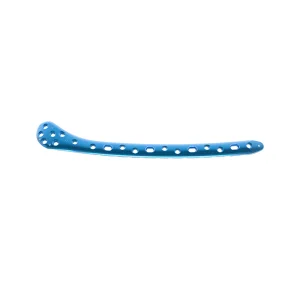
Distal Lateral Femur Locking Compression Plate I (Trauma Line)
View Product Details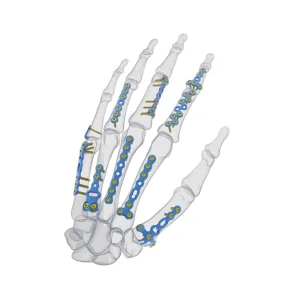
Hand Fracture Locking Plate System (New York Ambulatory Series)
View Product Details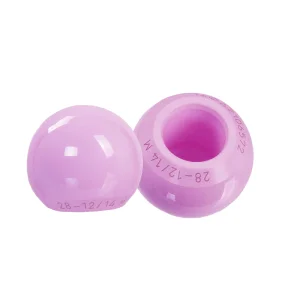
Ceramic CDH Femoral Head Implant (High-Survivorship Hip)
View Product Details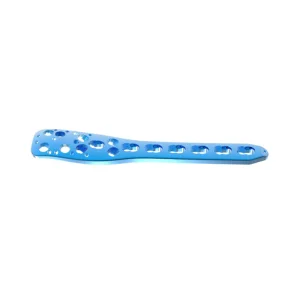
Proximal Humerus Locking Compression Plate III (Osteoporotic Solution)
View Product Details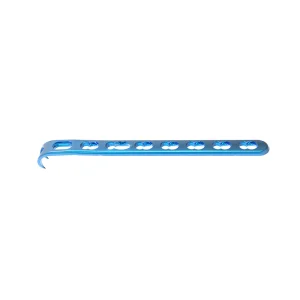
Olecranon Hook Locking Compression Plate (Periarticular Fit)
View Product Details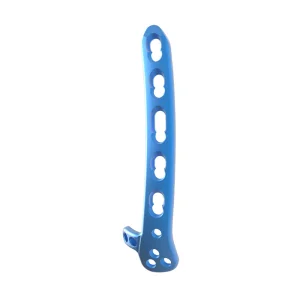
Distal Posterolateral Humerus Locking Plate with Lateral Support
View Product Details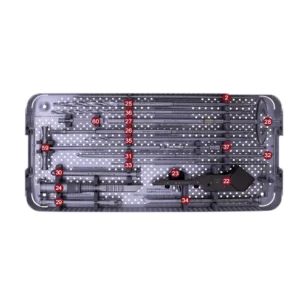
Surgical InterZan Intramedullary Nail Instrument Set
View Product Details