
Precision Osteosynthesis & Orthopedic Fixation Catalog (Part I)
Sterile-barrier packaged and non-sterile titanium implants engineered for anatomical congruence, angular stability, and streamlined surgical instrumentation.

Global Landscape of Fracture Plating: From Rigid Fixation to Biological Osteosynthesis
Internal fracture fixation has transitioned decisively from traditional compression concepts to biologically oriented, angle-stable constructs designed to preserve periosteal blood flow and accelerate secondary bone healing.
Evolution of Locking Compression Plates (LCP)
Traditional osteosynthesis relied entirely on friction generated between the bone surface and the plate by conventional bicortical screws. This compressed the periosteum, frequently causing localized cortical necrosis, delayed union, or plate failure. Modern CE-certified locking plates act as internal fixators: the screw head threads directly into the plate hole, creating a rigid angle-stable scaffold that suspends load across the fracture gap without relying on plate-to-bone friction.
Geriatric Fragility & High-Energy Trauma Demand
The global demand for orthopedic fracture plates is bifurcated into two major demographics: the rising volume of osteoporotic fragility fractures in aging societies (proximal humerus, distal radius, proximal femur periprosthetic breaks) and high-energy polytrauma driven by vehicular accidents and industrial expansion in emerging economies. Treating osteoporotic bone requires multi-planar, locking angular screw configurations to prevent toggle and pull-out under physiological weight-bearing.
Stringent Regulatory Hurdles: CE MDR (EU) 2017/745
With the transition from MDD 93/42/EEC to EU MDR 2017/745, orthopedic trauma plates fall under Class IIb implantable devices requiring comprehensive Clinical Evaluation Reports (CER), verified Post-Market Clinical Follow-up (PMCF), and full Unique Device Identification (UDI) tracking. Qualified manufacturers must present airtight biocompatibility reports according to ISO 10993 and dynamic mechanical verification according to ASTM F382 fatigue standards.
Biocompatibility, Metallurgy & Dynamic Mechanical Validation
Fracture fixation plates must balance bending stiffness, torsional resistance, and fatigue life without inciting immune reactions or causing extreme stress shielding.
| Material / Specification Parameter | Ti-6Al-4V ELI (Grade 5 ASTM F136 / ISO 5832-3) | Commercially Pure Titanium (Grade 4 ISO 5832-2) | Surgical Stainless Steel (316LVM ASTM F138 / ISO 5832-1) |
|---|---|---|---|
| Elastic Modulus (GPa) | 110 – 114 (Closer to cortical bone: 18-22 GPa) | 100 – 105 (Moderate stiffness) | 190 – 210 (High rigidity, higher stress shielding risk) |
| Tensile Yield Strength (MPa) | ≥ 795 MPa (Superior deformation resistance) | ≥ 480 MPa | ≥ 690 MPa |
| Ultimate Tensile Strength (UTS) | ≥ 860 MPa | ≥ 550 MPa | ≥ 860 MPa |
| Fatigue Resistance (Cycles @ ASTM F382) | > 1,000,000 cycles with no microcrack propagation | Moderate cyclic life | High fatigue life, prone to galvanic/fretting risk |
| Biocompatibility & MRI Artifacts | ✓ Exceptional (Minimal MRI blooming) | ✓ Superior | Moderate (Pronounced MRI scatter artifact) |
| Tissue Integration (Surface Passivation) | Dense TiO2 passive film, resists corrosion in Cl¯ fluid | Natural passivation layer | Requires electropolished passivation layer |
Limited-Contact Undersurface Geometry
By incorporating scalloped or grooved underside profiles (Limited Contact LCP design), the contact area between the plate and the underlying periosteum is reduced by up to 60%. This preserves the blood supply of the periosteal microvasculature, avoiding avascular necrosis of the cortex beneath the plate, minimizing infection risks, and drastically accelerating clinical consolidation.
Dual Combination Screw Hole Geometry
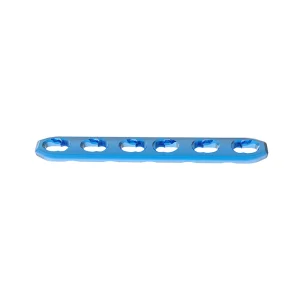
Each combi-hole combines an unthreaded dynamic compression unit (DCU) with a threaded locking conical socket. Surgeons can achieve classical interfragmentary compression with conventional cortex screws, followed by the insertion of self-tapping locking screws to achieve absolute rigid angle stability within the exact same structural hole footprint.
Fatigue Life & Four-Point Bending Rigidity
In accordance with ASTM F382-17 (Standard Specification and Test Method for Metallic Bone Plates), our locking plates undergo cyclic four-point bending fatigue assays up to 10^6 cycles under physiological saline conditions at 5 Hz, ensuring the implant withstands premature cyclical bending failure during the typical 12 to 16 week healing phase.
Chinese Factory Efficiency Advantages: Advanced Precision Machining & Rapid Turnaround
Headquartered in Beijing's Zhongguancun Science Park since 2009, ZATH leverages world-class automated precision multi-axis milling, complete supply chain verticalization, and agile engineering response.
5-Axis CNC & Swiss Screw Machining
Operating premium DMG MORI and Citizen multi-spindle Swiss lathes, our automated lines mill anatomical locking plates and cannulated screws in continuous setups. This eliminates re-clamping deviations, holding tolerances within ±0.005mm for exact thread pitches.
End-to-End Vertical Supply Chain
From aerospace-certified raw bar stock sourcing with complete chemical mill certificates to Wire EDM profiling, vibratory barrel deburring, ultrasonic alkaline degreasing, cleanroom packaging, and EO/Gamma sterilization validation—every phase is integrated under one roof.
Agile OEM/ODM Cycle Times
While European manufacturing cycles often stretch past 16-24 weeks, ZATH's dedicated tooling division delivers functional prototypes for customized anatomy, private labels, or regional plate variations in 15 days, with bulk production delivery in 4-6 weeks.
Dedicated Regulatory Dossier Support
Our regulatory affairs department provides global distributors with complete Summary Technical Documentation (STED), biocompatibility data (ISO 10993), packaging stability test files (ISO 11607), and sterilization validations for expedited health authority clearances.
Localized Clinical Scenarios & Anatomical Fixation Architectures
Orthopedic fracture plates are customized to distinct bone contours and biomechanical loading environments across the human skeleton.
Distal Radius Volar Locking Systems
Designed for intra-articular and extra-articular distal radius fractures (AO/OTA 23). The ultra-low profile plate sits proximal to the watershed line to prevent flexor pollicis longus (FPL) tendon irritation. Distal locking screw trajectories cross divergent subchondral bone vectors, delivering rigid raft support beneath the articular surface.
Proximal Humerus Multi-Directional Plates
Addressing 2-part, 3-part, and 4-part proximal humeral fractures (Neer classification). Features calcar-supporting screw holes targeting the inferomedial cortex to counteract varus collapse, while suture eyelets along the plate periphery allow robust rotator cuff tendon tension neutralization during reduction.
Distal Femur & Proximal Lateral Tibia
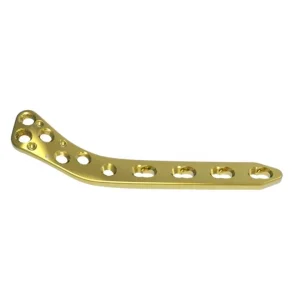
Engineered for high-stress periprosthetic fractures, comminuted metaphyseal injuries, and osteoporotic non-unions. Contoured accurately to the lateral femoral condyle and tibial plateau. The thick cross-section withstands cyclical axial load and bending moments while facilitating minimally invasive percutaneous osteosynthesis (MIPO).
Clavicle S-Shape & Olecranon Hook Plates
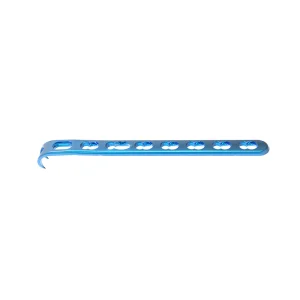
Pre-shaped three-dimensional anatomical contours matching the natural double-curve of the clavicle and the proximal ulna. Olecranon hook systems utilize dual proximal hooks to anchor avulsed triceps tendon insertions directly into the olecranon tip without sacrificing proximal bone stock.
Trauma Rib Locking Plates
Ultra-thin, malleable titanium constructs designed for flail chest stabilization and severe thoracic wall disruption. These plates offer elastic deformation matching chest wall respiratory expansion while providing rigid stabilization of rib fractures to dramatically reduce ICU ventilation days.
Pelvic & Acetabular Reconstruction Plates
Malleable 3.5mm curved and straight reconstruction plates crafted from ductile Grade 4 titanium or high-grade stainless steel. Engineered for precise three-dimensional in-situ contouring across complex pelvic rings, iliopectineal lines, and posterior acetabular columns.
Technological Roadmaps & Disruptive Osteosynthesis Trends
The orthopedic fracture plate landscape is moving rapidly beyond standard fixed-angle geometries into adaptive, digital, and bio-interactive platforms.
Variable-Angle (Polyaxial) Locking Systems
While standard locking plates enforce a singular screw trajectory, variable-angle (VA) locking mechanisms permit surgeons to angulate screws within a 30-degree cone (±15° off-axis). This proves crucial when capturing tiny comminuted intra-articular fragments, avoiding joint penetration, or maneuvering around pre-existing total joint arthroplasty stems.
Selective Laser Melting (SLM) & Additive Manufacturing
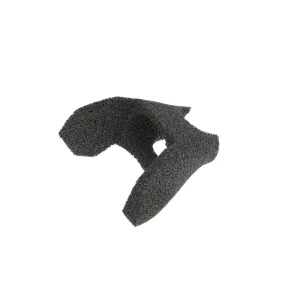
Direct metal 3D printing enables the integration of solid load-bearing plates with biomimetic porous trabecular titanium coatings (pore diameters 300-600μm, 65-75% porosity). These engineered porous lattices stimulate osteoblast proliferation and rapid osseointegration along bone-contact surfaces, reducing implant loosening.
Bioabsorbable Magnesium & Carbon-PEEK Constructs
To eliminate secondary hardware removal surgeries, high-purity magnesium alloys (WE43) that safely resorb and convert to biocompatible hydroxyapatite inside the body are advancing into craniofacial and pediatric plates. Simultaneously, radiolucent Carbon Fiber Reinforced PEEK (CFR-PEEK) plates allow artifact-free CT/MRI oncological follow-up and mimic natural bone compliance.
Global Sourcing Matrix: Auditing Fracture Plate Manufacturers
Key criteria hospital procurement committees, multinational OEM brand owners, and medical device distributors must scrutinize before qualifying a manufacturing partner.
1. Material Traceability
Every titanium or stainless steel ingot must possess certified chemical analysis and mechanical tensile test reports (EN 10204 Type 3.1). The manufacturer must enforce serial laser etching tracing each finished plate back to its specific raw material heat number.
2. Surface Passivation Quality
Rigorous nitric or citric acid chemical passivation under ASTM A967/ASTM F86 standards is essential. Inadequate passivation leaves free iron particles from cutting tools on the plate surface, precipitating pitting corrosion, discoloration, and metallosis in vivo.
3. Sterile Packaging Validation
Hospitals increasingly demand pre-sterilized implants. Suppliers must demonstrate microbial barrier validations per ISO 11607-1/2, accelerated aging tests confirming 5-year shelf life, and certified Ethylene Oxide (EO) or Gamma radiation sterility assurance levels (SAL 10^-6).
4. Matching Instrument Tolerances
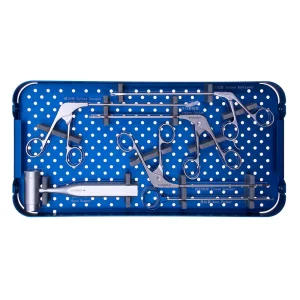
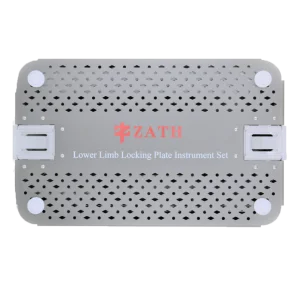
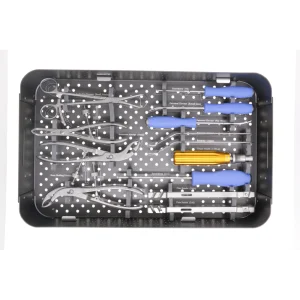
A locking plate is only as reliable as its surgical delivery set. Screwdrivers, drill bits, and tap sleeves must feature tight tolerances. Screwdriver tips must engage Stardrive (Torx) or Hex sockets without cam-out wear, preventing stripped screw heads during surgical tightening.
Frequently Asked Questions: Fracture Plates & CE Certification
Expert insights addressing regulatory clearance, metallurgical integrity, biomechanics, and global distribution partnership requirements.
Precision Osteosynthesis & Orthopedic Fixation Catalog (Part II)
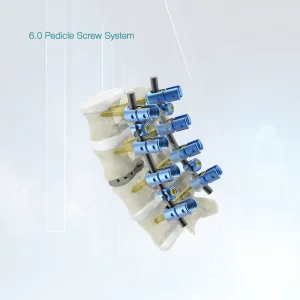
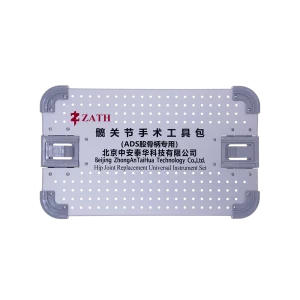
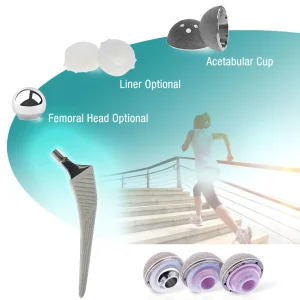
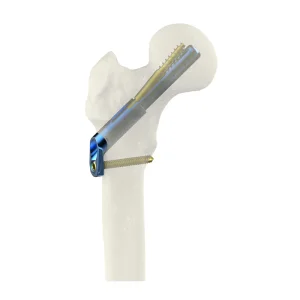
Expanding beyond fracture plates into rib reconstruction, thoracolumbar pedicle fixation, joint replacement components, and custom femoral neck systems.
Initiate OEM/ODM Custom Manufacturing or Request Full CE Dossiers
Contact our senior biomechanical engineering team at Beijing ZhongAnTaiHua Technology Co., Ltd. (ZATH) for CAD drawing reviews, prototype milling schedules, or complete regulatory STED file downloads for international market authorization.