
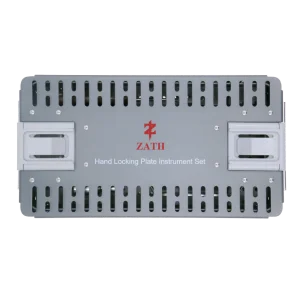
Primary Trauma & Surgical Portfolio
Engineered Orthopedic Systems & Immediate Quotes
Explore our certified trauma fixation plates, specialized arthroscopy instruments, and joint replacement implants ready for direct factory quotation.
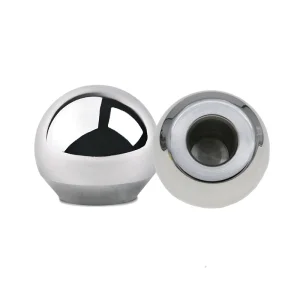
Artificial Hip Joint FDH Femoral Head
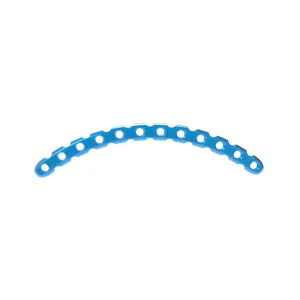
Custom Curved Reconstruction Locking Plate
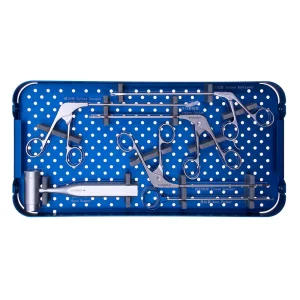
OEM Shoulder Arthroscopy Instrument Set
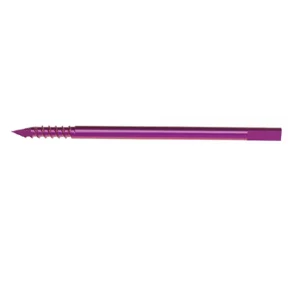
Triangular Edge External Fixation Pin
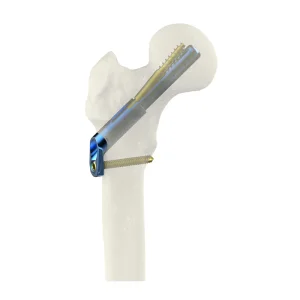
Femoral Neck Antirotation System (FNAS)
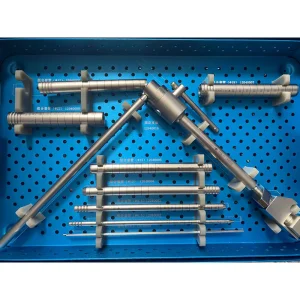
ODM Spine MIS Channel Instrument Set
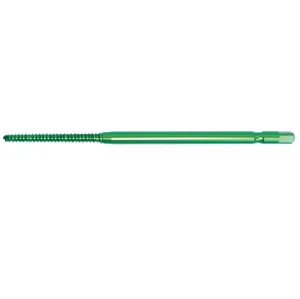
Custom Cancellous Bone External Fixation Pin
Clinical Engineering Whitepaper
Global Distal Radius Plate Evolution & Surgical Trends
An in-depth metallurgical and mechanical evaluation of volar locking systems in modern traumatology.
Biomechanical Transitions in Volar Locking Plate Design
Distal radius fractures represent the most prevalent skeletal injuries treated in emergency and trauma operating rooms worldwide, constituting up to 18% of all adult fractures. In recent clinical history, open reduction and internal fixation (ORIF) utilizing anatomic volar locking plates has definitively superseded conservative casting, percutaneous K-wire pinning, and bridging external fixators as the benchmark gold standard for unstable, intra-articular fractures. The surgical paradigm demands absolute biomechanical stability to enable immediate active wrist mobilization, thereby mitigating tendon adhesions, joint stiffness, and long-term complex regional pain syndrome (CRPS).
The engineering shift observed throughout China's orthopedic manufacturing clusters centers on anatomical pre-contouring and low-profile cross-sections. Historic plate configurations suffered from prominent distal borders that provoked chronic irritation or rupture of the Flexor Pollicis Longus (FPL) tendon along the watershed line. Modern distal radius plate systems engineered by ZATH incorporate a tapered distal edge seated proximal to the volar rim, optimized screw hole trajectories that capture the styloid process and lunate facet independently, and variable-angle (VA) locking mechanisms that offer ±15° cone angulation for customized fragment buttressing.
0.4mm
Ultra-Thin Distal Profile to Protect Tendons
±15°
Variable-Angle Locking Cone Trajectory
Ti6Al4V ELI
Medical Grade High-Strength Biocompatible Alloy
100%
ISO 13485 Lot-Inspected Traceability
Material Integrity and Modern CNC Manufacturing Benchmarks
Implant longevity and clinical performance depend heavily on material purity and surface passivation. The international trauma implants export sector in China has shifted away from commercial titanium grades toward high-strength Grade 5 Titanium alloy (Ti-6Al-4V ELI / ASTM F136). This metallurgical standard guarantees superior fatigue strength against cyclic loading during bone consolidation, alongside an elastic modulus closer to human cortical bone compared to traditional stainless steel (316LVM). This compliance profile reduces the risk of stress shielding and subsequent cortical osteopenia beneath the plate.
Furthermore, CNC precision turning and 5-axis Swiss-lathe processing ensure that the thread geometry within plate locking holes achieves uniform pitch tolerance and flawless anti-cold welding engagement with 2.4mm and 2.7mm locking cortical screws. Type II anodization provides high surface lubricity, reduced wear debris, and enhanced osteocompatibility without compromising radiolucent fluoroscopic visualization during intraoperative reduction.
Tendon Protection Profiling
Chamfered margins and anatomical curvature mimic the pronator quadratus ridge, systematically eliminating soft-tissue friction and minimizing post-operative tenosynovitis.
Multi-Column Support
Independent screw vectors target radial styloid, central articular facet, and the intermediate column, securing unstable comminuted osteoporotic fractures without collapse.
Integrated Instrument Sets
Engineered alongside dedicated surgical toolkits including quick-coupling depth gauges, calibrated drill sleeves, self-holding star drives, and torque-limiting drivers.
Procurement Strategy
Global Enterprise Sourcing Demands & Supply Chain Economics
Addressing hospital procurement thresholds, volume tendering, and distributor margin requirements.
Margin Optimization & Pricing
Global national health schemes and insurance caps place tremendous pressure on operating theater costs. Direct manufacturing agreements with Beijing ZhongAnTaiHua Technology Co., Ltd. (ZATH) deliver premium Tier-1 metallurgical performance at factory prices, allowing local distributors to sustain viable tender margins against multinational medical giants.
Sterile Unit Packaging Protocols
Hospitals are migrating from cumbersome non-sterile implant trays toward double-barrier sterile Tyvek blister packaging. Sterile presentation reduces Central Sterile Processing Department (CSPD) energy and autoclave overhead, prevents bio-burden accumulation from repeated cleaning cycles, and delivers verifiable 10⁻⁶ Sterility Assurance Levels (SAL).
Comprehensive OEM/ODM Adaptation
From private labeling, bespoke laser marking, and customized anodized color codes to market-tailored box dimensions and local language instruction manuals (IFU), enterprise procurement requires flexible and responsive design engineering tailored to unique territorial commercial models.
Turnkey Solutions
Macro Hospital & Distributor Ecosystem Integration
End-to-end operational synergy spanning trauma center supply, regulatory approval, and clinician education.
Standardized Tray Logistics
Complete instrumentation kits designed for rapid turnover in high-volume trauma hospitals, featuring ergonomic silicon-grip quick-release handles, tungsten-carbide drill bits, and high-contrast laser markings for rapid surgical identification.
Inventory Consignment Modeling
Buffer inventory systems maintained in Beijing Science Park coupled with global express dispatch (DHL/FedEx/UPS 4-6 day delivery) ensure that regional distributors can support emergency hospital demand without carrying crippling financial stock.
Surgeon Workshop & Wet-Lab Modules
Comprehensive surgical technique guides, high-definition 3D instructional videos, and complete sawbones models supplied to empower local sales teams and host clinical symposia on advanced volar reduction techniques.
E-E-A-T Quality Commitment
Regulatory Compliance, ISO 13485 & Global Approvals
Rigorous quality controls and authoritative certifications enabling seamless local market licensing.
Authoritative Medical Device Technical Documentation
Beijing ZhongAnTaiHua Technology Co., Ltd. (ZATH) operates under a fully certified ISO 13485 Medical Devices Quality Management System covering product ideation, precision machining, cleanroom packaging, bioburden testing, and storage. Recognizing that international medical device authorization is a primary hurdle for importers, ZATH provides an extensive dossier of compliant regulatory documentation:
- ISO 13485 & UDEM Verification: Validated third-party quality systems accreditation ensuring total repeatability across manufacturing batches.
- Free Sale Certificates (FSC): Official governmental authorization validating that the devices are registered and unrestricted for clinical distribution.
- Biocompatibility Dossiers (ISO 10993): Exhaustive toxicity, cytotoxicity, sensitization, and hemocompatibility data profiles from accredited testing laboratories.
- Mechanical Fatigue & Static Test Reports: ASTM F382 (Standard Specification and Test Method for Metallic Bone Plates) compliance data demonstrating bending strength and structural fatigue limits under maximum clinical loading scenarios.
- Cleanroom Sterilization Validation (ISO 11137 / ISO 11607): Validated radiation and ethylene oxide protocols guaranteeing sterility retention throughout the designated shelf life.
Innovation Pipeline
Engineering Roadmap & Next-Generation Fixation
Anticipating the technological milestones that will redefine orthopedic trauma manufacturing.
Patient-Specific 3D Titanium Printing
Leveraging electron beam melting (EBM) and selective laser melting (SLM) for severe intra-articular malunions. Custom contouring generated directly from pre-op CT scans ensures complete bone apposition where standard plates fall short.
Bioresorbable Magnesium Alloys
Advancing active research into magnesium-zinc-calcium resorbable implants that offer initial fixation rigidity while degrading safely over 12 to 18 months, completely removing the necessity for secondary plate-removal surgeries.
Smart RFID Implant Traceability
Integrating micro-etched DataMatrix codes and passive sterile RFID tags that facilitate direct OR inventory logging, automatic surgical recall compliance, and error-free hospital procurement management.
Expanded Clinical Lineup
Comprehensive Trauma & Fixation Solutions
Complete your orthopedic supply ecosystem with locking plates, intramedullary instrumentation, and spinal systems.
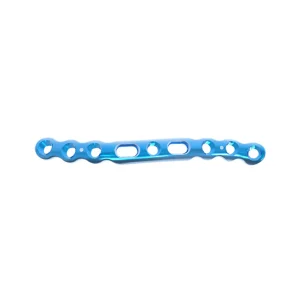
Anteromedial Clavicle Locking Compression Plate
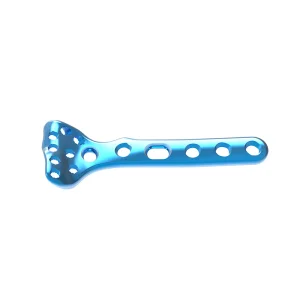
DVR Locking Compression Plate I System
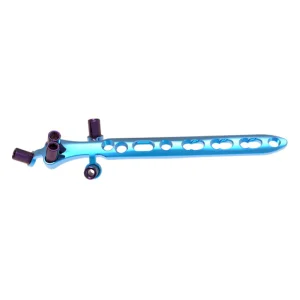
Proximal Ulna ISC Locking Compression Plate I
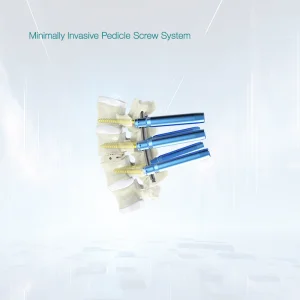
ZATH HE Minimal Invasive Spine Pedicle Screw
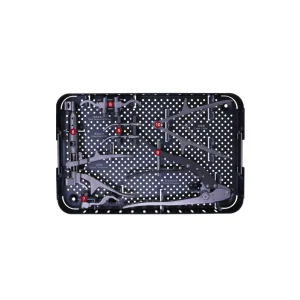
Orthopedic Cable Instrument Set Type II
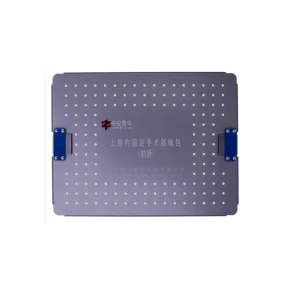
Rib Locking Plate Instrument Set
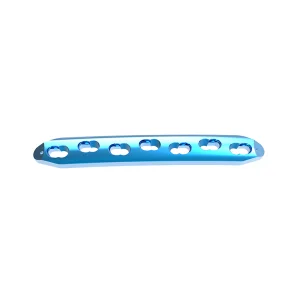
Curved Femoral Shaft Locking Compression Plate
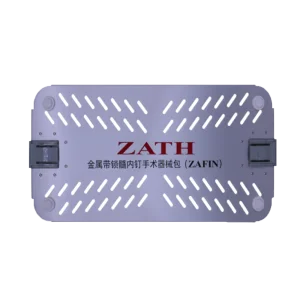
ZAFIN Femoral Nail Surgical Instrument Set
Technical & Procurement FAQ
Frequently Asked Questions on Distal Radius Systems
Key information regarding clinical specifications, bulk quotation mechanisms, and factory certifications.
What metallurgical grade is used in ZATH distal radius locking plates?
Our distal radius plates are machined from medical-grade Ti-6Al-4V ELI (Extra Low Interstitial) conforming strictly to ASTM F136 and ISO 5832-3 standards. This material delivers superior tensile strength (over 860 MPa), higher fatigue tolerance, and optimal elasticity compared to commercially pure titanium or standard surgical stainless steel.
How do you prevent FPL tendon irritation along the watershed line?
The plate is engineered with an ultra-low profile tapered distal lip (0.4mm–0.6mm thickness) that rests strictly proximal to the physiological watershed line. The screw holes allow flush seating of 2.4mm locking and cortex screws without head prominence, effectively preserving the gliding space of the Flexor Pollicis Longus (FPL) tendon and significantly diminishing the clinical incidence of tenosynovitis or rupture.
What is the turnaround time for bulk OEM/ODM quotations and customized labeling?
Technical quotations for standard distal radius plates and instrument configurations are issued within 24 hours. For custom OEM/ODM packaging, laser marking, or plate dimension modifications, our R&D engineering department produces 3D CAD modeling and pilot sample production timelines within 7 to 14 business days, complete with verified regulatory documentation.
Can hospital tenders receive sterile-packed implants with lot-specific barcodes?
Yes. All ZATH orthopedic implants are available in cleanroom double-barrier sterile packaging (Class 10,000 cleanroom) validated to ISO 11607. Packages feature integrated GS1 / 2D DataMatrix barcodes indicating manufacturing batch, expiry date, reference number, and sterilization lot, streamlining hospital traceability and automated inventory management.
What shipping methods and lead times are supported for international distributors?
We provide express air transit via DHL, FedEx, UPS, and TNT, which typically reaches overseas ports and medical distribution hubs within 4 to 6 business days. For container-scale tender orders, scheduled maritime and consolidated airfreight arrangements are handled via our specialized export logistics department in Beijing.