
Featured Trauma & Osteosynthesis Implant Portfolio
Sterile-packaged titanium anatomical plates, cannulated fixators, and matching surgical instrument suites machined for predictable clinical reduction.
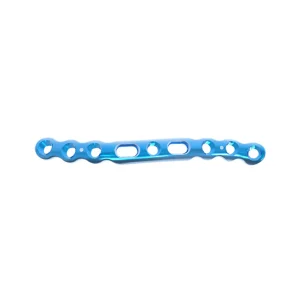
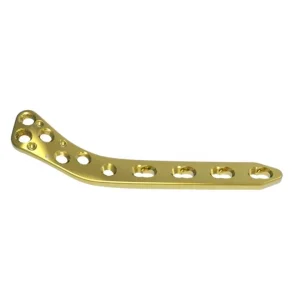
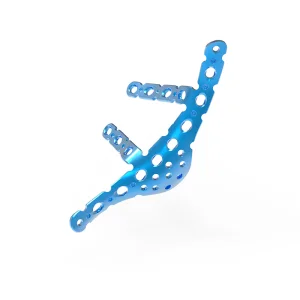
Custom Winged Pelvis Reconstruction Locking Compression Plate Factories, Exporter
View Specifications
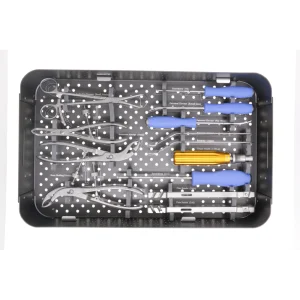
Discount ZATH CE Approved Upper Limb Locking Plate Instrument Set Quotes, Product
View Specifications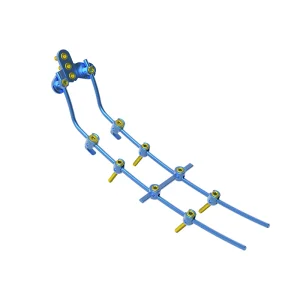
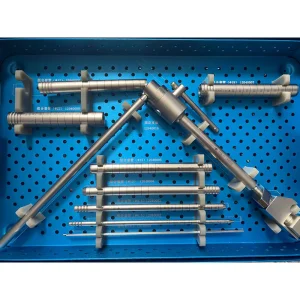
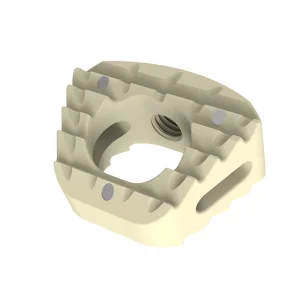
Discount ZATH Brand Cervical Interbody Cage PEEK Cage Factory CE ISO Pricelist, Quotes
View SpecificationsLocking Compression Plating: Engineering Foundations & Periosteal Perfusion
How modern internal fixators eliminate frictional compression against cortical bone, transforming comminuted fracture management and osteoporotic reconstruction.
Fixed-Angle Construct Rigidity
Conventional dynamic compression plates (DCP) rely on frictional force between plate and bone, induced by screw torque. In osteoporotic bone, screw purchase fails rapidly under cyclical shear loading. Locking plates feature threaded screw heads that engage mating internal threads inside the plate hole, creating a rigid angular construct. Axial and rotational stresses are borne across the titanium plate rather than the bone-screw interface, mitigating toggle, screw pull-out, and secondary collapse.
Preservation of Periosteal Vascularity
Direct periosteal strangulation is a primary cause of non-union and delayed callus formation. By functioning as an "internal-external fixator," ZATH locking plates do not need to be pressed tightly against the bone surface. A sub-millimetric biological offset remains intact, preserving the microvascular capillary supply within the periosteum and endosteum. This biological osteosynthesis paradigm accelerates early primary callus remodeling while reducing operative site infection rates.
Hybrid Combi-Hole Geometry
Clinical trauma demands surgical versatility. ZATH combi-holes unite dynamic compression functionality with locking stability in a single aperture. The unthreaded, sloped half accommodates standard cortical or cancellous screws for anatomic reduction through axial compression. The threaded half accepts locking screws for rigid angular neutralization. This dual-modality allows surgeons to alternate dynamically based on bone quality and comminution pattern.
Ti-6Al-4V ELI vs. 316LVM: Biomechanical Benchmarks
Material selection dictates implant fatigue resistance, modulus compatibility with natural cortical bone, and post-operative diagnostic clarity.
| Biomechanical / Material Parameter | Ti-6Al-4V ELI (ASTM F136 / ISO 5832-3) | Medical Stainless Steel (ASTM F138 / ISO 5832-1) | Clinical Performance Advantage |
|---|---|---|---|
| Elastic Modulus (GPa) | ~110 GPa (Closest to Cortical Bone) | ~205 GPa (Rigid Construct) | Titanium reduces stress shielding, stimulating natural cortical remodeling according to Wolff's Law. |
| Tensile Yield Strength (MPa) | ≥ 860 MPa | ≥ 690 MPa | Superior load-bearing endurance under multi-fragmentary trauma and delayed consolidation windows. |
| Fatigue Limit (Cycles @ 10^7) | Superior Endurance under Reverse Bending | Moderate (Prone to Stress Corrosion Cracking) | High resistance to plate breakage during physiological ambulation prior to union. |
| Biocompatibility & Passivation | Inherent TiO2 Anatase Layer; Near-Zero Metal Ion Release | Passivated Chromium Oxide Layer; Nickel Sensitivity Risks | Dramatically lower risk of aseptic loosening, metallosis, or allergic hypersensitivity reactions. |
| MRI / CT Diagnostic Artifact | Minimal Distortion; High-Contrast Visibility | Significant Ferromagnetic Scattering Artifacts | Allows precise post-reduction evaluation of soft tissue, cartilage, and neurovascular structures. |
Type II Anodization Treatment
All ZATH titanium locking plates undergo electrochemical Type II surface anodization. This controlled process thickens the natural titanium dioxide dielectric layer, eliminating micro-fretting corrosion at the plate-screw interface, reducing cold welding, and ensuring predictable hardware removal during elective secondary surgery.
ASTM F382 Static & Dynamic Fatigue
Every production batch undergoes 4-point bending fatigue assessments according to ASTM F382 standards. Implants must withstand 1,000,000 continuous cyclical loading repetitions without crack propagation or plastic deformation, ensuring absolute mechanical reliability in uncooperative or non-compliant patients.
Torx-Driven Stardrive Screw Interface
Eliminating cruciform stripping, ZATH locking screws implement high-precision T-drive (Star/Torx) recesses. This geometry increases surface contact, enabling high insertion torque transfer without cam-out forces. Screws seat securely into the locking hole even when inserted at acute anatomical angulations.
Why Global Healthcare Brands Source From China's High-Tech Hubs
An examination of the Beijing Zhongguancun Science Park manufacturing ecosystem: combining advanced German and Swiss CNC machining with vertically integrated economies of scale.
End-to-End In-House Control
From raw ingot spectral verification and wire-EDM blank extraction to 5-axis CNC contour milling, automated vibratory polishing, and laser marking, ZATH maintains 100% internal ownership. Eliminating secondary subcontractors guarantees zero lot contamination and shortened production cycles.
Rapid Prototype-to-OR Cycle
Where Western OEMs often face 12 to 18-month lead times for modified instrument sets or custom anatomical plate variations, China's agile engineering clusters deliver precision tooling, prototype validation, and initial test lots in under 60 days, providing distributors with unprecedented responsiveness.
30%–50% Total Cost Advantage
By optimizing material yields, leveraging localized precision tooling, and operating automated cleanroom packaging lines, Chinese manufacturers provide high-tier CE-quality trauma systems at a fraction of Tier-1 multinational list prices. This empowers distributors to secure national public tenders and private healthcare network contracts.
Strategic Global Logistics
Partnered with global express carriers (DHL, FedEx, UPS) and major air-cargo networks from Beijing Capital International Airport (PEK), emergency replenish orders arrive within 4 to 6 business days worldwide, supported by complete commercial invoices, packing lists, and certified sterile declarations.
Localized Anatomical Solutions: Head-to-Toe Fixation
Precision pre-contoured plates engineered to mirror regional bony morphology, drastically reducing intraoperative bending time and minimizing soft-tissue irritation.
Clavicular & Upper Shoulder Girdle
Fractures of the midshaft and distal clavicle present complex rotational vectors. The ZATH S-shape anteromedial clavicle plate features a low-profile taper and divergence screw paths, providing superior buttressing against pectoral and sternocleidomastoid muscle deforming forces while protecting subclavicular neurovascular bundles.
Proximal & Distal Tibia Reconstruction
Tibial plateau fractures (Schatzker Type II-VI) require rigid subchondral support. Our proximal lateral tibia plates utilize raft screw arrays that directly reinforce depressed articular fragments. Anatomical head contours prevent iliotibial band friction, while the distal shaft accommodates variable combi-screws for metaphyseal-diaphyseal alignment.
Pelvic & Acetabular Ring Fixation
High-energy polytrauma fractures across the iliopectineal and ilioischial lines demand extreme contour flexibility. The ZATH custom winged pelvic reconstruction plate offers 3D multi-planar malleable segments that maintain fixed-angle locking integrity even after aggressive in-situ anatomical contouring.
Periprosthetic & Femoral Trauma
With the rising incidence of total hip arthroplasty (THA), Vancouver B1 and C periprosthetic fractures require specialized plates that accommodate bicortical screw placement around intramedullary stems. ZATH periprosthetic systems feature integrated cable eyelets and staggered screw trajectories to secure osteoporotic bone without compromising implant cement mantles.
Distal Radius Volar Plating
Volar locking plates have revolutionized Colles and Smith fracture stabilization. Engineered to sit proximal to the watershed line, ZATH distal radius plates feature multi-axial subchondral peg options and smooth chamfered edges, eliminating flexor pollicis longus (FPL) tendon rupture while preserving physiological radial inclination and tilt.
Pediatric & Small Fragment Osteotomy
For delicate metacarpal, metatarsal, and pediatric trauma, mini-locking systems (1.5mm / 2.0mm / 2.4mm / 2.7mm) offer refined profile geometry and self-tapping screw threads that prevent iatrogenic cortical splitting while restoring length, rotation, and articular congruency.
Global OEM/ODM Strategy: From White-Label to Turnkey Commercialization
How international orthopedic distributors and hospital purchasing networks scale their product catalogs with ZATH private-label contract manufacturing.
Private Label Customization
Distributors can customize laser etching with proprietary brand logos, lot numbers, and GS1 DataMatrix barcodes. Anodized color coding (e.g., green for locking, gold for cortex, blue for reconstruction) is configured to match existing hospital system conventions, eliminating clinical confusion in the operating room.
Pre-Sterile Blister Packaging
ZATH supplies implants in ISO Class 7 (Class 10,000) cleanroom validated double-blister Tyvek packaging. Ready-to-use sterile implants eliminate hospital autoclave delays, reduce nosocomial infection risks, and simplify inventory management with 5-year shelf-life validations.
Comprehensive Technical Dossiers (TDF)
Navigating stringent regulatory clearances (such as EU MDR 2017/745, US FDA 510(k), and regional MOH approvals) requires exhaustive documentation. We provide complete technical files: ISO 10993 biocompatibility testing, ASTM F382 mechanical fatigue data, sterilization validation reports (ISO 11135 / ISO 11137), and Clinical Evaluation Reports (CER).
Technological Horizons: Smart Fixation, 3D Additive Mesh & Bio-Coatings
Emerging industry vectors shaping the next generation of fracture management and patient-matched reconstruction devices.
Selective Laser Melting (SLM) Titanium
Additive 3D titanium printing allows the integration of trabecular porous lattice structures (pore sizes 300–500 μm) directly into bone plates. This osteoconductive scaffold encourages bone ingrowth while customizing the plate geometry to patient-specific CT datasets for severe oncology and pelvic reconstruction.
Antimicrobial Surface Functionalization
Implant-associated infection (IAI) remains a catastrophic surgical complication. Emerging plate technologies utilize silver-doped anodization or bioactive zinc-ion surfaces. These contact-killing barriers disrupt bacterial biofilm colonization (e.g., Staphylococcus aureus) without inducing systemic cytotoxicity.
Carbon-PEEK Radiolucent Plates
Carbon-fiber reinforced polyetheretherketone (CFR-PEEK) plates deliver completely artifact-free radiographic imaging. This breakthrough allows oncology teams to accurately assess local tumor recurrence and enables trauma surgeons to confirm intra-articular reduction under intraoperative fluoroscopy without metal glare.
Frequently Asked Technical & Sourcing Questions
Essential clarifications for biomedical distributors, hospital tender committees, and regulatory procurement specialists.
Specialized Spine, Joint & Trauma Systems
Explore our certified spinal internal fixators, intramedullary nails, arthroscopy anchors, and specialized surgical instrument consoles.
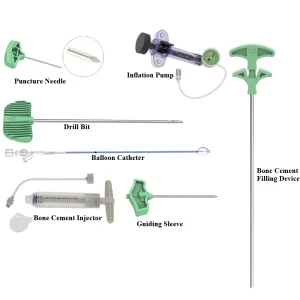
Famous Professional manufacturer PKP layer Vertebroplasty instruments set kit Exporters, Products
View Specifications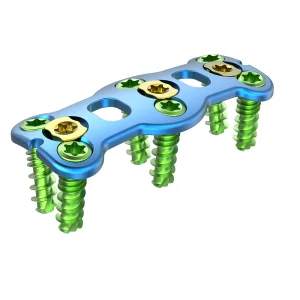
CE Certification High quality Orthopedic Cervical Shielder ACP Plate System Manufacturer, Suppliers
View Specifications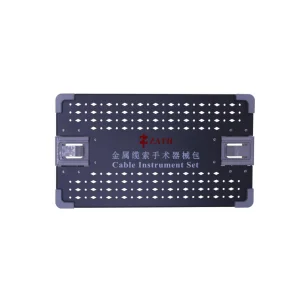
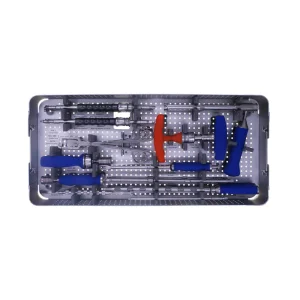
CE Certification Zipper 6.0 System Spinal Internal Fixation System Instrument Exclusive Set Factories, Product
View Specifications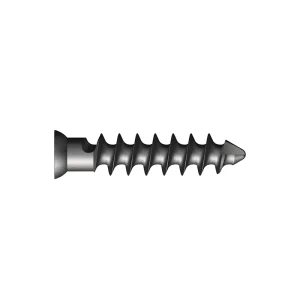
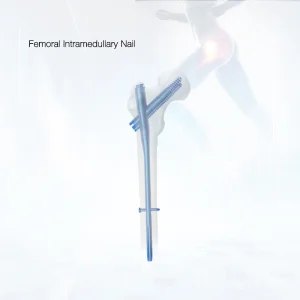
OEM Surgical Hospital Use InterZan Titanium Interlocking Nail for Femur Supplier, Factories
View Specifications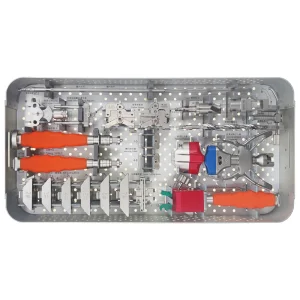
ODM New design quality guaranteed total knee joint instruments Manufacturer, Exporter
View Specifications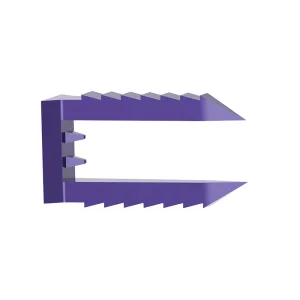
Famous Titanium Alloy Orthopedic Suture Anchor Titanium Manufacturer Companies, Products
View SpecificationsQualify Your Orthopedic Supply Chain Today
Request our comprehensive trauma catalog, complete ISO 13485 audit packages, material mill test certifications, and private-label contract pricing directly from our engineering team.