Precision Reconstructive & Joint Fixation Systems
Engineered to ISO 13485 standards, clinical-grade biocompatible titanium implants providing optimal load distribution and rapid bone consolidation.
Executive Whitepaper: Orthopedic Patella Claw Solutions
A rigorous review of mechanical tension conversion, comminuted fracture management, and modern metallurgy across global healthcare institutions.
Continuous Dynamic Compression
Unlike rigid cerclage wires or conventional Kirschner-wire tension bands that risk progressive loosening and secondary displacement under early quadriceps traction, contemporary shape memory alloy (NiTi) and pre-contoured titanium patellar claws generate sustainable, multidirectional dynamic compressive vectors across inferior and superior poles.
Soft Tissue & Retinacular Protection
Patellar fracture fixation frequently encounters hardware irritation, tendon impingement, and bursal dehiscence. Low-profile claw geometry contours directly to the anterior cortical envelope, eliminating prominent K-wire migration while preserving the longitudinal vascularity of the patellar tendon and suprapatellar expansion.
Comminuted Fracture Multi-Claw Grasp
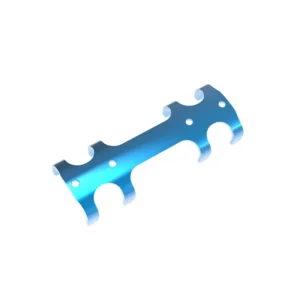
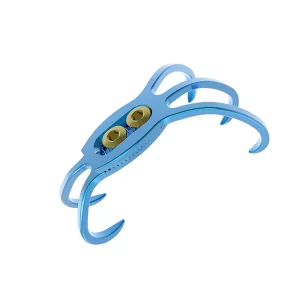
Complex C3-type intra-articular comminution demands anatomical fragment gathering without extensive periosteal devascularization. The multi-tine architecture of Chinese precision-machined patella claws functions as a bone basket, stabilizing peripheral avulsion fragments and reconstructing patellofemoral articular congruency.
Enterprise Procurement Criteria & Macro Industrial Solutions
Addressing the shifting landscape of value-based healthcare, standardized tray procurement, and tender compliance across the EU, APAC, LATAM, and Middle East markets.
Tier-1 CNC Tolerance Control
Global hospital tenders mandate strict dimensional repeatability. Leading Chinese manufacturers utilize Citizen and Star 5-axis Swiss-lathe processing units to guarantee claw claw-tip radius and claw tooth angles within ±0.01 mm, preventing tissue snagging.
Sterile-Packed Single Kits
Hospitals are transitioning rapidly away from bulk autoclaving toward pre-sterilized, barcode-tracked blister packaging. ISO Class 7 cleanroom sealing ensures minimum 5-year shelf life under validated ethylene oxide (EO) or gamma radiation sterilization protocols.
Value-Based Tender Economics
Reimbursement caps by national healthcare systems (DRG/DIP models) necessitate cost containment without compromising surgical outcomes. China’s vertically integrated implant manufacturing lowers per-unit acquisition cost by 35%–55% compared to Western multinationals.
Comprehensive Instrument Ergonomics
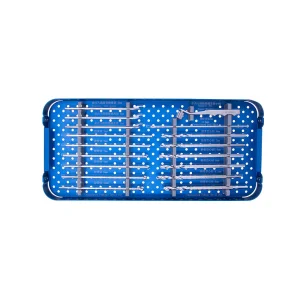
Patella claw deployment relies on dedicated shapers, ice-water bath containers for NiTi thermal transition, and claw clamp expanders. Chinese manufacturing hubs bundle fully modular, autoclave-resistant surgical tool sets tailored to OR workflow efficiency.
| Fixation Modality | Biomechanics & Load Holding | Surgical Disruption | Early Post-Op Knee Mobilization | Complication & Revision Profile |
|---|---|---|---|---|
| NiTi Shape Memory Patella Claw | Continuous temperature-activated axial compression; distributes load across whole anterior cortex. | Minimal periosteal stripping; percutaneous insertion compatible with fluoroscopic guidance. | Immediate active extension and passive flexion allowed from Post-Op Day 2. | Low Risk (<2%) Hardware skin impingement rare due to anatomical contour. |
| Titanium Variable-Angle Patella Plate | Multi-directional screw purchase; excellent holding power in osteoporotic bone. | Requires broad anterior exposure; meticulous plate pre-bending or patient-specific fitting. | Controlled mobilization starting at 1–2 weeks depending on fragment solidity. | Moderate (5–8%) Soft-tissue prominence occasionally reported over thin subcutis. |
| Modified Tension Band (TBW / K-Wires) | Converts tensile bending into articular compression; susceptible to wire slippage under cyclic flexion. | High local irritation; sharp pin ends prone to backing out into prepatellar bursae. | Delayed rehabilitation often required to prevent early hardware detachment. | High (25–40%) High secondary surgery rate for symptomatic wire removal. |
Engineering Roadmap: The Next Decade of Patellar Reconstruction
Strategic integration of additive manufacturing, surface bio-functionalization, and intelligent smart implants across leading Chinese device innovators.
3D Printed Patient-Specific Anatomical Cages
By leveraging preoperative high-resolution CT segmentation and selective laser melting (SLM), Chinese research centers are prototyping patient-matched patellar meshes. These integrate trabecular porosity (600–800 μm) promoting deep osteointegration in complex revision patellar reconstruction and nonunion salvage.
Bioactive Micro-Arc Oxidation (MAO) Coatings
Standard titanium surfaces are increasingly modified via micro-arc oxidation, incorporating calcium, phosphate, and zinc ions onto the alloy substrate. This technological advancement generates an osteoinductive surface layer while exerting antimicrobial properties against common nosocomial pathogens like MRSA and Staphylococcus epidermidis.
Degradable Magnesium-Zinc Hybrid Alloys
Eliminating the concept of permanent metallic foreign bodies, upcoming Chinese trauma pipelines focus on bioresorbable magnesium-based claws. These systems provide full biomechanical stability for 12–16 weeks before slowly degrading into non-toxic physiological metabolites, completely abolishing secondary removal surgeries.
Global Regulatory Framework & OEM/ODM Assurance
Facilitating seamless market clearance through comprehensive Technical Documentation (MDR Annex II/III), ISO 13485 QMS certification, and multi-market registration dossiers.
MDR (EU 2017/745) Ready Dossiers
We provide global B2B distribution partners with end-to-end regulatory documentation packages: Clinical Evaluation Reports (CER), Risk Management Files per ISO 14971, Biocompatibility validations according to ISO 10993 series (cytotoxicity, sensitization, systemic toxicity), and shelf-life aging tests.
Full Lot Traceability with Laser UDI
Every single patella claw and surgical tool undergoes fiber-laser direct part marking (DPM). High-density DataMatrix codes embed Unique Device Identification (UDI), lot numbers, manufacture timestamps, and material origin tracking back to mill certs for complete clinical transparency.
Flexible OEM/ODM & Private Labeling
From customized claw claw-angle geometry and multi-point sizing (S, M, L, XL configurations) to tailored surgical graphics and personalized blister tray labeling in English, Spanish, Russian, or Arabic, our production lines accommodate bespoke national health requirements.
Frequently Asked Questions by Hospital Buyers & Distributors
Key technical, mechanical, logistical, and clinical answers compiled by our senior orthopedic engineering team.
How does a NiTi Shape Memory Alloy Patella Claw achieve automatic compression during surgical placement?
What clinical indications favor patella claws over traditional anterior tension band wiring?
What certifications and testing reports accompany bulk export shipments from China?
What is the standard production lead time and minimum order quantity (MOQ) for OEM/ODM private branding?
Can matching surgical instruments be supplied in comprehensive modular sterilization trays?
Orthopedic Trauma, Spine & Patellar Solutions
Explore comprehensive orthopedic implant systems, anatomical locking plates, specialized claw configurations, and reconstructive anchors.