
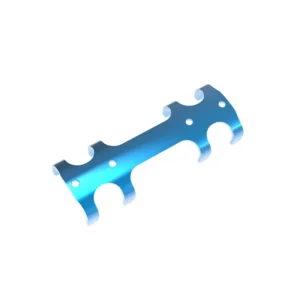
Featured Surgical Solutions
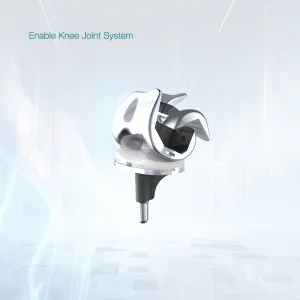
Clinical Precision: Trauma & Arthroplasty Catalog (Part I)
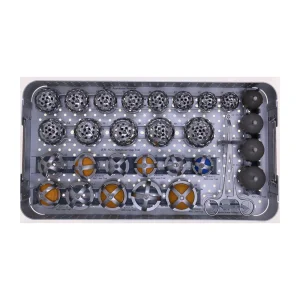
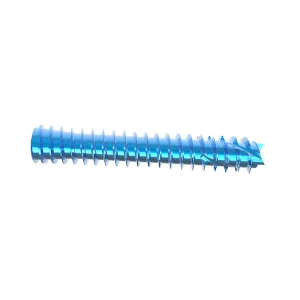
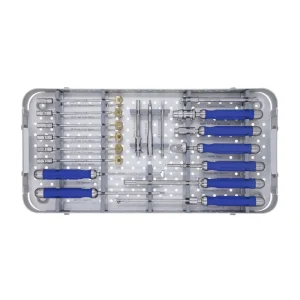
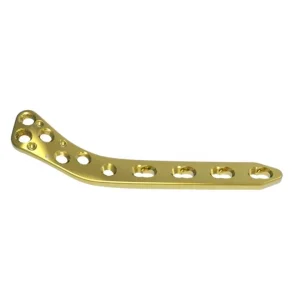
Engineered to rigorous biomechanical tolerances from certified medical-grade titanium (Ti-6Al-4V ELI) and implantable stainless steel. Direct quote pipelines and rapid production turnaround for hospital distributors.
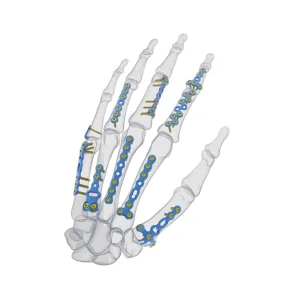
Executive Sourcing Guide
Strategic Procurement Dynamics: China Tibial Interlocking Market
Analyzing clinical efficacy, multi-planar distal fixation, metallurgic specifications, and the micro-economics of securing OEM/ODM orthopedic instrument quotes from verified Chinese manufacturers.
Biomechanical Geometry & Herzog Bend
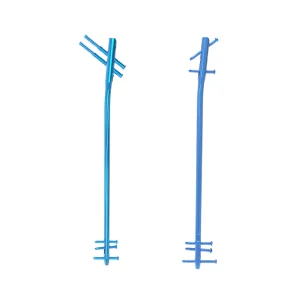
The tibial interlocking intramedullary nail represents the apex standard for managing diaphyseal, proximal, and distal tibial fractures (AO/OTA Type 42 and select 41/43 patterns). Sourcing from top-tier Chinese manufacturers guarantees exact replication of the Herzog curve (typically 10.5° proximal bend initiated 55mm to 65mm from the nail apex).
- Anatomic Canal Alignment: Avoids posterior cortex penetration and optimizes anterior insertion trajectories.
- Cannulation Tolerances: Strict concentric reaming inner diameters (Ø3.5mm to Ø4.5mm) accepting up to 3.2mm ball-tipped guide wires without binding.
- Load Transmission: Stress dispersal along the tibial mechanical axis prevents hardware stress risers and premature locking screw breakage.
Cost Drivers in Tibial Nail Quotes
Orthopedic procurement directors analyzing quotation sheets from Chinese manufacturers must decode the interplay between raw material grade, multi-axis machining cycle times, and quality validation dossiers. Pricing per unit fluctuates substantially across four fundamental manufacturing parameters:
- Material Lineage: Medical-grade Ti-6Al-4V ELI (ASTM F136 / ISO 5832-3) commanding higher pricing over Stainless Steel 316LVM (ASTM F138).
- Distal Targeting Radiotranslucency: High-end instrument kits integrate premium Toray® carbon-fiber targeting arms versus all-stainless assemblies.
- Surface Passivation & Anodization: Type II anodization for enhanced fatigue wear and reduced cold-welding between screws and nail holes.
Vendor Qualification & Verification
Navigating Chinese medical device clusters (Zhongguancun Beijing, Changzhou Medical Valley, and Suzhou Industrial Park) requires an E-E-A-T-based vetting protocol. Distributors must prioritize companies possessing both National Medical Products Administration (NMPA) Class III registration and international validations.
- Sterility Validation: Verification of ISO 11607 compliant ethylene oxide (EtO) or Gamma sterilization protocols.
- Traceability Dossiers: Raw mill bar certifications linked via laser etching directly to individual lot serialization numbers.
- Instrument Set Durability: Autoclave fatigue validation exceeding 500 steam sterilization cycles without dimensional drift.
Technical Tender Analysis
Global B2B Tibial Interlocking Sourcing Specifications
A reference procurement matrix detailing technical parameters, instrument components, and factory cost drivers for tier-1 orthopedic supply chains.
| Evaluation Parameter | Standard Commercial Grade | Tier-1 Premium Export Grade (e.g. ZATH) | Procurement & Clinical Impact |
|---|---|---|---|
| Raw Material Origin & Standard | Domestic Medical Titanium (GB/T 13810) | Certified Vacuum Arc Remelted Ti-6Al-4V ELI (ASTM F136 / ISO 5832-3) | Eliminates micro-inclusion fracture risks; optimizes cyclical axial-torsional fatigue endurance beyond 5 million cycles. |
| Nail Geometry & Dynamic Options | Unreamed / Reamed, 2 Proximal / 2 Distal standard holes | Multi-planar: 3 Proximal (including transverse/oblique) + 4 Distal multi-directional holes + Dynamic compression slot | Provides absolute rigid fixation in highly unstable sub-trochanteric, proximal third, and supramalleolar fractures. |
| Targeting Arm Material | Anodized Aluminum Alloy or 304 Stainless Steel | Medical Carbon-Fiber PEEK composite with zero radio-opacity | Ensures unobstructed intraoperative C-arm fluoroscopy; zero artifact obscuration during distal transverse locking screw placement. |
| Cannulated Reamer Metallurgy | Standard High-Carbon Surgical Steel | Custom 17-4PH / Custom 455 Precipitation Hardened Stainless | Retains razor flute sharpness over repeated reamings; eliminates thermal bone necrosis caused by dull cutting edges. |
| Targeting Alignment Tolerance | ±0.35 mm axial offset | ±0.05 mm over a 400 mm span via Swiss-type turning centers | Prevents drill-bit deflection and "missed-nail" cortical perforations during percutaneous distal locking. |
| Sterile Packaging Architecture | Non-sterile bulk packaging with PE bag | Class 10,000 cleanroom Tyvek® double-blister sterile packaging | Instant shelf availability; eliminates hospital central sterile reprocessing bottlenecks and minimizes surgical site infection vectors. |
Surgical Solutions & Ergonomics
Engineering Overhauls in Modern Tibial Instrument Sets
Addressing real-world operating room failures: missed distal locking, iatrogenic anterior cortical comminution, and long surgical turnover times.
Suprapatellar vs. Infrapatellar Instrumentation
Modern clinical pathways increasingly favor suprapatellar semi-extended nailing over traditional infrapatellar approaches. Why? Infrapatellar hyperflexion introduces deforming forces on proximal third fractures. In response, Chinese manufacturers have re-engineered instrument sets:
- Long Extended Cannulas: High-density polymer outer sleeves protect the trochlear groove cartilage during reaming and insertion.
- Extended Guide Wire Grippers: Enable surgeons to manipulate fracture reduction without fighting the quadriceps mechanism tension.
- Reduced C-Arm Radiation Time: Semi-extended positioning simplifies direct AP and lateral fluoroscopy without leg repositioning.
Eliminating Distal Freehand "Hunt & Peck"
The freehand "perfect circles" technique for placing distal interlocking screws accounts for up to 45% of total operative fluoroscopy exposure and frequent operative delays. Chinese trauma R&D hubs have pioneered mechanical and electromagnetic countermeasures:
- Rigid Distal Outrigger Portals: Deflection-compensated carbon outriggers calibrated precisely for nail lengths between 280mm and 420mm.
- Color-Coded Depth Calibrated Sleeves: Drill sleeves with micro-stop collars preventing posterior neurovascular bundle penetration.
- Self-Centering Trocar Tips: Diamond-point bone center-punches that stop cortical slippage on smooth tibial anterior/medial surfaces.
Ergonomic Modular Instrumentation Trays
Operating room turnover efficiency relies heavily on instrument tray architecture. Leading exporters now deliver two-level autoclavable anodized aluminum trays that map directly to the surgical procedure timeline:
- Intuitive Step Layout: Level 1 houses entry awls, universal ball-joint extraction t-handles, and graduated flexible reamers.
- Level 2 Dedicated Fasteners: Houses radiolucent proximal aiming arches, tissue protection sleeves, trocar assemblies, and torque limiters.
- Silicone Shock-Dampening Brackets: Medical-grade molded silicone inserts withstand thermal autoclave cycling without degrading or vibrating loose.
Industrial Clusters & Economics
Global Sourcing Comparison: China vs. Traditional Manufacturing Hubs
A rigorous macroeconomic assessment comparing manufacturing ecosystems, supply chain integration, cost efficiency, and lead times across the international orthopedic device sector.
China (Beijing / Changzhou / Jiangsu)
The global leader in high-volume, precision CNC orthopedic implants. Complete vertical supply integration from domestic titanium raw stock processing to finished sterile-barrier device manufacturing.
- Cost Advantage: 40% to 65% direct cost reduction compared to European/US counterparts for equivalent Ti-6Al-4V ELI quality.
- Capacity & Agility: Rapid prototyping turnarounds within 10 business days; extensive automated 5-axis Citizen and DMG MORI production lines.
- Scalability: Unmatched capacity to service nationwide centralized government tenders and multi-container global distributor contracts.
Tuttlingen, Germany
The historical global center of manual surgical craftsmanship. Celebrated for high-precision manual finishing, premium forged surgical hand instruments, and pioneering medical stainless-steel metallurgy.
- Strengths: Peerless tactile response in custom retractors, bone rongeurs, osteotomes, and specialized manual bone instrumentation.
- Challenges: Skyrocketing energy costs, labor scarcity, and significantly higher minimum order quantity hurdles.
- Procurement Reality: High per-set costs limit widespread public health tender competitiveness in emerging and cost-conscious markets.
Warsaw, Indiana, USA
The established capital of joint arthroplasty innovation, housing the multi-billion-dollar headquarters of major multinational orthopedic corporations.
- Strengths: Cutting-edge additive manufacturing patents, custom trabecular coatings, and massive clinical trial registries.
- Challenges: Extreme cost structures influenced by domestic tort environments, massive administrative overhead, and lengthy OEM lead times.
- Procurement Reality: High-margin products designed primarily for domestic reimbursement environments, creating procurement barriers for international mid-tier hospital networks.
Future Horizons 2025–2035
Engineering Roadmap: Next-Gen Intramedullary Tibial Systems
The evolutionary trajectory of fracture fixation technologies transitioning from static mechanical splints to bio-active, smart-sensory, and robotic-compatible surgical platforms.
Phase 1: Present Core
Multi-Planar Dynamization
Micro-machined slotted geometries enabling controlled axial micro-motion while maintaining rotational rigidity. Accelerated callus formation via physiological weight-bearing dynamization without screw removal.
Phase 2: Additive Trabecular
3D EBM Porous Interfaces
Electron Beam Melting (EBM) titanium surface architectures at proximal metaphyseal contact zones. Engineered 600μm interconnected pore structures stimulate rapid bony osseointegration and biological fixation.
Phase 3: Sensor Integration
Telemetry Union Nails
Embedded micro-strain gauge arrays and passive NFC sensor transponders inside the nail cannulation. Enables non-invasive, objective telemetry monitoring of bone fracture union and internal load transfer curves.
Phase 4: Resorbable Hybrids
Bio-Absorbable Fasteners
High-purity magnesium-alloy (Mg-Zn-Ca) distal locking screws designed to resorb safely after complete fracture consolidation, eliminating secondary surgeries for symptomatic anterior ankle impingement hardware removal.
Complete Orthopedic Suite
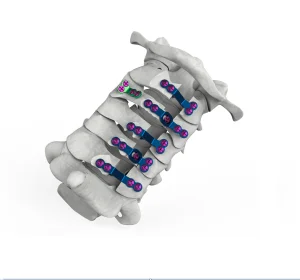
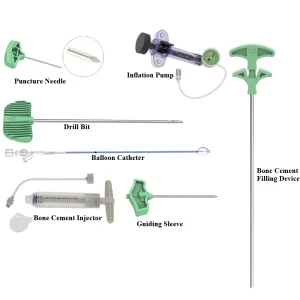
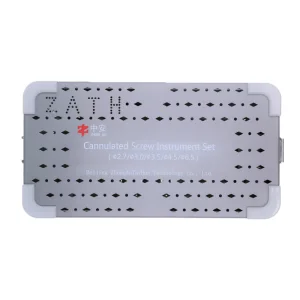
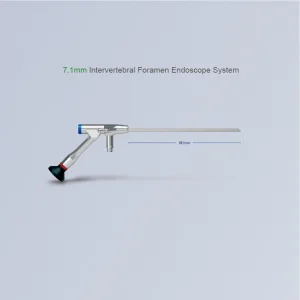
Clinical Precision: Spine, Trauma & Endoscopy Solutions (Part II)
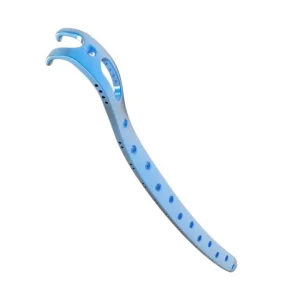
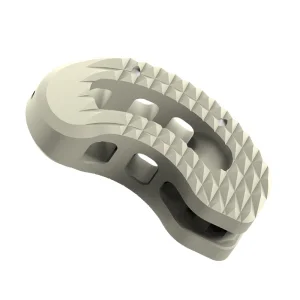
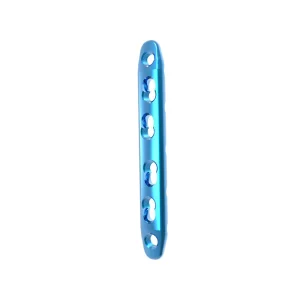
Complementing tibial nailing systems with our comprehensive spinal cages, reconstructive bone plates, minimally invasive endoscopic platforms, and precision surgical kit instrumentation.

Regulatory Assurance
Global Medical Device Compliance & Distributor Empowerment
Distributors cannot risk border detentions or healthcare tender disqualification. Sourcing from certified Chinese manufacturers provides comprehensive technical documentation and regulatory backing.
ISO 13485:2016 Certified Quality Management
Manufacturing facilities operate under audited ISO 13485:2016 management standards. Every single production batch undergoes rigid 100% optical coordinate measuring machine (CMM) dimensional verification before packaging:
- Zero Contamination Protocols: Cleanrooms certified to ISO Class 7 and Class 8 (Fed Std 209E Class 10,000 / 100,000) for sterile device packing.
- Bio-Burden Validation: Routine microbial limit testing and endotoxin testing per ISO 11737-1 guidelines.
- Full Lot Serialization: Barcode/DataMatrix direct-part marking ensuring complete traceability from raw billet melt to sterile pouch opening.
International Regulatory Dossier Support
Entering regional healthcare markets (such as COFEPRIS in Mexico, ANVISA in Brazil, SFDA in Saudi Arabia, or EU MDR 2017/745 Class IIb compliance) demands comprehensive documentation dossiers. Leading Chinese manufacturers provide:
- Full Technical Files (STED): Design dossiers, surgical risk analysis (ISO 14971), and biocompatibility summaries (ISO 10993).
- Free Sale Certificates (FSC): Official documentation certified by the China Chamber of Commerce for Import & Export of Medicines & Health Products (CCCMHPIE).
- Biomechanical Testing Reports: Dynamic four-point bending and fatigue characterization compliant with ASTM F1264 protocols.
OEM / ODM White-Labeling Services
Distributors wishing to build regional brand equity can leverage mature OEM/ODM white-labeling ecosystems. Experienced design engineers collaborate directly with your clinical advisory board to tailor device systems:
- Custom Laser Branding: High-resolution fiber-laser engraving of distributor logos, catalog codes, and customized lot matrices.
- Bespoke Anodic Color Schemes: Unique anodized titanium color coding (gold, blue, magenta, green) for fast screw diameter recognition.
- Tailored Surgical Tray Layouts: Instrument trays engineered to match regional surgical preference protocols and autoclave chamber dimensions.
ISO 13485:2016 Certified
ASTM F136 ELI Titanium
UDEM Quality Verified
Class III NMPA Manufacturing
Express 4-6 Days Global Transit
Procurement Intelligence
Frequently Asked Questions: Tibial Nailing & OEM Supply
In-depth technical, clinical, and commercial answers for orthopedic distributors, hospital procurement teams, and biomedical supply directors.
What is the fundamental clinical difference between Expert Tibial Nails (ETN) and standard Tibial Interlocking Nails?
The standard classical tibial interlocking nail (developed under earlier AO guidelines) featured two proximal transverse locking holes and two distal coronal locking holes, primarily addressing mid-diaphyseal fractures (AO 42). However, in fractures occurring within 5cm of the knee joint or 5cm of the ankle plafond (AO 41 and 43), standard nails failed to prevent angular deformity due to lack of multi-planar purchase.
The modern Expert Tibial Nail (ETN) architecture features multi-planar proximal locking (one oblique, two mediolateral, and one anteroposterior option) and up to four distal multi-directional locking holes situated extremely close to the nail tip (as close as 5mm from the distal apex). Furthermore, ETN designs feature an elongated dynamic slot that permits up to 7mm of controlled dynamization while restricting rotational shift. When sourcing from Chinese manufacturers, specifying "Expert-Type Tibial Nail System" ensures your catalog offers this modern periarticular fixation capacity.
What metallurgical grade is optimal for tibial interlocking systems: Ti-6Al-4V ELI vs. 316LVM Stainless Steel?
Medical titanium alloy Ti-6Al-4V ELI (Extra Low Interstitial, complying with ASTM F136 and ISO 5832-3) is overwhelmingly preferred in modern trauma markets. Titanium offers an elastic modulus (approximately 110 GPa) much closer to human cortical bone (18-20 GPa) compared to 316LVM stainless steel (approx. 200 GPa). This modulus parity reduces "stress shielding," accelerates periosteal bone bridging, and minimizes screw failure.
Moreover, titanium exhibits superior biocompatibility, low soft-tissue adherence, and negligible ferromagnetic interference during postoperative Magnetic Resonance Imaging (MRI). 316LVM stainless steel remains a viable, budget-conscious alternative for high-volume tender programs where price per unit is paramount, but tier-1 distributors increasingly specify titanium systems for their flagship trauma lines.
How do Chinese manufacturers guarantee distal targeting accuracy over long-nail geometries?
Distal targeting misalignment occurs when the nail flexes slightly upon entering the bowed medullary canal, or when mechanical manufacturing tolerances in the targeting jig accumulate over a 380mm+ cantilever arm. High-end Chinese manufacturers address this using three mechanical countermeasures:
1. Pre-Calibrated Carbon-PEEK Outriggers: High-modulus carbon-fiber outriggers are machined with a pre-set compensation angle that accounts for standard nail deflection under anatomical insertion force.
2. Optical CMM Jig Matching: Every surgical instrument set is matched to nail batches using automated Coordinate Measuring Machines (CMM) ensuring the drill sleeve axis coincides with the nail hole within ±0.05mm.
3. Rigid Keyed Interlocks: The proximal connection bolt between the insertion handle and the nail features double-splined, anti-rotation locating pins that eliminate torsional rotational looseness during mallet impaction.
What is the typical Minimum Order Quantity (MOQ) and delivery lead time for OEM custom-labeled kits?
For standard catalog configurations without private-label branding, Chinese manufacturers typically maintain standing inventories, allowing immediate dispatch within 3 to 5 business days via express carriers (DHL, FedEx, UPS). Express air freight to most destinations arrives within 4 to 6 business days.
For full OEM/ODM programs featuring customized laser engraving, bespoke packaging boxes, language-specific instructions for use (IFU), and custom anodization, typical MOQs range from 50 to 100 sets per implant specification, or 5 to 10 full instrument set containers. Lead times for initial OEM tooling, laser setup, and packaging artwork validation generally run 4 to 6 weeks, with re-orders cycling in under 3 weeks.
Can Chinese manufacturers provide sterile-packaged intramedullary nails, and what is the shelf life?
Yes. Premium manufacturers such as ZATH maintain on-site Class 10,000 (ISO Class 7) cleanroom facilities. Products are packaged using genuine DuPont™ Tyvek® heat-sealed blister shells designed to withstand atmospheric pressure variations during air transport.
Sterilization is conducted via validated Ethylene Oxide (EtO) or Gamma irradiation cycles according to ISO 11135 and ISO 11137 standards. Accelerated and real-time aging validation tests confirm a sterile barrier shelf life of 3 to 5 years from the manufacturing date, allowing hospitals and distributors to hold inventory securely without re-sterilization overhead.
What documentation is required to clear customs and register these devices with regional health ministries?
For customs clearance under Harmonized System Code (HS) 9021.10 (Orthopedic appliances, splints, and fracture devices), shipments require an itemized Commercial Invoice, detailed Packing List with lot and serial breakdown, Air Waybill, and a Certificate of Origin (CO). Where bilateral trade agreements exist (e.g., FORM E, FORM A), preferential tariff duty rates apply.
For health ministry product registration (e.g., COFEPRIS, ANVISA, SFDA, MoH), the manufacturer provides an authenticated Free Sale Certificate (FSC) legalized via Apostille or local embassy consular legalization, ISO 13485:2016 certificate, biocompatibility reports (ISO 10993), clinical evaluation summaries, and risk analysis dossiers (ISO 14971).
How do surgeons handle proximal or distal tibia bone shaft non-union using interlocking nails?
In cases of delayed union or hypertrophic non-union, the design of the tibial nail allows for intraoperative "dynamization." The surgeon removes the static locking screw, leaving the screw placed in the dynamic elongated compression slot. This transfers physiological axial loading forces directly across the fracture gap during walking (Wolff's Law), stimulating osteoblastic activity and robust bridging callus formation without compromising rotational stability.
In cases of oligotrophic non-union, the existing nail can be extracted via the instrument set's universal reverse mallet puller, the medullary canal reamed aggressively by an additional 1.5mm to 2mm to stimulate endosteal vascular flow, and an exchange nail of larger diameter inserted with supplemental autologous bone graft.