Clinical Implant Portfolio & Engineered Systems
Explore our certified orthopedic solutions engineered for trauma reconstruction, joint stability, and soft-tissue anchors, rigorously machined to micron tolerances under certified cleanroom controls.
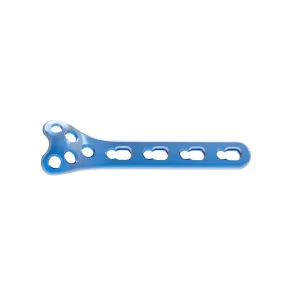
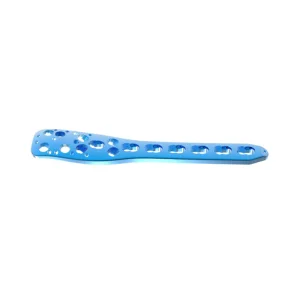
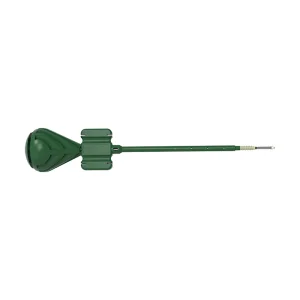
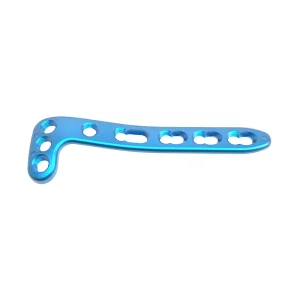
Engineering Evolution of Patella Fracture Fixation: From K-Wires to Multi-Claw Locking Systems
Patellar fractures represent approximately 1% of all skeletal injuries, yet their clinical management carries disproportionate surgical complexity. Positioned as the critical fulcrum within the knee extensor mechanism, the patella is subjected to severe tensile, bending, and shear forces exceeding 3,000 Newtons during deep knee flexion. As healthcare systems advance, surgeons and international procurement executives are actively migrating away from traditional Modified Tension Band Wiring (MTBW) using Kirschner wires toward anatomically contoured Patella Claw Plates (PCP) and shape-memory multi-claw fixation matrices.
Historical tension band constructs with stainless steel cerclage wires have documented clinical failure and hardware complication rates ranging from 22% to as high as 52%. Secondary surgical interventions triggered by prominent wire migration, painful subcutaneous impingement, loss of articular reduction, and skin necrosis not only impair functional knee outcomes but impose severe financial friction on national health networks. The demand for qualified China patella claw plate suppliers and manufacturers has surged globally because industrialized precision manufacturing offers anatomically sculpted, low-profile multi-claw plates that preserve soft tissue, grip comminuted poles, and distribute tension uniformly across the patellar dome.
Clinical Performance Insight: Biomechanical cadaveric and finite element analysis (FEA) demonstrate that multi-claw patella claw plate configurations reduce interfragmentary displacement under cyclic dynamic loading (0–500 N at 1 Hz for 10,000 cycles) by up to 68% compared to standard tension band wires, yielding superior construct stiffness while eliminating intraoperative wire protrusion.
Global Enterprise Procurement Requirements for Patella Claw Plates
Global orthopedic distributors, regional tenders, and corporate surgical group purchasing organizations (GPOs) evaluate patella fixation systems across demanding metallurgical, clinical, and logistical criteria.
Medical Metallurgy & Material Integrity
Implant suppliers must guarantee verified medical-grade Titanium Alloy (Ti-6Al-4V ELI conforms to ASTM F136 / ISO 5832-3) or Shape Memory Nitinol (Ni-Ti conforms to ASTM F2063). Traceable raw material melt certs and spectrographic validation ensure absolute biocompatibility, optimal modulus of elasticity, and zero toxic ion leaching in long-term human implantation.
Modular Sizing & Anatomical Fidelity
Global multi-center procurement requires tiered sizing configurations (Small, Medium, Large, and Extra-Large 5-claw or 6-claw configurations). Designs must respect the anterior patellar convexity and accommodate variable superior/inferior pole comminution without intraoperative contouring that could compromise metal fatigue life.
Sterility Assurance & Double-Blister Packaging
Implant products must be supplied with ISO 11137-compliant Gamma or ETO sterilization validations. Dual sterile-barrier tyvek packaging eliminates the risk of pre-operative hospital contamination, ensures immediate shelf availability in trauma bays, and provides a guaranteed 5-year shelf-life stability.
Clinical Solutions: Comparing Patellar Fixation Systems Under High Mechanical Strain
Comprehensive comparative data illustrating why international orthopedic surgical departments increasingly select patented multi-claw fixation over legacy methods.
| Evaluation Parameter | Modified Tension Band Wiring (MTBW) | Anatomical Titanium Claw Plate | Temperature-Dependent Shape Memory Claw |
|---|---|---|---|
| Primary Mechanical Mechanism | Cerclage wire conversion of tension to dynamic compression | Multi-vector claw grasp + rigid variable-angle locking screws | Continuous thermal continuous recovery force (Ni-Ti memory) |
| Comminuted Pole Fixation (AO/OTA 34-C3) | Extremely poor (wire slippage, fragment fragmentation) | Superior (multi-claw multi-planar encapsulation) | Superior (sustained micro-compressive hugging) |
| Prepatellar Soft-Tissue Irritation | Severe (up to 52% incidence of skin tenting & bursitis) | Negligible (< 2.0 mm ultra-low rounded profile edges) | Minimal (< 1.6 mm smooth seamless anatomical architecture) |
| Mean Yield Tensile Strength | 750 N – 1,100 N before catastrophic wire elongation | 2,800 N – 3,400 N robust cyclic yield threshold | 2,500 N – 3,100 N sustained elastic recovery limit |
| Time to Mobilization & Rehabilitation | Delayed (4–6 weeks immobilization often required) | Immediate to early active knee flexion (Post-op Day 2–3) | Immediate to early functional physical rehabilitation |
| Average Surgical Operative Time | 65 – 90 minutes (tedious wire looping and twisting) | 35 – 50 minutes (guided claw placement & locking insertion) | 30 – 45 minutes (ice-bath expansion, rapid body heat seating) |
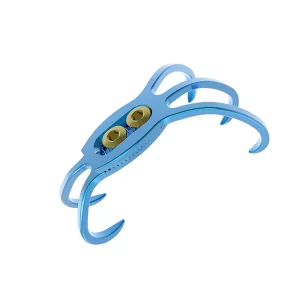
As demonstrated in clinical trials, the fundamental biomechanical dilemma of the patella is its dual requirement: providing absolute anatomical articular congruence on the retropatellar cartilage surface while counteracting the immense pulling vectors generated by the quadriceps tendon superiorly and patellar ligament inferiorly. Traditional K-wires penetrate longitudinally, often fracturing thin anterior cortical fragments. In contrast, our engineered claw plate constructs bridge the peripheral circumferential envelope, using curved claw prongs to grasp the non-articular borders and anchoring into strong subchondral bone without violating the knee joint capsule.
Technical Roadmap & Future Outlook: Next-Generation Patellar Technologies
The convergence of advanced additive manufacturing, bio-functional surface engineering, and intelligent materials is reshaping the future landscape of patellofemoral reconstruction.
Patient-Specific 3D Additive Electron Beam Melting (EBM)
While standardized modular S/M/L claw plates resolve over 92% of acute fractures, severe osteoporotic blowout comminutions and revisions with massive bone loss demand custom geometry. Our technical roadmap incorporates CT-driven 3D-printed titanium trabecular claw plates. These incorporate porous lattice scaffolds (65% porosity, 300–500 µm pore size) that stimulate rapid osteointegration directly through the implant body.
Dual-Phase Smart Shape-Memory Nitinol Deployment
Innovations in thermomechanical martensitic-to-austenitic phase transformation alloys enable claw claws to maintain continuous compressive pre-stresses across variable ambient temperatures. Cooled in sterile 0–4°C saline, claws soften for smooth anatomical wrapping. Upon contacting physiological body temperature (37°C), the matrix springs into shape, generating continuous 15–20 N interfragmentary compressive forces.
Antibacterial & Osteoinductive Surface Functionalization
Addressing surgical site infections in subcutaneous environments like the anterior knee, future iterations combine micro-arc oxidation (MAO) and electrochemical deposition of zinc-doped hydroxyapatite and silver nanoparticles. These active nanostructured layers eradicate MRSA/Staphylococcus biofilm formation while promoting high-affinity osteoblast attachment.
Global Commercial & Industrial Status: China’s Role in Orthopedic Supply Security
Strategic analysis of cost dynamics, supply resilience, multi-axis machining infrastructure, and scalable manufacturing in Beijing's Zhongguancun Science Park.
The international orthopedic implant market is navigating intense healthcare cost scrutiny, characterized by centralized public procurement programs, European Medical Device Regulation (MDR) rationalization, and US DRG reimbursement caps. In this environment, relying solely on high-margin Western multinational brands creates unsustainable budgetary deficits for hospital systems and independent national distributors. China has transitioned from an early-stage subcontracting base into a global center of high-tier biomechanical innovation and medical supply reliability.
Operating since 2009 in Beijing's Zhongguancun Science and Technology Park, Beijing ZhongAnTaiHua Technology Co., Ltd. (ZATH) anchors this transformation. Supported by a facility of over 300 skilled employees and roughly 100 dedicated technical specialists, ZATH integrates the entire value chain in-house: from 5-axis CNC machining centers (DMG Mori and Citizen Swiss-type lathes) and precision wire electrical discharge machining (EDM) to cleanroom sonic decontamination, optical CMM coordinate verification, and Class 100,000 sterile blister packaging.
Cost Rationalization & Commercial Margins
By bypassing third-party supply intermediaries and executing end-to-end manufacturing, our factory direct supply models allow global partners to realize 40% to 60% procurement cost reductions without sacrificing metallurgical quality or clinical efficacy.
Agile OEM & ODM Customization
We provide full private-label capabilities for overseas brands, including laser marking, specialized anodization color coding (gold, blue, magenta), tailored modular container systems, and rapid custom tooling designed to match local surgeon technique preferences.
Express Global Fulfillment Protocols
Through strategic inventory reserves and partnerships with DHL, FedEx, TNT, and air-cargo lines, urgent replenishment orders clear customs and reach distribution warehouses across Europe, the Middle East, Latin America, and Southeast Asia within 4 to 6 business days.
Localization Support, Regulatory Compliance & Quality Systems
Entering sovereign medical device registries requires bulletproof technical documentation, comprehensive risk files, and active institutional compliance.
ISO 13485:2016 Certified Audits
Every phase of our design, tooling, machining, cleanroom cleaning, packaging, and shipping operates under an audited ISO 13485 Quality Management System. Unannounced surveillance audits and rigorous supplier qualification ensure consistent, uncompromised implant performance.
Turnkey Registration Dossiers (MDR / 510k Ready)
Our in-house Regulatory Affairs (RA) team provides localized documentation packages: including ISO 10993 Biocompatibility reports, ASTM F382 static and dynamic bending fatigue certificates, accelerated shelf-life aging validations, and Free Sale Certificates (FSC) to accelerate regional MOH approvals.
On-Site & Digital Surgical Clinical Training
We support our distributors with surgical technique manuals, animated video guides, cadaveric workshop protocols, and direct consultation with senior biomedical engineers to ensure local surgical teams experience seamless procedural transitions in the OR.
Frequently Asked Questions: Patella Claw Plates & Sourcing
Direct technical answers to questions commonly raised by orthopedic hospital procurement managers, bioengineers, and overseas surgical distributors.
What specific fracture patterns benefit most from patella claw plates over standard tension band wiring?
What materials are utilized in your patella claw plate systems, and do they require post-healing removal?
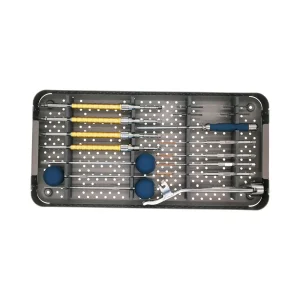
How does the surgical instrument set support intraoperative efficiency and sizing selection?
What quality assurances, certifications, and testing files are provided with bulk shipments?
What are the minimum order quantities (MOQ) and customization lead times for private label (OEM/ODM)?
How does the shape-memory patella concentrator function mechanically in vivo?
Complete Trauma & Surgical Implant Assemblies
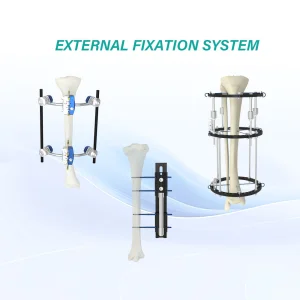
Integrate your hospital inventory with comprehensive modular assemblies across trauma plates, interbody fusion cages, external pins, and precision instrumentation sets.