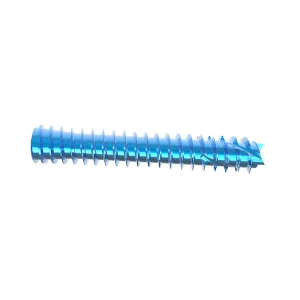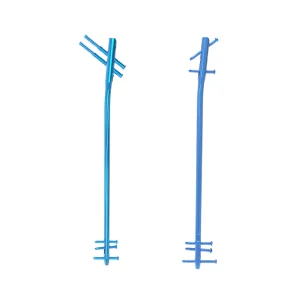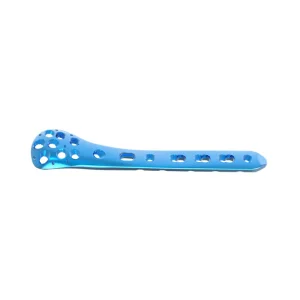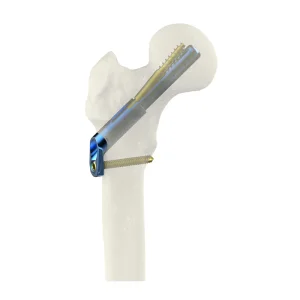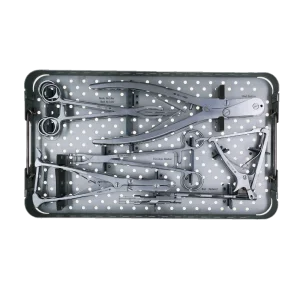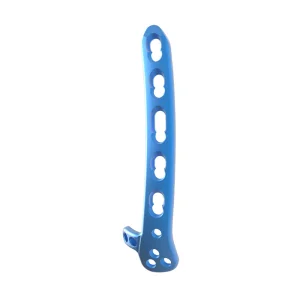
Featured Portfolio Matrix
Integrated Orthopedic Surgical Platforms & Traumatology Implants
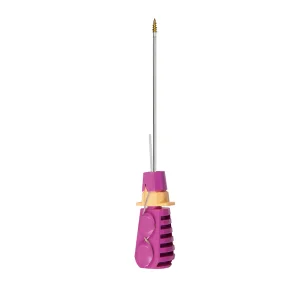
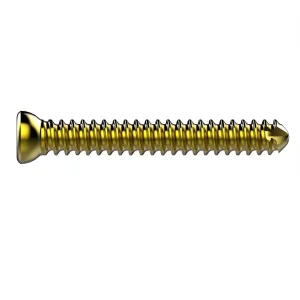
Comprehensive reconstructive solutions matching our clavicle locking plate systems, fabricated under unified ISO 13485 cleanroom machining standards.
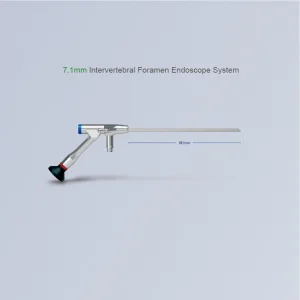
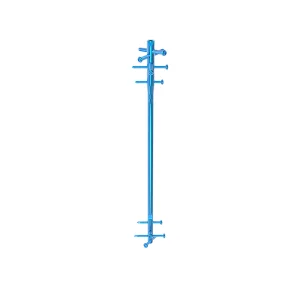
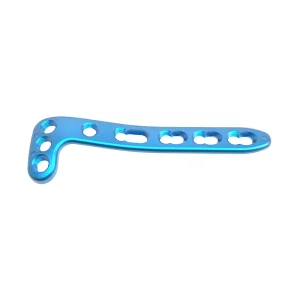
Engineering & Biomechanical Fundamentals
Clinical Architecture of Anatomical Clavicle Locking Compression Plates
A rigorous examination of multi-axial load bearing, S-curve anatomical conformity, and low-profile subcutaneous osteosynthesis.
Anatomical Pre-Contouring vs. Intraoperative Cold Working
The human clavicle possesses a complex three-dimensional sigmoidal morphology with distinct medullary canal variances across populations. Traditional straight or manual-bend reconstruction plates cause localized stress concentrations, micro-crack initiation during intraoperative contouring, and non-physiological periosteal stripping. Our pre-contoured clavicle locking plates are modeled from multi-ethnic volumetric CT scans (incorporating over 1,800 healthy bone profiles), optimizing superior and anteroinferior surface adaptation without requiring manual bending. This dramatically diminishes intraoperative fluoroscopy exposure time, preserves the periosteal microvascular supply, and minimizes implant prominence beneath the clavicular subcutaneous envelope.
Ti-6Al-4V ELI Alloy Integrity
Fabricated exclusively from Medical Grade 5 Extra Low Interstitial Titanium (ASTM F136 / ISO 5832-3). Offering superior fatigue endurance limit (>650 MPa) compared to pure CP titanium and standard 316L stainless steel, preventing hardware breakage under dynamic axial bending and rotational torques exerted by the trapezius, deltoid, and sternocleidomastoid muscles.
Comb-Hole Versatility
Engineered hybrid combi-holes enable surgical flexibility: locking screws create a rigid internal splint construct for osteoporotic or comminuted bone, while cortex screws facilitate axial compression for absolute rigid stability in transverse fracture patterns.
Low-Profile Beveled Margins to Prevent Soft-Tissue Impingement
Due to the subcutaneous positioning of the clavicle, plate palpability, surgical site pain, and subsequent hardware removal rates are among the highest in trauma surgery (often reaching 18%–35% in literature). Our systems feature ultra-low profile plate profiles (tapered from 3.2mm in high-stress midshaft zones to 1.8mm at the distal extremity) with machine-chamfered, polished atraumatic edges. Recessed screw hole counterbores eliminate screw-head protrusion, substantially lowering soft tissue irritation and skin tenting complications.
| Biomechanical Attribute | ZATH Custom Clavicle Locking System | Standard Non-Contoured Recon Plate | Conventional Locking Plate (Legacy) |
|---|---|---|---|
| Raw Material Grade | ASTM F136 Ti-6Al-4V ELI (Certified) | AISI 316L Stainless Steel | Grade 4 CP Titanium |
| Elastic Modulus (GPa) | 110 GPa (Closer to cortical bone: 18-20) | 200 GPa (Severe stress-shielding risk) | 105 GPa (Lower fatigue yield limit) |
| Plate Profile Thickness | 2.0 mm - 2.8 mm (Tapered Distal/Shaft) | 3.5 mm - 4.0 mm (Bulky, high extrusion rate) | 3.0 mm - 3.5 mm (Uniform, non-tapered) |
| Multi-Axial Locking Angle | ±15° Variable Divergence / Convergence | Non-locking only (0° rigid compression) | Fixed monoaxial 90° thread lock |
| Screw Interface Diameter | 2.7mm Distal Cluster / 3.5mm Shaft | 3.5mm Uniform | 3.5mm Uniform |
| Secondary Surgery / Removal Rate | < 4.8% Reported in Clinical Multicenter Data | 24.5% - 38.0% (Tissue irritation/pain) | 14.2% - 19.8% (Hardware protrusion) |
Surgical Indication Profiles
Localized Clinical Application Scenarios & Surgical Pathologies
Engineered for complex fracture geometries across patient demographics, from high-velocity athletic collisions to geriatric fragility non-unions.
Midshaft Clavicular Fractures (Robinson Type 2B1/2B2)
Midshaft displaced and wedge-comminuted fractures represent approximately 75%–80% of all clavicle fractures. The anatomical S-shape superior plate matches the cranial curvature perfectly, functioning as a neutralization or tension-band construct. The staggered lateral screw hole pattern prevents collinear cortical splitting during multi-screw fixation, enabling early range-of-motion mobilization.
Anatomy: Mid-diaphyseal • High LoadDistal Clavicle Fractures (Neer Type II / Craig Group II)
Unstable fractures lateral to the coracoclavicular ligaments exhibit non-union rates exceeding 30% under conservative treatment. Our distal clavicle pre-contoured plates feature a widened fan-shaped lateral paddle equipped with up to eight divergent 2.7mm locking screw holes. This multi-angle raft construct grips fragile subchondral bone without penetrating the acromioclavicular articulation.
Anatomy: Distal Acromial • Multi-Angle RaftGeriatric Fragility Non-Unions & Osteoporotic Bone
In elderly populations with widened canal diameters and thin cortices, conventional cortex screw threads strip under minimal torque. The angular stability of our locking screws creates a fixed-angle beam construct. Loads transfer directly from the bone via the locking threads into the plate, eliminating the reliance on bone-to-plate friction and preventing secondary reduction loss.
Anatomy: Low Bone Mineral Density
Industrial Infrastructure • Beijing High-Tech Zone
Chinese Manufacturing Resilience & Agile Lean Supply Chains
A completely integrated in-house medical ecosystem delivering unmatched cost-performance, batch repeatability, and rapid delivery cycles.
Headquartered within the Zhongguancun Science and Technology Park (Pinggu, Beijing), Beijing ZhongAnTaiHua Technology Co., Ltd. (ZATH) deploys advanced orthopedic device manufacturing infrastructure across 30,000+ square meters of specialized precision facilities. The global medical device industry faces persistent supply chain bottlenecks, raw-material inflation, and prolonged lead-times from traditional Western manufacturers. ZATH circumvents these macro-pressures by operating a vertically integrated manufacturing architecture where raw material aerospace-grade titanium sponge procurement, multi-axis computer numerical control (CNC) machining, electro-chemical surface oxidation, ISO Class 7 cleanroom assembly, and sterile barrier validation occur under unified management.
Multi-Axis Swiss CNC Machining
Equipped with ultra-precision 5-axis DMG MORI and Citizen Swiss high-speed machining centers ensuring micron-level screw thread tolerances (±0.005mm) and zero micro-burr surfaces.
Precision: ±5 MicronsType II Anodization Cleanrooms
Automated electrolytic anodization forms a dense, non-cytotoxic titanium oxide ceramic barrier, dramatically increasing surface hardness, corrosion resistance, and eliminating cold-welding risks.
Surface: ISO 10993 Non-Toxic100% Sterile-Packed Readiness
Every single implant is packaged within double-sterile Tyvek barrier pouches in an ISO 14644-1 Class 7 clean environment, certified for gamma or EO sterilization to save OR inventory prep costs.
Cleanroom: ISO Class 7Rapid Order Fulfilment Velocity
Strategic stock reserves of raw titanium alloy bars and standardized blanks allow rapid fulfillment. Express shipments via DHL/FedEx arrive in international hospital markets within 4 to 6 business days.
Logistics: 4-6 Days GlobalProcurement Advantage: By eliminating subcontracted outsourcing steps (slitting, deburring, passivation, anodizing, packaging), our direct-from-manufacturer platform cuts distributor landed costs by 35%–55% compared to multinational tier-1 brands, while guaranteeing lot-to-lot metallurgic consistency with certified Mill Test Certificates (MTC).
International Market Analysis
Global Commercial Dynamics, Tender Structures & Health Economics
Strategic insights for medical device distributors, hospital buying consortiums, and national health ministries.
The global clavicle fixation market is undergoing a seismic structural transition. Historically dominated by high-priced Western multinational corporations, public healthcare tenders in Europe, Latin America, Southeast Asia, and the Middle East are experiencing intense budgetary constraints driven by aging demographics and universal coverage mandates. Concurrently, rigorous regulatory frameworks—exemplified by the European Union’s Medical Device Regulation (EU MDR 2017/745)—have elevated technical bar barriers, driving out smaller domestic manufacturers and creating regional supply shortages.
This regulatory contraction presents an unprecedented market window for robust, capital-sound, ISO 13485-accredited manufacturers like ZATH. Distributors can no longer afford the exorbitant margin capture demanded by legacy global brands whose marketing overheads inflate hospital purchasing prices without delivering proportional clinical superiority.
DRG & Value-Based Reimbursement
Under Diagnosis-Related Group (DRG) hospital reimbursement policies, orthopedic surgery departments operate as cost centers rather than profit centers. Adopting our high-precision clavicle locking systems protects hospital margins without compromising clinical union rates or increasing revision liabilities.
Tender Qualification Competitiveness
National public tenders frequently require comprehensive documentation: raw material chemical composition analyses, biomechanical ASTM F382 4-point bending cycle fatigue reports, cleanroom bioburden validations, and traceable laser marking. Our turnkey regulatory dossier packets guarantee rapid qualification.
Private Labeling (OEM/ODM) Expansion
For established national distributors seeking to build enterprise brand equity, ZATH provides bespoke OEM/ODM engineering. From custom plate laser engraving, individualized anodization colors (e.g., gold, blue, teal, rose), to customized graphic case layout configurations.
Next-Generation R&D Pipeline
Technological Roadmap & Orthopedic Innovation Frontiers
Pioneering the convergence of additive manufacturing, surface bio-functionalization, and computational trauma surgery.
Patient-Specific 3D Additive Printing (SLM)
Integrating Selective Laser Melting (SLM) additive manufacturing to generate patient-specific clavicle reconstructive implants directly from patient DICOM slice data. Tailored specifically for post-traumatic malunions, severe tumor resections, and complex congenital shoulder girdle deformities with porous trabecular surface geometries promoting osseointegration.
Status: Clinical Evaluation PhaseBioactive Ceramic & Antibacterial Nano-Coatings
Developing plasma-sprayed hydroxyapatite (HA) gradient interfaces coupled with silver nanoparticle (AgNP) and zinc-doped bioactive coatings. These micro-thin layers deliver dual actions: stimulating osteoblast adhesion for accelerated bony bridging while conferring broad-spectrum antimicrobial resistance against hospital-acquired MRSA bio-film colonization.
Status: Lab Validation StageSmart Bio-Telemetry Strain Sensor Integration
Engineering micro-electromechanical telemetry sensors embedded within the non-structural dead zones of locking compression plates. These passive sensors allow wireless, non-invasive transcutaneous monitoring of fracture callus consolidation and load transfer during postoperative physical rehabilitation.
Status: Pre-Clinical Concept
E-E-A-T Regulatory Rigor
Regulatory Compliance, Audit Readiness & Local Registration Support
De-risking global market clearance through robust, documented quality assurance and international compliance portfolios.
ISO 13485:2016 Certified QMS
Our total quality management framework is fully certified under ISO 13485:2016 for orthopedic implant and instrument design, manufacture, and cleanroom sterile packaging. Unannounced third-party audits affirm ongoing compliance across every production lot.
Turnkey Registration Dossier Provision
We supply distributor partners with complete Technical Construction Files (TCF), including ISO 10993 cytotoxicity, sensitization, and genotoxicity evaluations; ASTM F382 static/dynamic bending fatigue curves; ethylene oxide sterilization validation (ISO 11135); and accelerated aging shelf-life verifications.
MDSAP Audit Alignment & Free Sale Certificates
With official Free Sale Certificates (FSC) issued by national competent authorities and quality procedures structured to align with MDSAP (Medical Device Single Audit Program) tenets, our technical files accelerate approval across Latin America (COFEPRIS, ANVISA), the Middle East (SFDA), and Southeast Asia (HSA, MDA).
Procurement & Clinical Q&A
Frequently Asked Questions on Clavicle Locking Systems
In-depth technical answers for procurement directors, biomedical engineers, and regional implant distributors.
What specific anatomical configurations and hole counts are available in your custom clavicle locking plate systems?
Our clavicle osteosynthesis portfolio encompasses four primary configurations: (1) Superior Midshaft Clavicle Locking Plates (available in 5, 6, 7, 8, 9, 10, and 12-hole variants in distinct Left and Right profiles); (2) Anteroinferior Midshaft Plates designed for acute superior skin tenting cases; (3) Superior Distal Clavicle Locking Plates featuring a broad 6 to 8-hole divergent lateral cluster to accommodate lateral subchondral bone; and (4) Clavicle Hook Plates with varying hook depths (12mm to 18mm) for severe acromioclavicular (AC) dislocations and Neer II distal fractures.
How does your factory prevent cold welding between titanium locking screw heads and plate holes?
Cold welding (galling) in titanium trauma systems is mitigated through two engineering controls: First, we apply a high-precision Class II Electrolytic Anodization process that hardens the titanium dioxide surface micro-structure. Second, a micro-differential hardness gradient is maintained between the screw head threads and plate eyelet threading, ensuring smooth cross-thread-free engagement when tightened within the recommended torque specification (1.5 N·m for 2.7mm locking screws; 2.5 N·m for 3.5mm locking screws).
What are the Minimum Order Quantities (MOQ) and production turnaround cycles for custom OEM/ODM branded plates?
For standard catalog items under the ZATH brand, there are no stringent minimum order quantities, supporting agile distributor inventory pilots. For custom OEM/ODM private labeling (including custom laser-marking, designated anodization coloring, and tailored box packaging), our typical baseline MOQ starts at 50 units per plate specification. Standard production lead-time is 2 to 3 weeks, compressed to 10 days for urgent hospital emergency orders.
Are matching surgical instruments and sterilizable graphic cases provided with the plates?
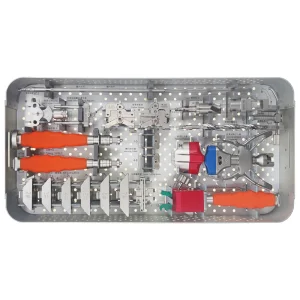
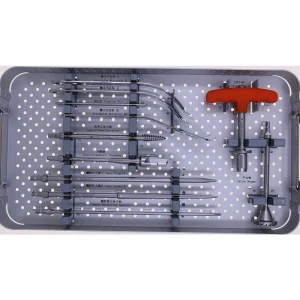
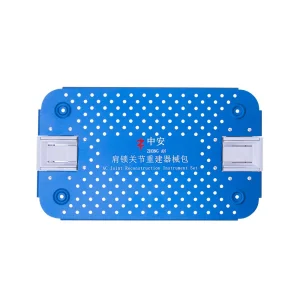
Yes. Every plate family is supported by a comprehensive, color-coded, hard-anodized aluminum surgical instrument set. The clavicle instrumentation kit includes quick-coupling torque-limiting screwdrivers, threaded drill guides with centering sleeves, graduated depth gauges, sharp reduction forceps, bone clamps, and periosteal elevators. The sterilization trays are designed with organized layouts, clearly labeled dimensions, and autoclavable silicone brackets capable of withstanding repetitive steam autoclave cycles at 134°C.
What documentation do you provide to expedite local Ministry of Health medical device registration?
Our dedicated regulatory affairs team provides an exhaustive submission package: authenticated ISO 13485:2016 certificates, Certificate of Free Sale (CFS), CE conformity documentation, Material Mill Test Certificates (MTC) certifying ASTM F136 chemical/mechanical properties, ISO 10993 biocompatibility test reports from accredited GLP laboratories, ISO 11135 sterilization validation reports, and comprehensive clinical evaluation literature summaries.
Complementary Orthopedic Instrumentation & Systems
Advanced Surgical Reconstruction Portfolio & Fasteners
Explore matching intramedullary nails, joint arthroplasty assemblies, and specialized orthopedic instrument sets manufactured in our Beijing facility.