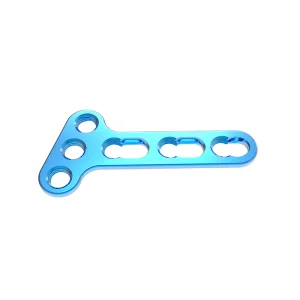
Primary Trauma Systems
Featured Orthopedic Fixation Hardware
Precision-machined, cleanroom sterile-packaged systems ready for OEM/ODM deployment across public and private healthcare supply chains.
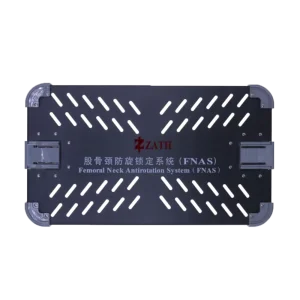
Famous Femoral Neck Antirotation System (FNAS Instrument Set)
Product Profile & Spec Sheet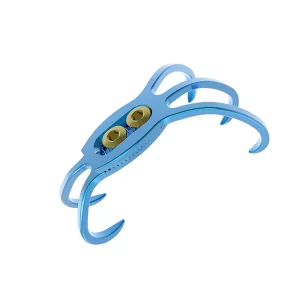
Cheap Patella claw S M L patella bone fracture solutions
Product Profile & Spec Sheet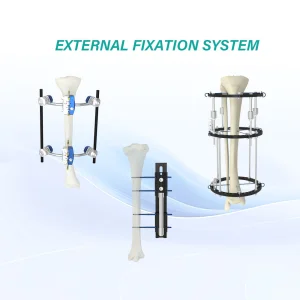
Discount Orthopedic stainless synthes external fixation fixator
Product Profile & Spec Sheet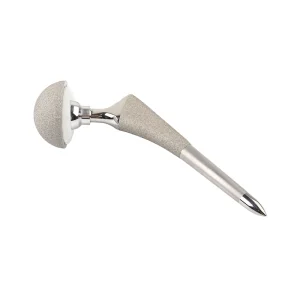
Famous FDS Cementless Stem Hip Joint Prosthesis
Product Profile & Spec Sheet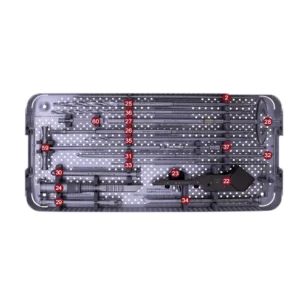
Famous Surgical InterZan Intramedullary Nail Instrument Set
Product Profile & Spec Sheet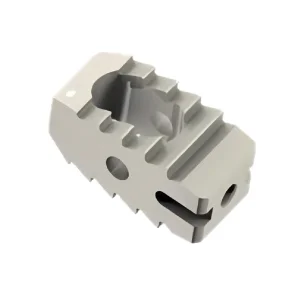
Famous Thoracolumbar Interbody Cage (Straight)
Product Profile & Spec Sheet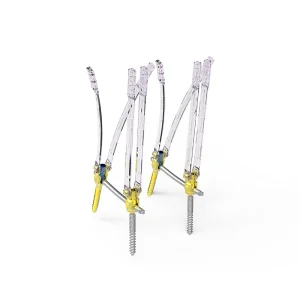
ODM Spine Titanium Minimally Invasive Pedicle Screws
Product Profile & Spec Sheet
Industry Economics
Deciphering Titanium Plate Fracture Fixation Pricing
A granular deconstruction of global manufacturing costs, biomaterial volatility, surface engineering investments, and regulatory compliance markups.
Ti-6Al-4V ELI
ASTM F136 Medical Grade Standard
42% - 65%
Cost Variance via 5-Axis Milling vs Casting
100%
Traceable CMM Inspection & Batch Testing
±5 μm
Micron Precision Screw Hole Tolerance
Raw Metallurgical Quality
Medical plate cost starts at raw ingots. Medical Grade 5 (Ti-6Al-4V ELI / ISO 5832-3) eliminates interstitial oxygen, improving cyclic fatigue strength significantly compared to standard Grade 4 CP titanium or industrial alloys. Vacuum arc remelting (VAR) certifications command a premium that directly correlates with reduced intraoperative hardware failure.
5-Axis CNC Milling Geometry
Complex anatomical contours, low-profile reconstruction plates, and limited-contact combi-holes require extensive CNC spindle runtime. Unlike pressed or stamped cheap stainless alternatives, titanium plates require high-precision coolant milling to prevent heat-induced alpha-case micro-cracking, dictating unit overhead costs.
Surface Treatments & Anodization
Type II electrochemical anodization alters the surface hardness, reduces wear-induced cold welding between locking screws and plate threads, and mitigates soft tissue adhesion. Micro-arc oxidation and advanced sandblasting processes enhance biocompatibility while influencing baseline production expenditure.
| Fixation Category | Material Class | Tolerance Standard | Indicative Ex-Factory Band (MOQ dependent) | Clinical Performance Benchmark |
|---|---|---|---|---|
| Anatomical Locking Plates (Distal Radius, Clavicle) | Ti-6Al-4V ELI (ASTM F136) | ±0.005 mm | $28.00 - $65.00 / unit | Pre-contoured, Low-contact profile |
| Large Fragment Plates (Femur, Tibia Shaft) | Ti-6Al-4V ELI Grade 5 | ±0.010 mm | $45.00 - $110.00 / unit | High torsional stability, Combi-hole |
| Cranial / Maxillofacial Meshes | Pure Titanium Grade 2 / 3 | ±0.002 mm | $18.00 - $48.00 / unit | High malleability, Minimal profile (<1.0mm) |
| Reconstruction / Mini-Fragment Plates | ASTM F136 ELI / Ti-CP | ±0.005 mm | $14.00 - $38.00 / unit | Multi-axis bending without thread warping |
Smart Manufacturing
China Factory 4.0: Supply Chain Agility & Cost Leadership
How end-to-end integration across Beijing and Yangtze River medical device clusters has revolutionized the quality-cost equation for global health systems.
Vertically Integrated Raw-to-Cleanroom Production
By housing certified bar-stock management, wire cutting (EDM), automated Swiss-style turning, 5-axis milling, ultrasonic degreasing, and ISO Class 7/8 packaging under one single roof in Beijing's Pinggu Park, the operational friction of multi-tier vendor subcontracting is eliminated. This compression of the manufacturing cycle protects hospital purchasing agents against extended lead times.
Automated Quality Control (AQC) & Digital Metrology
Modern bone plate manufacturing utilizes automated optical coordinate measuring machines (CMM) and laser scanning arrays. Every locking thread pitch, variable-angle pocket, and smooth plate-to-bone contact bridge is verified against 3D CAD step files in seconds, eliminating human measurement drift and guaranteeing strict adherence to ISO 13485 standards.
Agile OEM/ODM Engineering Capacities
Whether regional health authorities require distinctive plate coloration for immediate surgical sizing identification or custom anatomical geometries accommodating osteoporotic metaphyseal voids, Chinese Industry 4.0 infrastructure enables swift tooling adaptations, custom laser marking, and customized blister packaging.
Worldwide Context
Commercial Reality & Localized Clinical Indications
Bridging the gap between macro-level public health tendering demands and specialized anatomical reduction applications.
Volume-Based Procurement (VBP) Dynamics
Global medical device distribution is increasingly shaped by centralized national healthcare tenders. From Latin America's public healthcare tenders to Europe's cross-border centralized procurement, hospital administrators are shifting away from excessive Tier-1 pricing premiums. Certified manufacturers delivering equivalent metallurgical purity and functional retention at lower unit factory prices are rapidly gaining international market share.
Complex Poly-Trauma & High-Energy Fractures
In high-density industrial and transportation corridors, clinical demand surges for robust bridge-plating configurations. Locking compression plates (LCP) act as internal fixators, distributing load evenly across the comminuted fracture zone. Preserving the periosteal blood supply is critical; our low-contact undercut profiles prevent cortical necrosis beneath the plate body.
Geriatric Osteoporotic Fracture Fixation
With an aging global demographic, proximal humerus and femoral neck non-unions represent a heavy surgical burden. Fixed-angle construct plates anchor securely in trabecular bone of poor quality. Multi-axial screw locking allows surgeons to adjust trajectory angles, providing exceptional biological hold and reducing screw back-out complications in fragility fractures.
Procurement Knowledge Base
Frequently Asked Questions
Essential regulatory, quality, and commercial insights for supply chain managers, hospital procurement directors, and distributor networks.
Why do titanium bone plates carry a higher price point than stainless steel equivalents?
Titanium alloys (Ti-6Al-4V ELI) feature an elastic modulus (~110 GPa) much closer to human cortical bone (~18 GPa) than stainless steel 316LVM (~200 GPa). This substantially reduces stress shielding and subsequent bone re-fracture risks upon hardware removal. Furthermore, titanium exhibits superior corrosion resistance via passive oxide film creation, complete MRI compatibility without significant imaging distortion, and outstanding biocompatibility that eliminates allergic nickel reactions. The material itself is costlier to refine and significantly more difficult to machine, requiring specialized cutting tools and slower CNC feeds.
What regulatory documentation accompanies custom & OEM titanium plate orders?
Every production batch includes full material mill test certificates confirming compliance with ASTM F136 or ISO 5832-3 standards. We supply ISO 13485 QMS compliance records, bio-burden validation, cleanroom inspection logs, EO/Gamma sterilization validation certificates (ISO 11137/ISO 11135), and Free Sale Certificates (FSC) to assist distributor registration with local regulatory authorities.
How do volume commitments (MOQ) affect individual plate unit prices?
CNC setup times, custom tooling calibrations, and cleanroom packaging batch testing constitute fixed initial costs. As batch sizes scale from pilot prototypes (50-100 units) to annual tender volumes (10,000+ units), per-unit manufacturing costs drop by 30% to 55%. Long-term scheduled purchase contracts allow raw titanium bar stock optimization, locking in commodity rates against international market fluctuations.
Are plates delivered sterile-packaged or non-sterile for local autoclaving?
Both logistics options are supported. Sterile pre-packaged configurations feature double-blister medical Tyvek wrapping with a 5-year validated shelf life, designed for immediate operating theater handoff. Alternatively, bulk non-sterile supplies can be ordered alongside anodized aluminum instrument cases for hospital autoclave sterilization protocols.
Extended Reconstructive Catalog
Comprehensive Trauma & Joint Portfolio
Engineered instrumentation, specialized locking compression designs, and joint replacement implants ready for global export.
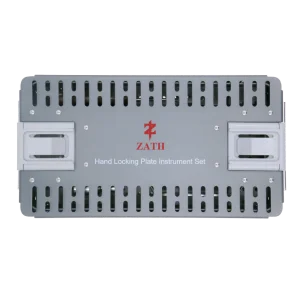
Cheap Hand Locking Plate Instrument Set (Lite)
Product Profile & Spec Sheet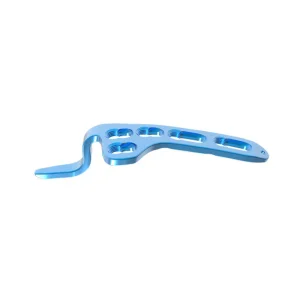
Buy Clavicle Hook Locking Compression Plate
Product Profile & Spec Sheet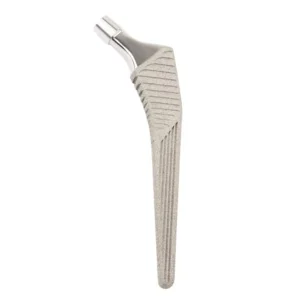
CE Certification ADS Stem For Hip Prosthesis
Product Profile & Spec Sheet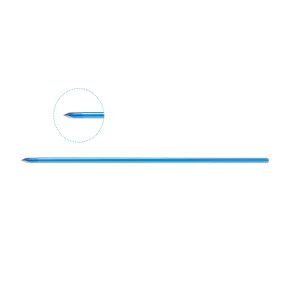
Best Diameter 1.5mm - 3.0mm Titanium Alloy Threaded Bone Pin
Product Profile & Spec Sheet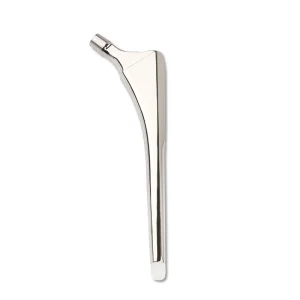
Cheap TDS Cemented Stem Orthopedic Implants
Product Profile & Spec Sheet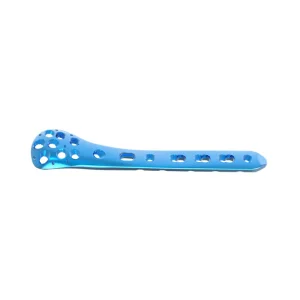
Cheap Proximal Lateral Humerus Locking Compression Plate II
Product Profile & Spec Sheet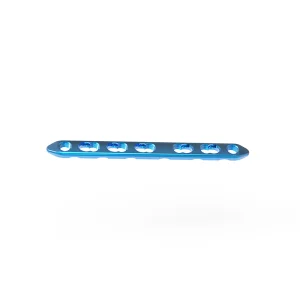
Custom Radius-Ulna Limited Contact Locking Compression Plate
Product Profile & Spec Sheet