Primary Orthopedic & Trauma Implantation Systems
Explore our ISO 13485-certified internal fixation plates, joint prostheses, and sterile-packaged implants optimized for international tenders and institutional healthcare distributors.
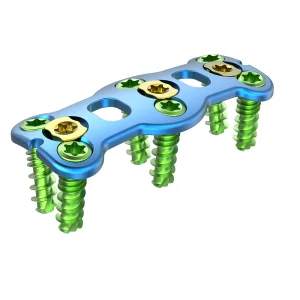
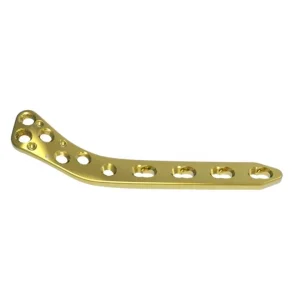
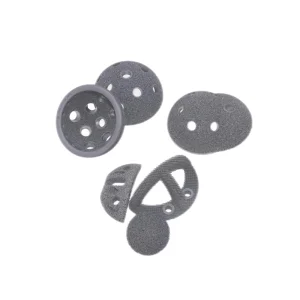
Global Commercial & Industrial Landscape of LCP Proximal Femoral Plates
An authoritative engineering assessment of internal fixation mechanics, demographic market demands, and how locked-screw angular stability resolves complex peritrochanteric fractures.
Clinical Shift to Fixed-Angle Mechanics
Fractures of the proximal femur—especially unstable intertrochanteric (AO/OTA 31-A2 and 31-A3), subtrochanteric, and periprosthetic fractures—present severe shear and bending stresses exceeding three to four times human body weight. Traditional dynamic hip screws (DHS) frequently fail in osteoporotic or comminuted bone due to screw cut-out, varus collapse, and lateral cortical blowout.
- Internal-External Fixator Effect: Screws lock directly into threaded plate holes, eliminating periosteal compression.
- Multi-Planar Head Purchase: Convergent and divergent locking screws distribute axial loads across the femoral head and neck.
- Preserved Vascularity: Reduced bone-plate contact maintains critical periosteal blood supply, accelerating callus formation.
The Global Cost Squeeze & Sourcing Realignment
Healthcare systems globally face severe budget constraints driven by aging demographics and the exponential incidence of osteoporotic fragility fractures. Western tier-1 orthopedic brands maintain exorbitant gross margins (>80%), pricing locking titanium plates between $1,200 and $2,800 per unit. Consequently, national healthcare ministries, group purchasing organizations (GPOs), and hospital chains are shifting procurement directly to verified manufacturing powerhouses.
- 60-75% Sourcing Savings: Factory-direct titanium LCP implants achieve massive unit margin improvements.
- Tender Competitiveness: Empowers local distributors in LATAM, Middle East, and APAC to win competitive tenders.
- Standardized Sizing: Broad size spectrums from 2-hole to 16-hole plates accommodate variable patient anatomies.
LCP vs Intramedullary Nailing Indications
While cephalomedullary nails (e.g., PFNA, InterZan) remain popular for simple trochanteric fractures, LCP Proximal Femoral Plates represent the definitive gold standard in challenging reconstructive situations: shattered greater trochanter, lateral wall destruction, narrow intramedullary canals, severe femoral shaft bowing, or existing total hip arthroplasty stems requiring lateral bypass plating.
- Anatomic Lateral Buttress: Provides crucial structural resistance against lateral wall comminution collapse.
- Dual Combination Combi-Holes: Enables sequential compression followed by rigid locked screw placement.
- Modular Instrument Kits: Standardized hexagonal and Torx drivers minimize OR changeover times.
Chinese Factory Efficiency Advantages: The ZATH Industrial Engine
Operating from the Zhongguancun Science Park in Pinggu, Beijing, ZATH combines high-speed multi-axis CNC robotics, certified medical-grade titanium metallurgy, and vertically integrated quality control.
DMG MORI 5-Axis & Citizen Swiss Lathes
Our Beijing manufacturing park integrates state-of-the-art Japanese Citizen Swiss-type lathes and German DMG MORI 5-axis simultaneous machining centers. By milling anatomical contours, complex plate head bends, and precise combi-holes in single clamped setups, we eliminate cumulative repositioning tolerances, achieving micro-tolerances within ±0.005 mm.
ASTM F136 Ti-6Al-4V ELI Metallurgy
We source ultra-pure Extra Low Interstitial (ELI) titanium alloy conforming strictly to ASTM F136 and ISO 5832-3 standards. Every incoming raw bar billet undergoes optical emission spectrometry, tensile strength testing, and microstructure verification to ensure optimal fatigue endurance and biocompatibility prior to CNC wire EDM and milling.
Class 100,000 Cleanroom Packaging
Our terminal operations feature an automated multi-tank ultrasonic passivation line and ISO Class 7 (Class 100,000) cleanroom environments. Plates are sealed inside medical-grade Tyvek double-barrier blister packs and pre-sterilized via Ethylene Oxide (EO) or gamma irradiation, ensuring sterility assurance levels (SAL 10-6) ready for hospital OR shelves.
| Specification Parameter | ZATH OEM / Factory Direct | Western Tier-1 Implants | Standard Local Machine Shops |
|---|---|---|---|
| Raw Material Specification | Certified ASTM F136 Ti-6Al-4V ELI / ISO 5832-3 | ASTM F136 Ti-6Al-4V ELI | Standard Ti-6Al-4V (Non-ELI) or SS316L |
| Machining Precision & Tolerances | ±0.005 mm (5-axis CNC single setup) | ±0.005 mm | ±0.03 mm to ±0.05 mm |
| Surface Treatment & Passivation | Type II Anodization / Micro-bead blasting Ra <0.4μm | Type II Anodized | Basic chemical washing |
| Quality System Certification | ISO 13485:2016 + CE / Free Sale Certificate (FSC) | ISO 13485 + CE MDR + FDA 510(k) | ISO 9001 (Non-medical compliant) |
| Direct Unit Quote Range (FOB) | $38.00 – $75.00 / pc | $450.00 – $1,200.00 / pc | $25.00 – $40.00 (Untested lots) |
| Lead Times for Wholesale Orders | 10 – 15 working days (Stock dispatched 4-6 days) | 6 – 12 weeks backordered | Variable / Unpredictable |
Localized Clinical Application Scenarios: Indications & Surgical Technique
Engineered to match the anatomical curvature of the lateral proximal femur, providing angular stable fixation across five critical surgical scenarios.
AO 31-A3 Reverse Oblique & Transverse Fractures
Reverse obliquity fractures have an inherent tendency to displace medially due to adductor pull. Cephalomedullary nails can experience nail entry point comminution or wedge propagation. The LCP-PFP provides a solid, anatomically pre-contoured buttress on the lateral tension band side, neutralizing shear vectors with 7.3mm and 5.0mm locking cannulated screws.
High Subtrochanteric Fractures with Shaft Extension
When subtrochanteric fractures extend distally beyond the isthmus into the femoral diaphysis, anatomical intramedullary nails may induce malrotation or valgus/varus tipping. Long-span ZATH LCP Proximal Femoral Plates (spanning 10 to 16 holes) bridge comminuted segments, providing elastic splinting and secondary biological bone healing without stripping callus blastema.
Periprosthetic Fractures (Vancouver B1 & C)
Managing fractures around well-fixed total hip arthroplasty (THA) stems is notoriously intricate. Intramedullary nails cannot pass through the prosthetic stem. The LCP-PFP allows bi-cortical locking screws proximal and distal to the stem tip, combined with Dall-Miles style cerclage cables looped through plate holes to achieve stable osteosynthesis around existing stems.
Future Trajectories in Proximal Femoral Internal Fixation
How cutting-edge surface modifications, polyaxial angle locking, and additive manufacturing are reshaping the next generation of trauma implants.
Variable-Angle Polyaxial Locking (VA-LCP)
Traditional fixed-angle plates force screws along a predetermined trajectory, occasionally colliding with existing hardware or penetrating subchondral articular cartilage. The industry is rapidly advancing to variable-angle locking technology (±15° cone angulation), enabling surgeons to target specific bone fragments and optimize screw trajectories in complex revision cases.
3D-Printed Trabecular Surface Integration
Electron Beam Melting (EBM) and Direct Metal Laser Sintering (DMLS) 3D titanium printing allow porous trabecular titanium coatings on plate under-surfaces. Mimicking human cancellous architecture (60-70% porosity, 300-500μm pore size), this technology enhances rapid osteointegration, preventing plate subsidence while minimizing bone contact necrosis.
Antibacterial Silver & Biomimetic Coatings
Implant-associated surgical site infection (SSI) remains a devastating orthopedic complication, with treatment costs exceeding $50,000 per patient. Next-generation trauma plates incorporate active nano-silver ions, copper-doped coatings, or biodegradable gentamicin polymers that eradicate bacterial biofilm formation without cytotoxicity.
Enterprise Procurement Criteria: Sourcing Protocols for Importers
Essential checklist for international hospital distributors, tender authorities, and OEM brand holders qualifying Chinese orthopedic manufacturing partners.
Quality System & ISO 13485 Verification
Institutional procurement demands rigorous compliance. Buyers must verify the supplier's ISO 13485:2016 scope for design, machining, and sterilization packaging. At ZATH, full audit dossiers, UDEM certificates, Free Sale Certificates (FSC), and ISO 10993 biocompatibility test reports (cytotoxicity, sensitization, systemic toxicity) are readily available.
100% Dimensional & Visual Lot Traceability
Every single LCP plate and locking screw must bear laser-etched lot numbers, material heat codes, and size markings. In the event of clinical inquiries, our digital quality database instantly reconstructs the complete supply history—from raw titanium ingot melt analysis to the specific CNC machine coordinate program and final autoclave run.
Matching Surgical Instrument Sets
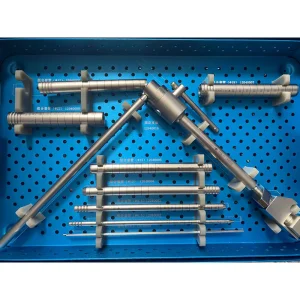
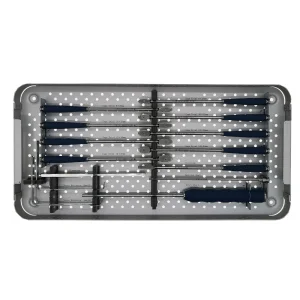
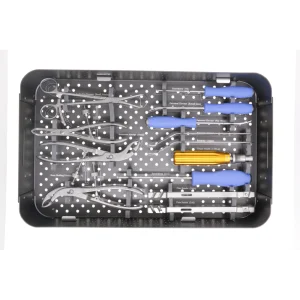
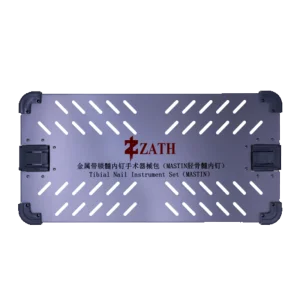
Implant sales fail without ergonomic, medical-grade stainless steel instrument containers. ZATH manufactures dedicated PFP surgical toolkits—including radiolucent carbon-fiber targeting drill guides, calibrated depth gauges, torque-limiting screwdrivers (4.0 Nm), threaded reduction sleeves, and guide wire extractors—ensuring seamless OR execution.
Request Direct Factory Quotations & OEM Sizing Matrix
Connect directly with our biomedical engineering sales specialists in Beijing. Receive full ISO 13485 regulatory dossiers, 3D CAD step files, wholesale price tiers, and custom instrument set configurations within 24 hours.
Frequently Asked Questions for Medical Importers & Hospital Buyers
In-depth responses covering technical specifications, factory audits, custom OEM labeling, sterile shelf lives, and international commercial quotes.
What screws are utilized with the LCP Proximal Femoral Plate System?
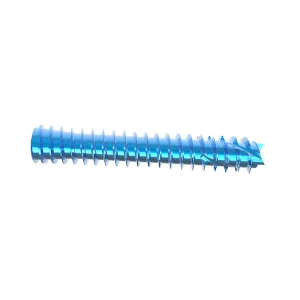
The proximal head portion accepts 7.3mm cannulated locking screws, 5.0mm cannulated locking screws, and 4.5mm cannulated conical screws driven at specific angles through targeting sleeves. The plate shaft features dynamic combi-holes accepting either 5.0mm standard cortical locking screws for angular stability or 4.5mm standard cortical screws for dynamic axial compression.
How are wholesale quotes and volume discounts structured?
Quotes depend on order volume, packaging format (bulk non-sterile vs double-barrier sterile blister packs), and material grade (Ti6Al4V ELI vs SS316L). Base factory-direct quotes typically range between $38.00 and $75.00 per unit, offering up to 70% savings compared to Western brand distributors, with additional discount tiers starting at 100-piece and 500-piece purchase commitments.
Can you provide OEM private labeling and customized plate geometry?
Yes. As an authentic manufacturer founded in 2009 with over 300 staff, we specialize in OEM/ODM services. We laser-mark your corporate trademark, model identifiers, and custom GS1-128 or DataMatrix 2D barcodes. Furthermore, our R&D team can modify plate curvature, hole spacing, or head angles to match specific regional anatomical preferences.
What is the delivery time and express shipping method?
Standard inventory items are dispatched within 48 hours via premium express couriers (DHL, FedEx, UPS, TNT, or EMS), arriving at most international airports within 4 to 6 business days. Custom OEM production runs usually require 15 to 25 business days depending on cleanroom sterilization scheduling and quantity.
What documentation do you provide for tender registration in our country?
We supply a comprehensive regulatory dossier including: ISO 13485:2016 certificate, UDEM conformity certification, Free Sale Certificate (FSC) legalized by the Ministry of Foreign Affairs, raw material mill test certificates (spectrographic and tensile), mechanical fatigue testing data (ASTM F382), biocompatibility reports (ISO 10993), and sterile validation reports (ISO 11135 / ISO 11137).
Are surgical instrument sets supplied with the implants?
Yes. We offer fully equipped Proximal Femoral Plate surgical instrument cases made of lightweight anodized aluminum or stainless steel. The sets feature color-coded drill bits, precision parallel drill guides, cannulated tap instruments, and calibrated torque limiters to guarantee error-free implant placement during surgery.
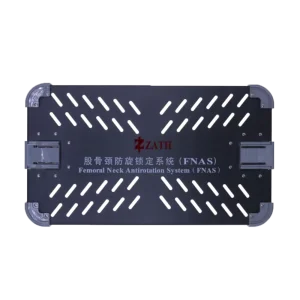
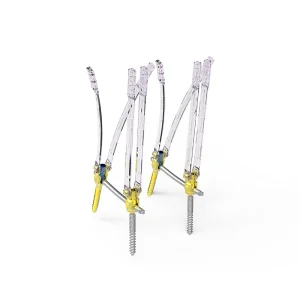
Specialized Surgical Implants & Instrument Systems
Explore matching femoral antirotation systems, MIS spine access platforms, pedicle screw configurations, and joint replacement solutions engineered to the same exacting standards.