Integrated Orthopedic Surgical Platforms
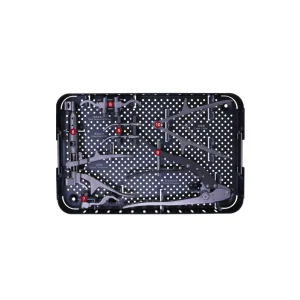
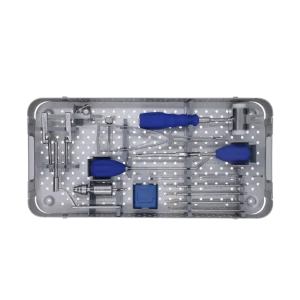
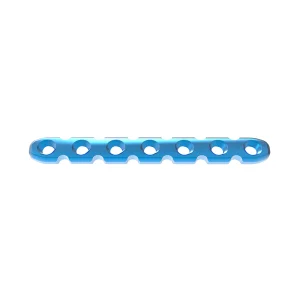
Comprehensive orthopedic implant assemblies designed for seamless interoperability with standard 3.5 AO cortical and small-fragment instrumentation systems.
Engineering Anatomy of the 3.5 AO Cortical Screw
The 3.5 mm cortical screw, rooted in the foundational AO/ASIF (Arbeitsgemeinschaft für Osteosynthesefragen) small fragment philosophy, remains the biomechanical benchmark for diaphyseal and metaphyseal internal fixation.
Thread Profile & Shear Distribution
The asymmetrical buttress thread profile of our 3.5 AO cortical screw maximizes pullout resistance by optimizing the contact angle against dense haversian bone. With a 1.25 mm pitch, the thread effectively dissipates axial shear stresses evenly through cortical bone strata.
- Thread Angle: Engineered rake angle minimizes micro-fractures during seating.
- Core Thickness: 2.4 mm inner shaft provides high torsional yield strength (>2.8 N·m).
- Crest Geometry: Micro-rounded crests reduce cellular stress necrosis at the bone interface.
Head Geometry & Drive Recess
The standard 6.0 mm hemispherical head facilitates seamless countersinking within standard dynamic compression plates (DCP) and locking compression plates (LCP). Precision recessed drive interfaces safeguard against intraoperative cam-out and stripped drivers.
- Hexagonal 2.5 mm: Deep cold-forged hex recess ensuring optimal contact area.
- StarDrive T15 (Torx-Compatible): Multi-lobe engagement reducing axial driver load.
- Undersurface Bevel: Engineered for progressive gliding compression without plate buckling.
Metallurgical Classifications
Manufactured exclusively from certified medical-grade alloys compliant with ASTM F136 (Ti-6Al-4V ELI) and ASTM F138 / ISO 5832-1 (316L Stainless Steel), achieving a harmonious balance between fatigue life and elastic biocompatibility.
- Titanium Ti-6Al-4V ELI: Elastic modulus closer to human cortical bone, dampening stress shielding.
- Stainless Steel 316L: Exceptional shear ductility, ideal for demanding interfragmentary lag screw applications.
- Surface Finish: Controlled electro-polishing or Type II anodization for enhanced hemocompatibility.
Procurement Evolution: MDR, DRG, & Supply Chain Audits
Hospital purchasing groups (GPOs), international trauma tenders, and contract distributors require unprecedented regulatory transparency, clinical traceability, and economic sustainability.
MDR (EU 2017/745) Harmonization
Navigating the stringent requirements of EU Medical Device Regulation (MDR) requires complete technical documentation. Every lot of our 3.5 AO cortical screws includes comprehensive material test certificates (EN 10204 type 3.1), mechanical test dossiers, and biocompatibility validations according to ISO 10993.
- Traceability through Unique Device Identification (UDI) laser marking.
- Post-market clinical follow-up (PMCF) registries supporting safe usage.
- Clean biological safety dossiers for expedited national registrations.
Total Cost of Ownership & DRG Pressures
Under global Diagnosis-Related Group (DRG) and Volume-Based Procurement (VBP) programs, healthcare facilities face compressed surgical reimbursement. Sourcing directly from an established primary manufacturer removes intermediate tier markups while maintaining Tier-1 surgical tolerance metrics.
- Reduction in cost per surgical case without compromising metallurgical purity.
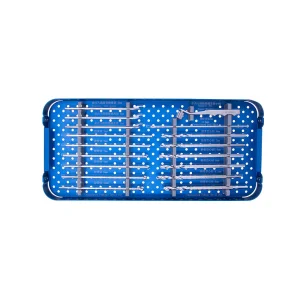
- Flexible sterilizable rack sets vs individual sterile peel-pouch configurations.
- Reduced hospital operating room turnaround via standardized instrument sets.
Inventory Buffers & Dual Sourcing
Disruptions in global logistics highlight the acute danger of localized supply choke points. Leading medical device multinationals and regional distributor chains rely on our automated production lines to serve as strategic dual-sourcing manufacturing hubs.
- Guaranteed production capacities with dedicated CNC Swiss-lathe cells.
- Consignment inventory agreements with 4–6 day rapid global air dispatch.
- Lot-specific retention archiving up to 10 years beyond nominal shelf life.
China Factory 4.0: Automated Orthopedic Excellence
Combining high-speed multi-axis Swiss precision turning, AI-assisted in-line visual metrology, and Class 100,000 cleanroom packaging within an ISO 13485 certified facility in Beijing.
Swiss CNC Turning Cells
Utilizing high-end multi-axis sliding headstock lathes (Citizen & Star), our facility performs thread whirling, cross-slot cutting, and self-tapping flute milling in a single setup, eliminating concentricity errors.
AI Optical Metrology
Automated telecentric optical vision systems perform 100% in-line dimensional screening on pitch, core diameter, and head sphericity, logging micron-level statistical process control (SPC) data.
Passivation & Surface Physics
Automated multi-stage ultrasonic cleaning and validated nitric/citric acid passivation (ASTM F86) remove all free iron particles and micro-burrs, producing an ultra-stable passive titanium oxide (TiO2) layer.
Cleanroom Packaging
Packaging operations in ISO Class 7 and Class 8 (100,000) cleanrooms utilize medical-grade Tyvek blister barriers, validated for gamma or ethylene oxide (EtO) terminal sterilization regimens.
| Critical Parameter | AO Standard Specification | ZATH Factory Specification | Clinical Performance Advantage |
|---|---|---|---|
| Nominal Thread Diameter | 3.50 mm (±0.05 mm) | 3.50 mm (±0.008 mm) | Ultra-consistent bone thread engagement; prevents cortical strip-out |
| Core / Minor Diameter | 2.40 mm (±0.06 mm) | 2.40 mm (±0.005 mm) | Higher bending moment and torsional yield resistance under cyclic load |
| Thread Pitch | 1.25 mm | 1.25 mm Uniform Pitch | Optimal axial advancement per revolution during dynamic fixation |
| Head Outer Profile | 6.00 mm Hemispherical | 6.00 mm Precision Spherical | Exact seated mating with dynamic compression (DCP/LCP) plate holes |
| Material Formulation | ASTM F136 / ASTM F138 | Medical Ti-6Al-4V ELI / 316L | Zero foreign-body inclusion; high biocompatibility and corrosion resistance |
| Torsional Yield Strength | Min. 2.3 N·m | > 2.95 N·m Average | Virtually eliminates screw head shearing during dense cortical seating |
Clinical Applications & Surgical Fixation Protocols
The 3.5 AO cortical screw serves as the clinical workhorse across small fragment trauma reconstruction, diaphyseal plating, and interfragmentary lag screw fixation.
Diaphyseal Radius & Ulna Plating
In forearm fracture reduction (both-bone forearm fractures, Galeazzi, Monteggia), the 3.5 AO cortical screw provides absolute anatomical stability through standard small-fragment compression plates.
- Pilot drilling executed with a 2.5 mm calibrated drill bit and neutral drill guide.
- Bi-cortical screw purchase achieves maximum load transfer across fracture gap.
- Countersunk screw heads sit flush to mitigate soft tissue irritation and tendon impingement.
Interfragmentary Lag Screw Technique
When compressing spiral or oblique fractures (fibula, humerus, clavicle), interfragmentary compression is paramount to prevent nonunion and enable direct primary bone healing.
- Gliding Hole: Proximal near cortex drilled to 3.5 mm using a specialized sleeve.
- Thread Hole: Distal far cortex prepared with a 2.5 mm pilot drill bit.
- Tightening draws the fracture interfaces together under high mechanical interfragmentary pressure.
Distal Fibula & Syndesmotic Stabilization
In Weber B and C ankle fracture complexes, 3.5 AO cortical screws are employed both in neutralizing lateral malleolar plates and as temporary trans-syndesmotic positional screws.
- Engages three or four cortices across the distal fibula and tibia.
- Maintains ankle mortise reduction during collateral ligament repair.
- Self-tapping flute geometries allow precise insertion without requiring bone tap steps.
Frequently Asked Questions for Clinical Buyers
Key technical, metallurgical, and supply chain insights for hospital biomedical engineers, procurement committees, and regional orthopedics distributors.
Self-tapping 3.5 AO screws feature engineered flutes at the distal tip that cut their own mating thread track in pre-drilled bone (2.5 mm hole), eliminating the need for a bone tap instrument and shortening operative time. Non-self-tapping screws require full manual tapping, which is sometimes preferred in extremely dense, sclerotic bone to avoid excessive insertion torque.
No. Clinical guidelines strictly prohibit mixing titanium screws with stainless steel plates (or vice-versa) due to the severe risk of galvanic corrosion in saline biological fluids. Our factory clearly color-codes and laser-marks all implants (Gold/Blue anodized for Titanium, polished silver for 316L Stainless Steel) to prevent inadvertent metallurgical mismatching in the surgical field.
For healthy cortical bone, the safe seating torque for a standard 3.5 AO cortical screw is between 1.5 N·m and 2.0 N·m. In osteoporotic bone, stripping occurs at significantly lower thresholds (~1.0 N·m). We supply matching calibrated torque-limiting screwdrivers with our surgical sets to prevent thread failure during the final tightening phase.
We support complete OEM/ODM modifications, including custom screw thread pitches, drive types (Hexagonal, StarDrive/Torx, Cruciform), custom lengths from 10 mm to 65 mm in 2 mm increments, laser-etched distributor branding, UDI coding, and custom-configured sterile blister pack packaging according to local ministry of health requirements.
All 3.5 AO cortical screws are manufactured using Swiss-type CNC thread whirling processes in a single continuous clamping pass. This guarantees runout concentricity within ±0.005 mm relative to the screw axis and prevents periodic pitch distortion that could otherwise cause micro-stresses during bone engagement.
Every delivery lot includes a comprehensive dossier containing EN 10204 Type 3.1 chemical inspection certificates, raw material tensile test reports, torsional yield test charts, passivation validation certificates (ASTM F86), dimensional inspection SPC records, and sterilization validation reports (ISO 11137 / ISO 11135).
Associated Trauma, Spine & Joint Platforms
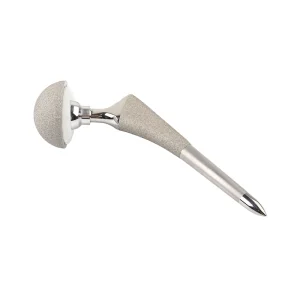
Complementary surgical instruments, intramedullary fixation systems, and reconstructive platforms engineered to the same rigorous quality metrics.