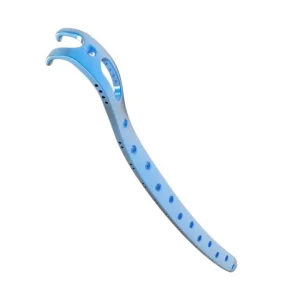
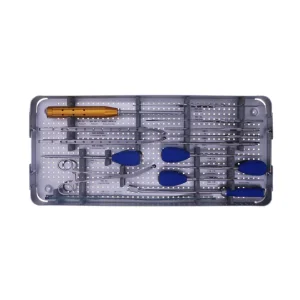
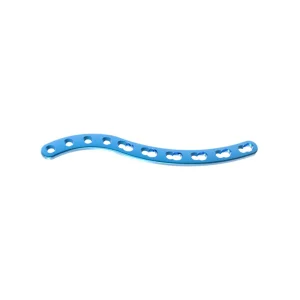
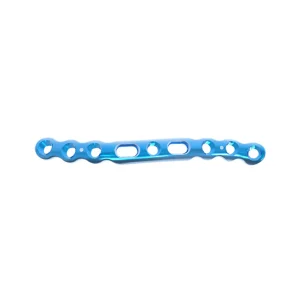
Clinical-Grade Tibia & Trauma Reconstruction Implants
Explore our high-precision lower-extremity trauma portfolio, engineered with certified Ti-6Al-4V ELI titanium and ultra-low profile anatomical designs to accelerate callus formation.
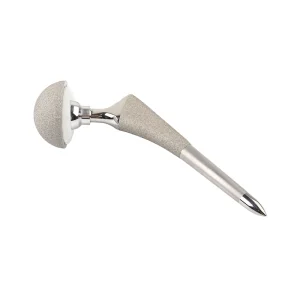
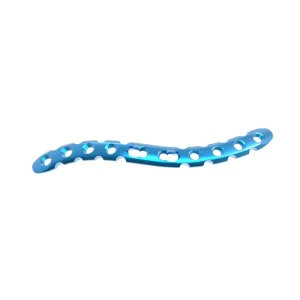
Macro Trauma Challenges: Tibial Biomechanics & Fixation Dynamics
Overcoming the structural, biological, and vascular vulnerabilities of the tibia through advanced limited-contact locking plate architectures.
The human tibia represents one of the most clinically vulnerable weight-bearing long bones in skeletal traumatology. Because the anteromedial border of the tibia is covered exclusively by subcutaneous tissue and thin integument without intervening muscular envelopes, tibial fractures—particularly those involving the proximal tibial plateau (AO/OTA 41) and the distal pilon or plafond region (AO/OTA 43)—present extraordinary rates of soft-tissue devitalization, open wound conversion, delayed union, and cutaneous necrosis.
Modern clinical traumatology demands an engineering shift away from rigid, compression-only constructs toward biologically optimized internal fixators. As demonstrated by the AO Principles of Fracture Management, preserving the periosteal microcirculation is directly correlated with rapid secondary bone healing through external callus formation. When selecting a tibia bone fracture plate supplier or OEM factory, surgical teams and medical procurement directors evaluate three uncompromising biomechanical pillars:
Limited-Contact Undersurface Geometry
Traditional non-locking dynamic compression plates (DCP) generate massive friction by compressing the implant directly onto the periosteum, suffocating haversian blood supply. Advanced tibial locking plates incorporate a scalloped, undercut base that reduces contact surface area by up to 60%, drastically preserving cortical perfusion.
Angular Stability & Combi-Hole Versatility
In osteoporotic bone or comminuted metaphyseal zones, conventional screws toggle and pull out under cyclical shear forces. Our fixed-angle locking holes mechanically couple the screw head with the plate threads, transforming the assembly into an internal fixator where axial forces are redistributed without reliance on bone-implant friction.
Optimized Elastic Working Length
By modulating screw spacing across the fracture zone, surgeons fine-tune construct stiffness. High-grade titanium alloy (Ti-6Al-4V ELI) delivers an elastic modulus of ~110 GPa—substantially closer to cortical bone (~18 GPa) than stainless steel 316L (~210 GPa)—mitigating stress shielding while delivering micro-motion that stimulates osteogenesis.
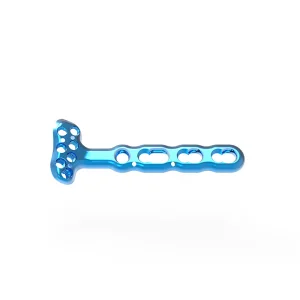
ZATH's production systems address these macro challenges through precise 5-axis CNC machining, ensuring each anatomical contour precisely mirrors the lateral condyle, medial flare, or anterolateral distal tibia without requiring excessive intraoperative cold-bending that could induce material micro-fissuring.
Global Orthopedic Manufacturing Landscape & Procurement Trends
Analyzing shifting supply dynamics: How tier-one hospitals and international distributors achieve cost-efficiency without compromising metallurgical reliability.
The global orthopedic trauma fixation market is undergoing a structural transformation. Rising healthcare expenditures, aging populations with osteoporotic vulnerability, and the expansion of national volume-based procurement (VBP) programs across Europe, Latin America, and the Asia-Pacific region have disrupted historical procurement monopolies. Healthcare systems no longer accept bloated brand premiums from multinational conglomerates when ISO 13485-certified manufacturers can deliver equivalent metallurgical purity, tighter dimensional tolerances, and comprehensive clinical instrument sets at optimized industrial unit economics.
| Technical & Commercial Parameter | Traditional Legacy Brands | ZATH Precision Manufacturing | Clinical & Strategic Advantage |
|---|---|---|---|
| Raw Material Formulation | Commercial Ti-6Al-4V / 316L SS | Vacuum Melted Ti-6Al-4V ELI (ASTM F136 / ISO 5832-3) | Superior Fatigue Life Higher yield strength and fracture toughness |
| Machining Precision & Burring | 3-Axis CNC + Manual Deburring | Simultaneous 5-Axis Swiss-Type CNC Machining | Zero Burrs Thread pitch consistency protects locking mechanics |
| Anatomical Profile Accuracy | General Population Averages | High-Resolution Multi-Ethnic CT Bone Data Integration | Minimized Cold Bending Decreases operative time and soft tissue impingement |
| Sterility & Packaging | Non-Sterile Bulk Trays Typical | Class 10,000 Cleanroom Sterile Peel-Pouch Packaging | Infection Risk Reduced Immediate OR readiness with GS1 barcode tracking |
| Supply Chain Flexibility | Rigid Catalog, 12-16 Wk Lead Times | Dynamic Capacity, Rapid Air Express (4-6 Days Delivery) | Working Capital Efficiency Lowers hospital holding inventory liabilities |
Furthermore, global regulatory scrutiny under the EU Medical Device Regulation (EU MDR 2017/745) has escalated technical barrier requirements. Factory qualification now demands rigorous post-market clinical follow-up (PMCF), validated static four-point bending and bending fatigue testing under ASTM F382 protocols, along with unannounced notified-body audits. ZATH maintains strict institutional alignment with these global standards, providing our international partners with immutable documentation packages for registration dossiers worldwide.
Anatomical Sub-Types & Localized Clinical Application Scenarios
From complex bicondylar tibial plateau collapse to distal pilon plafond reconstructions: Targeted geometric designs for complete tibial coverage.
Proximal Tibia Locking Fixation
Clinical Focus: Schatzker Type I through VI bicondylar plateau fractures, periprosthetic fractures adjacent to total knee replacements, and proximal metaphyseal non-unions.
Design Mechanics: Raft-construct locking screw configurations immediately subchondral to the articular surface maintain anatomical plateau height against axial collapse. Anatomically pre-shaped lateral and medial buttress profiles offer dependable double-plating stabilization for high-energy motor vehicle trauma.
Tibial Diaphyseal Shaft Plates
Clinical Focus: AO/OTA 42 transverse, oblique, and comminuted shaft fractures where narrow intramedullary canals or severe deformities rule out nailing.
Design Mechanics: Featuring graduated combi-holes that accept standard cortical screws for dynamic compression or self-tapping locking screws for bridging osteosynthesis. The rounded low-profile plate tips facilitate sub-muscular tunneling in Minimally Invasive Percutaneous Plate Osteosynthesis (MIPPO) techniques, avoiding extensive open exposures.
Distal Tibia & Pilon (Plafond) Plates
Clinical Focus: AO/OTA 43 comminuted distal pilon plafond fractures, intra-articular shearing injuries, and low-energy osteoporotic malleolar fractures.
Design Mechanics: Ultra-thin tapered profiles (down to 1.5mm distal thickness) designed specifically to minimize skin tension over the vulnerable medial malleolus and anterolateral Chaput fragment. Multidirectional distal screw trajectories effectively reconstruct the subchondral joint line without joint penetration.
Minimally Invasive Percutaneous Plate Osteosynthesis (MIPPO) Integration
In high-energy distal and shaft tibia fractures, extensive periosteal stripping during traditional open reduction internal fixation (ORIF) exponentially increases the risk of deep infection, hardware extrusion, and delayed osteogenesis. ZATH tibial plate geometries are engineered with beveled, bullet-nosed ends and optimized instrument-guided aiming sleeves. This allows surgeons to safely pass the plate beneath the subcutaneous tunnel via small, remote stab incisions, preserving the anterior compartment soft-tissue envelope and fracture hematoma—a critical requirement for accelerated bone healing.
Beijing ZhongAnTaiHua Technology Co., Ltd. (ZATH)
Over 15 years of orthopedic engineering excellence from China’s premier biomedical innovation corridor.
Founded in 2009, Beijing ZhongAnTaiHua Technology Co., Ltd. (ZATH) has established itself as an authoritative leader in orthopedic implant design, multi-axis precision manufacturing, and worldwide export distribution. Situated within the prestigious Zhongguancun Science and Technology Park (Pinggu Park, Xinggu A Area, Beijing), our comprehensive industrial facility consolidates raw material testing, high-speed wire EDM blanking, multi-axis CNC machining, ultrasonic multi-stage passivation cleaning, cleanroom packaging, and lot-traceable warehouse management under one unified corporate roof.
ZATH’s robust engineering roster comprises nearly 100 seasoned mechanical, metallurgical, and biomechanical engineers collaborating directly with clinical trauma specialists. Beyond trauma locking plates, our advanced manufacturing capabilities span four clinical platforms:
- Trauma Fixation Systems: Anatomical locking compression plates, intramedullary interlocking nails, cannulated compression screws, patella and external fixation systems.
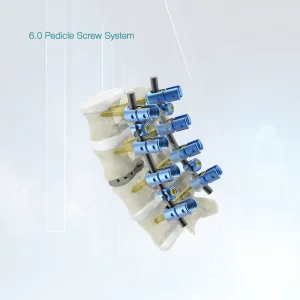
- Spine Fixation Platforms: Polyaxial pedicle screws, minimally invasive (MIS) percutaneous systems, anterior cervical plates (ACP), PEEK interbody fusion cages, and PKP vertebroplasty kits.
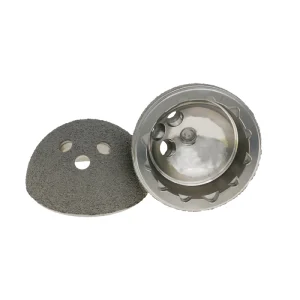
- Joint Arthroplasty Systems: Primary and revision total knee replacement (TKA) systems, cemented/cementless femoral hip stems, bipolar heads, and acetabular cups.
- Sports Medicine Repair: Titanium and PEEK suture anchors, knotless soft-tissue fixation devices, and cortical endo-buttons.
With an unwavering commitment to quality assurance, ZATH maintains ISO 13485 certification, CE approvals, and Free Sale Certificates (FSC), empowering healthcare distributors across more than 50 nations with competitive turnaround times, rapid air logistics (4 to 6 days dispatch via DHL, FedEx, TNT, UPS), and comprehensive regulatory documentation dossiers.
Regulatory Compliance, Metallurgical Validation & Localization Support
Ensuring frictionless market clearance and clinical safety across international health authorities.
For regional medical device distributors, regulatory compliance is often the decisive bottleneck in hospital tender submissions. ZATH provides turn-key regulatory dossiers that accelerate clearance through health ministries across Europe, the Middle East, Latin America, Southeast Asia, and Africa.
ISO 13485 QMS Architecture
Our quality management system is audited under ISO 13485 standards. Every titanium batch undergoes spectral chemical analysis and metallographic structural evaluation, guaranteeing complete traceability from virgin bar stock to sterile package opening.
ASTM F382 Biomechanical Validation
Our tibial fracture plates undergo extensive biomechanical stress cycles, surpassing ASTM F382 standards for static 4-point bending strength and dynamic bending fatigue limits. Plates withstand over 1,000,000 cycles without plastic deformation or notch fracture.
OEM & ODM Tailored Engineering
We provide comprehensive private labeling, custom laser etching, customized tray layouts, specialized screw length configurations, and bespoke multilingual instructions for use (IFUs) configured to meet specific regional registration mandates.
Technological Roadmap: The Next Era of Tibial Osteosynthesis
Pioneering additive manufacturing, bio-integrative surface treatments, and sensor-guided orthopedic trauma care.
The boundary between mechanical hardware and active biological engineering is rapidly dissolving. As a dedicated orthopedic manufacturing company, ZATH continues to invest a substantial portion of annual revenues into forward-looking research and development programs. Key engineering vectors shaping our multi-year technology roadmap include:
3D Additive Electron Beam Melting (EBM)
Transitioning from subtractive CNC milling to additive manufacturing for complex revision trauma. 3D-printed porous titanium surfaces mimic trabecular bone architecture, lowering the elastic modulus to ~3-5 GPa while encouraging biological osseointegration across massive diaphyseal bone voids.
Bio-Active & Antimicrobial Nano-Coatings
Post-surgical bacterial colonization and implant biofilm formation present catastrophic complications in open tibial trauma. ZATH is researching silver-nanoparticle and copper-doped anodic oxide coatings that exhibit broad-spectrum bactericidal properties while preserving surrounding osteoblast viability.
Smart Telemetric Fracture Strain Sensing
Future internal fixators will incorporate micro-electromechanical (MEMS) strain gauges within the bridging segment of the plate. These passive, wireless transponders allow orthopedic surgeons to objectively measure interfragmentary strain and callus mineralization during routine outpatient checkups without repeated radiation exposure.
Frequently Asked Questions by Surgical Teams & Procurement Directors
Essential insights covering metallurgical specifications, surgical handling, regulatory status, and OEM partnerships.
Integrated Orthopedic Trauma, Spine & Reconstruction Solutions
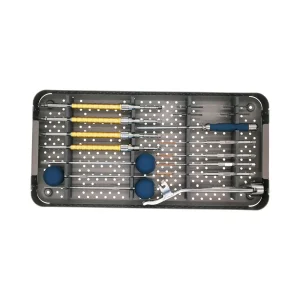
Explore matching instrument universal sets, polyaxial spine hardware, intramedullary nails, and clavicle reconstruction plates.