
Featured Orthopedic Implant Assemblies & Instrumentation
Precision-machined locking plates, endoscopic systems, and total joint replacement instruments engineered under certified cleanroom parameters and exhaustive biomechanical testing.
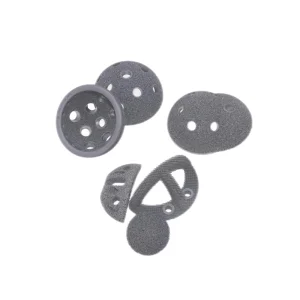
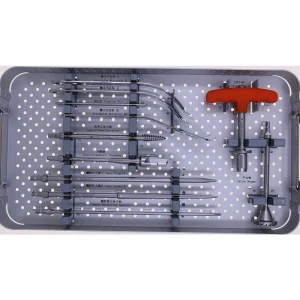
Global Macro Landscape of Clavicle Fracture Fixation
Clavicle fractures account for approximately 2.6% to 4.0% of all adult traumatic skeletal fractures and roughly 35% of all shoulder girdle injuries, reflecting a pronounced global demand for standardized internal fixation assemblies.
Epidemiological Drivers & Demographics
Clavicle injuries display a classic bimodal distribution: high-energy motor vehicle and sports trauma predominant among young males (ages 15–35), contrasted with low-energy osteoporotic falls among geriatric populations (ages 65+). As athletic participation surges and global demographics age, OEM clavicle bone plate manufacturing facilities have scaled production pipelines to accommodate both dense cortical purchase and fragile cancellous fixation configurations.
Shifting Paradigm: From Sling to ORIF
Historical conservative management via figure-of-eight bandages yielded nonunion rates exceeding 15% to 20% in completely displaced midshaft fractures, accompanied by shoulder asymmetry and symptomatic malunion. The definitive shift toward open reduction and internal fixation (ORIF) with pre-contoured locking compression plates (LCP) reduces nonunion rates to less than 1.5% while restoring shoulder girdle mechanics and facilitating rapid functional rehabilitation.
OEM Foundry Specialization & Consolidation
Global medical device brand owners are increasingly outsourcing implant fabrication to specialized OEM/ODM contract manufacturing hubs. Operating in Class 10,000 (ISO Class 7) cleanroom facilities equipped with multi-spindle Swiss CNC turning-milling centers, these specialized plants compress design-to-market cycles, ensure ISO 13485:2016 compliance, and provide rigorous audit trails for FDA 510(k) and EU MDR 2017/745 dossier clearance.
Anatomical Contouring & Locking Interface Mechanics
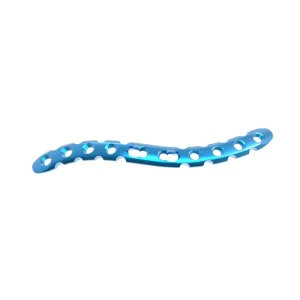
The human clavicle possesses a double-curved S-shape morphology characterized by complex multi-planar torsion. Implant engineers must balance structural rigidity with periosteal vascular preservation.
3D Computed Tomography Morphometry
State-of-the-art OEM clavicle plate geometries are derived from vast CT databases encompassing thousands of multi-ethnic clavicular reconstructions. By mapping the medial upward convexity and lateral forward concavity, manufacturers generate true anatomical pre-contouring that minimizes intraoperative manual bending. Minimizing contouring reduces notch fatigue, micro-fissuring, and mechanical degradation under cyclical loading.
Combi-Hole Mechanics & Hybrid Fixation
Modern locking compression systems utilize precision-engineered combi-holes. One half provides a dynamic compression unit (DCU) ramped surface for standard cortical or cancellous screws to achieve axial compression, while the adjacent threaded section engages locking screws at fixed angles (typically 90° or variable ±15°). This creates a rigid angular-stable internal fixator construct that prevents secondary reduction loss.
Limited Contact & Periosteal Protection
To combat iatrogenic bone resorption induced by periosteal strangulation, OEM production lines utilize limited-contact undersurface geometries (LC-LCP). Scalloped recesses on the plate's bone-facing side reduce contact area by up to 60%, maintaining periosteal micro-capillary perfusion beneath the construct, accelerating callus formation, and lowering infection vulnerability in revision-prone subcutaneous zones.
| Implant Parameter | Superior Midshaft Clavicle Plate | Anteroinferior Clavicle Plate | Distal / Lateral Hook Plate |
|---|---|---|---|
| Primary Material | Ti-6Al-4V ELI (ASTM F136) / PEEK | Ti-6Al-4V ELI / 316L Stainless | Ti-6Al-4V ELI / Annealed Stainless |
| Plate Profile Thickness | 2.7 mm – 3.2 mm tapered | 2.4 mm – 2.8 mm low-profile | 3.5 mm shaft with 12–18mm hook depth |
| Screw Compatibility | Ø2.7mm / Ø3.5mm Locking & Cortex | Ø2.7mm / Ø3.5mm Variable Angle | Ø3.5mm Locking / Non-locking Cortical |
| Mechanical Strength (ASTM F382) | > 12.5 N·m Bending Moment | > 9.8 N·m Bending Moment | > 16.0 N·m (Withstands Coracoclavicular stress) |
| Cleanroom Packaging | Double Tyvek Blister, Gamma/EO Sterile | Double Tyvek Blister, Gamma/EO Sterile | Medical Blister Tray with Protective Cap |
Materials Science & High-Precision Subtractive Tooling
Inside an ISO 13485 certified OEM bone plate factory, implant manufacturing requires extreme tolerances, zero cross-contamination, and strict surface integrity validation.
Medical-Grade Titanium Alloy (Grade 23 ELI)
OEM fabrication centers preferentially deploy Ti-6Al-4V ELI (Extra Low Interstitial, ASTM F136 / ISO 5832-3). ELI grades offer reduced interstitial elements (oxygen, nitrogen, carbon, iron), providing superior ductility, fracture toughness, and resistance to fatigue crack propagation. Furthermore, titanium's elastic modulus (110 GPa) aligns substantially closer to cortical bone (18–20 GPa) than stainless steel (200 GPa), markedly mitigating stress-shielding osteopenia.
5-Axis Simultaneous CNC Machining
Machining complex 3D helical contours and multi-threaded combi-holes necessitates continuous 5-axis DMG MORI or Citizen Swiss CNC milling centers. Operating under high-pressure flood coolant filtration, tools craft screw hole pitch accuracies within ±0.008 mm. Precision threading prevents screw-plate galling and thread stripping during intraoperative torque application, ensuring flawless locked construct engagement.
Surface Passivation & Color Anodization
Following multi-stage automated deburring and ultrasonic degreasing, implants undergo Type II electrochemical anodization in compliance with AMS 2488. This builds a robust, chemically inert titanium dioxide (TiO2) ceramic passivation layer. Anodization eliminates micro-burrs, dramatically reduces fretting corrosion, prevents bacterial colonization, and provides color-coded optical identification for left/right anatomical distinctions.
Localized Anatomical Sites & Surgical Indications
Clavicular anatomy dictates specialized plate configurations across distinct anatomical segments, requiring customized screw trajectories to avoid neurovascular compromise of the subclavian bundle.
Midshaft Fractures (AO/OTA 15.2)
Midshaft injuries constitute over 80% of clavicular fractures. Pre-contoured S-shaped locking compression plates are positioned superiorly or anteroinferiorly. Surgical protocols mandate achieving at least 6 to 8 cortical purchases on each side of the fracture zone. In comminuted configurations, bridging plate techniques preserve the biological fracture hematoma without stripping intermediate osseous fragments.
Distal / Lateral Clavicle Fractures (Neer Type II)
Unstable lateral third fractures involve rupture of the coracoclavicular (CC) ligaments, accompanied by upward displacement of the medial fragment. Specialized distal clavicle locking plates feature a broad lateral fan array with 5 to 8 diverging Ø2.7mm locking screw holes. This multidirectional divergence achieves robust subchondral bone purchase even in minimal lateral bone fragments.
AC Joint Dislocation & Hook Plate Mechanics
Rockwood Type III to V acromioclavicular (AC) dislocations present high failure rates with standard straight plates. Clavicular hook plates incorporate an anatomically angled hook that engages underneath the posteromedial aspect of the acromion. This maintains stable vertical reduction of the clavicle while coracoclavicular ligaments heal, requiring planned implant retrieval at 3 to 6 months to prevent subacromial impingement.
Nonunion, Malunion & Revision Arthrodesis
Nonunion cases following conservative neglect or failed primary fixation require stable revision osteosynthesis. OEM 3.5mm titanium reconstruction locking plates enable multidirectional manual contouring around complex calluses. When paired with autologous bone grafting, these rigid constructs withstand extensive cyclical rotational strain and facilitate rapid vascularized bony bridging.
OEM / ODM Manufacturing Infrastructure & Audit Controls
Global distributors and hospital procurement committees require comprehensive supply chain transparency, cleanroom environmental monitoring, and meticulous Device Master Records (DMR).
ISO 13485:2016 Quality Management
From raw ingot chemical assays to certified tensile testing, compliant OEM factories maintain rigorous lot traceability. Every batch of titanium undergoes positive material identification (PMI) and spectrometer verification. Complete production runs are documented in Device History Records (DHR) retained for a minimum of 15 years to ensure uncompromised clinical audit integrity.
EU MDR 2017/745 & FDA 510(k) Ready
Transitioning to EU Medical Device Regulation (MDR) requires comprehensive clinical evaluation reports (CER), Post-Market Clinical Follow-up (PMCF) plans, and biocompatibility evaluations under ISO 10993. Leading Chinese OEM manufacturers deliver pre-validated technical documentation, mechanical test data (ASTM F382 static and dynamic fatigue), and finite element analysis (FEA) packages to expedite distributor submissions.
Cleanroom Sterile Barrier Packaging
Implants are packaged inside certified ISO Class 7 cleanrooms with HEPA air filtration. Employing automated thermoforming double-blister medical Tyvek systems, packaging prevents abrasion and particulate contamination. Validated under ISO 11607 for 5-year shelf-life stability, products support ethylene oxide (EO) or gamma ray irradiation sterilization.
Technological Roadmap: The Next Decade of Clavicular Osteosynthesis
Continuous advances in additive layer manufacturing, biodegradable metallurgy, and telemetric load sensors are transforming orthopedic fracture management.
Direct Metal Laser Sintering (DMLS) & PSI
Selective Laser Melting (SLM) and Electron Beam Melting (EBM) enable the additive manufacturing of Patient-Specific Implants (PSI). By transforming patient DICOM CT data into custom porous titanium constructs within 48 to 72 hours, factories produce customized trabecular lattice structures (pore sizes 300–600 μm) that promote osseointegration and provide ideal contact in severe dysplastic clavicles.
Bioresorbable Magnesium-Zinc Alloys
Second-look surgeries for clavicle plate removal remain common due to subcutaneous prominence and patient discomfort (reported in 15% to 30% of cases). Resorbable high-purity magnesium alloys (Mg-Zn-Ca) deliver initial structural rigidity comparable to titanium, while degrading via physiological metabolic pathways over 12 to 24 months, fully eliminating the necessity of secondary extraction operations.
Smart Strain-Sensing Internal Fixators
Micro-electromechanical systems (MEMS) embedded within plate bridge spans can measure micro-strain and transmit real-time telemetry to clinical teams. Quantifying load transmission across the fracture gap provides definitive physiological proof of osseous union before radiographic evidence manifests, empowering data-driven physical therapy and identifying incipient mechanical nonunions.
Frequently Answered Questions for Device Sourcing Engineers
Clear, authoritative guidance on technical tolerances, fatigue standards, sterilization lifespans, and private-label customization procedures.
Comprehensive Orthopedic Implants & Surgical Toolkits
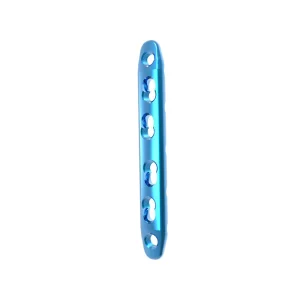
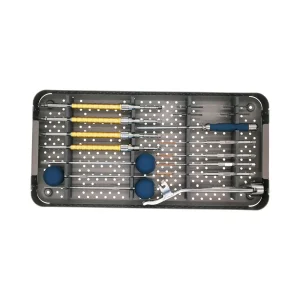
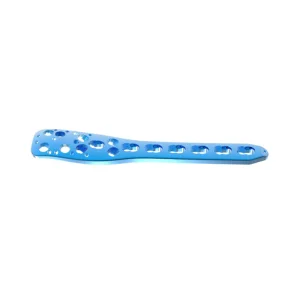
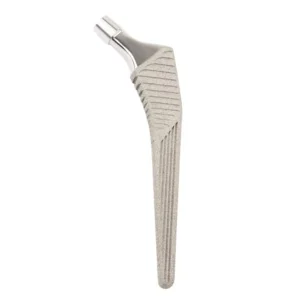
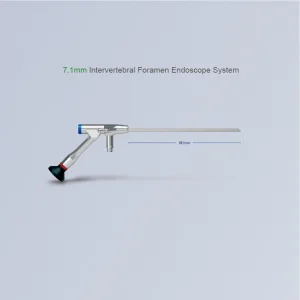
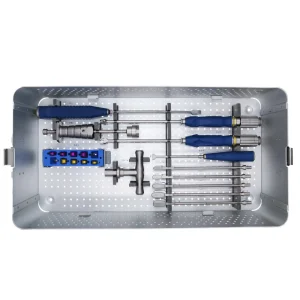
Explore our full line of specialized intramedullary nails, pedicle screws, locking compression plates, and total hip prostheses engineered for global clinical distributors.
Partner with a Certified OEM Bone Plate Foundry
Accelerate your orthopedic brand's growth with ISO 13485:2016-accredited manufacturing, private-label laser marking, rapid tooling turnaround, and end-to-end technical documentation support.