Engineered Orthopedic Implants & Systems
Direct factory configurations across trauma reconstruction, cortical compression, and complex joint reconstruction systems built under rigorous ISO 13485 cleanroom standards.
Distal Clavicle Fixation: Global Industry Dynamics
An authoritative review of lateral third clavicular fracture management, biomechanical hurdles, and international OEM supply-chain evolution.
Distal (lateral) clavicle fractures represent approximately 15% to 28% of all clavicular fractures and present unique clinical dilemmas due to high non-union rates when managed conservatively. Classifications such as Neer Type II, Type V, and Craig Group II fractures involve disruption of the coracoclavicular (CC) ligaments or comminution of the small, fragile lateral bone fragment. In historical orthopedic trauma practice, hook plates and tension band wirings dominated; however, recent clinical meta-analyses demonstrate persistent complications with subacromial impingement, rotator cuff attrition, and obligatory secondary implant removal surgeries associated with traditional clavicle hook plates.
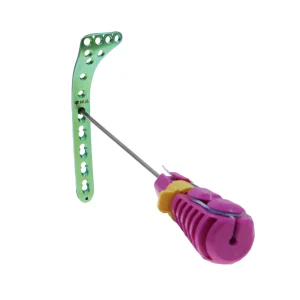
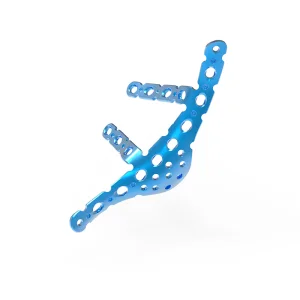
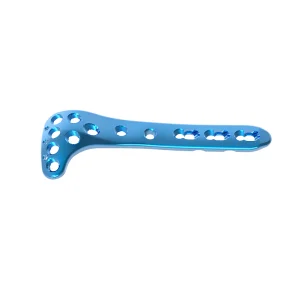
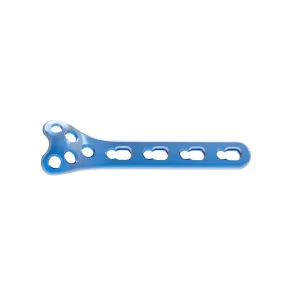
As a result, the global orthopedic trauma market has systematically pivoted towards pre-contoured anatomical Distal Clavicle Locking Plates (DCLPs). These low-profile titanium alloy implants provide fixed-angle biomechanical stability via divergent and convergent locking screw configurations. For original equipment manufacturers (OEMs), brand license owners, and hospital tenders, procuring certified DCLP platforms demands rigorous adherence to medical device standards including ASTM F382 (Standard Specification and Test Method for Metallic Bone Plates), ISO 5832-3 (Wrought Titanium 6-Aluminium 4-Vanadium Alloy), and CE MDR Annex IX quality audits.
Engineering Principles of Distal Clavicular Osteosynthesis
Overcoming minimal subchondral bone stock, deforming muscular forces, and soft tissue irritation through finite element-optimized geometry.
Subchondral Multi-Hole Matrix
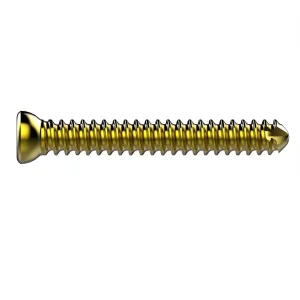
The distal bone block often measures less than 15mm in anteroposterior depth. OEM distal plates integrate an expanded lateral head accommodating up to six 2.4mm or 2.7mm multidirectional locking screws. This divergent array creates a mechanical raft supporting comminuted osteochondral fragments without articular breach.
Low-Profile Tapered Contours
Given the minimal subcutaneous soft-tissue envelope over the acromioclavicular junction, plate profile height is precision-milled from 3.2mm along the diaphyseal shaft down to 1.8mm at the lateral extremity, complete with polished, rounded chamfered margins to eliminate postoperative bursal impingement.
Integrated CC-Ligament Eyelets
To neutralize the upward displacement caused by the trapezius and downward pull from upper extremity weight, strategic suture holes (1.5mm - 2.0mm) are laser-cut along the anterior margin, facilitating high-tensile suture-tape or Endobutton looping directly to the coracoid process.
| Design Parameter | OEM Standard Specification | Clinical Rationale | Test Standard |
|---|---|---|---|
| Raw Material Grade | Ti-6Al-4V ELI (ASTM F136 / ISO 5832-3) | High fatigue strength, low elastic modulus (110 GPa) reducing stress shielding | Chemical & Tensile Mill Certs |
| Distal Head Thickness | 1.6 mm – 2.0 mm ± 0.05 mm | Prevents skin tenting and hardware prominence over the acromion | Mitutoyo Optical CMM |
| Shaft Comb-Hole Interface | Dynamic Compression Unit + Threaded Locking | Allows axial compression with cortical screws or fixed-angle locking stability | ISO 9585 / ASTM F382 |
| Lateral Screw Diversity | 4 to 8 Divergent Screw Holes (2.4 / 2.7 mm) | Maximizes bone purchase in poor quality osteoporosis cancellous bone | FEA Pullout Analysis |
| Surface Treatment | Type II Electrochemical Anodization | Reduces cold welding of screw-plate threads and limits bacterial biofilm adhesion | AMS 2488D / ASTM F86 |
Technical Roadmap & Future Industry Outlook (2025–2035)
Next-generation advancements bridging additive manufacturing, smart alloys, and robotic-assisted surgical alignment.
EBM 3D Trabecular Titanium
Additive manufacturing utilizing Electron Beam Melting (EBM) enables continuous bone-ingrowth lattices directly onto the periosteal underside of the plate, stimulating osteointegration in osteoporotic fracture gaps while maintaining an ultra-thin ductile profile.
Variable-Angle Locking Hubs
Moving away from monoaxial threading, advanced Cobalt-Chrome insert rings or proprietary thread-forming titanium geometries offer a 30° cone of angulation (±15° off-axis), allowing surgeons to target specific stable subchondral bone islands tailored to unique fracture lines.
Bio-Absorbable Hybrids
Development of magnesium-zinc-calcium (Mg-Zn-Ca) alloy components for the distal cluster facilitates controlled physiological degradation over 18 to 24 months, fully eliminating the necessity of hardware removal in young athletic demographics.
AI-Driven Contour Databases
Utilizing high-resolution CT morphology databases across global ethnic populations (Caucasian, Asian, Hispanic, African), modern OEM dies pre-shape the S-curve with 96% anatomical conformity, reducing in-situ intraoperative bending that weakens titanium crystal structures.
Localized Application Scenarios & Supply Chain Resilience
Aligning high-precision trauma hardware with clinical pathology, ambulatory surgical protocols, and scalable OEM production.
High-Impact Sports Trauma
Frequent in competitive cycling, equestrian sports, and alpine skiing. The distal clavicle experiences high shear forces. Fixation with low-profile DCLPs plus coracoclavicular tape cerclage permits early rehabilitation and full functional shoulder range of motion within 6 to 8 weeks post-surgery.
Geriatric Comminution & Osteopenia
Low-energy fall incidents in patients over 65 often produce multi-fragmentary distal fractures with fragile cortical shells. The multi-hole subchondral locking screw raft spreads axial loads across dense subchondral acromial margins, preventing screw back-out and loss of primary reduction.
Revision of Failed Non-Unions
Secondary pseudoarthrosis following conservative neglect or previous unthreaded K-wire fixation requires rigid fixation combined with bone grafting. Extended 8- to 12-hole diaphysis DCLP plates provide extended bridging spans across the avascular necrotic zone.
Macro Turnkey Manufacturing & Global Distribution Workflow
For multinational implant brand owners, OEM/ODM cooperation goes beyond mere machining. We provide complete technical design dossiers (Design History Files - DHF), Device Master Records (DMR), mechanical fatigue validation reports (ASTM F382 static four-point bending and fatigue life testing surpassing 1,000,000 cycles without failure), and Class 10,000 cleanroom blister packing with validated ethylene oxide (EtO) sterilization cycles (SAL 10⁻⁶).
Distal Clavicle Locking Plate Sourcing Q&A
In-depth guidance for orthopedic distributors, hospital purchasing authorities, and regulatory affairs managers.
What are the key biomechanical advantages of DCLPs over clavicle hook plates?
Clavicle hook plates achieve retention by inserting an unthreaded hook beneath the acromion process. This frequently leads to subacromial osteolysis, acromial erosion, subacromial impingement syndrome, and rotator cuff tears, virtually necessitating a secondary surgery for plate extraction within 3 to 6 months. Conversely, Distal Clavicle Locking Plates (DCLPs) utilize an anatomically contoured multi-hole lateral head with fixed-angle locking screws that reconstruct the bone directly without breaching the subacromial joint space, avoiding obligatory removal in over 89% of cases.
What raw materials are utilized in high-performance DCLP OEM production?
High-tier OEM manufacturing employs medical-grade Titanium Alloy Ti-6Al-4V ELI (Extra Low Interstitial) conforming to ASTM F136 and ISO 5832-3. This titanium grade provides superior yield strength (≥ 795 MPa) and ultimate tensile strength (≥ 860 MPa) while possessing an elastic modulus (~110 GPa) significantly closer to cortical bone than 316L stainless steel (~200 GPa). This closeness in modulus curtails the phenomenon of stress shielding while facilitating superb biocompatibility, MRI conditional safety, and corrosion resistance.
How does the locking hole design prevent cold welding and thread stripping?
Cold welding between titanium screws and plates is mitigated through precision CNC thread threading tolerances (class 4H/6H) combined with Type II Anodization (AMS 2488 standard). This electrochemical conversion coating creates a dense, lubricious titanium dioxide surface layer that increases surface hardness, minimizes galling during high-torque locking insertion, and maintains an explicit disengagement torque profile when extraction is warranted.
What customization options are offered for OEM and ODM distribution partners?
We provide end-to-end ODM/OEM customization including: custom anatomical curvature matching specific regional demographic osteology; customized screw hole patterns (combining 2.4mm/2.7mm locking with 3.5mm cortex slots); bespoke surface color anodizing (gold, deep blue, green, tech grey) for instant intraoperative size differentiation; high-resolution fiber-laser etching of distributor branding, lot codes, and GS1-compliant 2D DataMatrix UDI barcodes; and tailored graphic instrument case configurations.
What regulatory compliance documentation accompanies OEM export shipments?
Every lot is supplied with a comprehensive Device History Record (DHR) package containing: raw material chemical composition and mechanical mill certificates, optical coordinate measuring machine (CMM) dimensional inspection reports, ASTM F382 static/dynamic four-point fatigue test certificates, cleanroom particulate monitoring logs, bioburden and endotoxin test results, and Free Sale Certificates (FSC) to expedite local health ministry import authorizations.
What is the standard production lead time and Minimum Order Quantity (MOQ)?
For standard catalog configurations in bulk non-sterile packaging, typical dispatch takes 2 to 3 weeks with an MOQ of 50 units per specification. For custom OEM/ODM branded runs (including tooling validation, prototype CMM verification, and custom laser etching), initial first-article batches typically require 4 to 6 weeks. Fast-track emergency restocks for established hospital supply contracts can be prioritized via automated buffer stock programs.
Are complete matching surgical instrument sets supplied with the plates?
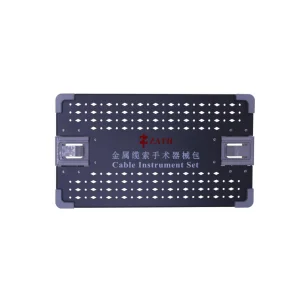
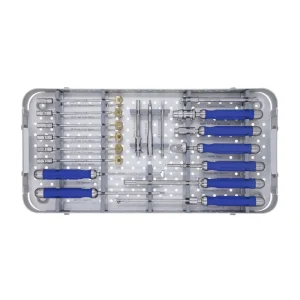
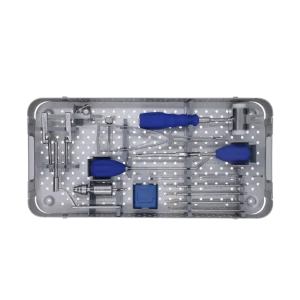
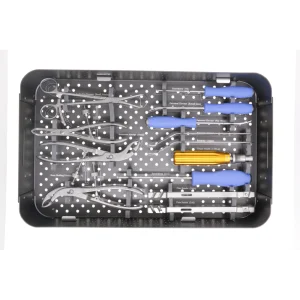
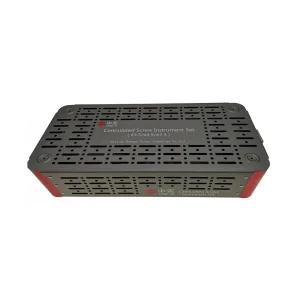
Yes. Implants are paired with custom-crafted surgical instrument sets manufactured from surgical stainless steel (17-4PH / AISI 420) and medical-grade silicone/radel trays. Trays include: calibrated torque-limiting screwdrivers (0.8 Nm / 1.5 Nm), threaded drill sleeves with centric/eccentric guides, cobalt-coated drill bits, depth gauges, sharp reduction forceps, plate-bending irons, and countersinks, fully validated for hospital autoclaving at 134°C.
What packaging options are available: sterile vs. non-sterile?
Clients can choose between: 1) Non-sterile batch packaging in double-sealed anti-static ESD bags with protective foam inserts; or 2) Terminal cleanroom pre-sterilization (Class 10,000 ISO Class 7 cleanroom) utilizing thermoformed double PETG blister trays with breathable Tyvek lids, validated under ISO 11607-1/2 for a 5-year shelf life under gamma irradiation or EtO sterilization protocols.
Featured Implant Platforms & Precision Kits
Expand your surgical distribution inventory with ISO 13485 certified upper extremity, spinal, trauma, and sports medicine devices.